Hepper is reader-supported. When you buy via links on our site, we may earn an affiliate commission at no cost to you. Learn more.
What Does an Emotional Support Dog Do? How They Help Humans

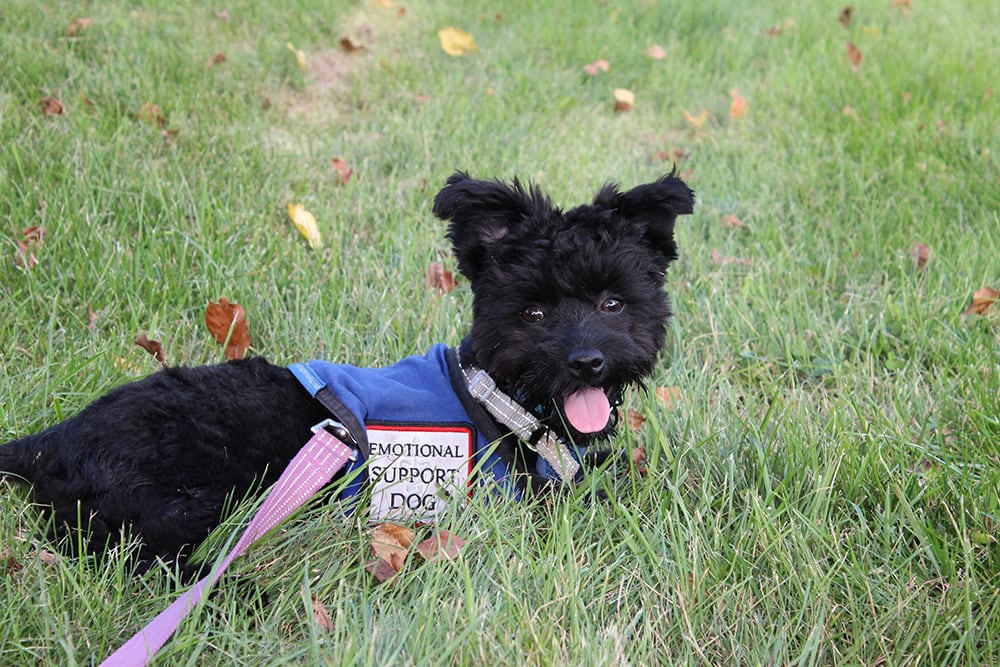
If you’ve ever spotted a dog wearing a vest stating that they are an “emotional support animal,” you might be curious about what that means. What do emotional support dogs do, and how can they help people? Emotional support dogs provide comfort, companionship, and therapeutic benefits to people with mental health or psychiatric conditions, such as anxiety and depression.
In this article, we’ll tell you all about emotional support dogs and how they can help humans. We’ll also cover the differences between emotional support dogs and service dogs and how that impacts where they’re allowed to go with you. Finally, we’ll explain how to get your dog approved for emotional support.

Emotional Support Dogs: The Basics
Technically, an emotional support animal (ESA) doesn’t have to be a dog. Any domestic animal qualifies if its owner has a condition that would benefit from its presence. Emotional support dogs aren’t trained to perform specific tasks but simply provide comfort through their presence and company.
Emotional support dogs provide many physical and mental benefits to people dealing with mental health issues. For example, they may help lower stress, relieve loneliness, and encourage people to be more social and active, which can benefit those with depression. Petting a dog can help lower blood pressure and normalize your heart rate, which can help ease anxiety and stress.


Frequently Asked Questions (FAQ)
What Is the Difference Between a Service Dog and an Emotional Support Dog?
As we mentioned, emotional support can be provided by other types of animals besides dogs. Legally, service animals are dogs only (with the occasional miniature horse) who have been specifically trained to perform tasks assisting people with certain physical and psychiatric conditions.
Guide dogs for the visually impaired are probably the most well-known service animals, but there are many other types, including psychiatric assistance dogs, that help people with conditions like PTSD. Service dogs are protected under the Americans with Disabilities Act (ADA), which is why they are allowed access anywhere their owners go, including planes.
Emotional support animals don't have special training, don’t perform specific tasks, and are not protected by the ADA. However, they aren’t considered just pets either, and people with emotional support dogs have some rights specifically concerning housing.
Where Are Emotional Support Dogs Allowed?
Because they aren’t service animals, businesses don’t have to allow access to emotional support dogs by law. However, that doesn’t stop people from bringing them, which is why you often see dogs in grocery stores dressed in “emotional support animal” vests. Legally, businesses don’t have to allow this.
Housing is the one area where access to emotional support dogs is well-protected. The Fair Housing Act (FHA) generally classifies them as a “reasonable accommodation” that landlords must make for people with a documented need for emotional support. Because of this, you can have an emotional support dog even in housing that ordinarily doesn’t allow pets.
In many cases, emotional support animals used to be allowed to fly in plane cabins. However, this has recently changed in the United States.

How Do I Make My Dog an Emotional Support Animal?
Because of the housing rules regarding emotional support animals, many people classify their dogs this way. While there’s no official certification or registration for emotional support dogs, you need proper documentation to receive the protections of the FHA. Generally, this takes the form of an “ESA letter.”
For your dog to be considered an emotional support animal, you need an official letter from a certified mental health professional or medical doctor. This letter must state that you have a mental health condition that would benefit from having an emotional support dog. The ESA letter is a prescription from your mental health provider and can be sent to a potential landlord upon request.
If you’re already under the care of a mental health provider, they can write you an ESA letter. If not, several online services can provide you with one, although you’ll need to be careful to avoid scammers. A legitimate online service will connect you with a licensed mental health provider for a consultation before issuing your letter.
In Conclusion
Any pet can help brighten its owner’s day, but emotional support dogs can make a genuine difference in the lives of those struggling with mental health. Globally, anxiety and depression are rising as we continue dealing with the pressures and habits of the so-called “modern lifestyle”. Mental health care is vital to combat this increase, and emotional support dogs are just one piece of the puzzle to consider.
See also:
Sources
Featured Image Credit: grandbrothers, Shutterstock
Get Hepper In Your Inbox


Pet care tips from our vets and experts, straight to your inbox.
You may opt-out at any time. View our Privacy Policy for more information.

A lifelong lover of all creatures great and small, Elizabeth got her first cat at 5 years old and at 14, she started working for her local veterinarian. After spending more than 20 years working as a veterinary nurse, Elizabeth decided to step away to become a stay-at-home parent to her daughter. Now, she is excited to share her knowledge with our pet parents. Elizabeth lives in Iowa with her family, including her two fur kids, Linnard, a husky mix and Algernon, the worldʻs most patient cat. When not writing, she enjoys reading, watching soccer, and spending time outdoors with her family.
Join the conversation
Ask a question, share your story, or send private feedback.