Hepper is reader-supported. When you buy via links on our site, we may earn an affiliate commission at no cost to you. Learn more.
How to Stop Dog Aggression Toward Cats: 10 Simple Steps

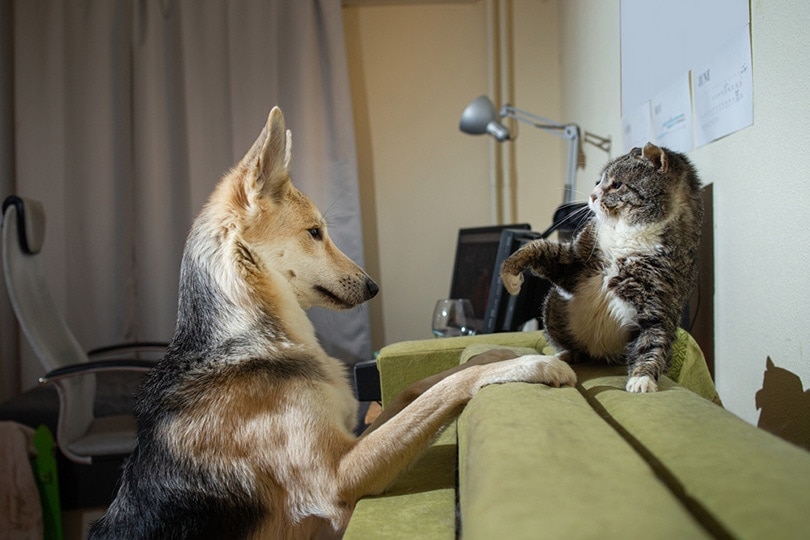
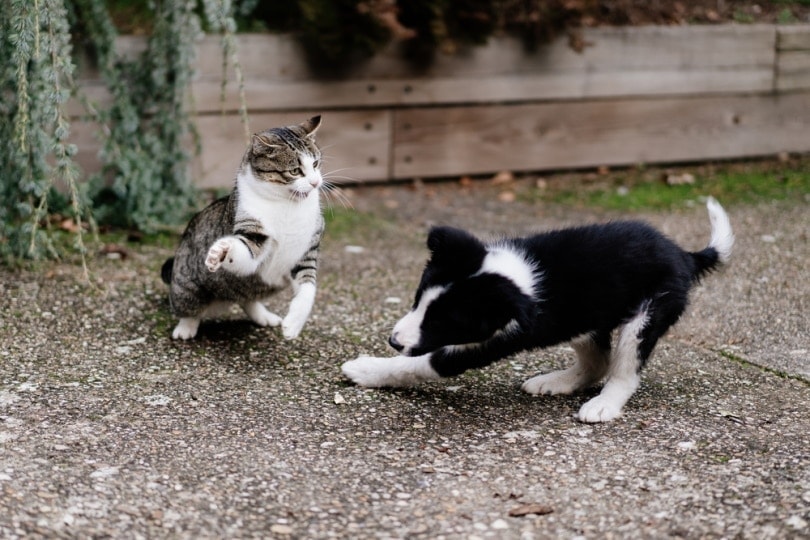
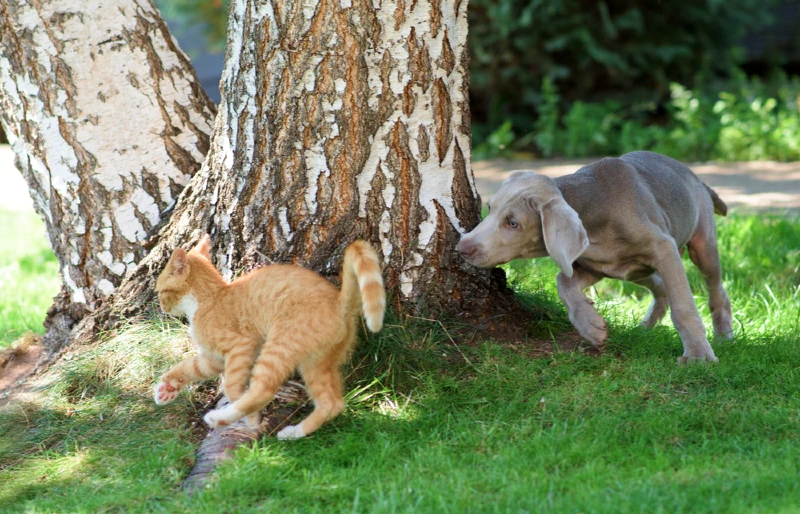
It may sound like a cliche, but it’s one based in fact when it comes to fighting like cats and dogs. First, the animals are competitors since they’re both predators. Competition and being territorial indeed come into play. Felines have speed on their side, which explains why they run if faced with threats. That sets off the alarm in canines with their prey drive in full force.
That’s one thing if aggression occurs in the wild. It’s another matter if your pets are going at it. That is especially true if the two are mismatched, with your dog being the bigger of the two. So, how exactly do you keep your dog from being aggressive toward your cat?

The 10 Tips on How to Stop Dog Aggression Toward Cats
1. Socialize Your Dog and Cat Early On
Early socialization and exposure to new things are vital for fostering a healthy dog-cat relationship. Canine socialization occurs between 21–49 days, followed by the puppy’s first of two fear-impact periods. You shouldn’t bring home a pup that is under 8 weeks old. The loss of that critical time with the mother and littermates can have negative consequences down the road.
Fear often lurks behind aggression. One way to avoid it is by ensuring your dog has an active life. That will give you opportunities to introduce your dog to new experiences when young, such as meeting other cats. If you later decide to bring home a kitten, it may be easier for your pup to accept a new animal in the household.
2. Be Proactive
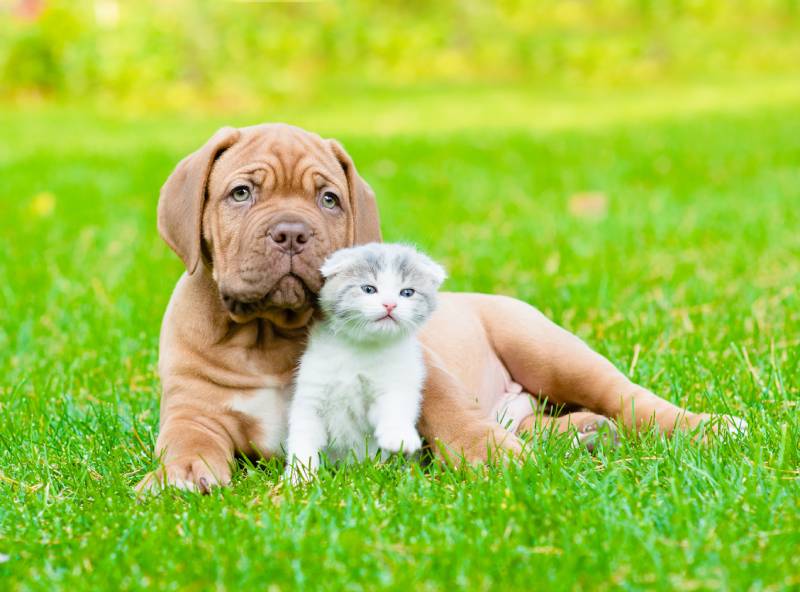
It is essential to be proactive. Anticipate that the fur may fly between your dog and cat. That means you have to have supervised playtime. You should also keep your pup on a leash so you can control the first meetings. You can make your kitty feel more secure if they have a place to escape. A bookshelf or bookcase can get your feline out of harm’s way if your pooch is getting anxious.
You can also use a pheromone product to settle down your dog. They mimic the smell and can have a calming effect to keep your canine under control and less likely to rush your cat.
3. Positive Reinforcement Is Essential
Remember that instincts are at play when it comes to dog aggression toward cats. Therefore, it’s essential not to punish your pup or scold them harshly for acting in ways that come naturally to them. Positive reinforcement is more effective and doesn’t make your dog fearful. When your pets are together, reward your pooch with a treat for acting civil around your kitty.
This technique is an example of behavior modification and reinforcing appropriate actions. Your dog learns to make a positive association between your kitty’s presence and the prospect of a treat. Canines are usually food-motivated, making it an effective way to reshape their behavior.
4. Ensure Your Dog Gets Enough Exercise
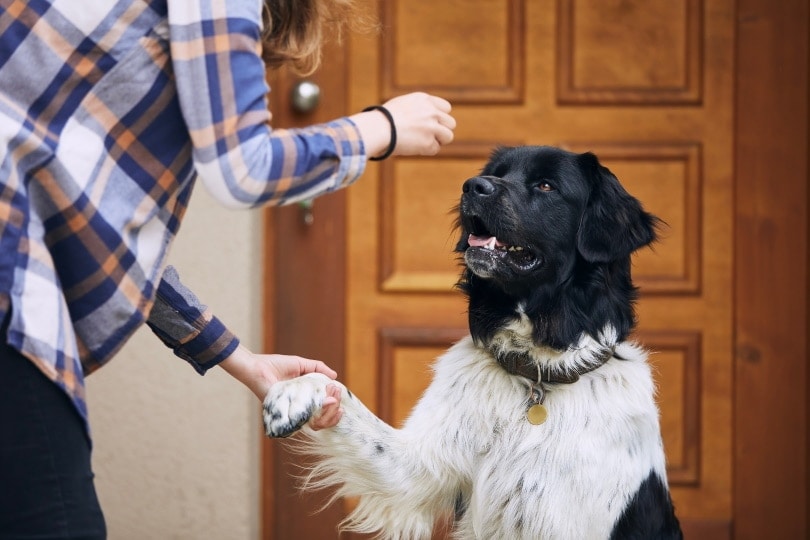
Sometimes, inactivity can be the spark for dog aggression. A cat sprinting by can be just the thing to put their instincts in the driver’s seat. A long walk and a full belly will ensure your dog doesn’t have enough fuel in the tank to chase your kitty. You may also find your pup is more tolerant of your cat if they’re in a playful mood.
Of course, the energy needs of breeds vary. Some dogs, like Border Collies, always seem to be on the move. Others, such as Great Danes, are easygoing and take things in stride. We suggest monitoring your pup’s energy in relation to their activity to strike the right balance.
5. Determine What's Behind the Unwanted Behavior
You can save yourself a lot of frustration by determining what’s behind your dog’s aggression. Several things can cause a dog to snap. We discussed fear, but another reason includes illness. Your pup may not want to play with your kitty if they don’t feel well. The same thing applies to a sleepy pet or one that is stressed. Some canines are also possessive of their food and toys.
Look for a pattern to the unwanted behavior. Then, take steps to avoid recreating the situation. If you can identify the trigger, you may go a long way toward restoring peace in your household.
6. Learn to Read Your Pet's Body Language
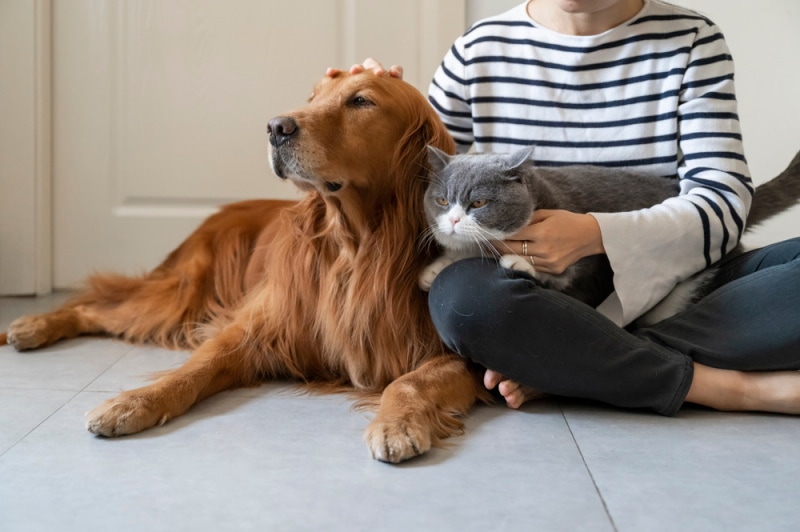
It’ll help keep things under control if you can spot the warning signs before the situation gets heated. Cats and dogs usually signal their displeasure before attacking. It’s an excellent way to avoid a fight, which can lead to injury or worse.
Hissing, growling, and spitting are obvious signs that a cat is irritated and close to fighting. Look for other red flags in both animals, such as ruffled back fur and ears flattened against their heads. If you notice these warnings, follow the next item on our list.
7. Redirect the Unwanted Behavior
An excellent way to avoid a confrontation is to redirect the animals’ attention. A loud noise, especially an unusual one, will turn their sights to the strange occurrence and not the fight at hand. We don’t recommend yelling or scolding your pets. The point is to take their minds off what’s going on between them. You can even make it something positive, like shaking a bag of treats.
8. Reinforce the Leave-It Command
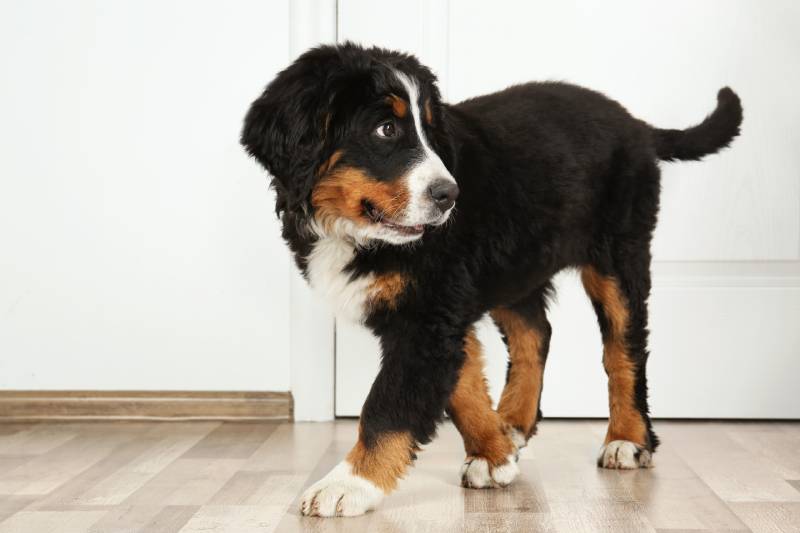
The chances are you’ve taught your pup commands like “leave it” or “no.” You can think of them as all-purpose directives. Sure, they’re helpful to keep your dog from chewing a shoe. However, they can also work when it comes to curbing signs of aggression toward your cat. Your canine learns they must stop doing something when they hear the order. You can extend its use to quit bothering your kitty.
9. Don't Leave the Pets Alone Unsupervised
If you are not entirely confident your pets will get along, we strongly urge you not to leave them alone unsupervised. That’s particularly true if there is a significant size or age difference between the two. It’s also a concern if your cat isn’t declawed. Those nails are formidable weapons for any animal on the receiving end. We recommend separating your pets at feeding time as well.
10. Enlist the Help of a Trainer
If nothing seems to work, there’s no shame in consulting an animal trainer. Sometimes, the presence of a stranger can make your dog pay attention to their direction. The trainer may recommend other techniques, such as desensitization or response substitution, to get your pup used to your cat gradually to make the lesson stick.
A dog trainer can also provide additional tips for ways you should act in response to canine aggression toward your cat. Often, it’s not just the message to change the unwanted behavior but also how it’s delivered.
Conclusion
We understand how frustrating it can be if your pets don’t get along. You undoubtedly want a peaceful household without the threat of a fight. Fortunately, if you are looking for tips on how to stop dog aggression towards cats, there are several things you can do to turn the situation around to something more favorable. Patience is paramount. Your pup needs time to learn what’s expected of them, whether it is actions you take or those made by a trainer.
See Also:
Sources
Featured Image Credit: Reshetnikov_art, Shutterstock
Get Hepper In Your Inbox


Pet care tips from our vets and experts, straight to your inbox.
You may opt-out at any time. View our Privacy Policy for more information.

Chris is an experienced pet writer specializing in science topics, with a particular passion for health and the environment. She has been a writer for over 15 years and lives with her husband and three cats in Michigan.
Beyond writing about cats and dogs, Chris loves to learn about wine. She has WSET 1 and 2 certifications and is currently pursuing her Certified Wine Specialist Award (CSW).
Join the conversation
Ask a question, share your story, or send private feedback.