Hepper blog

Search our database of over 9,984 posts with up-to-date information from our experts and veterinarians.

Hepper is reader-supported. When you buy via links on our site, we may earn an affiliate commission at no cost to you. Learn more.

Are Pugs Hypoallergenic? Vet-Reviewed Dog Allergy Facts

By Nicole Cosgrove · Reviewed & fact-checked by Dr. Amanda CharlesVet Approved
Dr. Amanda Charles
Reviewed & Fact-Checked byDr. Amanda CharlesVeterinarian
Dr. Amanda Charles qualified as a vet in 2002 after graduating from the University of Liverpool and has been in small animal practice ever since. She has a postgraduate Certificate in Dermatology. She loves empowering pet parents by giving them up-to-date and accurate information and thrives off the variety that being a vet brings.Outside of work, Amanda has two very active young sons and an equally active Cocker Spaniel and Ragdoll cat, all of whom keep her very busy!View authorThe information is current and up-to-date in accordance with the latest veterinarian research. Read about our vets
Share
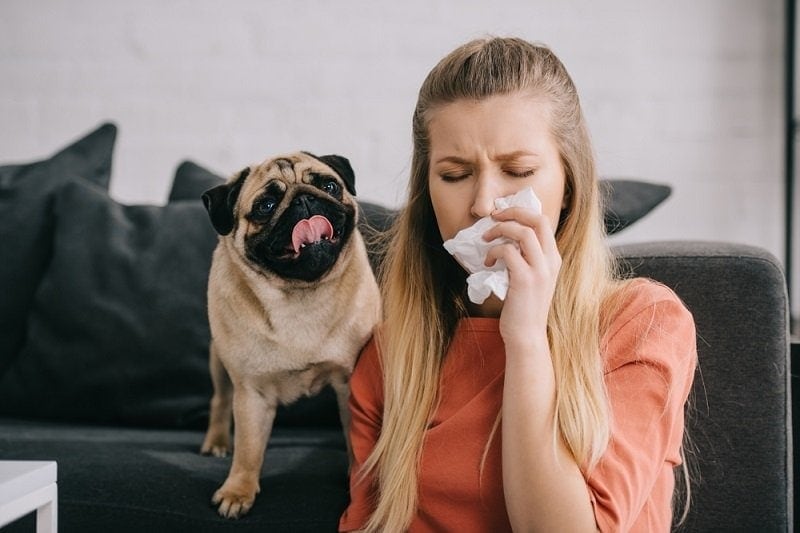
blonde girl allergic to dog sneezing in tissue near adorable pug_lightfield studios_shutterstock

Pugs are adorable little pups that make excellent pets for almost everyone. With their laidback temperament and entertaining personalities, you’re sure to have a blast with one of these dogs. However, if you’ve been considering adopting a Pug but are allergic to dogs, you need to know whether they are hypoallergenic or not.

Technically, no dog is 100% hypoallergenic; it’s just that some shed less hair and produce less dander than others, so they may be less allergenic for some people.1 Unfortunately, the Pug is not hypoallergenic or even less allergenic. So, if you have intense allergies, the Pug—or in fact, any dog—might not be your best option. However, if your allergies are fairly mild, there are a few things that you can do to reduce your allergy symptoms around Pugs.

Dogs & Allergies

What causes a person to be allergic to a dog in the first place? Many think that it’s a dog’s hair, but the real culprit is proteins found in dog dander, saliva, and urine.

Dander is microscopic shed dead skin cells. As these are small and lightweight, they can remain in the air for a long time and can easily stick to furniture, bedding, and other household items. Dander is also attached to dog hair, so dogs that shed a lot will leave more dander in their wake (hence why people often believe that it’s the hair itself that causes allergies).

Saliva seems an odd thing for one to be allergic to, but your pet’s saliva holds certain proteins that can trigger your immune system.2 So, when an animal grooms themselves or licks other objects, the saliva will dry and can then become airborne, causing a reaction when allergic people inhale it. Add in the fact that dogs are often keen on licking their humans and Pugs can be prone to drooling, and you could end up with saliva all over you, making things worse.
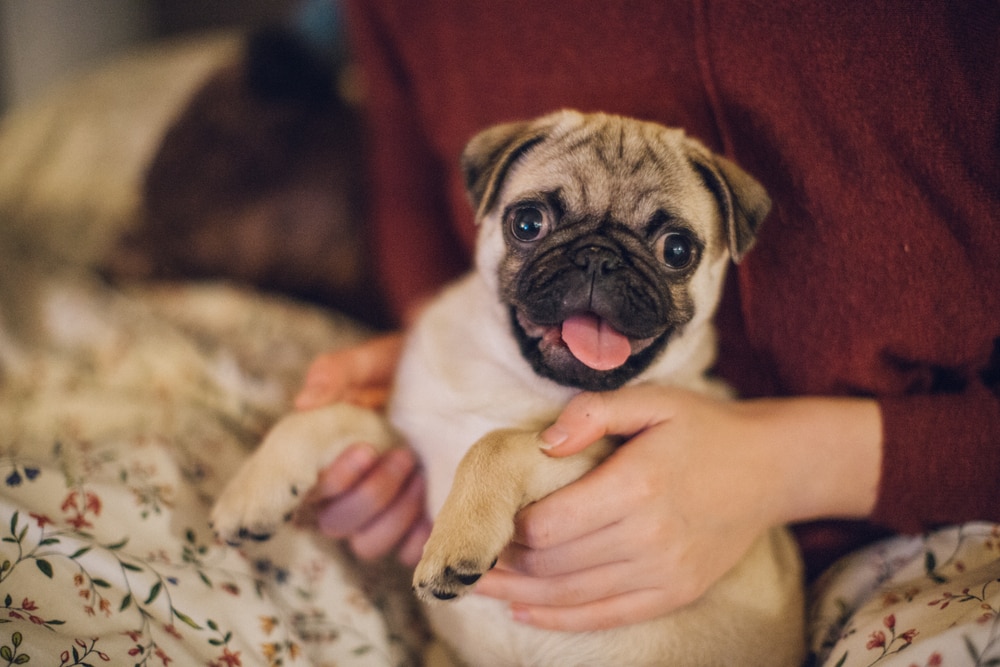
Happy pug puppy on lap
Image Credit by: wriemis, Shutterstock

Why Pugs Aren’t Hypoallergenic

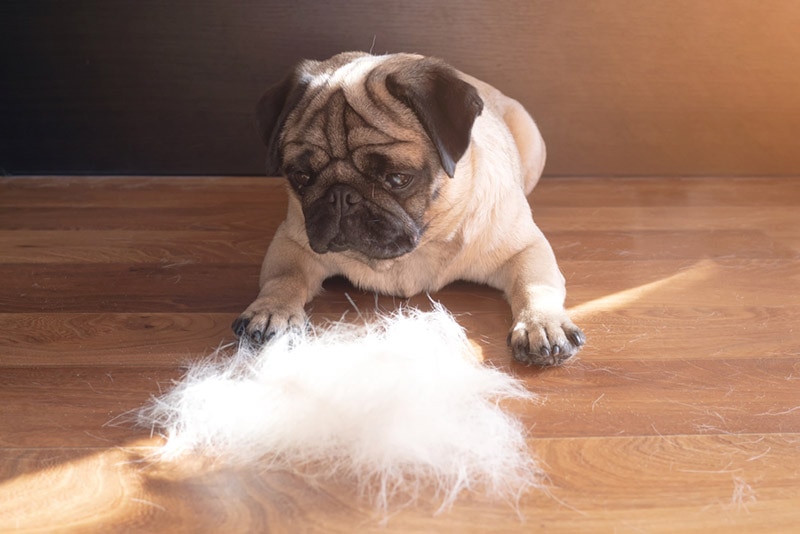
Pugs have short coats, which may lead one to think that they wouldn’t shed much, but unfortunately, a short coat doesn’t necessarily equate to a dog that sheds less. In fact, Pugs are pretty moderate shedders that shed all year round. Admittedly, due to their coat being smooth, they shed less than some other breeds (like Golden Retrievers or German Shepherds). But these small pups shed more than you think! That equals more dander and allergens in your home, which leads to more allergy symptoms.

How Can I Reduce Allergy Symptoms?

If you do have a Pug and mild allergies, there are ways you can ease your symptoms.

  • Vacuum often! Since Pugs shed so much, you’ll need to vacuum frequently (or invest in a good robot vacuum to do it for you).
  • Train your dog not to get on the furniture. Keeping your pet off your furniture won’t keep dog hair away entirely, but it will go a long way in reducing the amount of dog hair around you when you sit on the sofa. Get your pup a cozy dog bed, and place it next to furniture so they don't feel left out.
  • Get furniture with fabric that helps repel dog hair. Fabrics like polyester and velvet will attract dog hair, but other fabrics, such as leather, denim, and satin, will help keep it away. (You might want to get clothes in similar fabrics to reduce dog hair on you too.)
  • Brush your Pug often! Brushing your dog at least once a week helps get rid of loose dog hair so it doesn’t end up on you or your furniture. Ideally, this should be done outside by a nonallergic family member.
  • Keep your Pug out of the bedroom, and cover vents in your home with a cheesecloth. Dog hair and dander can travel through your venting system, but putting cheesecloth over vents in bedrooms or other rooms should help keep dog hair from getting in that way.
  • Get an air purifier, as it can help reduce indoor airborne allergens, such as dander.
  • Wash after your dog licks you. If you’re allergic to a dog’s saliva, one excellent way to reduce allergy symptoms is by washing your hands or face immediately after your dog licks you.
  • Change clothes after playing or cuddling with your Pug. Any clothes you wear while hanging out with your dog are sure to be covered in hair, so changing out of them into clean clothes right away can be helpful.
  • Speak to your doctor about your allergy to see if there are any medications that can help you manage your symptoms
cheerful middle aged male vet holding a pug at veterinary clinic
Image Credit by: Friends Stock, Shutterstock

Hypoallergenic Alternatives

If you think your allergies won’t be able to handle a Pug, there are several other small dogs you might consider that may be less allergenic! Some dogs shed less and produce less dander, which might be easier on your allergies. However, it’s important to note there are different types of allergen proteins and different dogs produce different amounts, even if they are all from the same breed. Allergy sufferers react to different proteins, and recent research has shown that people who have dog allergies may not be allergic to all dogs. It’s not straightforward to predict what will trigger allergies!

Breeds that are considered less allergenic for many people include:

Conclusion

Unfortunately, Pugs are not hypoallergenic and are instead rather prolific shedders. All that shedding means there’s more dog hair and dander flying around your home, which can induce allergy symptoms. Plus, some people are allergic to dog saliva, so that should be taken into account.

However, there are some ways you can ease allergy symptoms (if your allergies aren’t terribly bad). It’s important to consider your own health and how bad your dog allergies are before bringing a new dog into your family and home and committing to their lifelong care. Choosing a less allergenic breed with a low shedding or low dander coat may be a good option, but no dog breed is completely hypoallergenic.

Sources

Featured Image Credit: Lightfield, Shutterstock

Get Hepper In Your Inbox

Pet care tips from our vets and experts, straight to your inbox.

List

Select all that apply.

You may opt-out at any time. View our Privacy Policy for more information.

Nicole Cosgrove
Authored by

Nicole Cosgrove

Join the conversation

Ask a question, share your story, or send private feedback.
Rate this post
Required to post. Only our editors see your rating.
Who should see this?

A human reviews every comment before it appears. Your email is never published.

Picked to go with this article

Are Corgis Hypoallergenic? Vet-Reviewed Facts & FAQ

Are Corgis Hypoallergenic? Vet-Reviewed Facts & FAQ

Life is tough if you’re a dog lover and an allergy sufferer. It can be even harder if you’re a dog lover and someone else in your family is an allergy sufferer…

Quincy Miller
By Quincy Miller ·
How Much Do Pugs Shed? Breed Health & Grooming Tips

How Much Do Pugs Shed? Breed Health & Grooming Tips

The beloved Pug is a companion many dog lovers dream of making part of their family. These little dogs are comical, even-tempered companions that love spending…

Melissa Gunter
By Melissa Gunter ·
Are Pitbulls Hypoallergenic? What You Need to Know!

Are Pitbulls Hypoallergenic? What You Need to Know!

Although Pitbulls are short-haired, Pitbulls are not considered hypoallergenic and shed quite a bit. This shedding causes a lot of irritation, runny noses, and…

Nicole Cosgrove
By Nicole Cosgrove ·
23 Worst Dog Breeds for Allergies (With Info & Pictures)

23 Worst Dog Breeds for Allergies (With Info & Pictures)

If you love dogs but have allergies, then you might feel like it’s an impossible dream to become a dog owner. That’s not the case at all! There are plenty of d…

Nicole Cosgrove
By Nicole Cosgrove ·

Keep reading

More stories you might like

Are Maltese Hypoallergenic? Pet Allergies Explained

If you’re allergic to dogs, the Maltese might be recommended to you as a hypoallergenic pet. However, while this breed does shed less than most other breeds, t…

Nicole Cosgrove
By Nicole Cosgrove ·
Are Maltese Hypoallergenic? Pet Allergies Explained

Are Shih Tzus Hypoallergenic? 6 Tips to Reduce Shih Tzu Dander

The Shih Tzu is a toy dog that makes a great pet, especially if you live in a small apartment. However, the enclosed space can make your allergies worse. If yo…

Nicole Cosgrove
By Nicole Cosgrove ·
Are Shih Tzus Hypoallergenic? 6 Tips to Reduce Shih Tzu Dander

Are Chihuahuas Hypoallergenic? Dealing With Allergens & FAQ

Not many people can resist the charm of the Chihuahua. Unfortunately, not everyone has the luxury of adopting a dog simply because they have fallen in love wit…

Nicole Cosgrove
By Nicole Cosgrove ·
Are Chihuahuas Hypoallergenic? Dealing With Allergens & FAQ

Are Bulldogs Hypoallergenic? Vet-Verified Recommended Breeds & FAQ

Affectionate, loyal, and known for their stocky physique and wrinkly snout, the Bulldog has long since been a favorite for dog-lovers around the world. These b…

Nicole Cosgrove
By Nicole Cosgrove ·
Are Bulldogs Hypoallergenic? Vet-Verified Recommended Breeds & FAQ

Are Beagles Hypoallergenic? Breed Facts & FAQ

Beagles are the eighth most popular dog breed in America,1 and since they are so common, many people might conclude that Beagles are also hypoallergenic. Unfor…

Nicole Cosgrove
By Nicole Cosgrove ·
Are Beagles Hypoallergenic? Breed Facts & FAQ

Are Poodles Hypoallergenic? What You Need to Know

Let us cut right to the chase: are Poodles hypoallergenic? While Poodles shed less than other dogs, they are not actually hypoallergenic. Hypoallergenic dogs a…

Kristin Hitchcock
By Kristin Hitchcock ·
Are Poodles Hypoallergenic? What You Need to Know

Are Havanese Dogs Hypoallergenic? What You Need to Know

The Havanese is an adorable medium-sized dog that is popular for their floppy ears, shaggy coat, and docile demeanor. Ranked as the 25th most coveted breed in…

Nicole Cosgrove
By Nicole Cosgrove ·
Are Havanese Dogs Hypoallergenic? What You Need to Know

Are Huskies Hypoallergenic? What You Need to Know

No matter what definition you provide to the word “hypoallergenic,” Huskies are not the best choice for those with dog allergies—in most cases. The concept of…

Kristin Hitchcock
By Kristin Hitchcock ·
Are Huskies Hypoallergenic? What You Need to Know