Hepper is reader-supported. When you buy via links on our site, we may earn an affiliate commission at no cost to you. Learn more.
My Cat Ate a Rubber Band: What Should I Do? (Vet Answer)


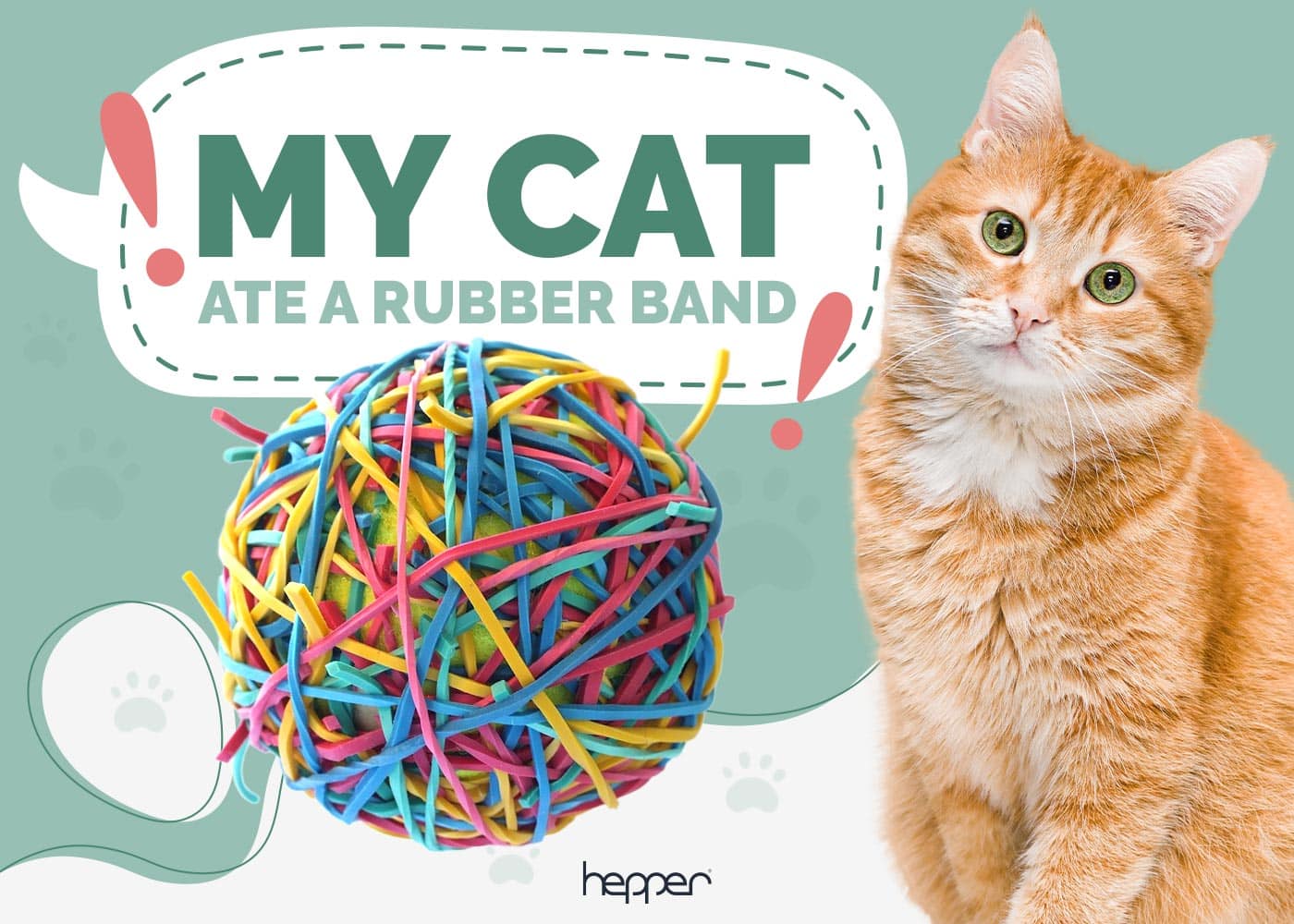
If your cat ate a rubber band, keep reading. Swallowing a rubber band can cause severe problems for cats, such as gastrointestinal obstruction. In some cases, when cats chew rubber bands, they pass them through their feces, without any issues. However, in other cases, rubber bands cause obstructions that can have fatal consequences for your kitty.
Therefore, if your cat has eaten a rubber band, you should consult your vet immediately. They will assess the situation and decide the best course of action. Rubber bands may pass through your cat’s digestive system or become lodged along the way.

How Do I Know If My Cat Has Swallowed a Rubber Band?
If your cat swallowed a rubber band and it got stuck in the intestine, your pet may show the following clinical signs:
- Vomiting
- Retching
- Diarrhea
- Constipation
- Production of small amounts of feces in a short time
- Lack of appetite
- Abdominal pain
- Behavioral changes, such as biting, growling, or hissing when picked up or handled around the abdomen
- Lethargy
- Oversleeping
- Changes in their drinking behavior
If you have seen or suspect that your cat has swallowed a rubber band or any other foreign body and you notice these clinical signs, take them to the vet immediately. Intestinal obstruction is a medical emergency, which can be remedied surgically. However, these clinical signs can also appear in other medical conditions, not only if your cat swallows a foreign body.
If your cat ate a rubber band but it didn’t block their intestines, you will probably see the item when they defecate or vomit. In this case, there are usually no additional clinical signs.
What to Do If Your Cat Ate a Rubber Band
If your cat has eaten a rubber band, speak to your vet immediately. They may recommend bringing in your cat to induce vomiting or to perform imaging tests. Your vet may also ask you to monitor their poop for a few days. You should observe if your cat vomits because in some cases, the rubber band won't reach the intestine and instead, stay in your cat's stomach. At some point, your cat may vomit it up, or it may get lodged.
We know that monitoring your cat's poop or vomit is not a pleasant activity, but it is necessary if your pet has eaten a rubber band.
Rubber bands cannot be broken down by your cat's intestines. Therefore, if they don’t get lodged and simply pass through the digestive tract along with the poop, you should be able to notice it. If you see a rubber band in your cat's poop, it is good news because you will know that the danger has passed. However, your cat may have swallowed more than one, so this is not always a reason to forget about the problem.
Since it cannot be broken down in the intestine, rubber can stay in your cat's digestive tract for long periods of time until it causes an obstruction.
Is Playing With Rubber Bands Safe for Cats?
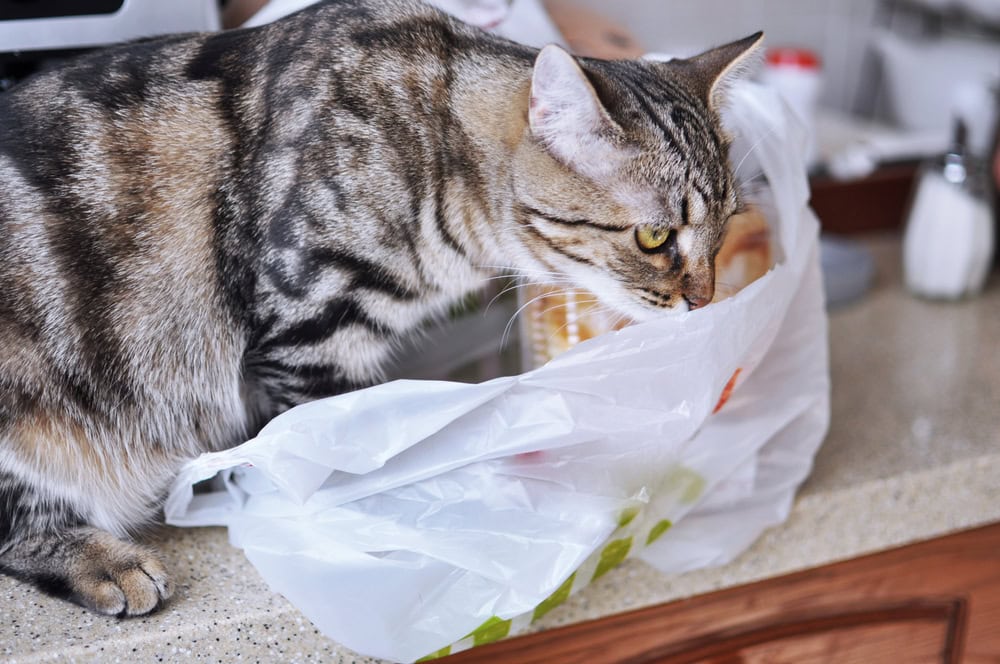
Many cats are not very interested in the special toys we buy for them and prefer to play with various household items, such as aluminum foil, paper, plastic bags, yarn, strings, rubber bands, or hair ties. It is not recommended to let your cat play with any of these items. Once swallowed, they can cause severe digestive problems, such as intestinal obstruction, which is a medical emergency.
Cat toys are designed in such a way that pets can play safely with them. However, no matter what toy you choose for your cat, it is recommended to supervise them when playing to avoid possible problems that may arise—your cat can choke on a ball, swallow inedible items, poke or scratch their eyes or mouth, etc.
Also, keep the rubber bands away from your cat to make sure they don't steal them when you're not paying attention.
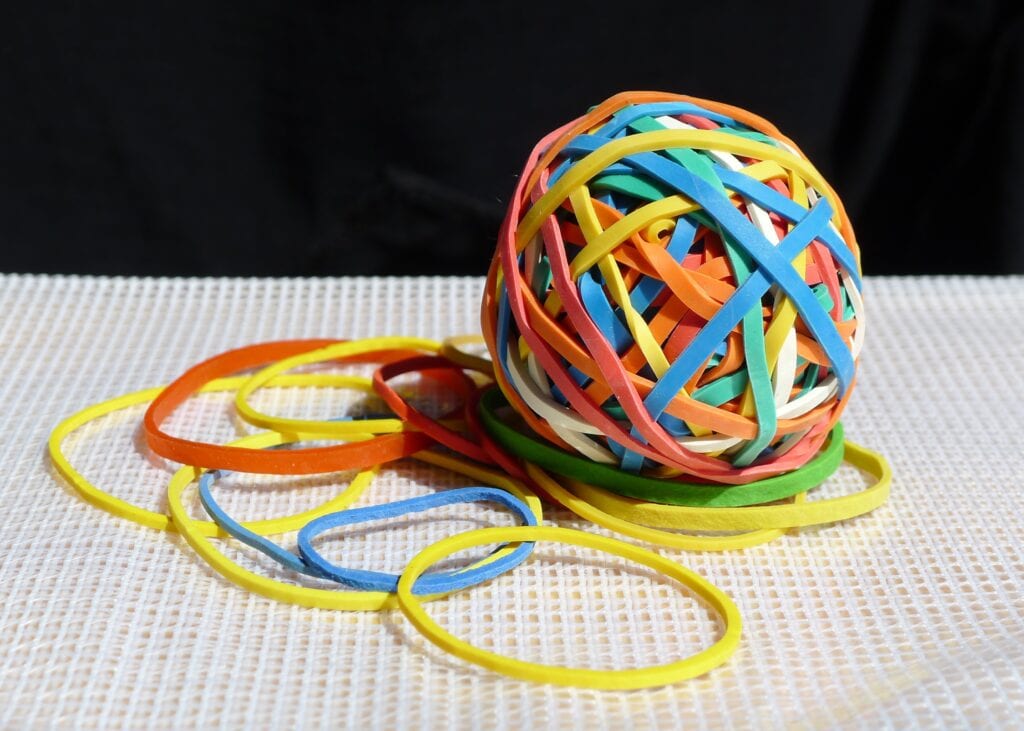
Why Are Rubber Bands Dangerous for Cats?
Rubber bands may seem like harmless items if ingested, but nothing could be further from the truth. Swallowing a rubber band can cause complications like:
All these complications can put your cat's life in danger if you don't act fast.
How Long Can a Cat Live With Intestinal Blockage?
Intestinal blockages are comparable to clogged pipes. Food and waste cannot move through the digestive tract due to the obstruction, affecting digestion and intestinal motility. Cats can have some bowl and gas movement with partial obstruction, but if the blocked item does not pass, it will eventually cause damage to the intestines.
If the blockage is complete, your cat will deteriorate rapidly. If the intestines perforate, your cat will develop peritonitis and sepsis, which are life-threatening complications. Intestine entanglement can make cats sick very quickly, in a very short time. The sooner the condition is diagnosed, the greater the chances of recovery.
How Will a Vet Treat My Cat After Eating a Rubber Band?
Once you have arrived with your cat at the clinic, the vet will examine your pet and discuss their medical history (to rule out other diseases).
Your vet may recommend administering an injection to your cat to induce vomiting. In a 2023 study, half of the cats that had emesis attempted vomited some or all of the foreign object, and the most common object that the cats ate was a rubber band.
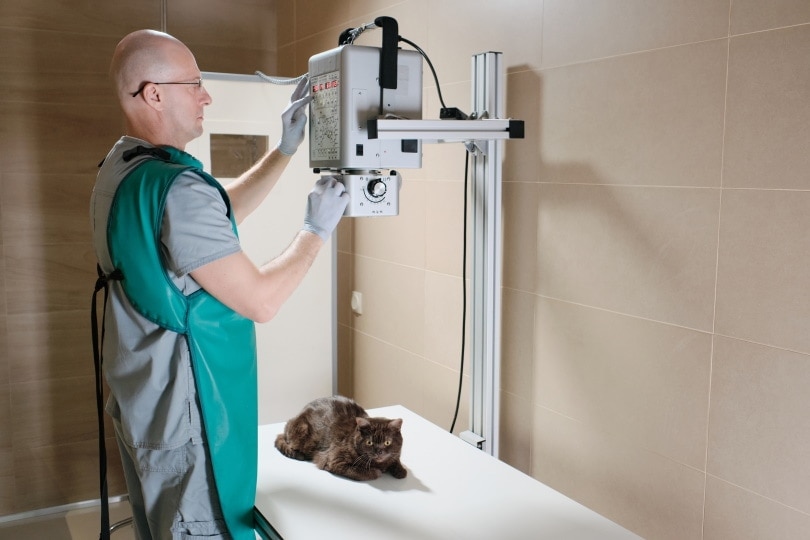
If the vet suspects a gastrointestinal obstruction, the next step is to order imaging tests, such as abdominal ultrasound or X-rays, to look for foreign bodies or other abnormalities. A gastrointestinal study with contrast may be needed to better visualize the obstruction. Your cat will need to ingest a contrast agent that appears bright white on X-rays. A set of X-rays will be done at different time intervals to track the movement of the contrast as the substance moves through the gastrointestinal tract of your cat. This study will enable the vet to visualize the flow of the gastrointestinal tract and determine the blockage location.
In some cases, your vet may recommend performing endoscopy, which enables visualization of the foreign body and removal. Other tests your vet can recommend are blood work and urinalysis. These will help your vet evaluate your cat’s blood cells and organ function. In other words, the vet will evaluate your cat’s overall health condition and determine the best treatment option.
Final Thoughts
If your cat has swallowed a rubber band, contact your vet. Do not try to make your cat vomit because you risk poisoning them or irritating their esophagus and stomach.
Also, contact your veterinarian if your cat shows the following signs after swallowing a rubber band: lethargy, vomiting, diarrhea, constipation, abdominal pain, or lack of appetite. All of these can be signs of gastrointestinal obstruction that can have life-threatening consequences for your cat.
Featured Image Credit: Nitavin, Shutterstock
Get Hepper In Your Inbox


Pet care tips from our vets and experts, straight to your inbox.
You may opt-out at any time. View our Privacy Policy for more information.
Iulia Mihai is a veterinarian with more than 13 years of experience in pet pathology, laboratory, and cancer. She studied at the University of Agronomical Sciences and Veterinary Medicine of Bucharest, Romania Iulia earned a master’s degree in equine and pet pathology and studied epithelial cancer for her Ph.D. Dr. Mihai's passions for internal medicine and parasitology inspired her to volunteer at the faculty’s clinic in her third year of college. She has worked in a couple of veterinary clinics over the years as an internal medicine specialist, and loves to write and educate pet parents about pet nutrition, behavior, and diseases.
Iulia is a passionate veterinarian with a strong affinity for veterinary parasitology, internal medicine, and laboratory. She is excited to share her experience and knowledge with pet owners around the world through her writing and hopes to educate people on pet nutrition, diseases, and behavior.
Education
Iulia graduated from the University of Agronomical Sciences and Veterinary Medicine, Bucharest, Romania, in 2012 and has a Master’s degree in Small Animals and Equines Pathology and is certified in HAACP food safety system implementation. Iulia started her Ph.D. in epithelial cancer in dogs and cats in 2013. Her research is published in national and international veterinary journals.
Experience
Dr. Iulia has been a veterinarian for more than 14 years. She is experienced in animal pathology and laboratory and has experience with exotic animals, such as pet rats and ferrets. She also has skills in the field of clinical pathology, laboratory, microscopy, cancer, and imaging.
Join the conversation
Ask a question, share your story, or send private feedback.