Hepper is reader-supported. When you buy via links on our site, we may earn an affiliate commission at no cost to you. Learn more.
How to Tell if a Cat Is Choking & What to Do (Vet-Approved)



Choking is a serious event that requires immediate attention to save a cat’s life. However, it can be difficult to determine if a cat is choking because they use different signals and body language. While humans have an official choking sign, cats don’t, and they can also be good at hiding pain.
Here’s how you can tell if a cat’s choking and what you should do after you’ve determined that it’s choking.

The 5 Signs Your Cat Is Choking
1. Check for the Right Signs of Choking
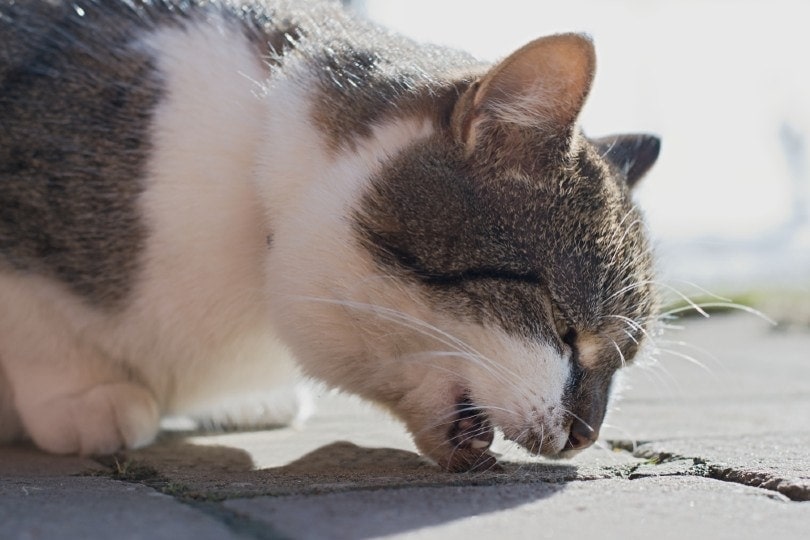
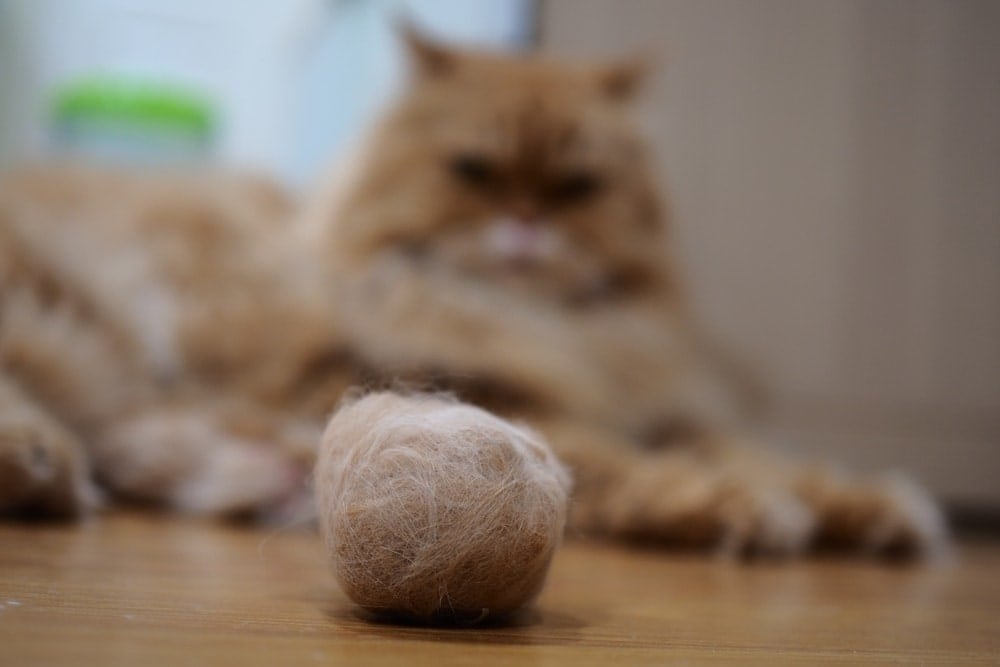
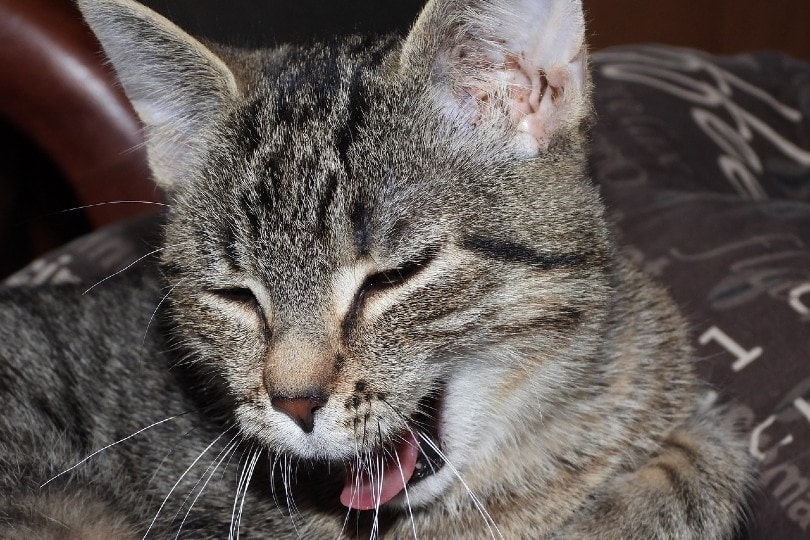
Sometimes, it can be hard to tell if your cat’s choking or gagging because it is common for cats to be coughing up a hairball.
When your cat’s gagging or coughing up a hairball, it’ll be crouched low and have its neck stretched out. It’ll also make consistent heaving sounds, and you’ll hear air passing through its windpipe.
Conversely, cats who are choking will show these signs:
2. Safely Restrain Your Cat
If you’ve determined that your cat is choking, quickly restrain it by carefully wrapping a towel or small blanket around it. This will protect you from getting clawed by your cat as you do further inspections.

3. Check Your Cat’s Mouth for Obstructions
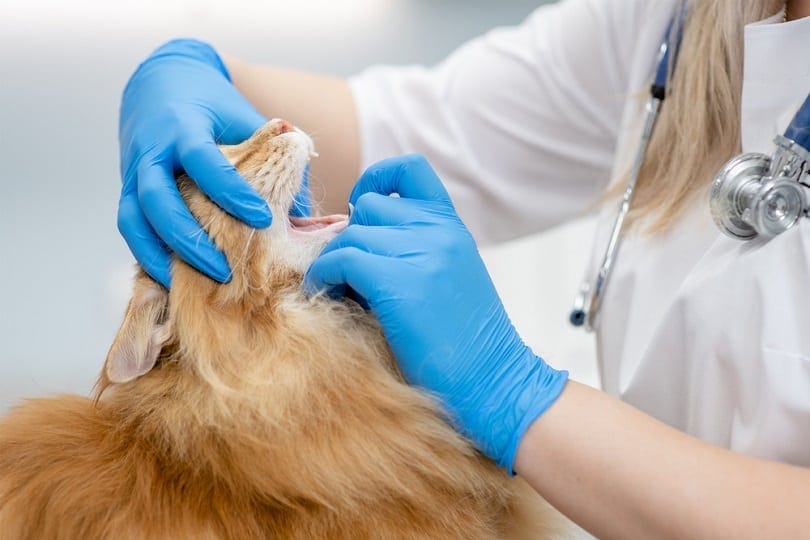
Open your cat’s mouth to see if you can see what’s obstructing its airway. If it is difficult for you to see, use a flashlight. You can also sweep the mouth with your finger to determine if you can feel any objects in your cat’s mouth. Do this gently because you don’t want to accidentally lodge any obstructions down the throat.
If you can see an object at the back of the throat that looks easy to retrieve, use a pair of tweezers to quickly extract it. Never use your fingers because you can end up pushing the object further down the throat.
If you see a piece of string or cord, start pulling at it gently. If there is any resistance, don’t try to pull it out. It can be anchored on something in the body, and you don’t want to cause any potential bodily damage.
4. Start Driving to the Nearest Veterinarian or Animal Emergency Hospital
If you can’t remove the object or see what’s obstructing your cat’s throat, call your veterinarian and start driving to the nearest veterinarian’s office or animal emergency hospital right away. Call in advance to alert them of the situation.
It is best to drive to the hospital with another person. While one person is driving, the other person can continue to monitor the cat’s condition.
5. Perform the Heimlich Maneuver, if Necessary
If your cat has collapsed, you can attempt a variation of the Heimlich maneuver for cats. It’s best to confirm this is the next right step by calling your vet from home or the car.
Place your cat in your lap with its back braced against your abdomen. Then, make a fist with your hand and position it in the area just underneath the ribcage. It should be in the soft area right above the abdomen. And place your opposite hand over the ball of your fist.
In a controlled manner, push your fist in and then up towards the ribcage several times. Check your cat’s mouth to see if the obstruction came up. If you don’t see anything, try the Heimlich maneuver again several times.
If the obstruction comes up, carefully remove it from your cat’s mouth. If your cat still isn’t breathing after the object has been removed, close your cat’s mouth and gently breathe into its nose to help it start breathing again.
You should still take your cat to the veterinarian after it recovers from the Heimlich maneuver. Your veterinarian can check to make sure that your cat’s in stable condition and if it has any bruised or fractured ribs from the Heimlich maneuver.

At the Veterinarian’s Office
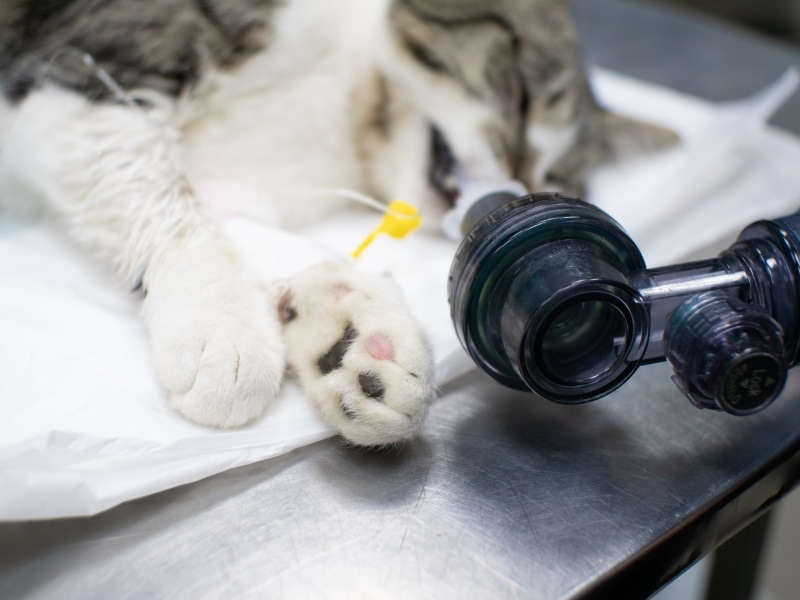
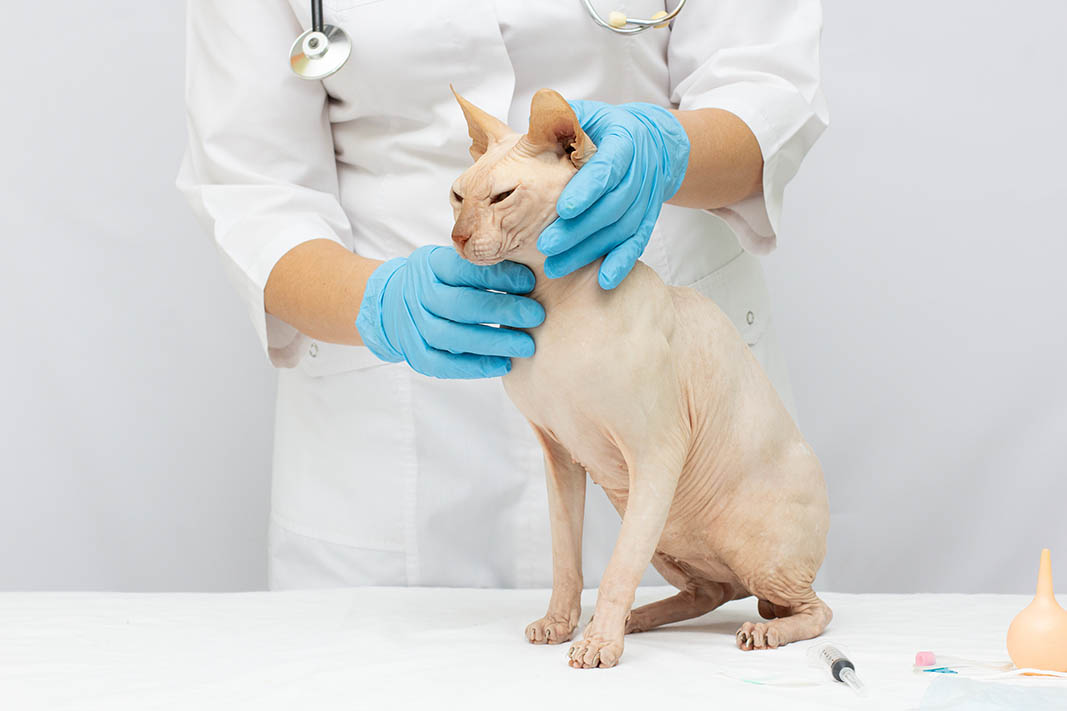
The veterinarian will quickly examine your cat and attempt to expertly remove any objects in the throat and mouth. Depending on the severity of your cat’s condition, the veterinarian may sedate your cat and perform surgery to extract the obstruction.
In the most severe cases, your cat may need an emergency tracheostomy. This procedure entails the veterinarian surgically creating an opening through the neck into the trachea to allow direct access to the airway and delivery of oxygen.
Once the object has been removed, veterinary staff will have to monitor your cat’s condition to make sure it’s stable and recovered from the lack of oxygen.
How to Prevent Your Cat From Choking
The last thing you want is a repeat of the same incident, so make sure to take the proper steps to prevent your cat from getting into situations where they can choke on something.
First, remove easy access to objects that can easily slip into your cat’s mouth. Safely store these objects in a box with a secure lid or a heavy drawer.
Items such as pompoms or buttons can seem like fun toys that your cat would want to play with, but they can also be choking hazards. Make sure to store these objects in containers with secure lids to prevent your cat from getting to them.
You’ll also want to make sure that any treats or food is a safe size for your cat to swallow without choking. Certain foods, including nuts and berries, can be choking hazards because of their size. In general, cats shouldn’t eat nuts anyway because they can be difficult to digest.
Final Thoughts
Seeing your cat choking can feel scary, but there are active steps that you can take to save its life. Be quick, stay calm, and do your best to get your pet to the nearest hospital as fast as possible.
The best way to protect your cat from choking is to remove or safely store away small objects that can get lodged in their throats. Make a safety plan and review it from time to time, so that if an incident occurs, you’ll know exactly what you need to do.
Related Read: Why Is My Cat Gagging? Vet-Reviewed Reasons
Featured Image Credit: HelgaKa, Pixabay
Get Hepper In Your Inbox


Pet care tips from our vets and experts, straight to your inbox.
You may opt-out at any time. View our Privacy Policy for more information.
Nicole is a lover of animals of all sizes but is especially fascinated with the feline variety. She’s the proud mom of Baby, a Burmese, and works every day so he can relax in the sunshine or by the fire. She’s always had a cat in her home and has spent countless days with others, observing behaviors and softening up even the grouchiest of the lot. Nicole wants to share her kitty expertise with you so you and your cat can live happy, healthy, and care-free.
Join the conversation
Ask a question, share your story, or send private feedback.