Hepper is reader-supported. When you buy via links on our site, we may earn an affiliate commission at no cost to you. Learn more.
My Dog Ate a Chocolate Chip Cookie: Here's What to Do (Vet Answer)


In this article
As pet parents, we know that chocolate is unsafe for our animals. The dangers are primarily the type of chocolate and the amount consumed for the size of your dog. What happens if your dog eats a chocolate chip cookie?
It’s likely that your dog will be fine, especially if they are a large dog that ate a small cookie, but it ultimately depends on how much chocolate it contained and whether it was dark chocolate. Read on to learn more about chocolate and how it can be harmful to dogs.

The Harm of Chocolate
Chocolate toxicity depends upon the type of chocolate, the amount ingested, and the size of the pet. The main toxic properties in chocolate are theobromine and caffeine, which are found in varying amounts in different types of chocolate. For example, dark chocolate is more toxic to pets than milk chocolate.
If a small amount of milk chocolate is consumed, such as what’s in a Kit Kat bar or a single cookie, there may not be any ill effects noted. That said, milk chocolate also contains sugars and fats that may upset your dog’s GI tract.

Chocolate Toxicity Calculator
You can check to see if your dog has potentially eaten a toxic amount of chocolate by using the Chocolate Toxicity Calculator.
What Happens If My Dog Eats Chocolate?
If a small amount of chocolate is ingested, such as a single chocolate chip cookie, there may not be any side effects noted. Other times, though, your dog may develop vomiting, loose stools, or diarrhea.
Consumed in toxic quantities, dogs may exhibit adverse effects like:
Emergency Contacts
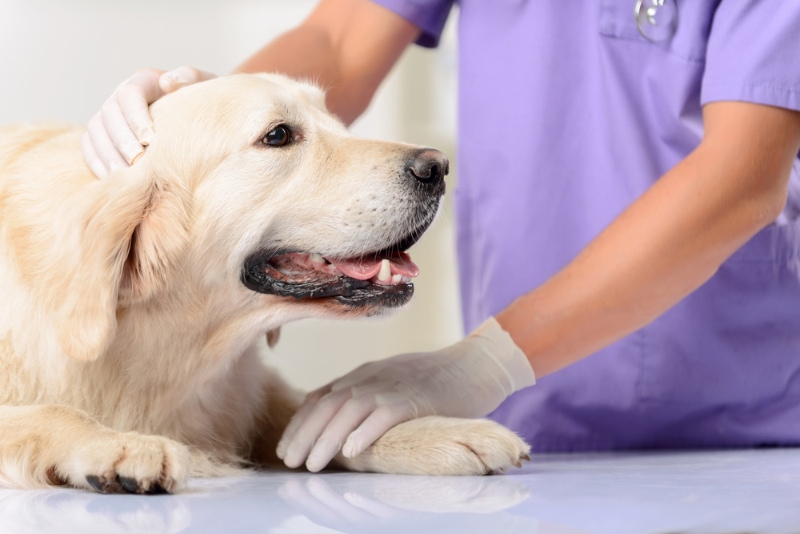
If you are unsure what to do following chocolate ingestion by your dog, contact your nearest emergency veterinarian. They can advise you on the next steps and help you determine whether your dog may have consumed a lethal dose of chocolate.
If you can’t get a hold of your vet or your dog is exhibiting multiple clinical signs, please call the Pet Poison Helpline at (855) 764-7661 or the ASPCA Animal Poison Control at (888) 426-4435. Both agencies have toxicology experts available 24/7 who can advise you on what to do. Consultation fees may apply.
Conclusion
You should always make sure chocolate and chocolate chip cookies are kept out of reach of your dog and out of their diet to avoid a potentially dangerous situation. If your dog eats a cookie and you’ve monitored them for 24 hours and they seem fine, they are likely in the clear.
Still, it is advisable to follow up with your veterinarian as soon as possible to be sure your dog has not suffered any ill effects from the chocolate in the cookie. If any adverse reactions are noted after cookie consumption, an emergency vet visit will be required, as the situation may be life-threatening.
See also:
Featured Image Credit: Juan Luis Muñoz, Pixabay
Get Hepper In Your Inbox


Pet care tips from our vets and experts, straight to your inbox.
You may opt-out at any time. View our Privacy Policy for more information.
Dr. Stacie Grannum, born and raised in Arizona, was inspired to pursue veterinary medicine at the age of five after attempting to care for a baby bird that had fallen from its nest. Although the bird did not survive, the experience ignited her passion for animal care. Determined to become a veterinarian, she worked tirelessly and, in 2014, received her Doctor of Veterinary Medicine degree from Colorado State University.
Today, Dr. Grannum specializes in companion animal health, emphasizing wellness and preventive care. She also has a passion for writing about pet health and is enthusiastic about educating and sharing her expertise with other pet owners.
Dr. Stacie Grannum was born and raised in Arizona, and from the age of five, she knew that she wanted to pursue a career in veterinary medicine. An encounter with a baby bird that fell from its nest changed her life forever. Dr. Grannum diligently cared for it, but despite her attempts to save it, the little bird did not survive. From this devastating loss came her new ambition, which carved the path that Dr. Grannum followed. She worked hard toward that goal and dedicated her time to becoming a veterinarian.
Education
Dr. Grannum earned her Doctor of Veterinary Medicine Degree from Colorado State University in 2014.
Experience
Today, Dr. Grannum's focus is on companion animal health, particularly wellness and preventive medicine. She also enjoys writing about pet health and is eager to share her knowledge with other pet lovers.
Join the conversation
Ask a question, share your story, or send private feedback.