Hepper is reader-supported. When you buy via links on our site, we may earn an affiliate commission at no cost to you. Learn more.
Parti Pomeranian: Pictures, Facts, Origin, & History

In this article
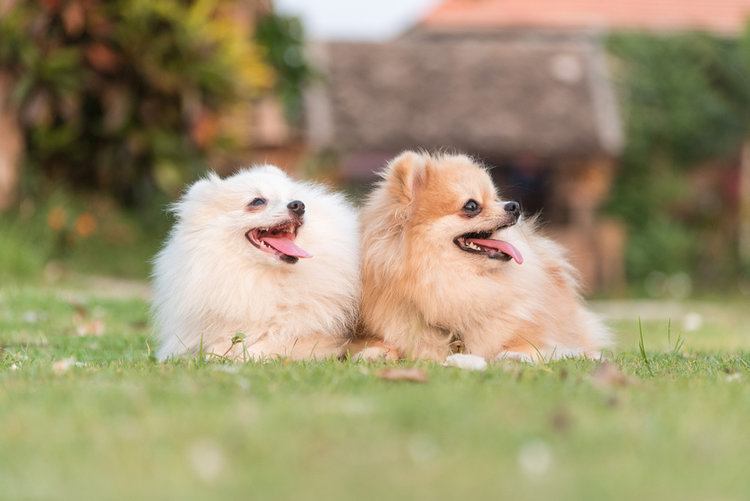
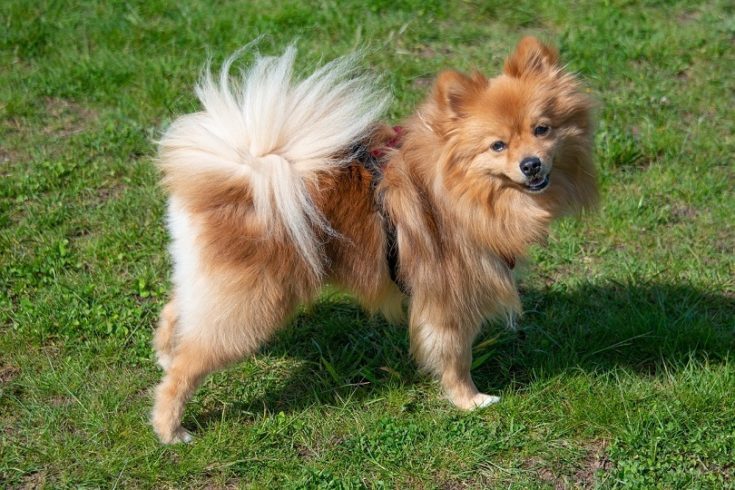
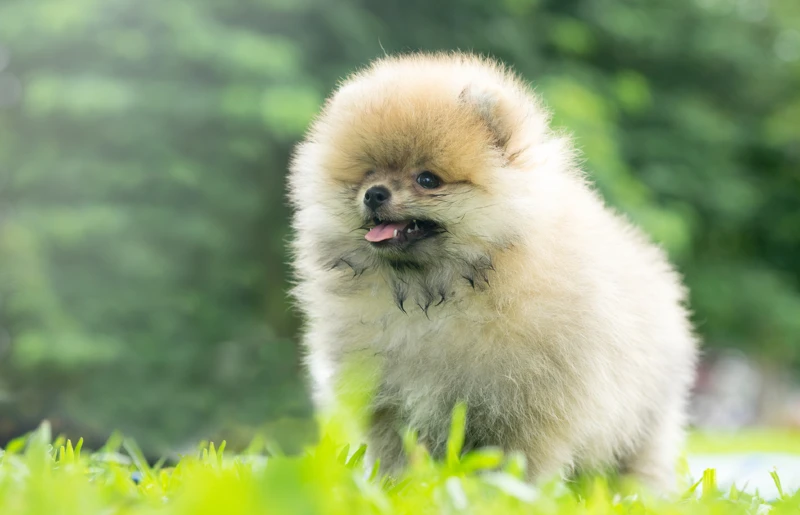
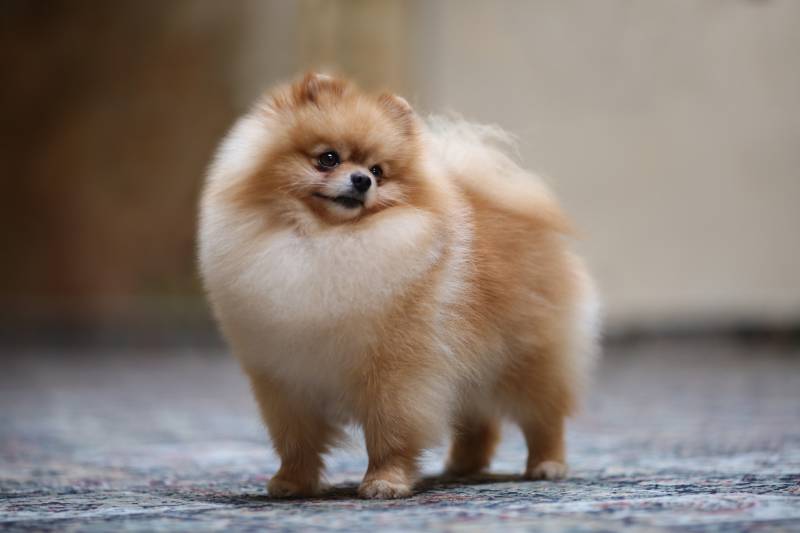
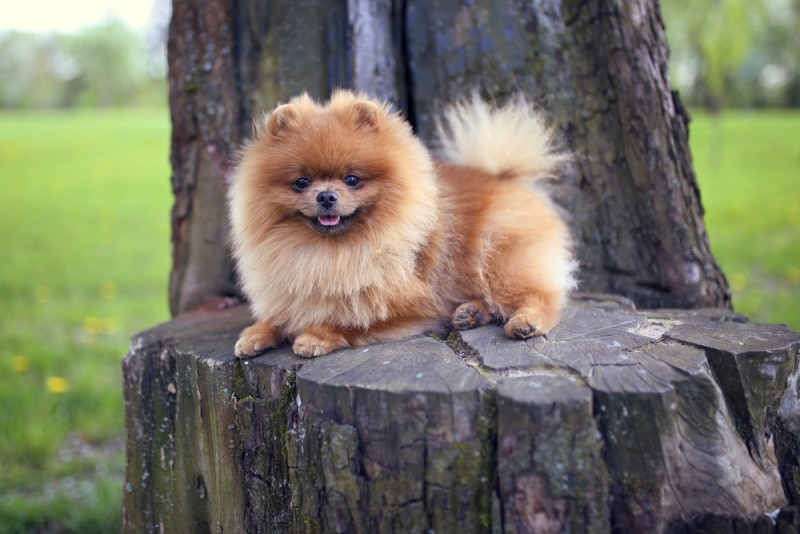
With a mostly white or cream coat with pops of color, the Parti Pomeranian switches up the normal solid-colored pattern most popularly seen in the breed. A true Parti Pomeranian has at least 50% white fur. While they're not considered rare, the Parti pattern isn't as common as a solid color such as black or orange. Personality isn't influenced by color, so any Pomeranian you choose will make a good pet. You can count on the Parti Pomeranian to bring all the life and yips to the party whether they're in many shades of orange, white, black, or lavender.

The Earliest Records of the Parti Pomeranian in History
Weighing under 7 pounds, the modern Pomeranian mostly retains its ancestral history through its thick tufts of fur and large personality rather than its size. The original Pomeranians were much bigger than the small yappy dogs sitting on our sofas today.
Back in the days of the Vikings, the predecessor of Pomeranians resided in Iceland. This dog was called the Spitz. They were large-boned and fluffy, with small, pointed ears like a wolf and dense fur to insulate them in the frigid climate. Icelandic natives mostly used them to pull sleds, which shows you just how much bigger they were back in the day.
At some point, the Spitz dogs were imported to Europe—in a land compromising Germany and Poland that was once known as Pomerania, which is how they received their name.
How the Parti Pomeranian Gained Popularity
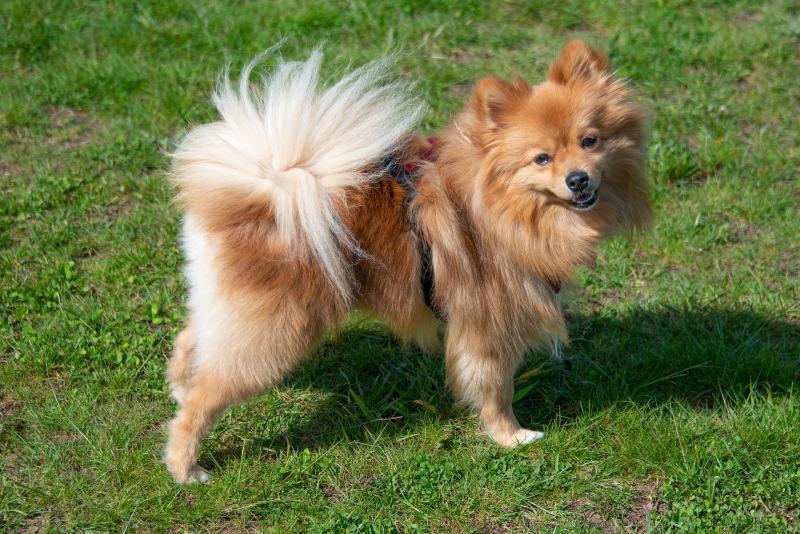
Interestingly, as the Pomeranian was bred across Europe, the breed size shrunk. Likely, this was due to dog fancier's preference for smaller pet dogs instead of working dogs as the 1800s waned and farm work grew scarce. As an avid animal lover, Queen Victoria played a role in scaling back the breed standard as well. At one point, it's estimated that 30 Pomeranians resided in the royal kennels. Interestingly, her grandmother, Queen Charlotte, first brought the breed to England during her reign in the late 1700s.
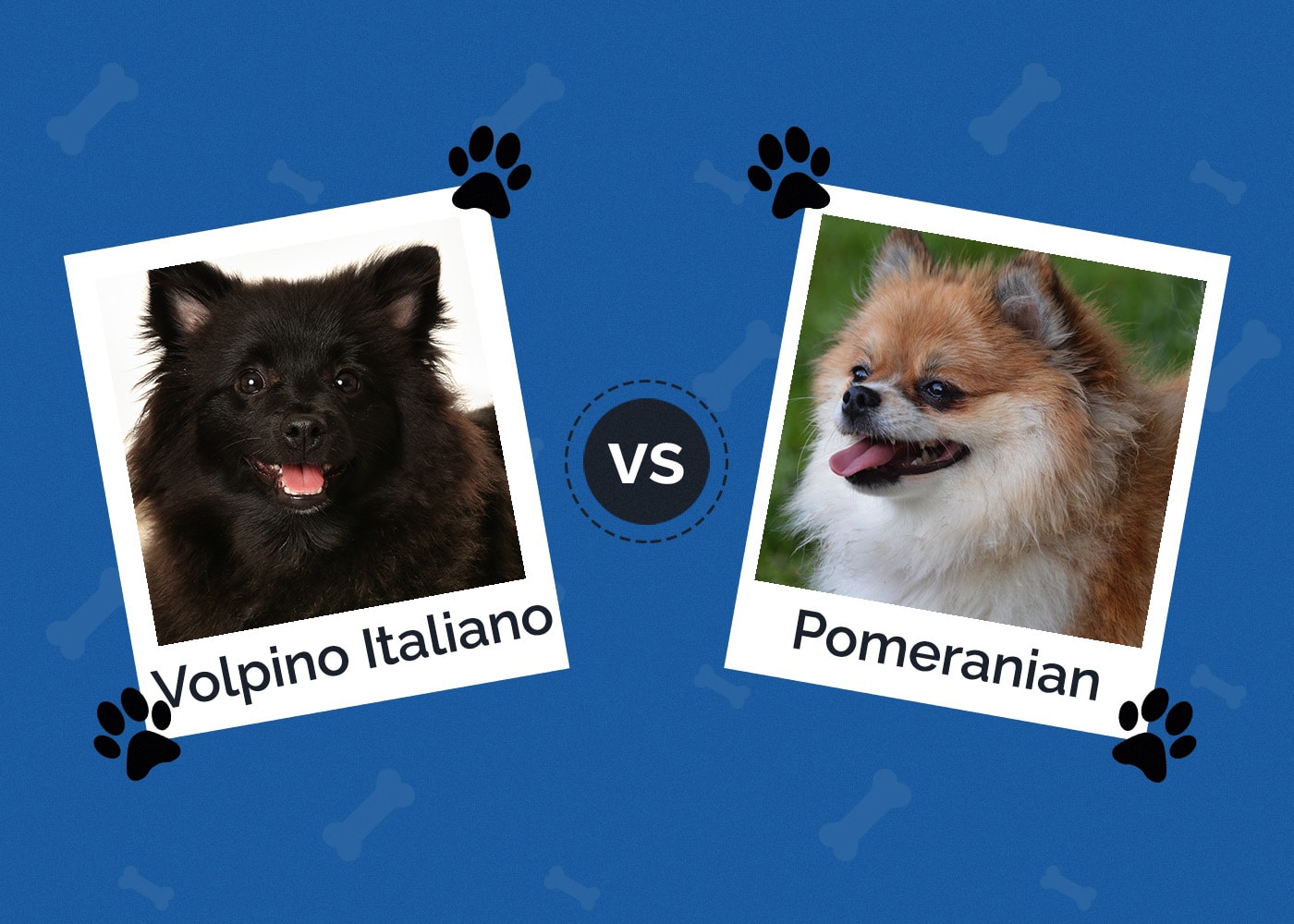
As the Industrial Revolution continued, Italian Pomeranians mostly donned the orange fur that's most popular in the United States today, whereas English Pomeranians tended to be white or black. Interestingly, Pomeranians weren't internationally recognized as “Pomeranians” until the 1970s. They've most often been referred to as some type of Spitz dog, including the German Spitz, which is a blanket term for several different Spitz breeds of different sizes. Fox Dog, Pommer, and Bear Spitz were other regional names.
Formal Recognition of the Parti Pomeranian
The Pomeranian was recognized by the American Kennel Club almost as soon as the organization formed. They were inducted in 1888 into the miscellaneous group, which later became the toy group. By the time the AKC was born, the Pomeranian's role had almost entirely shifted from pulling sleds and guarding valuables to sitting in laps and yapping at the neighbors.
Although the Parti coat is part of the Pomeranian breed standard, the Parti Pomeranian is not a desirable show dog in some countries.

Top 5 Unique Facts About the Pomeranian
1. Pomeranian means “On the sea.”
Nestled into a cove on the Baltic Sea where the borders of Germany and Poland now meet, Pomerania is a historic part of Europe that's lost its unique identity to times and the devastation of the world wars. The Pomeranian still proudly bears its name in its memory.
2. In Germany, the Pomeranian wasn't acknowledged as a distinct breed until 1974.
Although this little dog had already been registered in the United States with the AKC, Germany considered the Pomeranian to still be a part of the German Spitz group until 1974, when they finally acknowledged their new name. To be fair, the Pomeranian isa descendant of the German Spitz. However, generations of breeding had shrunk the standard so much that they now deserve their own official designation.
3. Lavender/blue is the rarest color.
The breed standard for Pomeranians acknowledged virtually any color, even if it's rare. While blue is an acceptable color, you won't find it very often, and it's actually closer to what we would consider gray.
4. Brindle Pomeranians aren't accepted as part of the breed standard.
While parti has all the fun, brindle Pomeranians aren't accepted into the group at all. Brindle includes Pomeranians of any color with a tiger stripe pattern.
5. Parti Pomeranians are expected to have a symmetrical white mark on their foreheads.
The white pattern divides the fur on either side of the Pomeranian's head. It doesn't matter how thick the white stripe is, so long as it evenly splits both sides.

Does The Parti Pomeranian Make a Good Pet?
Pomeranians pack a lot of personality into a small body. The modern Pom weighs no more than 7 pounds and stands at a mere 6-7 inches high, although Parti Poms may be a little bigger than the breed standard. All Pomeranians are full of energy and life, with the average life expectancy between 12 and 16 years.
As long as children know how to properly treat a dog, Pomeranians are a great family addition. They are likely to be protective of their family, barking at potential intruders, and not afraid to nip at any offenders. This is why it's so important to teach your children how to play gently with the new puppy, lest their fingers become a target by your feisty Pom.
Although they love to play, they'll want to spend an abundance of time in your lap, too. Plan on spending at least 30 minutes a day walking your Pom. Since the breed originated from a cold climate, Poms don't like the heat. You might want to split your daily excursions into two brief walks in the early morning and late evening in the summer to prevent them from over-exhaustion.
How To Groom Your Pomeranian
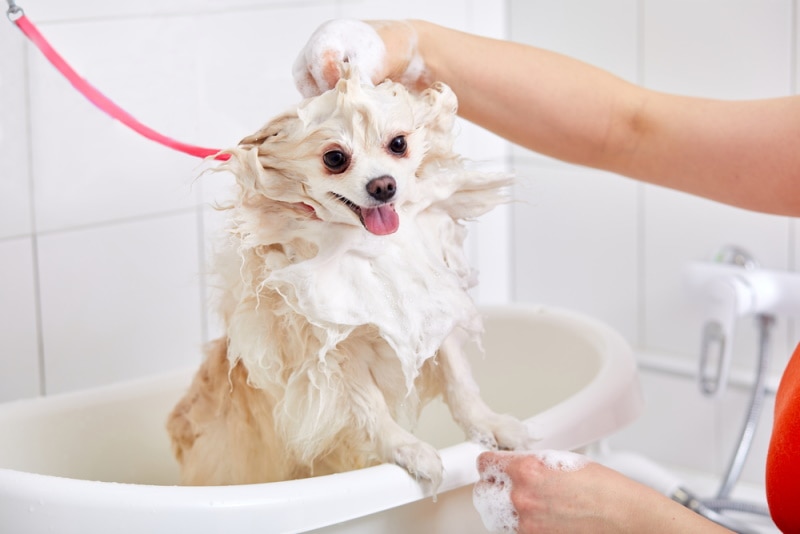
Their thick double coat is certainly one reason they have a low tolerance of heat and humidity. Every year, usually in the late spring, Pomeranians will “blow” their undercoat to lose the extra fluff before summer brings the heat. Parti Poms have the same grooming requirements of all Pomeranians. Their fur needs brushing at least once a week with both a slicker brush and a pin brush to catch the loose fur and keep them looking their finest. Despite their pampered appearance, Pomeranians don't need a spa day every week. Bathing your dog too frequently can dry out their skin and coat, so only bathe them when necessary, or about once a month. We recommend using a gentle sulfate-free shampoo like this one by Hepper to avoid stripping their coat.
Conclusion
You may see a Parti Pomeranian parading down the aisle at a dog show just as easily as you can find one trotting through your neighborhood. As long as their base color is at least 50% white, the patches may be any other standard color to be accepted into the AKC. Any Pomeranian will likely give you its best years of love and life, so don't be discouraged if you find one for adoption with a less than perfect pattern. Parti or no parti, it's a well known fact that Pomeranians in every color bring all the fun.
Sources
Featured Image Credit: KristinaSh, Shutterstock
Get Hepper In Your Inbox


Pet care tips from our vets and experts, straight to your inbox.
You may opt-out at any time. View our Privacy Policy for more information.
Brooke Bundy is a freelance writer who graduated from the University of North Georgia with a B.S. in Media Studies. She is interested in storytelling across different mediums. When she isn’t writing, Brooke loves to spend time with her dog, and three cats, in New Orleans, Louisiana. Brook enjoys gardening, cooking, brewing coffee, and making her pet's house a home.
Join the conversation
Ask a question, share your story, or send private feedback.