Hepper is reader-supported. When you buy via links on our site, we may earn an affiliate commission at no cost to you. Learn more.
Red Merle Australian Shepherd: Pictures, Facts & History
In this article
Dog breeds generally have a natural connection to certain regions, reflecting the climatic features and cultural customs. As a result, the names of numerous breeds contain references to their national heritage. However, despite their name, the Australian Shepherd is a European breed refined in California after traveling through Australia.
Australian Shepherds are unquestionably gorgeous dogs, but the red merle Australian Shepherds stand out because of their distinctively marbled coats. They are a cowboy's herding dog of choice and are renowned for their skill in canine sports like agility, herding, trick competitions, flyball, and diving.
Breed Overview
Height:
Weight:
Lifespan:
Colors:
Suitable for:
Temperament:
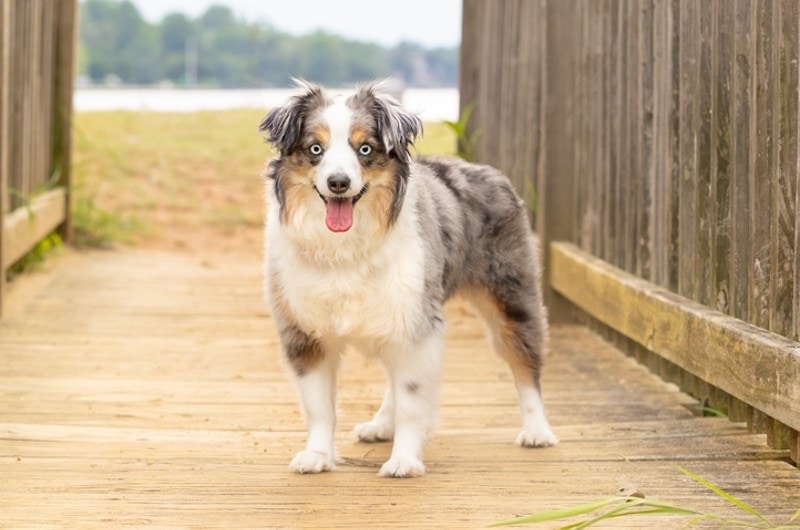
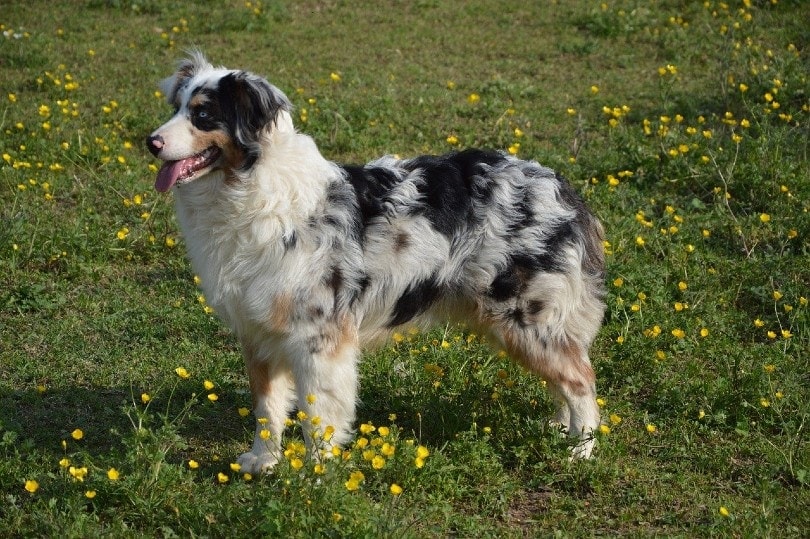
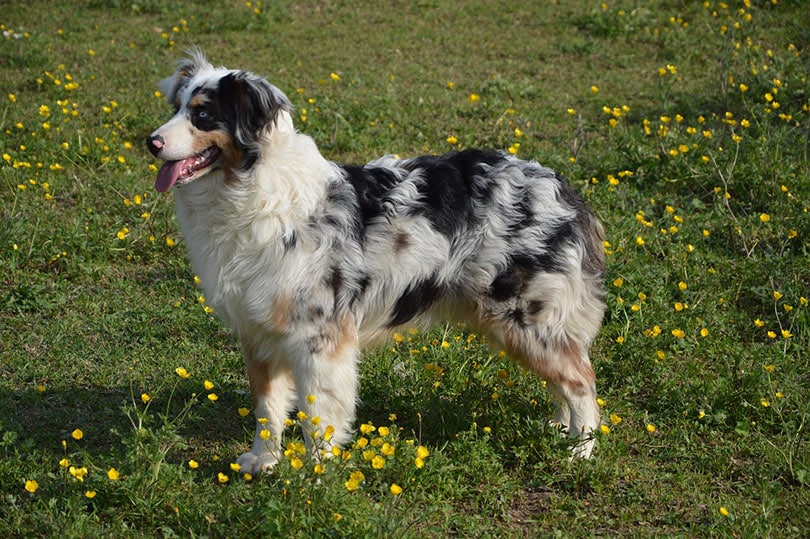
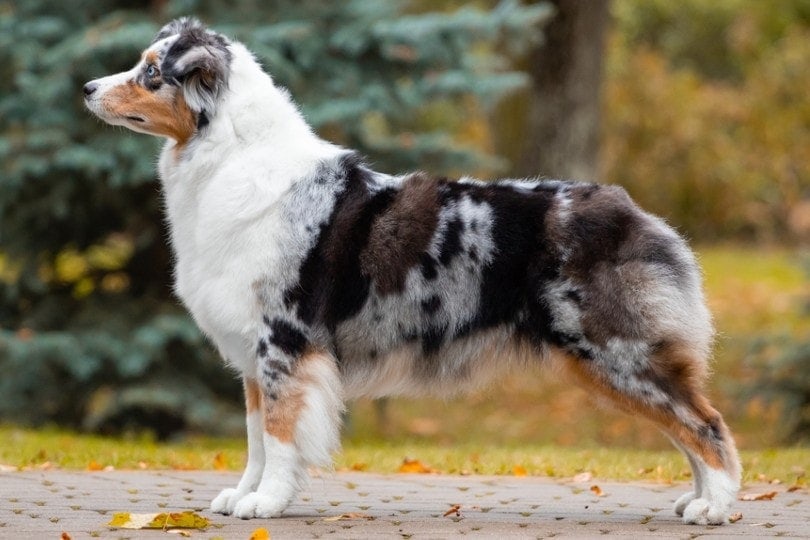
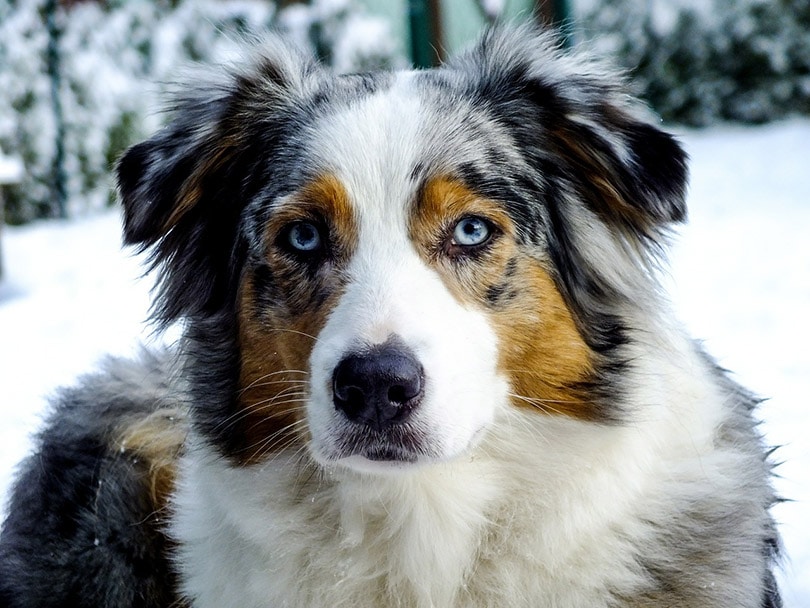
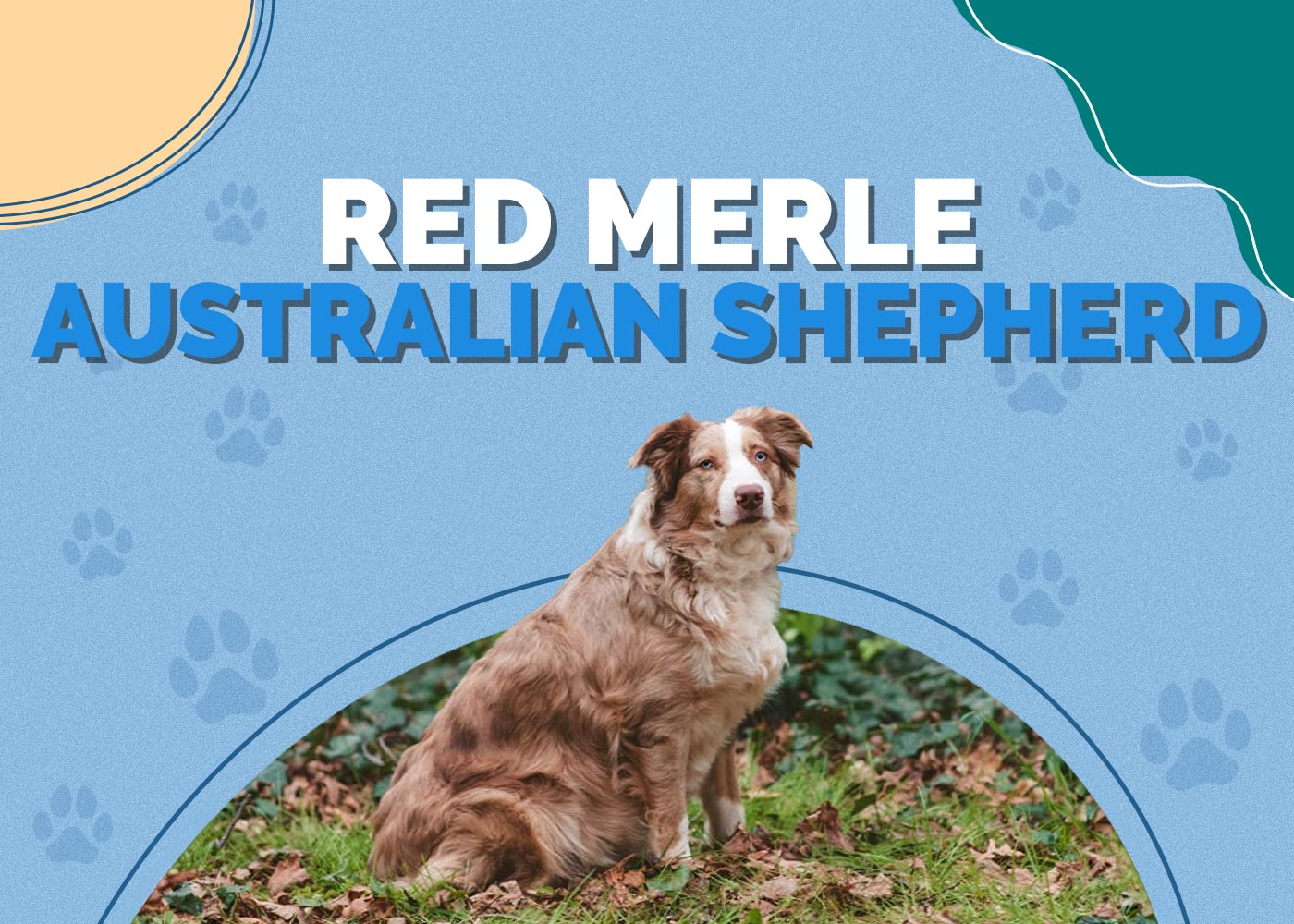
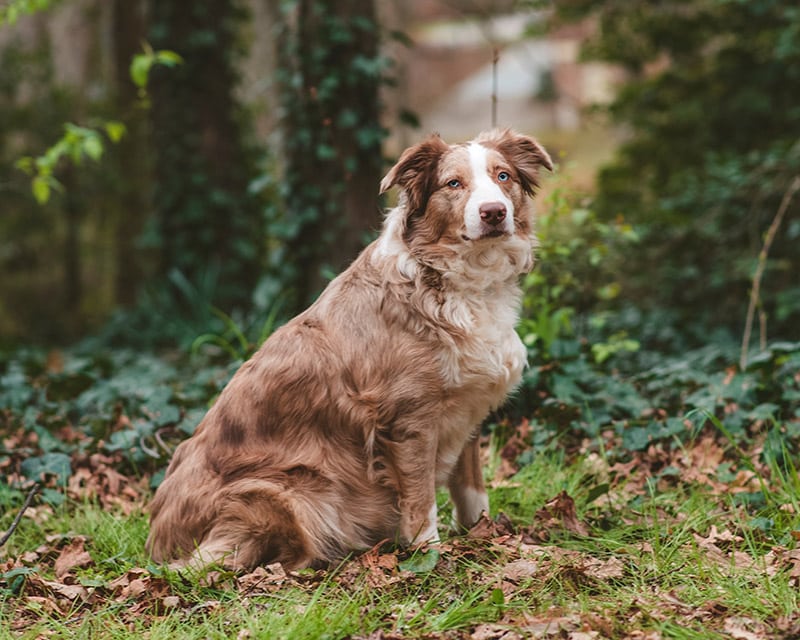
There is no disputing the remarkable beauty of the Red Merle Australian shepherd. While all Australians share the same traits and temperaments, the single characteristic distinguishing Red Merles from other Australian Shepherds is their coat color, which can be characterized as a liver or golden hue on a white background with darker markings.
"Merle" refers to the Australian Shepherd's coat pattern, which can be marbled or freckled. Most Aussies have black lips, noses, and eye rims. However, the Red Merle Australian Shepherd is unique. The eye rim, lip, and nose colors are all determined by the same gene as the merle coat, which means that Red Merle Australian Shepherds have features that are red or liver.
Red Merle Australian Shepherd Characteristics

The Earliest Records of Red Merle Australian Shepherds in History
The Red Merle Australian Shepherd's ancestors were European herding dogs brought to America in the 19th century. The Australian Cattle Dog, Border Collie, Australian Kelpie, and other herding dogs are believed to have contributed to the breed's development.
They first came to significance in Europe, close to the Pyrenees Mountains. The Australian Shepherd was the herding dog of choice for the Basques, a group of native people, and were referred to as Pyrenean shepherds at the time.
More herding dogs were required to manage the increasing number of sheep in the middle of the 19th century, so farmers began to send their sheepdogs as a result, and others were imported from Australia.
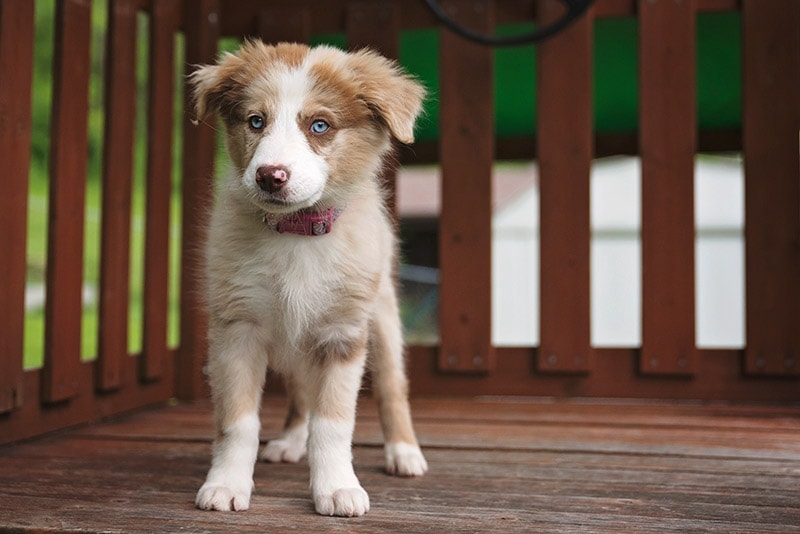
Farmers and ranchers in the West were the first people to use Aussies to herd cattle in the United States. Red Merle Australian Shepherds are a subtype of the original Australian Shepherd breed developed in America and have a striking color pattern.
How Red Merle Australian Shepherds Gained Popularity
The dogs rose to national fame after World War II as symbols of Western civilization. They participated in rodeos and horse shows and were portrayed in Western-themed films and television series. Australian Shepherds were admired by American ranchers because they made excellent herders, but they also gained popularity among the general public due to their regular involvement in rodeos.
They would perform tricks for the audience and assist in keeping the bulls in line. Some Australian Shepherds even became famous in Disney films, including Stub: The Greatest Cowdog in the West and Run Appaloosa Run, and they soon became beloved companions of celebrities, which included Steven Spielberg, Demi Moore, and Bruce Willis.
Formal Recognition of Red Merle Australian Shepherds
The American Kennel Club (AKC) recognizes four coats as part of the Australian Shepherd standard, including Red Merle. Despite the dog’s long history, the AKC only officially recognized the Australian Shepherd for the first time in 1991. However, the United Kennel Club officially recognized the breed in 1979.
As the breed's parent association, the United States Australian Shepherd Association (USASA) promotes Australian Shepherd breeders and owners worldwide, including in America. The USASA supports ethical breeding practices and pet ownership.
In addition to conducting AKC-sanctioned competition events, the club also sponsors educational initiatives and supports and funds scientific studies to enhance the breed's health, which is a priority for the USASA.
Top 4 Unique Facts About Red Merle Australian Shepherds
1. It is Common for Australian Shepherds to Have Bobbed Tails
One in five Australian Shepherd puppies will be born with a bobbed tail. Ranchers purposely bred the dogs with short tails since it was safer for them to do their job at herding.
2. Red Merles Are Less Common
Due to the red color's recessive gene, Red Merle Australian Shepherds are less common than blue or black Aussies. Like the solid color coating, the merle pattern results from a recessive gene. A Red Merle Australian Shepherd is less likely to be born since red and merle are recessive.
3. It is Common for Australian Shepherds to Have Two Different Colored Eyes
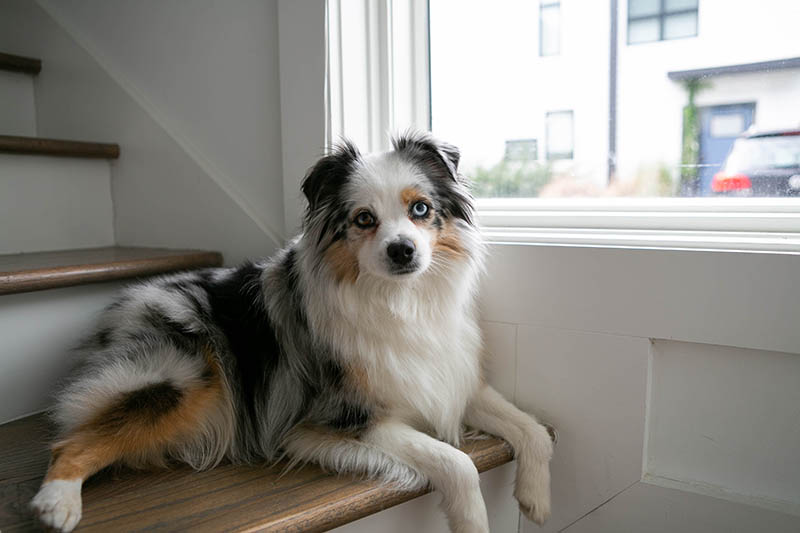
Heterochromia is a common trait in Australian Shepherds. It is a disorder that results in one eye's color being different. Australian Shepherds can have eyes that are any mix of green, hazel, amber, brown, or blue.
4. A Phantom Merle Gene May Be Present in your Aussie Puppy.
Predicting how your dog's coat will look when it's a puppy can be difficult. Most of the time, Aussies with solid coats are born with a lighter variation of the color all over their body. Merles are a little more challenging to detect. A dog may have a solid coat when they’re a puppy, but a merle coat may appear as they grow. "Phantom" merle genes are used to describe this occurrence.
Do Red Merle Australian Shepherds Make a Good Pet?
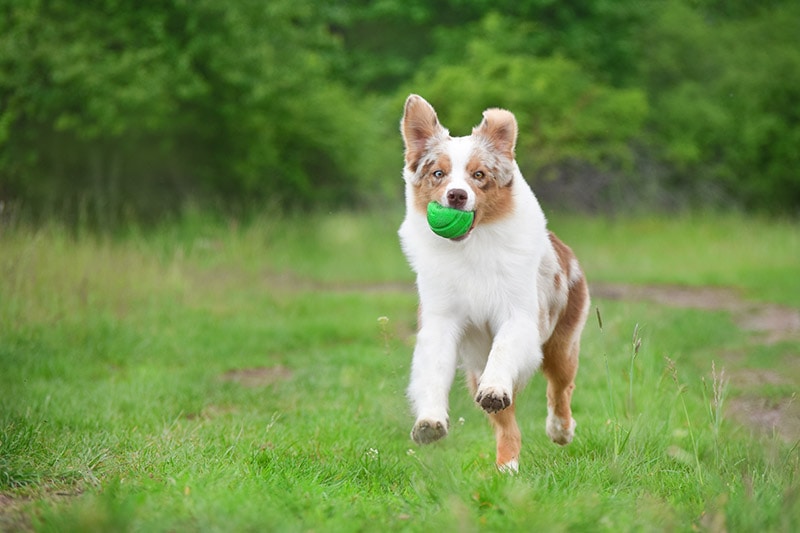
The Red Merle Australian Shepherd has become a very popular canine and continues to grow in popularity every day. They make wonderful pets for families looking for a companion who is high-spirited, playful, loyal, protective, and intelligent. They are the ideal adventure buddies since they enjoy the outdoors and will watch over you while you explore new places. Their high energy makes them ideal for active families, and they will certainly keep you motivated!
While Red Merle Australian Shepherds are highly intelligent and trainable, they have an innate herding instinct, which owners with children need to be aware of. They may attempt to "herd" children and nip at their feet. They are also large, so their herding may unintentionally knock over a small child. However, Red Merle Australian Shepherds can be wonderful companions and protectors for children if they are properly trained and supervised while playing.
As with all dog breeds, your Red Merle Australian Shepherd will require high-quality grooming, a well-balanced diet, veterinary care, and mental and physical stimulation. If you can provide your Aussie with the appropriate care and love, they will make wonderful pets.
Conclusion
Besides their unique and striking coat, the Red Merle Australian Shepherd is not much different from other Australian Shepherds. The coat is rare compared to the others, which makes it stand out even more. They were developed by herding breeds of the Pyrenees Mountains and were admired and respected for their skills.
They also caught the public's attention from their appearance in rodeo shows, where they performed tricks and kept bulls in line. The Red Merle Aussie is a wonderful family pet, especially for active families, that requires intensive exercise and training.
Sources
Featured Image By: Anna Darahan, Shutterstock
Get Hepper In Your Inbox


Pet care tips from our vets and experts, straight to your inbox.
You may opt-out at any time. View our Privacy Policy for more information.

Nicole is a lover of animals of all sizes but is especially fascinated with the feline variety. She’s the proud mom of Baby, a Burmese, and works every day so he can relax in the sunshine or by the fire. She’s always had a cat in her home and has spent countless days with others, observing behaviors and softening up even the grouchiest of the lot. Nicole wants to share her kitty expertise with you so you and your cat can live happy, healthy, and care-free.
Join the conversation
Ask a question, share your story, or send private feedback.