Hepper is reader-supported. When you buy via links on our site, we may earn an affiliate commission at no cost to you. Learn more.
What Is the Runt of the Dog Litter? Meaning, Myths, & Vet-Approved Facts


In this article
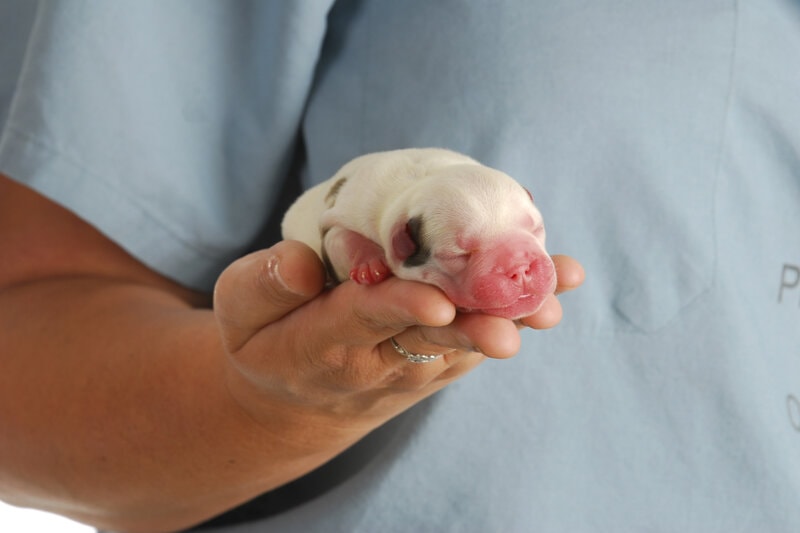
He’s the smallest one in the litter by a long shot. It’s hard not to feel sorry for the runt. It’s probably evident right from birth that he’s going to struggle, especially during these first critical weeks.
Your puppy may be tiny compared to his littermates. However, calling him the runt of the litter is a layman’s term with no widely accepted clinical definition in veterinary medicine.
Suffice to say that he is the littlest of the bunch.
There are several misconceptions about runts and why a litter will include one. However, the one certainty is that this pup will face more problems than his healthy littermates and may require additional care.

Myths and Realities About the "Runt of the Litter"
We dismissed the official definition of a runt. However, there are other fallacies that you should know about, especially if you’re planning on breeding your dog. It’s essential to understand that it is a significant undertaking that requires careful thought and planning. We’ll discuss some of the myths about the runt and the health implications down the road.
Does Gestation Position Matter?
Often, many myths have a kernel of truth that sometimes takes on a life of its own. That’s true with the run and the dreaded middle spot in the female’s uterus.
The female has a Y-shaped uterus with two horns. This twist on a dog’s anatomy allows her to have more than one puppy per pregnancy. Nevertheless, no one spot is better than another. This organ is highly vascularized, i.e., having blood vessels to deliver nourishment to the growing pups.
A pivotal factor is the implantation or the attachment of the developing embryo to the lining of the uterus. It occurs at about 18 days in a dog’s pregnancy.
Where the puppy ends up will determine how he develops and his birth size.

Does There Have to Be a Runt?
There are many factors that determine how a female’s pregnancy will play out for her and her puppies. They include things such as:
Any one of them can affect whether she’ll give birth to her litter or if she’ll have a runt. It’s not a given that every litter will have one. Some things are in your control, such as the female’s health and her breeding age. The best way to prevent her from having a runt is by giving your dog the best possible care.

Health Implications for the Smallest in the Litter
Gestation is a critical time for all puppies. During this time, they receive nutrition and immune protection from their mother that will ensure proper development. Therefore, it’s imperative that they get all they need.
The runt has problems out of the gate.
Poor implantation puts him at a severe disadvantage, not only while in the womb but after birth, too. Concerns exist involving the runt’s health and the mother’s care afterward. Let’s review how trouble is most likely to occur.
Size and Feeding
The runt’s smaller size is a difficult obstacle to overcome. He must vie for his place to nurse against littermates that are bigger than he is. It’s even more critical for him because of his poor start in life. Pet owners may have to give the puppy a milk replacement powder if he isn’t able to get enough nutrition from the mother.
Another health risk is dehydration. It’ll take a few weeks before the puppies can transition to solid food. In the meantime, they must get both nutrition and liquids from their mother. If the runt can’t get enough milk, he can succumb to this condition, too. It becomes more of a concern with larger breeds that typically have larger litters than smaller dogs with three or fewer pups.

Size and Hypothermia
Another concern rests with temperature control and hypothermia. Puppies depend on their mother and littermates not only for food but to keep them warm. If the runt can’t assert himself into the group, he risks developing this life-threatening condition. Eventually, he’ll generate some body heat to stay warm. That’s part of what makes these first three weeks so critical.
Disease Risk
A puppy that isn’t getting adequate nutrition is at a heightened risk of disease. These health conditions often go through an entire litter, too. That means that the runt’s well-being is just as critical to the other pups and the mother as it is for him.

Maternal Care
Sometimes, a young female is overwhelmed with having a litter of puppies. She may fail to care for them properly, putting all their health and well-being at risk. Other times, a mother observes the runt’s weakness and reduced chances of survival. In these cases, she may neglect the pup. While it seems cruel to us, it’s evolution at work, directing her to concentrate on the stronger ones in the litter.
The fact remains that up to 30% of puppies may not live past eight weeks. If the mother isn’t taking care of the runt, a pet owner’s only recourse is to take on the task themself. It’s a time-consuming undertaking, especially with younger puppies.
Fading Puppy Syndrome
Sometimes, a runt will seem like he’s thriving—or at least surviving—and then seem to go downhill quickly. Veterinary medicine refers to this phenomenon as fading puppy syndrome. Several things can contribute to it, not the least of which is the runt’s weight. Remember that puppies grow rapidly in those first weeks. The gap between a runt and his littermates may grow wider.
The mother’s neglect can make it even more difficult and, unfortunately, inevitable. That’s why it’s imperative to seek veterinarian care for a runt. He’ll likely require fluids or other support to get him past the critical eighth week.

Final Thoughts About the Runt of the Litter
Life isn’t always fair, especially when it comes to the runt of the litter. While healthy puppies can enjoy the care of their mother, this one’s journey begins with struggles. It’s not easy to predict if a female will have a runt. Keeping her healthy and giving her a nutritious diet are some of the best ways to ensure a risk-free pregnancy. The compassionate pet owner will step up if the need arises.
See also:
Featured Image Credit: ExplorerBob, Pixabay
Get Hepper In Your Inbox


Pet care tips from our vets and experts, straight to your inbox.
You may opt-out at any time. View our Privacy Policy for more information.
Nicole is a lover of animals of all sizes but is especially fascinated with the feline variety. She’s the proud mom of Baby, a Burmese, and works every day so he can relax in the sunshine or by the fire. She’s always had a cat in her home and has spent countless days with others, observing behaviors and softening up even the grouchiest of the lot. Nicole wants to share her kitty expertise with you so you and your cat can live happy, healthy, and care-free.
Join the conversation
Ask a question, share your story, or send private feedback.