Hepper is reader-supported. When you buy via links on our site, we may earn an affiliate commission at no cost to you. Learn more.
Fading Puppy Syndrome: Causes & Signs (Vet Answer)


In this article
Some puppies seem perfectly healthy at birth, but then fail to thrive and die within the first couple of weeks of life. Fading Puppy Syndrome is the name used to describe this phenomenon where newborn puppies seem normal at birth, but then gradually decline and pass away within the first 2 weeks. Deaths most commonly occur within the first 5 days of life. It is responsible for about 50% of total neonatal deaths in dogs.
The death occurs even though the mother usually has no health issues, the pregnancy was uneventful, and the gestation length was appropriate. This article discusses the causes, diagnosis, and treatment options for Fading Puppy Syndrome. Read on to find out more.

What Is Fading Puppy Syndrome?
Newborn puppies are very vulnerable in the period after they have been born. They are born deaf and blind, and they completely rely on their mother for warmth and nourishment. They have developing immune systems, and they are unable to regulate their own blood glucose levels very well or keep themselves at a suitable temperature.
Fading Puppy Syndrome refers to a puppy that appears to have a clean bill of health at birth, but gradually declines and eventually dies in the first 2 weeks of life. Around 50% of these cases are “true fading puppies”, where there is no identifiable problem or disease. Their birth weight is usually normal, and they have no signs of ill health or genetic defect at birth, but they rapidly decline.
What Are the Signs of Fading Puppy Syndrome?
Clinical signs of Fading Puppy Syndrome are often non-specific and vague. Unfortunately, once clinical signs become apparent, it is often too late to save the puppy. Common signs include:
- Low birth weight
- Struggling to gain weight
- Less active than litter mates
- Suckling less/struggling to latch
- Often found isolated in their own
- High pitch crying, different from other littermates
- Lethargic
- Reduced muscle tone
- Restlessness
- Breathing difficulty
- Low body temperature
- Vomiting and diarrhea
- Reduced urine and fecal output
What Are the Causes of Fading Puppy Syndrome?
It is thought that there are three different categories of causes of Fading Puppy Syndrome. These are genetic, environmental, and infectious.
Genetic
Birth defects present that can have serious implications for the puppy's health. For example, cleft palate. This, depending on the severity, can prevent puppies from suckling from their mother and swallowing the milk. They will often cough and gag and have milk bubbling from their noses.
Heart abnormalities can be present from birth. Some common defects include patent ductus arteriosus, ventricular septal defect, and subaortic stenosis. These all affect the function of the heart and its ability to supply vital organs and muscles with oxygen.
Some puppies are born without a fully functioning anus; this is called Atresia Ani and can predispose to Fading Puppy Syndrome.

Environmental
When the puppy is too hot or too cold, they are unable to respond to extremes in temperature appropriately at their age and due to their size and surface area to volume ratio, they can get too hot or too cold very quickly. Any toxins in the environment the puppy is exposed to will affect them very quickly due to their size and immature immune system.
Newborn pups are born altricial, meaning they are completely helpless and rely on their mother for everything. If the mother is inexperienced or rejects the puppy, they don't have much chance of survival unless a human intervenes.
If the mother is overweight, she may roll onto or squash the puppy accidentally. Also, if the mother is under stress or malnourished, she may not produce good quality milk or enough milk to feed her puppies. This is more common in larger litters. If the puppies are not cleaned out regularly or if the mother isn't let out for urination and defecation, the living area becomes very unhygienic very quickly. Puppies develop sores from urine and feces scalding and can pick up diseases easily.
If one of the puppies gets stuck during delivery or if they are deprived of oxygen at any point or put under stress unduly, they may go on to develop Fading Puppy Syndrome.
Infections
Any sort of infection, bacteria, viral, parasite, or other source will have serious implications for a newborn puppy. They have weak, underdeveloped immune systems so are prone to infections.


Diagnosis of Fading Puppy Syndrome
It can be extremely difficult to spot the first signs of Fading Puppy Syndrome as they are often very subtle. If a puppy is identified as not thriving or doing as well as litter mates, it must be taken to a veterinary hospital as soon as possible. Owners should be closely monitoring the weights of each puppy, how much time they are spending feeding, and urine and fecal output, as well as how the puppy is interacting with the rest of the litter. When at the vet's a thorough physical exam will be carried out. The mother will usually be examined as well for any signs of ill health.
Diagnostic tests carried out by your vet can include:
- Routine blood work to assess white and red blood cell counts and organ function.
- A urine sample to assess if infection is present and to assess the concentration of the urine
- Fecal exam to look for any parasites or infectious causes
- X-rays to look at the chest and abdomen
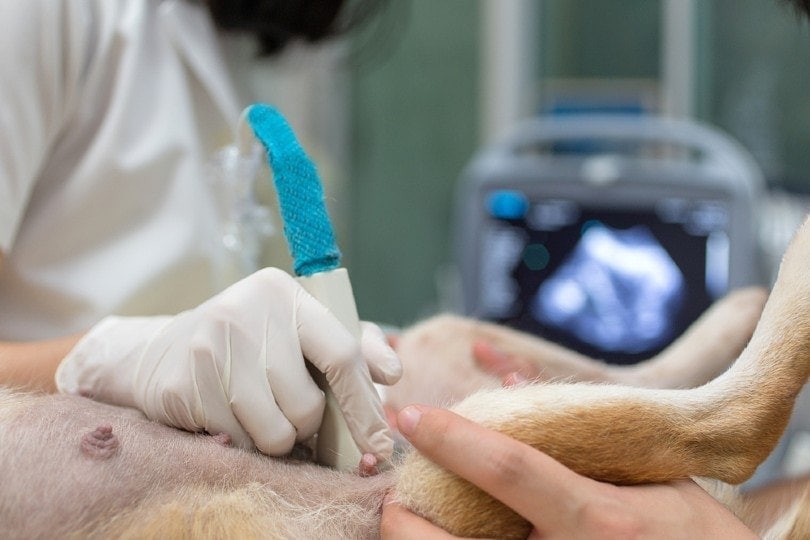
- Ultrasound scan to assess the structure and function of the heart and other organs.
Often it is not possible to identify the cause of Fading Puppy Syndrome which can make it difficult to treat or prevent.
How Do I Care for a Puppy with Fading Puppy Syndrome?
Sadly, once clinical signs have been noted in newborns with Fading Puppy Syndrome, they often die soon after. This is why it is so important to seek veterinary attention if there are any suspicions that there is something wrong.
Treatment usually focuses on keeping the puppy warm, hydrated, and well-nourished. The treatment does depend on any underlying cause that has been identified. For example, if an infection is noted, antibiotics will be required. Aggressive care is required if there are serious illnesses such as Herpes Virus or Parvo Virus. Congenital defects such as heart deformities or lack of anus have a poor prognosis and often the kindest thing to do is euthanasia.
Puppies that are too cold must be brought back up to a safe temperature. This should be done gradually using a heat lamp or covered heated pads and hot water bottles. If a puppy is unable to move, it should never be left with a heat source as it may become too hot and will be unable to move to a cooler place. If the puppy has had low blood sugar (hypoglycemia) they can be given glucose orally or by injection, but this must only be done by a veterinarian as it is easy to overdose them due to their size.
If the puppy is dehydrated, fluids can be given either under the skin or into the veins by a vet. Often a strict hand-feeding protocol needs to be implemented. Hand-feeding newborn puppies is a difficult task and a big commitment—often owners are not comfortable doing this themselves. There is a high risk of aspiration pneumonia (when fluid is inhaled into the lungs causing an infection) when hand feeding too so extra care must be taken.
Syringe feeding may also be done; this is also tricky and must be done carefully as the puppy has no control over the amount of milk they are being fed. The puppy must be weighed every day to monitor weight changes.
If a puppy from a litter does pass away, it is recommended to carry out a post-mortem to try and identify any causes to prevent any more puppies from dying.

Frequently Asked Questions
Can puppies survive Fading Puppy Syndrome?
Puppies that present with Fading Puppy Syndrome often pass away soon after clinical signs have become apparent. Some will pass away before the owner has noticed any signs or symptoms. There is no treatment for some puppies with severe congenital defects present and the only option is euthanasia. The best chance is to get the puppy to the vet immediately if there are any clinical signs noted.
How to tell if your puppy has Fading Puppy Syndrome
It is often difficult to spot signs of Fading Puppy Syndrome. Any puppies that have experienced a difficult birth, who don't seem to be as active as their litter mates, who are failing to thrive, who aren't feeding for very long or not passing urine or feces as frequently need to be seen by a vet immediately. Causes of Fading Puppy Syndrome can be congenital or acquired so the puppy may have been born with a problem or may develop it after birth.

What percentage of puppies get Fading Puppy Syndrome?
This does depend on the circumstances affecting the litter. If there was a problem with the mother or issues with the birth that affected all the puppies, there are higher chances of the majority of the litter being affected. If there are environmental factors, this can affect a small percentage of the litter. Infectious causes can spread from puppy to puppy and affect the whole litter, or just the puppies who are smaller and not as robust as their larger litter mates.
Some research has suggested Fading Puppy Syndrome affects up to 30% of litters up to 3 weeks of age with most deaths occurring in the first 7 days of the puppy's life.
Conclusion
Fading Puppy Syndrome is unfortunately a relatively common phenomenon seen in newborn puppies. Due to the fact that puppies are born altricially, they are very vulnerable during the first few weeks of life. They rely completely on their mother for nourishment, they cannot regulate their own body temperature, and have a very weak immune system. It is important to monitor all puppies to ensure they are feeding and passing urine and feces frequently.
Strict hygiene measures must be kept, and the mother must be looked after to ensure she is in the best condition to nourish her puppies. If any puppies are not thriving as they should be, immediate veterinary attention is required.
See also:
Sources
Featured Image Credit: marketlan, Shutterstock
Get Hepper In Your Inbox


Pet care tips from our vets and experts, straight to your inbox.
You may opt-out at any time. View our Privacy Policy for more information.
Dr. Emma is an experienced vet who is always happy to share her knowledge and expertise with our readers. Her passion is surgery but she will happily talk about anything animal related. Dr. Chandley graduated from The Royal Vet College and since then she has worked in general practice in the UK. She has completed a postgraduate certificate in Small Animal Surgery and has also gained Advanced Practitioner status in the same discipline. She enjoys developing her skills in clinical pathology, animal behavior and nutrition as well.
Emma is an experienced veterinarian who is always happy to share her knowledge and expertise with our readers. She is passionate about surgery but will happily talk about anything animal related.
Experience
Since graduating, Dr. Emma has worked in general practice in the UK. She has completed a postgraduate certificate in Small Animal Surgery and has also gained Advanced Practitioner status in the same discipline. She also has expert knowledge in small animal medicine with a special interest in Endocrinology, although surgery is her passion. She enjoys developing her skills in clinical pathology, animal behavior, and nutrition as well.
Education
Emma received her degree from the Royal Vet College, University of London. She obtained her postgraduate certificate from the British Small Animal Veterinary Association and Nottingham Trent University.
She was granted Advanced Practitioner status by The Royal College of Veterinary Surgeons.
Join the conversation
Ask a question, share your story, or send private feedback.