Hepper is reader-supported. When you buy via links on our site, we may earn an affiliate commission at no cost to you. Learn more.
Trifexis vs. Heartgard Plus: We Asked a Vet (2026 Update)

In this article
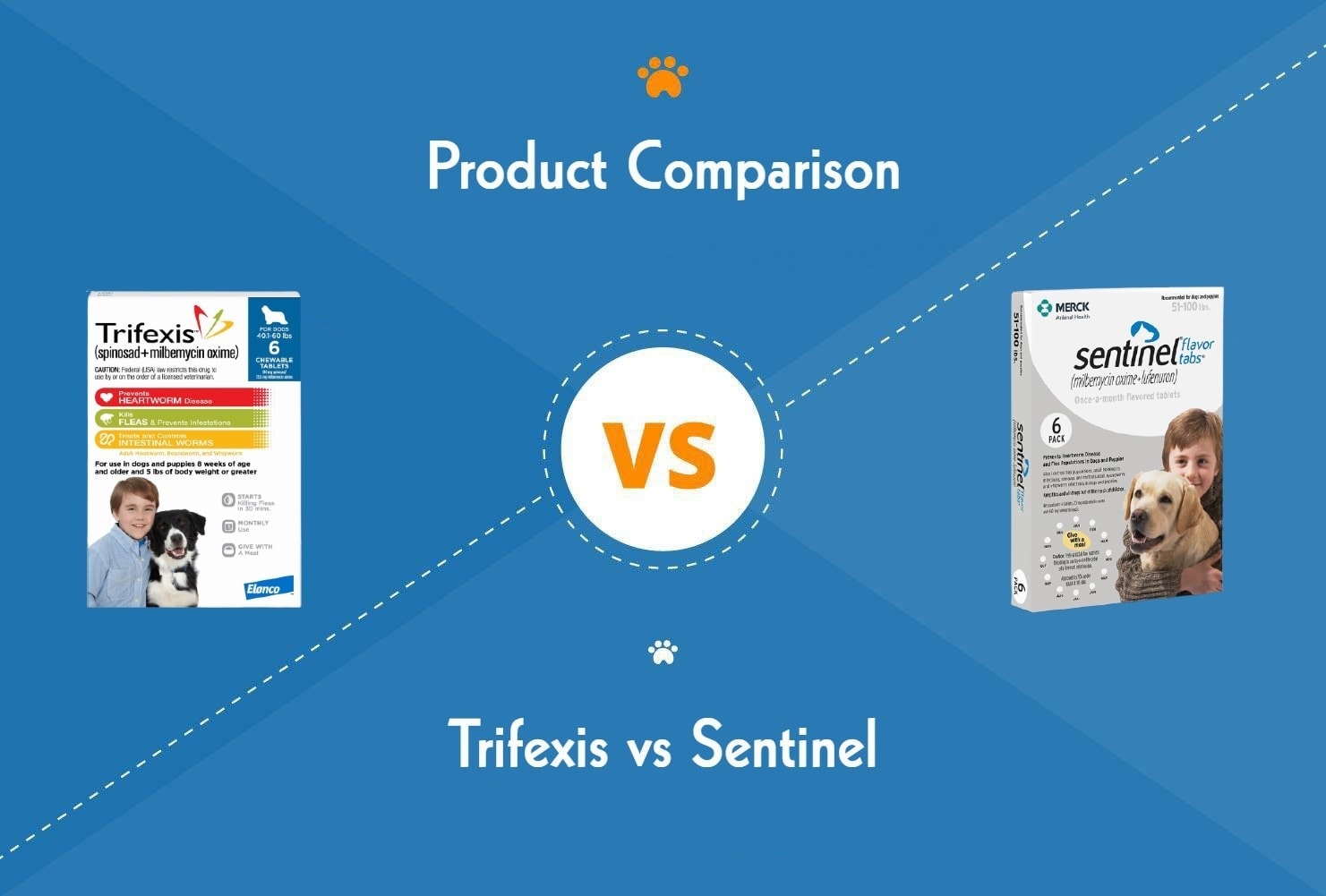
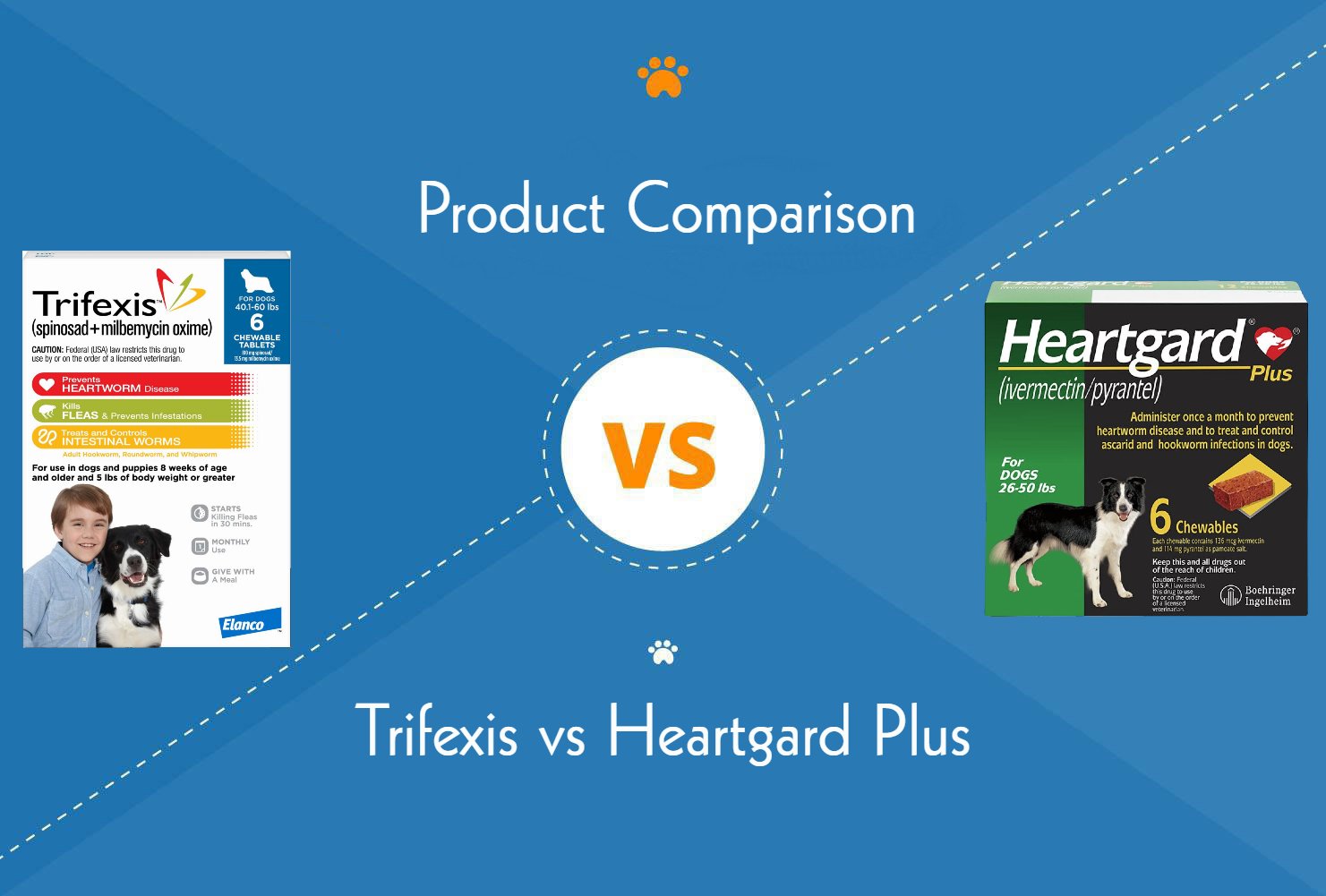
Both Trifexis and Heartgard Plus provide effective protection for your dog against hookworms, roundworms, and heartworms. In addition, Trifexis kills and offers protection against fleas and whipworms. Neither of these products is effective against ticks, however. Both products come in chewable tablets that must be taken monthly to be effective.
If you want to give your pet one of these products, you must have your dog tested for Dirofilaria spp. at a veterinary office beforehand because otherwise, they can be dangerous and even fatal.
If your dog suffers from heartworm disease (and has microfilariae in their blood) and you administer Trifexis or Heartgard Plus, they can cause the sudden death of microfilariae, triggering a shock-like reaction and the death of your pet. If you are also looking for flea and whipworm protection, Trifexis is ideal, but keep in mind that it's more expensive than Heartgard Plus.

At a Glance
Let’s see what the best option for your pup is.

Overview of Trifexis
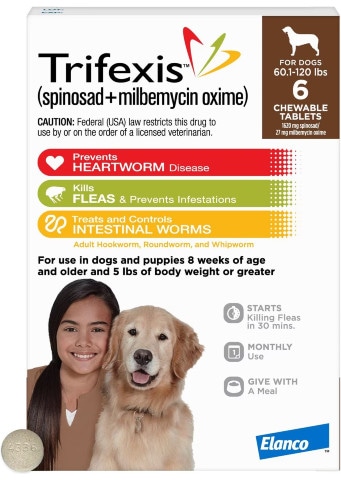
Trifexis is an antiparasitic drug with internal and external action. It can kill and prevent flea infestations, whipworms, roundworms, and hookworms. It's also a suitable product for the prevention of heartworms. Some literature states that Trifexis can protect against the immature adults of Angiostrongylus vasorum (also known as French heartworms).
Trifexis is available in five sizes for oral use. It comes in beef-flavored chewable tablets, which take effect against fleas in approximately 30 minutes. The tablets must be administered monthly. It's prescribed only by a veterinarian, who will perform a heartworm test before administration to ensure your dog is not infected with the worms. However, Trifexis is not effective against ticks.
To administer Trifexis, your dog must be at least 8 weeks old and weigh 5 pounds. Like any other drug, it can cause adverse reactions, the most common being lethargy, vomiting, or depression. Contact the veterinarian if your dog's behavior changes after taking Trifexis.
Pros
- Kills and prevents flea infestations
- Begins to kill fleas 30 minutes after administration
- Treats and prevents whipworm, roundworm, and hookworm
- Prevents heartworms
- Tasty chewable tablets that most dogs will take without issue
- Available in five sizes to suit different weight ranges
Cons
- Has a minimum age for administration requirement of 8 weeks
- Has a minimum weight limit of 5 pounds
- Is not effective for the treatment and prevention of ticks
- Does not guarantee that all dogs will eat these tablets, despite the beef flavor
- Can cause adverse reactions, such as scratching, vomiting, wobbly walking, depression, lethargy, or convulsions, especially in dogs that are sensitive to the active substances (spinosad and milbemycin oxime)
Overview of Heartgard Plus
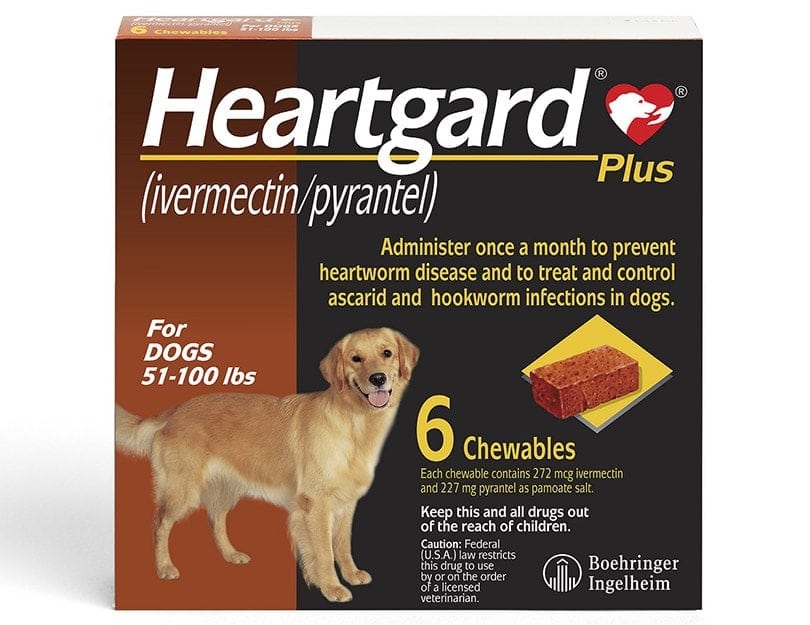
Heartgard Plus is an antiparasitic drug with an internal effect. It's effective in treating and preventing roundworms and hookworms, and it can also prevent heartworms. It has no external impact and is ineffective against fleas or ticks.
It's available in three sizes for oral use and comes in chewable tablets with beef flavor, which must be administered monthly for maximum effectiveness. Heartgard can be given to dogs that are at least 6 weeks old. It has no minimum weight limit.
A veterinarian prescribes it and performs a Dirofilaria spp. test before administering the first tablet to ensure the dog is not infected with heartworms. Like any other drug, Heartgard Plus can cause side effects, the most common being vomiting, diarrhea, lethargy, or hypersalivation.
It contains ivermectin, a drug to which some breeds, such as Collies and Sheepdogs, are sensitive. Contact the veterinarian if your dog's behavior changes after taking Heartgard Plus.
Pros
- Has a minimum age for administration requirement of 6 weeks
- Has no minimum weight limit
- Has palatable tablets
- Contains real beef
- Is available in three sizes to suit different weight ranges
Cons
- Is ineffective for the treatment and prevention of fleas and whipworms
- Is ineffective against ticks
- Can cause side effects like vomiting, anorexia, diarrhea, depression, wobbly walking, hypersalivation, convulsions, and staggering, especially in dogs that are sensitive to the active substances (ivermectin and pyrantel)
- Contains ivermectin, and some breeds (Collies, Sheepdogs, and Collie/Sheepdog crossbreeds) may be more sensitive.

What Are the Differences Between Them?
Active Ingredients
Regarding active substances or ingredients, Trifexis contains spinosad and milbemycin oxime, while Heartgard Plus contains ivermectin and pyrantel. All these substances belong to different groups of drugs.
Target Parasites
Common parasites that Trifexis and Heartgard Plus can kill are:
Roundworms: Toxocara canis and Toxascaris leonina
Hookworms: Ancylostoma caninum
Microfilaria (immature heartworms): Dirofilaria immitis larvae
Trifexis can also kill:
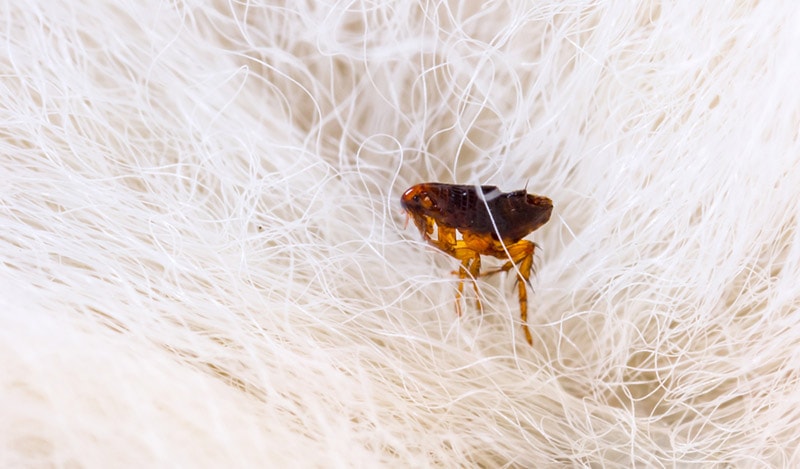
Fleas: Ctenocephalides felis
Whipworms: Trichuris vulpis
Heartworms (also known as French heartworms): Angiostrongylus vasorum immature larvae
Heartgard Plus can also kill:
Hookworms: Uncinaria stenocephala and Ancylostoma braziliense
All dogs should be tested for heartworms before administering either of these products since they can become dangerous or even deadly. If your dog has microfilariae (immature heartworms) in their blood, and you give them these products as a preventative measure, they can cause the microfilariae to die suddenly and trigger a shock reaction in your pet, which can lead to death.
Interactions With Other Medicinal Products
Trifexis can interact with medications like digoxin, doxorubicin, or other macrocyclic lactones, which could lead to enhanced toxicity. Also, the simultaneous use of spinosad and ivermectin can lead to excessive salivation, tremors, wobbly walking, convulsions, disorientation, and blindness.
Heartgard Plus can interact with drugs like immunosuppressive medication (cyclosporine), antifungal medication (ketoconazole, itraconazole), other antiparasitic medication (levamisole, piperazine), or blood pressure medication (amlodipine).
If your dog is on any of these medications, contact the vet.
Duration of Action
Trifexis and Heartgard Plus should be administered monthly for maximum efficiency.
Formulation
Trifexis and Heartgard Plus are available as beef-flavored chewable tablets. The only difference is that Heartgard Plus contains real beef.
Optimal Weight
Trifexis has a weight limit of 5 pounds or more, while Heartgard Plus has no limit, so it can be given at any weight as long as the puppy is 6 weeks old.
Both products come in various sizes for oral administration. Trifexis comes in five sizes, while Heartgard Plus only has three.
Price
Although Heartgard Plus is cheaper than Trifexis, you must buy a separate antiparasitic product that will get rid of and protect your dog from fleas and ticks. However, none of these products are effective against ticks, so you will still need to purchase a separate product for that.

What the Users Say
Most people are satisfied with Trifexis and Heartgard Plus, calling them effective. They’re beef-flavored and chewable, and many dogs see them as treats and take them with pleasure. Users are also delighted that these products are less messy than applying spot-on pipettes on their dog's neck and back.
Trifexis
Many customers have said they have difficulty giving Trifexis to their dogs, even though they are advertised as palatable. Also, some owners noted that the flea prevention lasts at most 25 days, not 30. However, most users are delighted that it is effective against all the parasites described on the package, even if it is more expensive than many other products on the market.
However, some people are disappointed that it is not effective against ticks. Others said that their dog kept scratching from live fleas and that even though they regularly gave Trifexis to their pets, they still got heartworms. These cases are exceptional, though, and most users are satisfied with the product.
Heartgard Plus
As advertised, Heartgard Plus contains real beef, and many owners are happy that their dogs will take it because they love the taste. However, others have reported diarrhea and said that now and then, a tablet is as hard as a rock, and they lose money because they have to throw it away.
A few have complained that even though they gave their dog Heartgard Plus regularly, they were still diagnosed with heartworms. However, most people are satisfied with Heartgard Plus.
Final Verdict
Trifexis and Heartgard Plus do what they promise. They are effective against heartworms, roundworms, and hookworms. However, you should not administer them before taking your dog to the vet for a heartworm test since they can harm your pet. Trifexis is also effective against fleas and whipworms. Unfortunately, neither product is effective against ticks, so you will have to buy a separate product.
Even though both come as beef-flavored chewable tablets, Heartgard Plus wins a point because it contains real beef, and dogs tend to love it. Trifexis is also expensive compared to Heartgard Plus or other products with similar properties. In addition, Trifexis has five sizes for oral administration, and Heartgard Plus has only three.
Trifexis has a disadvantage in that it can only be administered to dogs from the age of 8 weeks and with a minimum weight of 5 pounds, while Heartgard Plus has no weight limit and can be administered starting at 6 weeks. Both products should be given monthly.
Get Hepper In Your Inbox


Pet care tips from our vets and experts, straight to your inbox.
You may opt-out at any time. View our Privacy Policy for more information.
Iulia Mihai is a veterinarian with more than 13 years of experience in pet pathology, laboratory, and cancer. She studied at the University of Agronomical Sciences and Veterinary Medicine of Bucharest, Romania Iulia earned a master’s degree in equine and pet pathology and studied epithelial cancer for her Ph.D. Dr. Mihai's passions for internal medicine and parasitology inspired her to volunteer at the faculty’s clinic in her third year of college. She has worked in a couple of veterinary clinics over the years as an internal medicine specialist, and loves to write and educate pet parents about pet nutrition, behavior, and diseases.
Iulia is a passionate veterinarian with a strong affinity for veterinary parasitology, internal medicine, and laboratory. She is excited to share her experience and knowledge with pet owners around the world through her writing and hopes to educate people on pet nutrition, diseases, and behavior.
Education
Iulia graduated from the University of Agronomical Sciences and Veterinary Medicine, Bucharest, Romania, in 2012 and has a Master’s degree in Small Animals and Equines Pathology and is certified in HAACP food safety system implementation. Iulia started her Ph.D. in epithelial cancer in dogs and cats in 2013. Her research is published in national and international veterinary journals.
Experience
Dr. Iulia has been a veterinarian for more than 14 years. She is experienced in animal pathology and laboratory and has experience with exotic animals, such as pet rats and ferrets. She also has skills in the field of clinical pathology, laboratory, microscopy, cancer, and imaging.
Join the conversation
Ask a question, share your story, or send private feedback.