Hepper is reader-supported. When you buy via links on our site, we may earn an affiliate commission at no cost to you. Learn more.
What Causes Wet Dog Smell & Can It Be Prevented? Useful Facts & Cleaning Tips

In this article
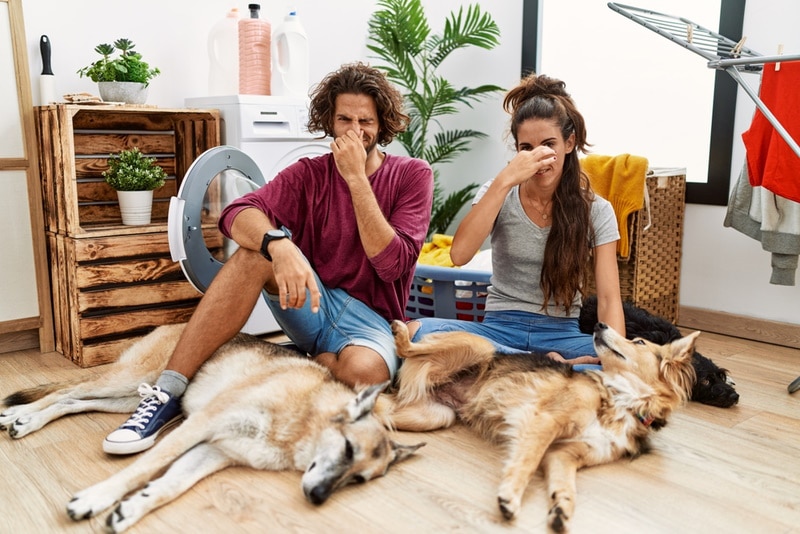
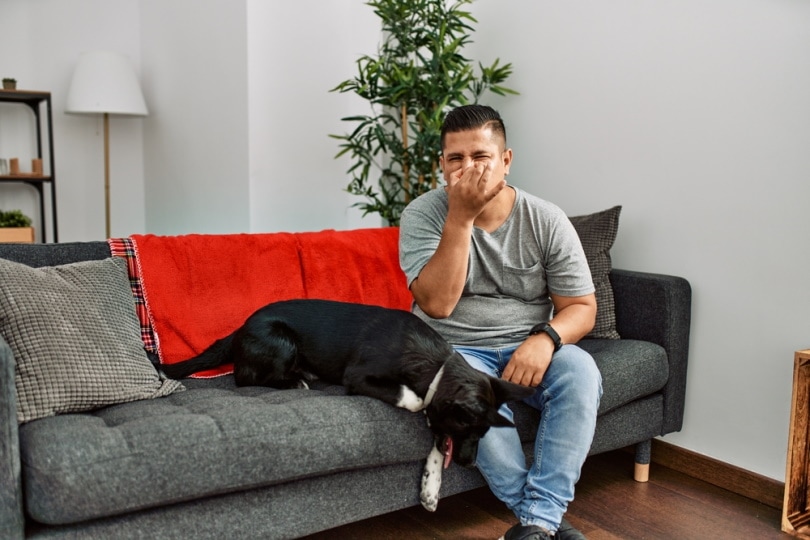
Wet dog smell is one of those universal odors that anyone can identify, even if they don’t have a dog. It is odd to think that your house or car can smell like a soggy pup even if you don’t have one. How can this be?
As it turns out, the pungent smell isn’t the dog’s fault—it is yeast and bacteria. Ready to sniff around for more details?

The Science Behind Wet Dog Smell
Take a look at your dog’s hair and skin, and maybe even your own. Something you won’t see, no matter how hard you squint, are microorganisms 1.
Microorganisms, or microbes, take up real estate on everyone and everything, including your dog. These tiny living things are invisible to the naked eye but play a vital role in the skin microbiome and essentially everything they touch.
The most common microbes are bacteria, viruses, and fungi. Some microbes make us sick, some improve our health, and some make us stinky. In fact, some of the most pungent smells stem from bacteria.
As microbes continue about their days, they leave behind a certain unique smell that’s amplified with moisture evaporation. Even in dog-free households, it’s possible to have the same microbes in your house making it difficult to prevent. A humid environment will amplify this smell, causing the wet dog smell.
Some Dogs Smell Worse Than Others
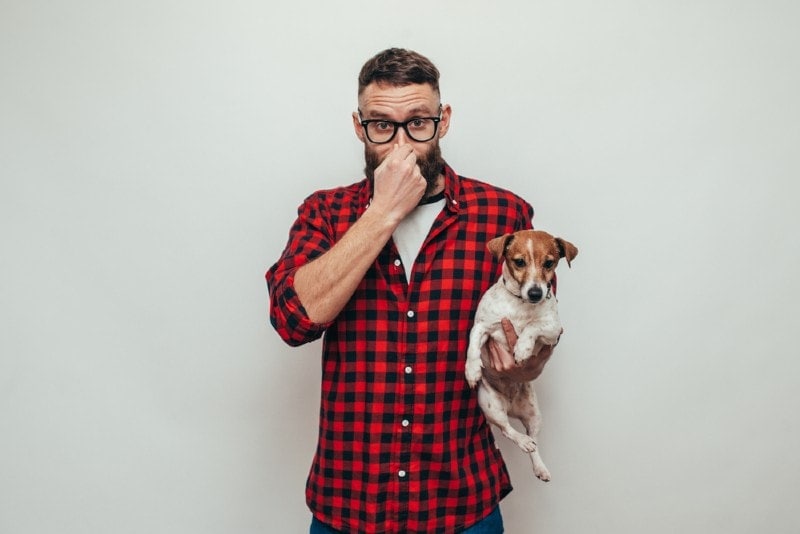
It’s true that some dogs smell worse than other dogs, like how some humans can smell more pungent than others. Dog breeds, such as the Chinese Shar-Pei, Pugs, Bulldogs, and Frenchies, are all more smelly than others because their skin flaps retain moisture.
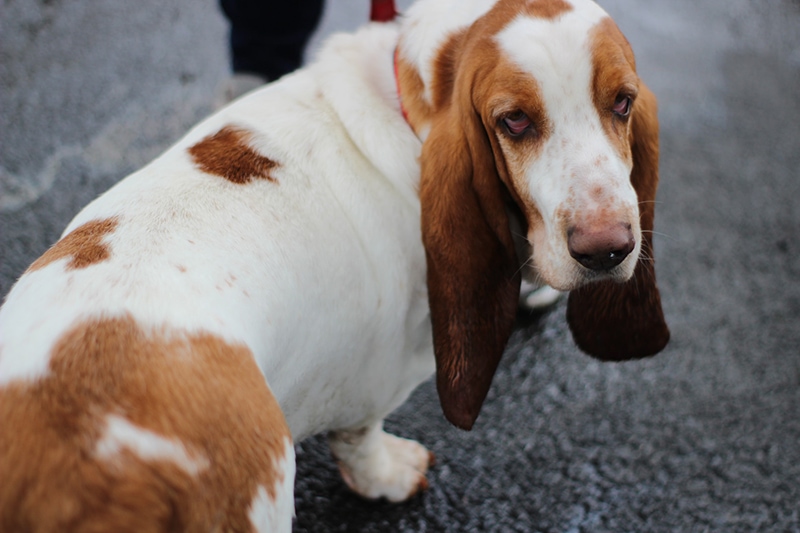
Other dogs have more oily skin, like Basset Hounds and Cairn Terriers. Mastiffs, Newfoundlands, and Dogue de Bordeauxs are all drooly dogs and can also be a bit smelly.
The biggest takeaway from the wet dog smell is moisture. Any dog that retains moisture, either with skin flaps, natural skin oils, or drool, will likely be smellier than other dogs.

How to Get Rid of Wet Dog Smell
1. Bathing
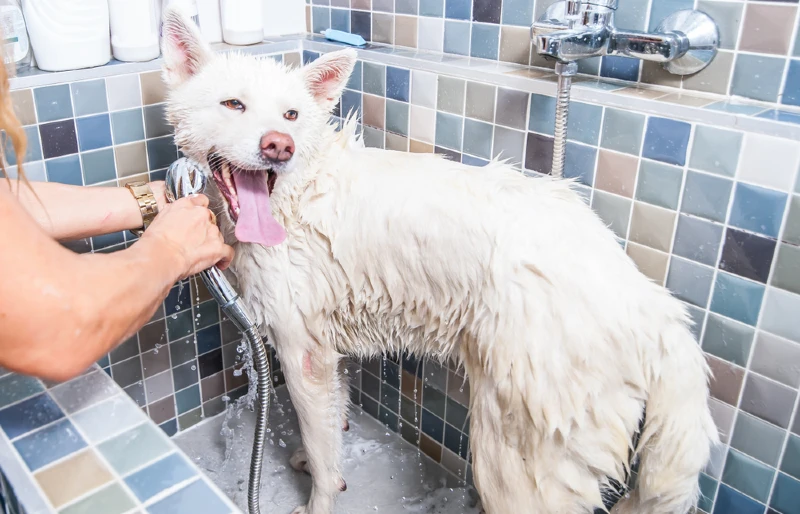
Bathing is important for a good-smelling dog and is a good place to start, but ensuring your dog is fully dry is more important to keep the wet dog smell out of your house.
Double-coated dogs need more time to dry, so try using a thick towel and hair dryer to expedite the process. Keep these items by the front door for rainy days, too.
2. Furniture
Baking soda and a steamer are your best friends when it comes to removing odors from furniture. A steamer will kill the bacteria, while the baking soda and vinegar will lift the odors out of the material (vinegar also kills bacteria in the process).
To use: Sprinkle baking soda onto the furniture’s surface and let sit for 10 minutes. Vacuum, then steam the same surface area.
These good old-fashioned products do the job, are gentle on most materials, and are safe around pets.
On the other hand, you can also buy a cleaning spray designed specifically for pet owners. Some people find these are a lot quicker and easier to use.
3. Wash Pet Beds, Toys, Leashes, and Linens
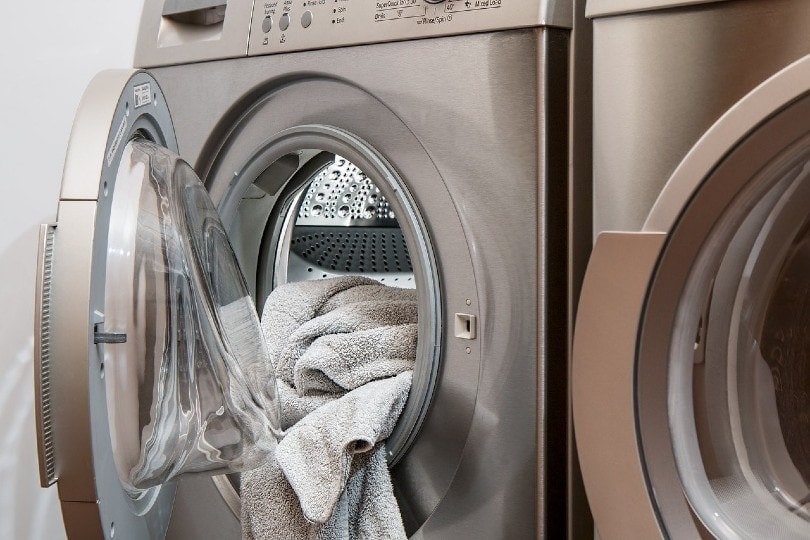
Wash beds, toys, harnesses, and leashes too, as these all retain odors and moisture.
If the wet dog smell is really bad, opt for a different material that doesn’t retain moisture like nylon and leather.
To use: Sprinkle ½ cup baking soda into the washer to amplify the detergent’s power—the outcome is much fresher. Add a splash of vinegar to the rinse cycle as a natural softening agent.
Our favorite enzyme cleaner for eliminating pet smells and stains is our very own Hepper Advanced Bio-Enzyme Pet Stain & Odor Eliminator Spray. It makes clean-up a breeze because it permanently removes even the very worst smells and stains (urine, feces, vomit, you name it!) from basically any surface you can imagine.

- ADVANCED ENZYMATIC CLEANER - Penetrates the most stubborn smells and stains at the deepest molecular levels to dissolve any pet mess you encounter and lift it away at the source.
- FOR ANY MESS, ON ANY SURFACE - This pet odor eliminator cleans your carpets, floors, furniture, fabrics, and more. Whether it's urine, feces, vomit, or drool, you can erase all foul spots and smells!
- FRESH, NATURAL ODOR - Our unique formulation doesn't rely on dangerous or unpleasant chemical fragrances to get the job done. We eradicate smells and stains, not just cover them up.
4. Medical Treatment
At the end of the day, you can take your dog to a professional groomer or veterinarian if the smell is atrocious. Specialty shampoos and topical medicines can help kill some of the bacteria causing the odor.

Conclusion
The wet dog smell makes the list of pungent odors we can all live without, but as long as moisture exists, you’ll come across this odor eventually. With a few materials you most likely have on hand, you can remove this odor from your house. Some dog breeds require more maintenance than others, but the process of removing the smell will always be the same.
Sources
Featured Image Credit: UfaBizPhoto, Shutterstock
Get Hepper In Your Inbox


Pet care tips from our vets and experts, straight to your inbox.
You may opt-out at any time. View our Privacy Policy for more information.

Cassidy is a vet tech and pet sitter who has more recently become a pet writer. She loves cats and dogs and has had dozens of pets over the years. Her specialty is the human-animal bond.
Cassidy and her husband currently live in Kansas with a German Shepherd named Raven, two cats named Lucy and Streudel, and several backyard chickens.
Join the conversation
Ask a question, share your story, or send private feedback.