Hepper blog

Search our database of over 9,984 posts with up-to-date information from our experts and veterinarians.

Hepper is reader-supported. When you buy via links on our site, we may earn an affiliate commission at no cost to you. Learn more.

Why Does My Cat Sound Like a Pigeon? 3 Vet-Reviewed Reasons

By Ashley Bates · Reviewed & fact-checked by Dr. Maja PlatisaVet Approved
Dr. Maja Platisa
Reviewed & Fact-Checked byDr. Maja PlatisaVeterinarian
Dr. Maja has over 8 years of veterinary experience working with various animal species in the United Kingdom and the Channel Islands, from dogs, cats, rabbits, guinea pigs, to cows, goats, sheep, pigs, and poultry. Maja is very enthusiastic about veterinary volunteering work and often helps in neutering projects for stray animals in Greece. She has a wide range of skills in the fields of animal medicine and surgery, diagnostic imaging, endoscopy, microscopy and other aspects of clinical work. She is very passionate about animals and their health and loves to help our readers with any questions or issues with their four-legged family members and other animal companions. Her passion is small animal medicine and emergency work, while she also has a great interest in animal welfare. Dr. Platiša received her veterinary training and degree from the Faculty of Veterinary Medicine, University of Zagreb, Croatia, in 2015.View authorThe information is current and up-to-date in accordance with the latest veterinarian research. Read about our vets
Share
Ask us a question in the comments
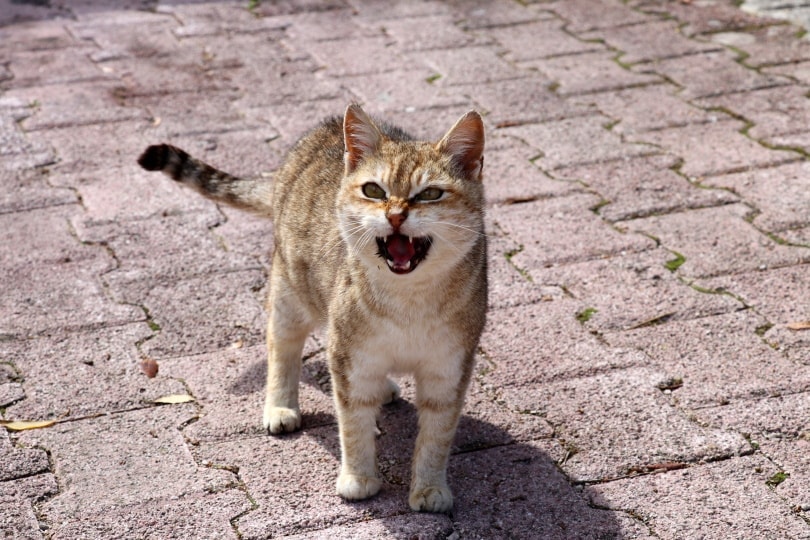
cat meowing

We all know that our cats make a fair share of strange and otherworldly noises. Sometimes their noises can surprise us, being very different from a meow or hiss. There are up to 21 different cat vocalizations described in literature. If you've ever heard a sound similar to a pigeon cooing, it actually has a name and a meaning. It’s usually referred to as trilling, although there may be some other variants of it as well, and in this article, we're going to go over what trilling is, why your cat does it, and a few more details!

Trilling: What Is it?

Trilling is one of a cat’s many methods of communication. It has its own set of meanings, depending greatly on the overall mood of the situation. Trilling is used to chat with other familiar cats and humans, and it generally marks a friendly sound or an invitation to play.

Trilling includes high-pitched, repetitive, short and soft bursts of sound. It is a very distinct sound that can be described as an R “rolling”, such as in languages like Spanish, or as some people call it, “cooing like a pigeon”. It is distinct from other sounds a cat usually makes.

You can hear what it sounds like by clicking here. Cats will easily go from making one sound to the other, combining them continuously. The trill and purr, both classed as the murmur sounds, are produced with a closed mouth. So, that’s cute and all, but what does it mean?
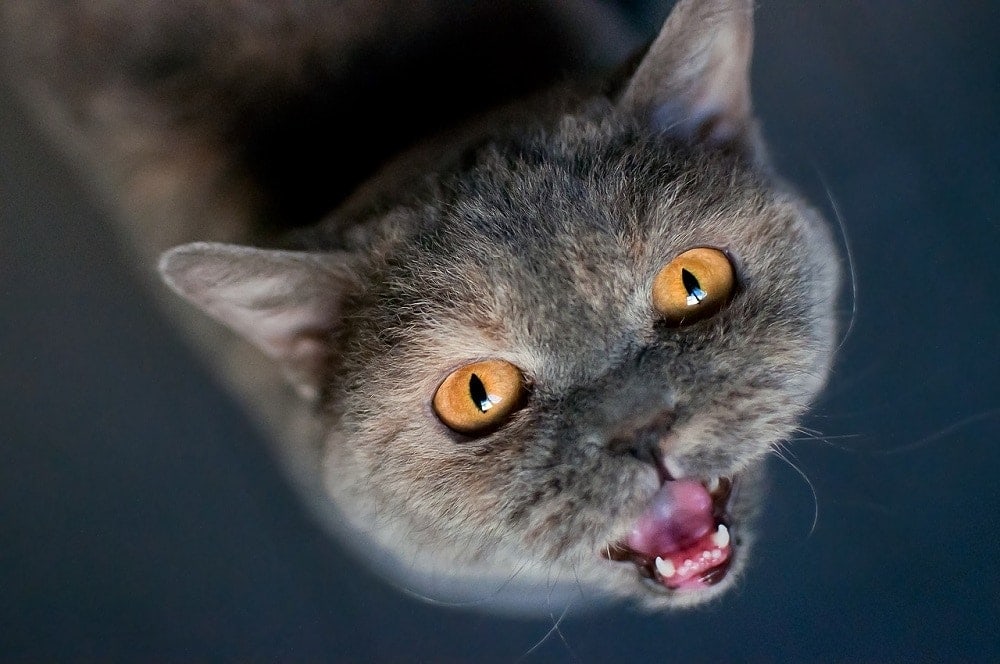
cat meow
Image by: athree23, Pixabay

Why Do Cats Coo Like a Pigeon (Trill)?

1. Your Cat Wants Attention

To put it plainly and simply, your cat wants attention. They might come up to you and trill for a way to say, “Hello, I’m here.” Conversely, you might also hear this vocalization if you start giving your cat attention unexpectedly. It is a pleasing surprise in the event of first contact, like a greeting or recognition, or it may be in response to treats and cuddles.
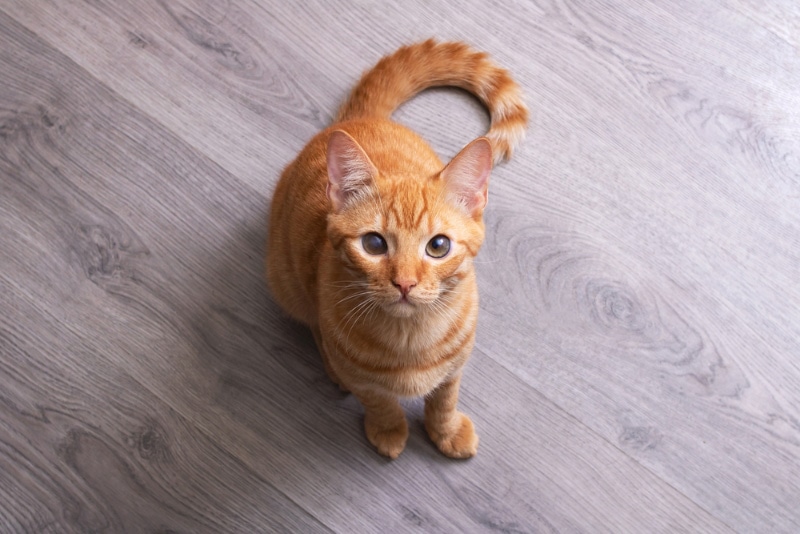
cat sitting on wooden floor and looking up
Image by: Vera Aksionava, Shutterstock

2. Your Cat Is Chatting With You

Your cat is probably just looking for a way to communicate with you. Trilling is a way of showing curiosity or attentiveness. They might come up to you and try to questionably ask you what exactly you're up to. Trilling seems to happen in a very positive or inquisitive fashion.

You can engage in conversation with them, and you can certainly expect reciprocation. Trilling can be followed up by meowing, purring, and other pleased vocalizations. They might even use their trill to lead you to the empty food bowl you forgot to fill. How polite.


3. Mom Cats Are Getting the Kitten’s Attention

You might also hear mother cats trill at their kittens. This is a way of grabbing the kittens’ attention and communicating things with them. It is very commonly seen in mother-to-kitten interactions. You can observe that in your daily life if you have a litter in your home.

Cat Sounds: What Are They and What Do They Mean?

Cats make plenty more sounds than just a trill. They have many different vocalizations, but before we dig into all that, let us blow your mind!

Did you know that feral cats don’t meow that often? It’s true. They might meow every once in a while, but they generally don’t use this vocalization as frequently because meowing in cats is mainly a way to interact with humans. Feral cats don’t often have the need to make these interacting vocalizations unless there are people feeding them with whom they may interact. This is a behavior brought on by domestication and socialization.

The most common sounds cats make are:

  • Meow: The meow is the familiar sound we all know and love. It is among some of the first onomatopoeias we learn as children.
  • Purr: When a cat is really feeling good, most purr. Not only is this a sign of happiness, but the frequency of a cat’s purr may also have the capability of healing, based on some research. Still, cats can also purr if they are in pain or ill as a way to reassure and soothe themselves.
  • Chattering: Chattering is the noise your cat makes while it looks eagerly at a bird or squirrel out the window. They are agitated and focused on the prey at hand, so much that they make this ungodly noise.
  • Growling: Growling is pretty self-explanatory; it’s a low roar of displeasure or fear if feeling threatened.
  • Hissing: Hissing means you or someone else better back off—these kitties are scared or mad, and you don't want to stick around to find out which one it is.

What Other Sounds May Resemble a Pigeon’s Cooing?

There are two other sounds that also may resemble a pigeon’s cooing. One of them is not that well researched and is called the gurgle. It’s a short, low sound that expresses friendly intentions when approaching another cat. It sounds similar to the staccato element in the cooing of pigeons.

The second sound is chirping. They’re high-pitched sounds that may be used as a way to mimic bird or rodent chirp, or as part of the kitten-mother interactions.

So, if you're thinking about the sounds that your cat is making and they sound like a pigeon, it could be more than just a trill sound they’re producing.

Conclusion

Now you understand the trill and some other sounds that cats may produce that sound like a bird. Maybe your cat isn’t mimicking a pigeon, but it certainly sounds similar. There are many reasons why cats trill, and they are usually associated with friendly and positive emotions. We hope we’ve taught you something new about your cat and their ever-peculiar behaviors.

Sources

Featured Image Credit: Stanimir G.Stoev, Shutterstock

Get Hepper In Your Inbox

Pet care tips from our vets and experts, straight to your inbox.

List

Select all that apply.

You may opt-out at any time. View our Privacy Policy for more information.

Ashley Bates
Authored by

Ashley Bates

Join the conversation

Ask a question, share your story, or send private feedback.
Rate this post
Required to post. Only our editors see your rating.
Who should see this?

A human reviews every comment before it appears. Your email is never published.

Picked to go with this article

Why Do Cats Trill? 3 Vet-Reviewed Reasons for This Behavior

Why Do Cats Trill? 3 Vet-Reviewed Reasons for This Behavior

Some cats can be extremely vocal, while others remain pretty quiet. No matter what kind of feline you have, you’ve probably heard them make the trill sound on…

Ashley Bates
By Ashley Bates ·
Why Your Cat Trills When They Jump: 5 Vet-Approved Reasons

Why Your Cat Trills When They Jump: 5 Vet-Approved Reasons

Before a cat jumps, they will crouch down, wiggle their shoulders, sometimes let out a meow, and then jump. If you have ever heard your cat make a vibrating or…

Sarah Psaradelis
By Sarah Psaradelis ·
How Many Sounds Can a Cat Make? 7 Common Vocalizations

How Many Sounds Can a Cat Make? 7 Common Vocalizations

As a cat owner, you’ve come accustomed to the sounds your kitty makes. You know what each meow means and even when they aren’t happy with their situation. Whil…

Nicole Cosgrove
By Nicole Cosgrove ·
Why Do Cats "Ekekeke"? Cat Sounds Explained (With Videos)

Why Do Cats "Ekekeke"? Cat Sounds Explained (With Videos)

Our cats talk to us all the time. They tell us when they miss us. They tell us that they're hungry, they practically communicate every aspect of their lives wi…

Ashley Bates
By Ashley Bates ·

Keep reading

More stories you might like

Why Do Cats Chatter? Feline Behavior & Instincts Explored

It’s common knowledge that cats meow and purr but what about that chattering noise your cat makes? Chattering or “chittering” as it’s also called is a sound ma…

Nicole Cosgrove
By Nicole Cosgrove ·
Why Do Cats Chatter? Feline Behavior & Instincts Explored

Cat Communication 101: Cat Body Language & Meowing

Have you ever wished your cat could talk? While cats can be mysterious creatures, they have some very effective ways of communicating with humans. From those p…

Nicole Cosgrove
By Nicole Cosgrove ·
Cat Communication 101: Cat Body Language & Meowing

Do Maine Coons Purr? Breed Facts & Other Vocalizations

If you are curious about the Maine Coon breed, you might wonder what you can expect when you own one. One of the most common cat vocalizations is purring. It i…

Ashley Bates
By Ashley Bates ·
Do Maine Coons Purr? Breed Facts & Other Vocalizations

Caterwauling: Vet-Reviewed Facts & FAQ

They might not be able to talk, but cats have a plethora of ways in which they can communicate. Caterwauling is one such way. Caterwauling is a shrill, howling…

Nicole Cosgrove
By Nicole Cosgrove ·
Caterwauling: Vet-Reviewed Facts & FAQ

Why Is My Cat Making a Vibrating Noise? 5 Vet-Approved Reasons

This article has been fact checked by a qualified veterinarian using information available at the time of review. Veterinary medicine is continually evolving a…

Rachel Giordano
By Rachel Giordano ·
Why Is My Cat Making a Vibrating Noise? 5 Vet-Approved Reasons

5 Reasons Why Your Cat Is Chirping at Birds: Do They Lure Them?

Cats are curious creatures. So often, we will try to figure out what they are thinking or why they are acting a particular way. One of the things that your fel…

Nicole Cosgrove
By Nicole Cosgrove ·
5 Reasons Why Your Cat Is Chirping at Birds: Do They Lure Them?

Do All Cats Meow? Is It Typical? Vet-Approved Answers

Cats rely on meowing as their main form of communication—usually with humans and for kittens with their mother. Cats start meowing a few days after they are bo…

Sarah Psaradelis
By Sarah Psaradelis ·
Do All Cats Meow? Is It Typical? Vet-Approved Answers

Do Cats Purr When They Are in Pain? Vet-Reviewed Facts & FAQ

How much do you love hearing your cat purr while they are curled up in your lap? It’s a relaxing sound that lets you know that your cat is feeling good at that…

Kathryn Copeland
By Kathryn Copeland ·
Do Cats Purr When They Are in Pain? Vet-Reviewed Facts & FAQ