Hepper is reader-supported. When you buy via links on our site, we may earn an affiliate commission at no cost to you. Learn more.
Why Do Dogs Eat Their Puppies? 6 Vet-Reviewed Reasons


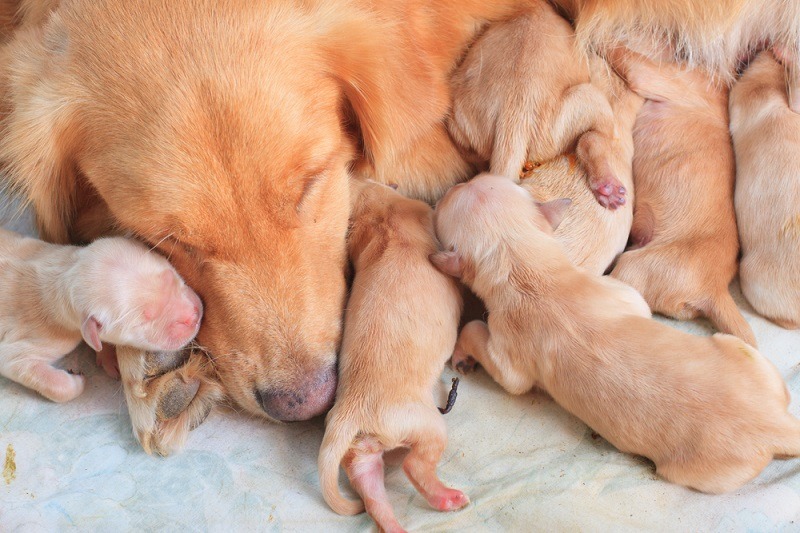
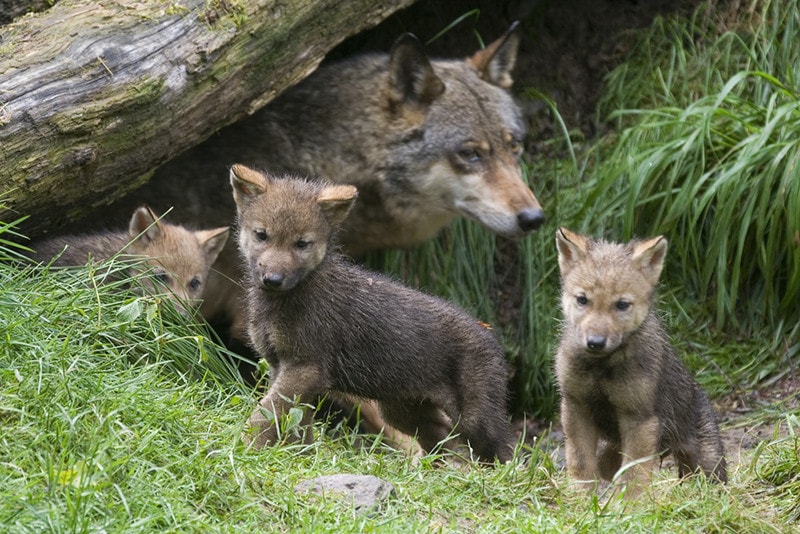
It’s one of those things that nobody likes to talk about, but the fact is, mother dogs will occasionally eat their puppies. It’s rare and tragic, but unfortunately, it does happen. There are a few theories as to why this occurs. We’ll explore prominent ones below, as well as discuss strategies for preventing it from happening in the future.

Do Dogs Eat Their Babies?
Before we explore why a dog might eat her young, it’s important to note that animals don’t have the same moral compasses that humans do. They’re just following their instincts, not trying to be monsters. In some cases, she might be trying to be a good mom—just in a misguided way.
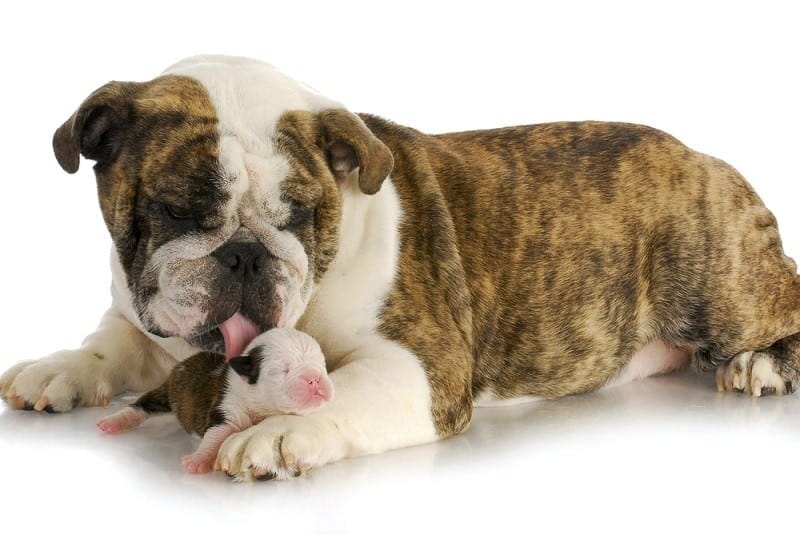
As a result, you shouldn’t punish a dog that eats her young. By all means, try to stop her from doing it again, but don’t judge her for it. She’s not trying to be evil, and she’s still the same dog you’ve known and loved.
Is It an Inherited Trait?
There doesn’t seem to be any sort of predisposition within certain breeds to eat puppies. However, studies suggest that lower cholesterol and oxytocin levels might be behind canine infanticide and cannibalism.1
Beyond that, though, there doesn’t seem to be any sort of inherited trait that makes one dog more likely to commit cannibalism than another. Instead, most of the factors seem to be external.
The 6 Main Reasons a Mother Dog May Eat Her Puppies Are:
1. She May Not Recognize Them
Dogs don’t always recognize their puppies as their own. If they don’t realize that the puppies are theirs, then their natural predatory instincts may kick in, with tragic results.
This is especially common in dogs who deliver via Cesarean section. C-sections prevent their bodies from releasing the natural hormones that cause them to recognize their young, and they also prevent them from experiencing the act of birth.
Sometimes, though, the hormones do kick in—there’s just a little bit of a lag. In those cases, preventing the mother from eating the young can make all the difference in the world, as they’ll resume their normal maternal duties as soon as the hormones take effect.
2. She May Be Inexperienced
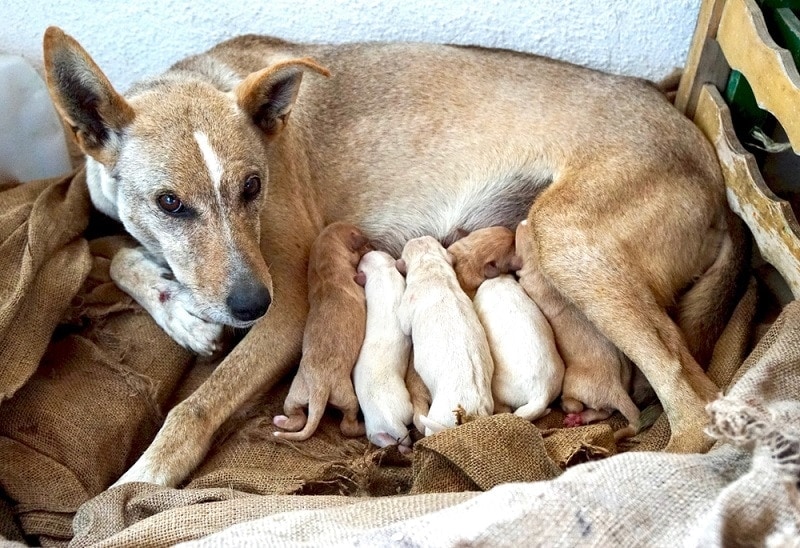
First-time mothers, especially those bred too young, might simply not know how to care for their puppies. While dogs rarely display direct severe aggression towards their newborn puppies, inexperienced dogs may fail to attend to their puppies regarding warmth, nutrition, and the much-needed stimulation for the pup's urine and feces elimination. Normally, maternal behavior is instinctive, but some first-time, inexperienced female dogs are poor mothers, especially if they are nervous or anxious.
3. She May Be Stressed
All animals—including humans—do strange things when they’re under stress. For nursing dogs, this can include killing their puppies.
One of the biggest sources of stress for a new canine mother is a busy birthing area. If there are people constantly coming and going or other animals harassing her, a mother may flip out and start eating puppies. It’s horribly out of character, but it happens nonetheless.
You should do everything you can to give a new mom a quiet, secluded nursery. Set aside a room in your house or barn, and make it as comfy as possible for her. Be sure to give her plenty of food and water as well, so she doesn’t have to leave her pups to go looking for sustenance.
Of all the reasons that a mom might eat her pups, stress is one of the easiest to avoid, so do your best to avoid it. If you have a stressed dog, we suggest speaking to a vet online.
4. She Might Have Made a Mistake
After giving birth, a dog will clean her pups, bite off the umbilical cord, and eat her placenta. Sometimes, she devours more than just the afterbirth, though.
The vast majority of the time, any puppy that gets eaten will have been stillborn. Most stillborn pups give off certain clues that alert the mother to that fact, and she’ll usually drag off any puppies that didn’t make it. She may also eat the body along with the placenta.
The good news is that as long as she only eats the stillborn pups, the mother should still be trustworthy around the rest of her newborns.
5. She Might Be Committing a Mercy Killing
Not every puppy is born strong with a high chance of survival. Some are weak, scrawny, or otherwise unhealthy.
In the wild, these dogs would have virtually no chance of surviving. As a result, the mother might not want to waste precious resources feeding a dog that won’t make it. Instead of letting the pup wither and die, the mom may just put the runt out of its misery. This may seem barbaric, but it’s the best way to ensure that the rest of the group survives. It’s a behavior that serves the animals well from a Darwinian perspective.
Of course, advances in veterinary care have made it possible for many of these weak puppies to survive and thrive, but most dogs don’t keep up with advances in veterinary care. It’s up to you, then, to rescue the puppy and try to save them.
Be on the lookout for any pups that aren’t nursing or that have wandered off away from the rest of the litter. Also, if the dog is clearly sick or deformed, the mother may not let it nurse. In these cases, you’ll have to take on the mantle of motherhood yourself.
6. She May Have Mastitis
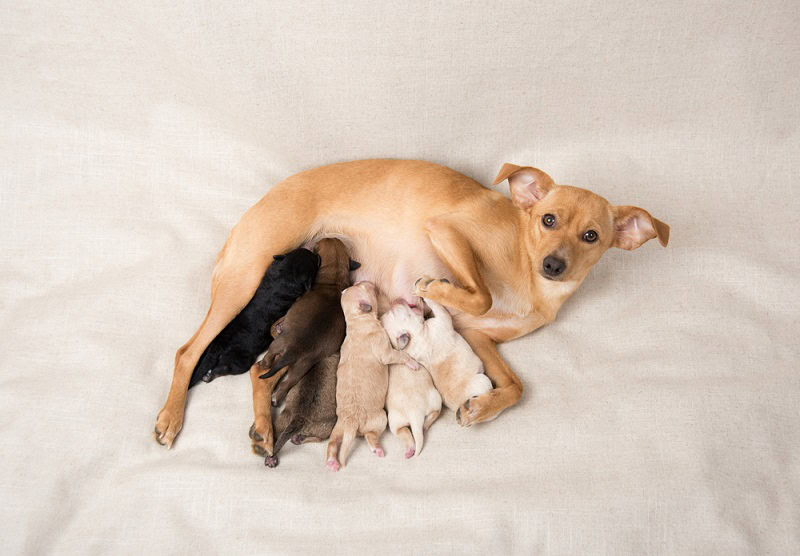
Mastitis is a painful infection of the mammary gland that sometimes occurs after birth. The dog’s mammary glands can become red, swollen, and painful to the touch. This makes nursing excruciating. However, the puppies don’t realize that—all they know is that they’re hungry and the teats are where the milk is. If they’re too eager to latch on, they may hurt their mother, causing her to lash out and potentially kill them.
She may also reject and abandon her puppies. This can be just as fatal as being attacked, and in some cases, the mom will come back to eat the young that didn’t make it.
Fortunately, mastitis is treatable, so as long as you get your dog prompt medical care, it shouldn’t be fatal to the puppies. You may need to bottle-feed them until the mom’s ready to take over again, though.

Not All Dogs Make Good Mothers
The simple fact is that not every dog is cut out for motherhood. Some dogs are naturally unstable for one reason or another, and they shouldn’t be allowed to have puppies.
If a dog has already killed or eaten one of her puppies, you should consider taking the rest away from her, as they may all be at risk. Also, unless this happened in the first litter due to inexperience, this dog should be fixed as soon as possible. If hormonal and cholesterol causes are behind the aggressive behavior, she’ll likely repeat her behavior with future litters. However, some inexperienced mothers who are unsuccessful with the first litter can be good mothers to subsequent litters.
Other Things to Keep in Mind
One myth about newborn dogs is that the mother will reject her young if the scent of a human gets on them. That’s almost certainly not the case, especially if the mother is accustomed to being around people.
In fact, it may be essential for you to handle the puppies, especially if any are sick, injured, or not feeding. You may need to keep them alive until the mother can resume caring for them again. However, if you repeatedly handle and move the puppies more than necessary or hide the puppies away from her sight, she might perceive that something is wrong with that puppy and reject it. Ideally, only handle the puppies when it's absolutely necessary.
Moreover, it’s possible for you to introduce infection into the puppies by handling them, and that may cause the mother to eat them. You may carry a highly contagious virus, like parvo on your clothing or shoes, which can then infect the pups. Wear clean clothes when handling the pups, especially if you’ve interacted with other dogs recently.
Also, you may notice the mother growling or snapping at her puppies. This is perfectly normal, as she’s disciplining them the same way any mother would. This discipline shouldn’t happen within the first week of their lives, though, so you may need to intervene if she’s showing aggression too soon.
One other thing to be aware of is that while most doggie mothers won’t eat their puppies, it doesn’t mean that other dogs won’t. Puppies and their mothers are in a vulnerable state, especially during the first crucial weeks. That’s why you shouldn’t let any dog other than the mother around the new litter.
Most Dogs Make Excellent Mothers
As long as your dog is mature, healthy, and otherwise well-behaved, you shouldn’t have to worry about her eating her puppies. It’s a rare behavior, and there are usually clear underlying causes behind it.
Canine cannibalism is an unfortunate thing, but it does happen. Fortunately, you’re not likely to experience it, and if you do, there are things you can do to make sure it never happens again.
See also:
Featured Image Credit: stockphoto mania, Shutterstock
Get Hepper In Your Inbox


Pet care tips from our vets and experts, straight to your inbox.
You may opt-out at any time. View our Privacy Policy for more information.
Nicole is a lover of animals of all sizes but is especially fascinated with the feline variety. She’s the proud mom of Baby, a Burmese, and works every day so he can relax in the sunshine or by the fire. She’s always had a cat in her home and has spent countless days with others, observing behaviors and softening up even the grouchiest of the lot. Nicole wants to share her kitty expertise with you so you and your cat can live happy, healthy, and care-free.
Join the conversation
Ask a question, share your story, or send private feedback.