Hepper is reader-supported. When you buy via links on our site, we may earn an affiliate commission at no cost to you. Learn more.
African Cichlid: Pictures, Size, Care, Tank Setup & More
In this article
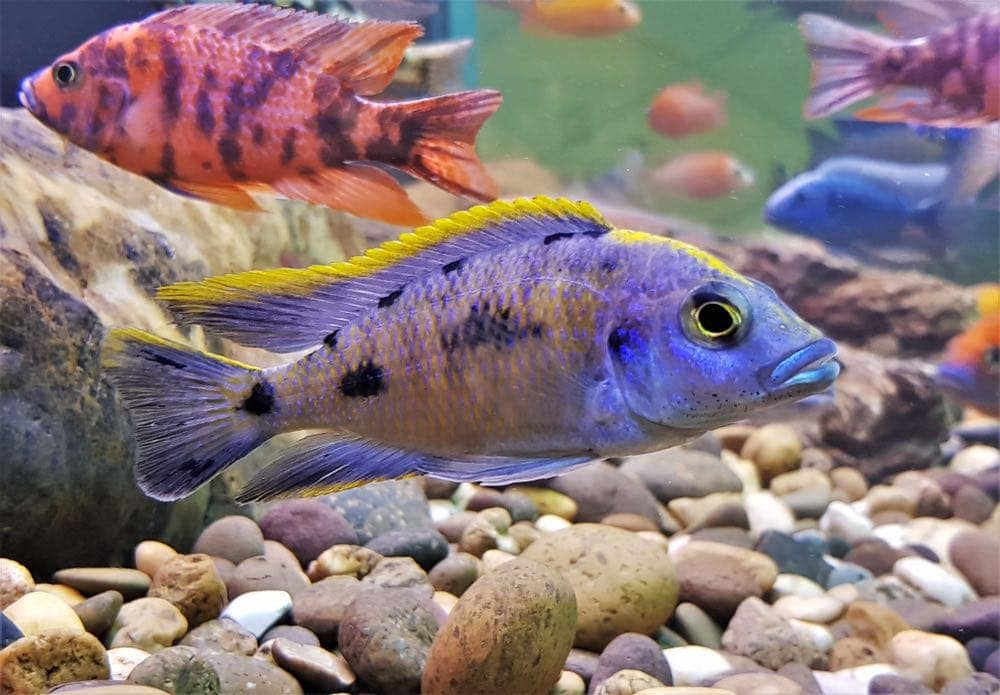
The majority of African Cichlids sold in the pet trade come from the Malawi and Tanganyika Lakes in Central Africa. Most are freshwater species, but brackish and saltwater fish exist. Many prefer shallow waters, with some outliers. You will find dozens of varieties available, but you are probably here to find out more about taking care of this fish species. So, let’s dive right in!

Quick Facts About the African Cichlid
| Species Name: | African Cichlid |
| Family: | Cichlidae |
| Care Level: | Moderate to advanced |
| Temperature: | 75–85℉ |
| Temperament: | Semi-aggressive to aggressive |
| Color Form: | Varies with the species |
| Lifespan: | 6–10 years |
| Size: | Varies with the species |
| Diet: | Depends on the species |
| Minimum Tank Size: | At least 30 gallons |
| Tank Setup: | Typical tropical tank setup species variations for pH, hardness, and temperature |
| Compatibility: | Best alone or with like species |

African Cichlid Overview
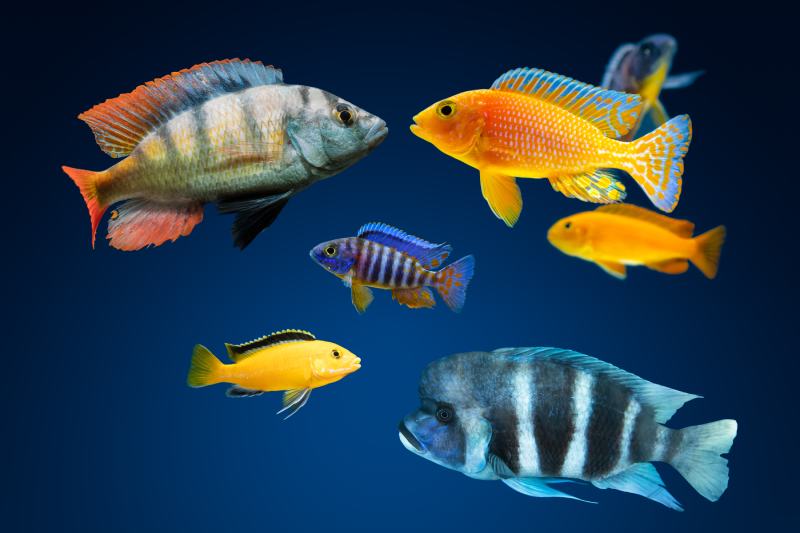
The Cichlidae family is widely distributed across the world, usually in semi-tropical and tropical areas. It’s noticeably underrepresented in Asia. Africa and South America are the primary strongholds. Raising these fish is often challenging. You’ll likely find an array of species choices. Complicating the matter is the fact you may find it hard to find specific information on your cichlid.
As if that wasn’t enough, scientists are still identifying new species, which isn’t surprising, given the remote habitats of some fish. Of course, there’s also the taxonomy turmoil. We’d be remiss if we didn’t mention how difficult it can be to keep them healthy. Part of it is a lack of expert knowledge. Other issues concern raising wild species in captivity.
How Much Do African Cichlids Cost?
Surprisingly, African Cichlids are widely available. You won’t have a problem finding one. It might be another story to get a specific species. You’ll find both wild-caught and captive-bred fish. That can play a role in the price you’ll pay. Rarity is another factor. However, you can find a decent selection of African Cichlids for under $50.
We suggest sticking with sellers who offer guarantees or warranties, given their cost. It’s worth mentioning that many businesses sell juvenile specimens that may be impossible to sex or definitively determine the adult color.
Typical Behavior & Temperament
The behavior of African Cichlids is often dependent on their diet. Of course, carnivores will likely be semi- or outright aggressive. The size factor also exists. Small fish and large species don’t mix. The former is more likely to be food than tank mates. It’s worth mentioning that these fish are often known for their threatening behavior. It also shows up in the varying territoriality of different cichlids.
Appearance & Varieties
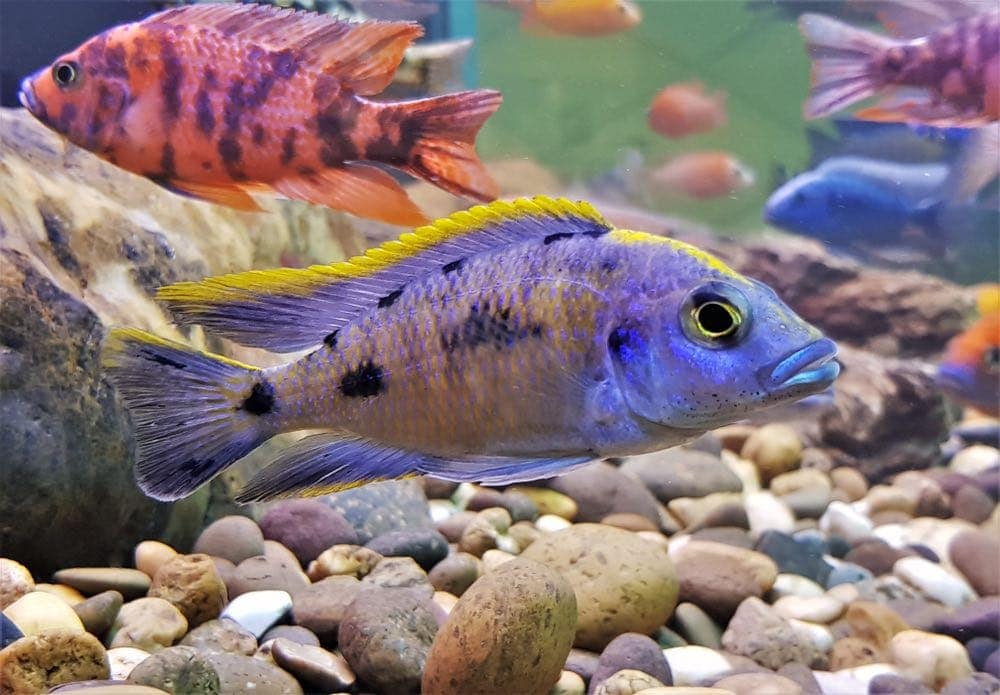
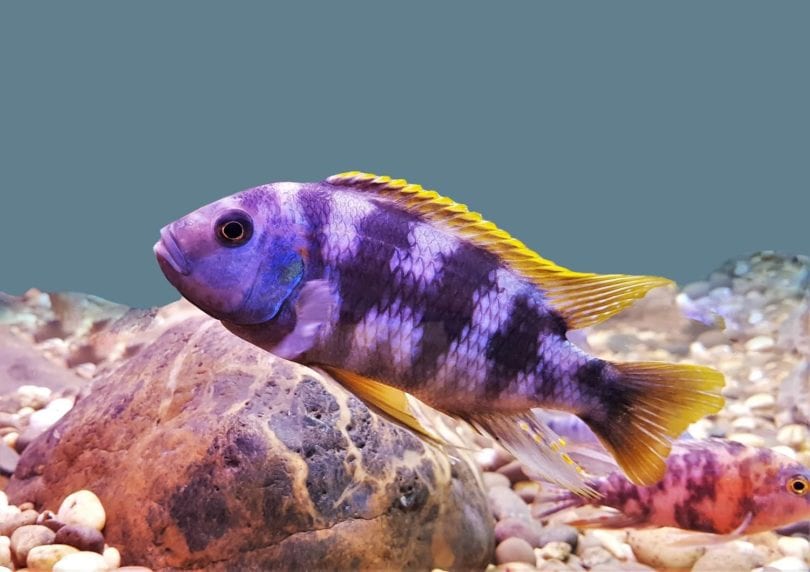
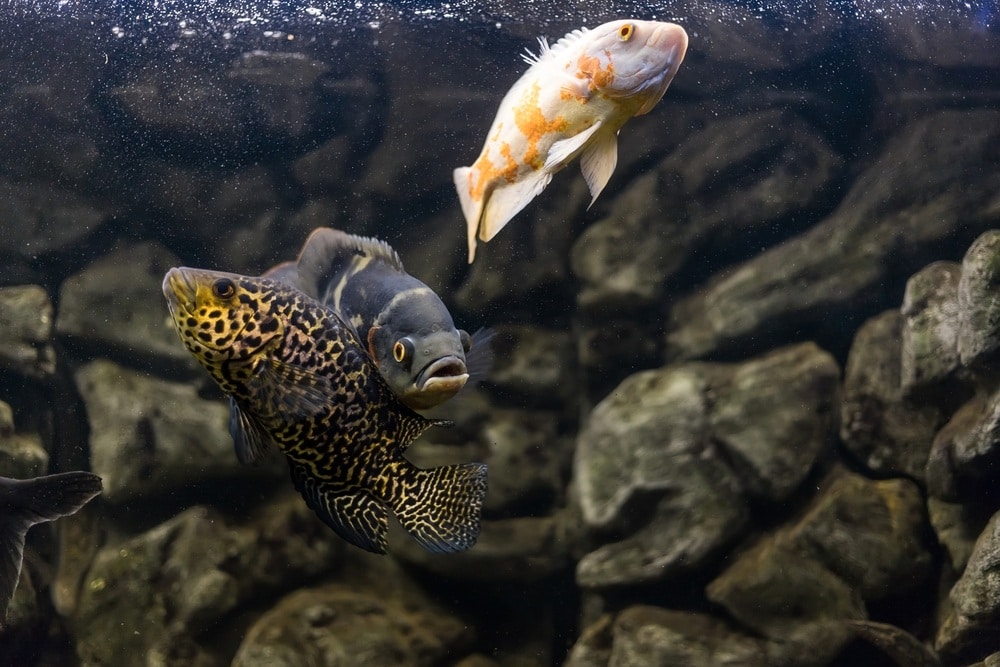
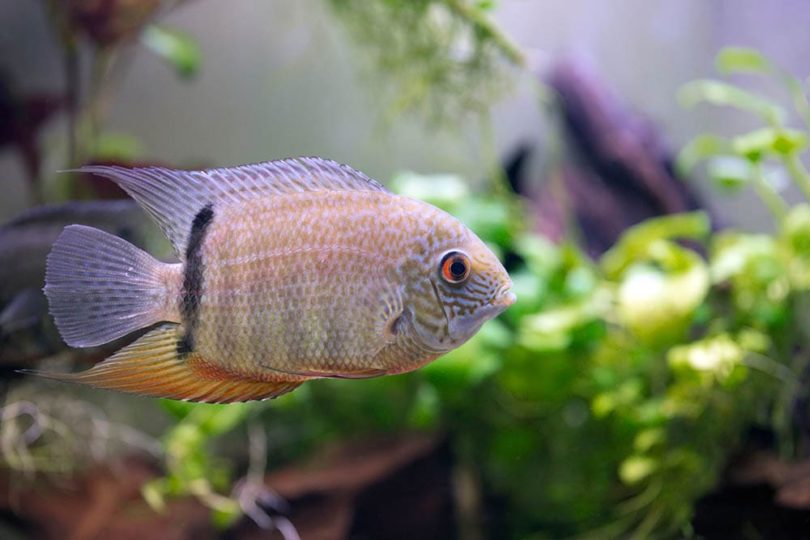
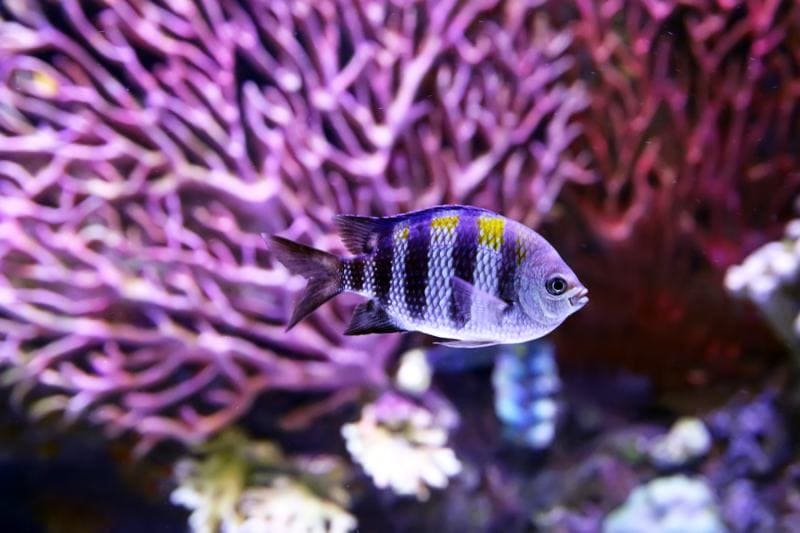
One common denominator we see is an elongated body with prominent dorsal, ventral, and anal fins. Many are plain-colored and blend in with their habitats. Others, such as the appropriately named Midnight Peacock, are quite striking and colorful. You’ll see mono-colored fish and ones with stripes and other trappings conducive to camouflage.
Interestingly, the appearance of a particular species isn’t necessarily a significant factor in the price you’ll pay. It’s more of a product of demand and availability.

How to Take Care of an African Cichlid
Perhaps, part of the allure of raising African Cichlids is the difficulty of keeping them. Some enthusiasts may view it as a challenge. It’s essential to put this theory in context. Any animal is likely to be stressed when plucked from its native habitat to a captive setting. Remember that survival often depends on a keen understanding and knowledge of one’s world. It’s easy to see why wild fish have issues.
Habitat, Tank Conditions & Setup
Stability is a vital element in keeping African Cichlids healthy. So, what setup do you need to have? Let’s take a closer look.
Aquarium Size
We recommend at least a 30-gallon tank for cichlids. They are territorial. If you have any hope of other fish living with them, everyone will need their space. It also benefits the fish on another vital score. A bigger aquarium has more stable water conditions that fluctuate less dramatically than a small tank. It’s a matter of concentration.
Ammonia, nitrites, and nitrates are problematic if they get out of hand by upsetting the water chemistry. They are more subject to rapid change in small water quantities than larger ones. It’ll also make maintenance easier for you. Of course, your initial setup cost is considerably higher. However, you have to weigh the benefits.
Water Conditions
The same concept of stability applies to water conditions. We recommend a temperature range of 75–85℉. Aim for a pH between 7.8–8.6. The hardness is on the higher end between 12–30 dH. Regular testing will ensure your aquarium stays within these limits. Of course, species variations exist. It’s worth noting that microclimates can exist with the large lakes in which African Cichlids live.
Tank Setup
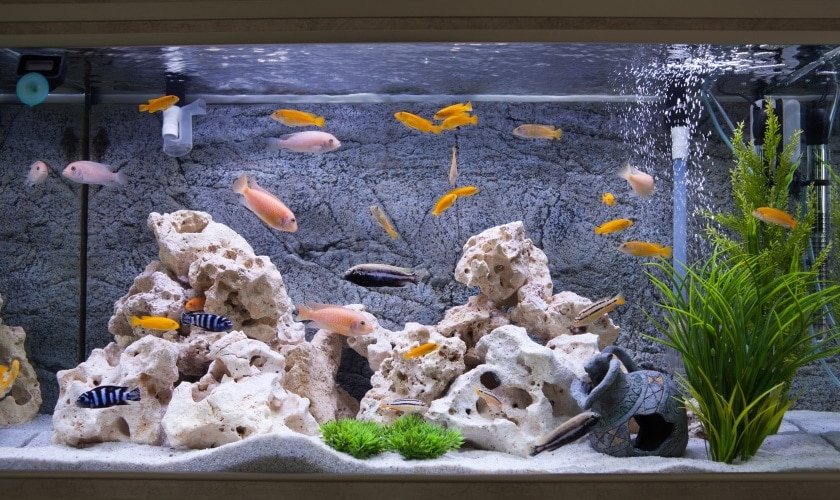
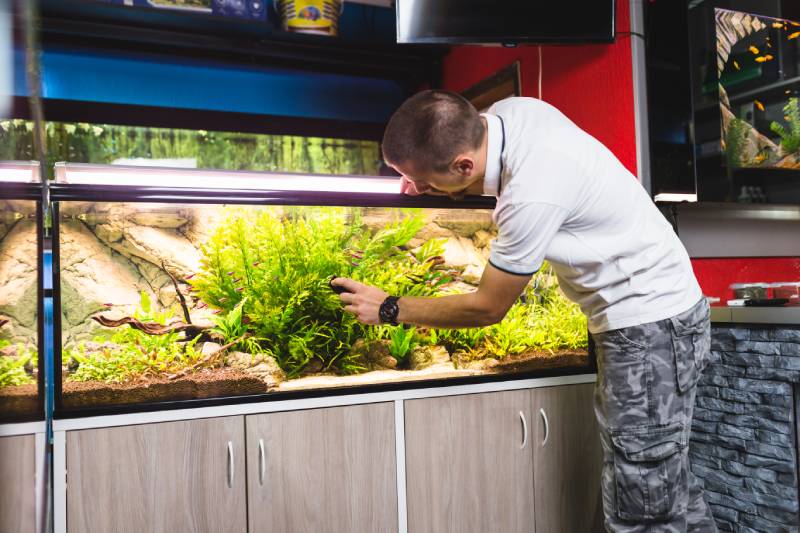
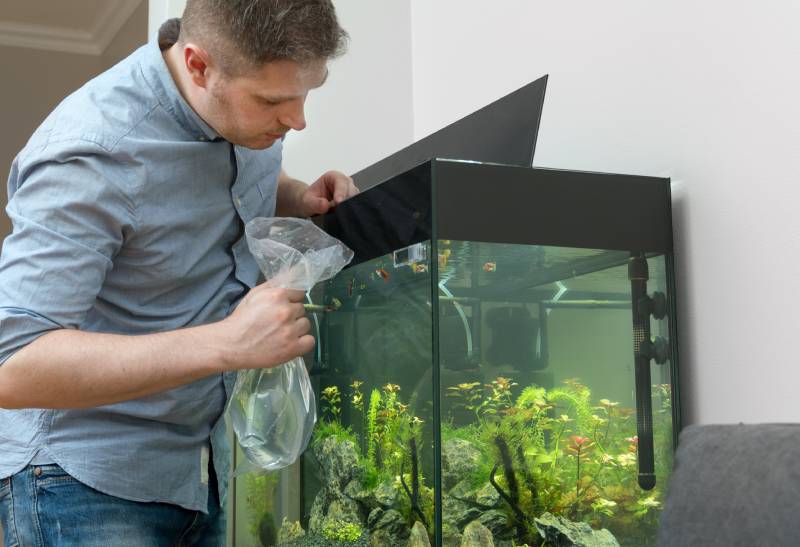
The tank size and water chemistry are the primary factors. A power filter and heater are must-haves to ensure a stable environment. We like using a power filter because it helps agitate the water’s surface to maintain healthy dissolved oxygen levels. You must also clean the substrate and remove debris that can foul the water.
Plants, rocks, and driftwood can provide cover and structure. Animals feel more secure if they have hiding places. It’s also vital for the survival of smaller fish and juveniles. Otherwise, they are prey to predators.
We suggest using live plants instead of artificial plants. Wild-caught species have no experience with these foreign materials. It’s critical for herbivores.
Are African Cichlids Good Tank Mates?
This question is hard to answer definitively because of the broad spectrum of African Cichlids. We suggest starting with fish that eat the same things. Keep herbivores with other species that consume plants. It’ll make care easier for you. It can help ensure compatibility. For example, small fish like guppies are just food for a meat-eating cichlid.
We suggest doing your homework. Find a pet store with experienced staff who understand the unique needs of cichlids. Remember that it’s one thing if two species inhabit the same African lake; it’s another matter to put them together in the confined space of a tank. All bets are off at this point.
What to Feed Your African Cichlid
The diversity of African Cichlids includes their dietary range. Again, it’s species-dependent on what to feed your fish. It's worth noting that carnivores might be reluctant to eat frozen or freeze-dried foods. After all, they’re predators used to chasing and killing prey. If your cichlids aren’t eating these foods, offer them live feeder fish to see if that sparks an interest.
Some species are omnivores, underscoring the need for live plants. Remember that a wild-caught fish will be wary of unfamiliar foods because it’s instinctive. It’s a survival strategy common among many species across class lines.
Keeping Your African Cichlid Healthy
Diet and your tank setup are the deal breakers that will determine the health of your African Cichlids. We strongly urge you to research these topics to ensure you’re providing what your fish need and expect from their habitats. Keep changes to a minimum. Bi-monthly water changes in a large aquarium aren’t as stressful as those in a small tank. Remember that conditions in large water bodies don’t fluctuate a lot.
Breeding
African Cichlids need a separate tank for breeding because you must separate the parents from the eggs and fry. That’s not unique to these fish. It also explains why the females may produce hundreds of eggs. Feed your fish a high-protein diet to give them and their offspring the best chance for success. The male will court the female. She may lay eggs or mouth brood them, depending on the species.
The female may put some effort toward parental investment—or not. Hence, there is a separate tank for breeding. Observe the situation and make a call based on what the fish do.

Are African Cichlids Suitable For Your Aquarium?
African Cichlids are fascinating fish. They are indeed a step up for the enthusiast looking for a greater challenge than raising guppies. However, the demands start with setting up the right tank for them. They are hardy but also susceptible to the effects of excessive stress. They're part of a diverse group of fish. Therefore, your first task is learning about their specific needs.
See also:
Sources
Featured Image Credit: Arunee Rodloy, Shutterstock
Get Hepper In Your Inbox


Pet care tips from our vets and experts, straight to your inbox.
You may opt-out at any time. View our Privacy Policy for more information.

Chris is an experienced pet writer specializing in science topics, with a particular passion for health and the environment. She has been a writer for over 15 years and lives with her husband and three cats in Michigan.
Beyond writing about cats and dogs, Chris loves to learn about wine. She has WSET 1 and 2 certifications and is currently pursuing her Certified Wine Specialist Award (CSW).
Join the conversation
Ask a question, share your story, or send private feedback.