Hepper is reader-supported. When you buy via links on our site, we may earn an affiliate commission at no cost to you. Learn more.
Are Papillons Good With Cats? Facts & Tips to Introduce Them

In this article
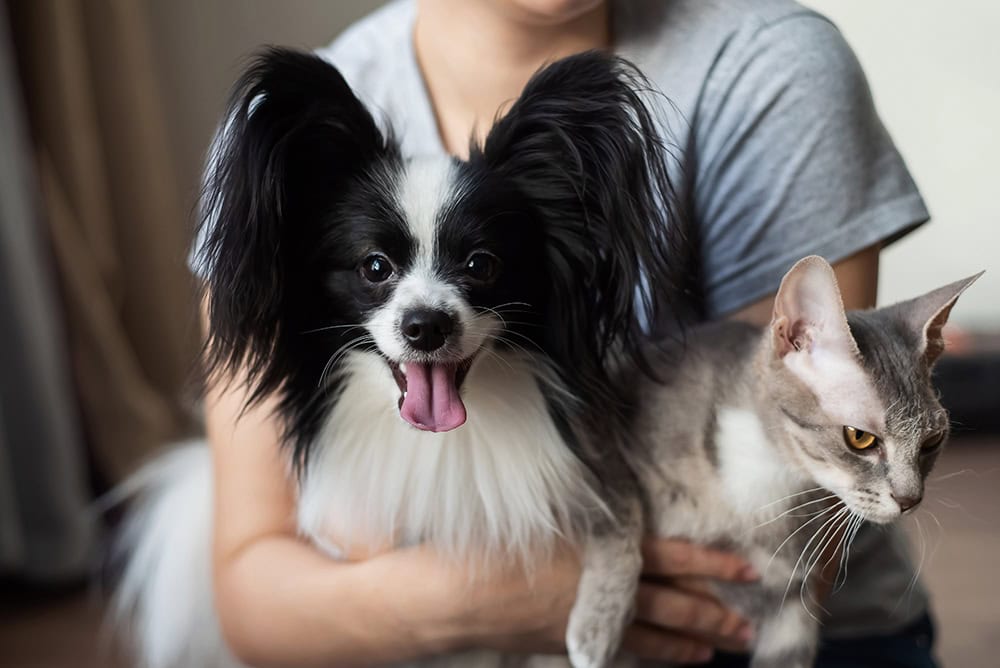
Some dog breeds naturally get along better with cats than others. If you’re hoping to become a multi-species home, you need to familiarize yourself with the breeds that are more likely to develop lifelong companionships with your feline family members. Papillons are among the most brilliant, affectionate, and energetic small dogs, but do they get along well with cats? Papillons certainly can get along with cats!
Read on to learn more.

Can Papillons Get Along With Cats?
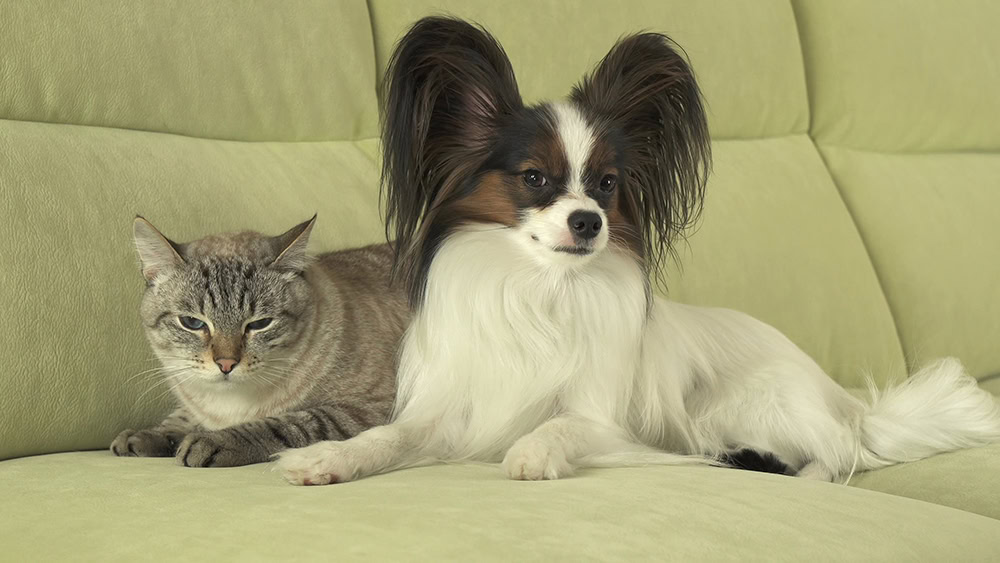
Yes, Papillons can get along swimmingly with cats, provided they’re socialized from a young age. Paps are a small breed, similar in size to a cat. Their small size makes them less imposing and intimidating for your kitty.
Papillons are very people and animal-oriented dogs, needing to spend much time with their family members to avoid developing separation anxiety. If you can’t be at home with your Pap all the time, pairing them up with a buddy in the form of a dog-friendly cat or another pup is a great way to keep them occupied and happy in your absence.


How to Introduce a Papillon and a Cat
Introducing your cat to a new pet, be it a dog or another kitty, should be a slow and deliberate process. Cats can be quite territorial, and if yours is used to running the home, he may not be open to sharing his space with another animal immediately.
A slow introductory period is key to increasing the chances of your kitty and Papillon hitting it off.
1. Give Your Kitty a Sanctuary
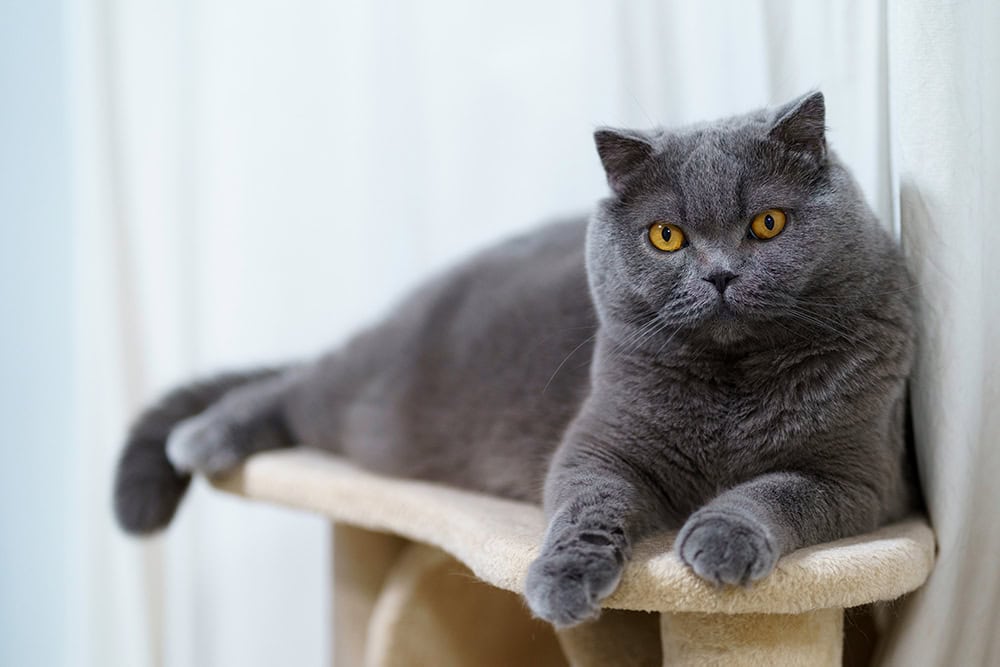
Your cat needs to always have access to a 100% dog-free sanctuary in your home. This can be any room in your home, but it should have a door so you can keep your Pap out.
This sanctuary needs your cat’s essentials: litter box, scratching post, water bowl, food bowl, and his favorite toys. Setting up a hiding spot to help him feel safer is not a bad idea.
2. Be Realistic With Your Expectations
It’s exceedingly rare for a cat and a dog to hit it off immediately. You should not expect them to tolerate one another in the first few weeks. It can take even longer than that in some cases. The key to successful integration is being patient and taking your time.
3. Keep the Two Separate
When you first bring your Papillon home, keep him and your kitty in separate rooms for the first few days. Don’t even let either animal see the other. Though they may be kept in different rooms, they can smell and hear each other. This step aims to allow the animals to get used to one another’s presence without being introduced face-to-face. This is especially important as you want to ensure your new pet has had its first vet check-up and been cleared of any illnesses before introducing the two.
4. Swap Scents
Before allowing the two animals to interact physically, you’ll want them to get used to each other’s scent. Put an old t-shirt or blanket in each pet’s sleeping quarters. Let it sit there to “marinate” in their smell for two days. On the third day, swap the shirts or blankets so each animal can get accustomed to the other’s smell. Don’t be alarmed if your cat hisses at the item. This is all part of the desensitization process.
5. Teach Your Pap Basic Commands
It is a good idea to familiarize your Papillon with basic commands before you introduce him to your kitty. Once he knows obedience cues like “sit” and “down”, he may be less energetic and excitable when meeting your cat for the first time.
6. Feed Them Near Each Other
Feed your animals on opposite sides of a closed door. This technique allows them to become accustomed to the other’s scent. The idea here is to teach them to associate the smells of the new pet with pleasant things, like their tasty meal.
7. Conduct Visits in Each Other’s Areas
Once the animals are used to one another’s scent, have each visit the other’s area when the other is away. Have someone in the family take the dog for a walk while you let the cat go into his room to sniff around. Then, take your kitty into another room while you allow your Pap to explore the cat’s space.
8. Let Them See One Another
After a week or so of scent-swapping and area visits, your pets should be ready to see each other for the first time. These visits should be timed when both animals are calm and not in overly excitable or sleepy moods. They both need an escape route during these first eye contact visits, so don’t stick either in a cage or kennel, as they’ll feel stuck without a place to run to if the meetings become too overwhelming.
9. Begin With Face-to-Face Meetings
Once the two can eat “beside” each other on the opposite sides of the door, you can begin with meet and greets. Choose a common area of your home (e.g., not your cat’s special sanctuary) to host these meeting sessions.
Keep the first few sessions short and your Pap on a leash. Allow your kitty to set the pace of the first few meetings. He can come and go as he pleases, and do not force him to stay or restrain him in any way.
If either animal displays aggressive behavior, redirect them calmly. Never yell or physically punish your animal, as this can damage the bond you’ve built with them. Instead, provide both pets with a high-value reward after every positive interaction.
10. Repeat Meetings Daily
Continue with the short-and-sweet daily meetings and high-value rewards. The goal is to have both animals associate their meetings with something positive. End every session before either animal begins to stress out or show signs of aggression.
11. Allow Them Free
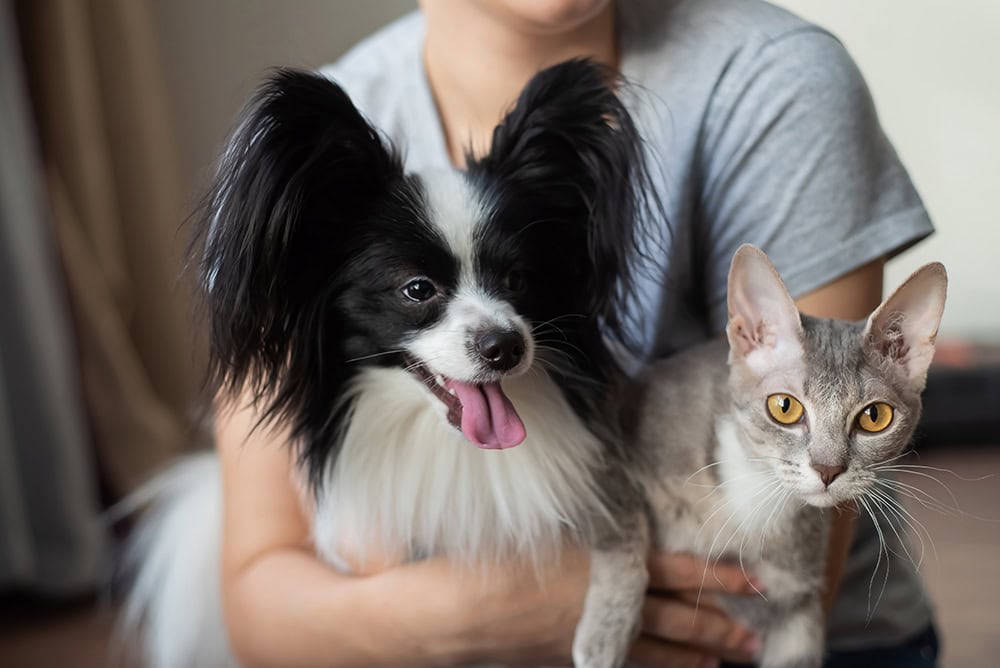
Once your pets appear to be getting along well, you can let them loose in the same room together. Keep your Pap on a leash so you can intervene if he gets excited and starts chasing your kitty. If tension rises, return to the daily meetings for a few days or weeks until you feel they’re ready to be free together again.
12. Supervise
Consider only allowing your pets to have free reign of the home when you are there to supervise. You may not have to separate them every time, but it is not a bad idea to keep both safe while you’re away until you’re 100% sure you can trust them alone together.
Final Thoughts
Papillons are among the best breeds to adopt if you have a cat-friendly household. Paps enjoy constant company, and having a feline companion is great for keeping separation anxiety at bay when you must leave the house. Of course, a proper introduction period should be expected. Never let your dog and cat be alone together until they’ve been introduced slowly and socialized together.
Sources
Featured Image Credit: Erik Lam, Shutterstock
Get Hepper In Your Inbox


Pet care tips from our vets and experts, straight to your inbox.
You may opt-out at any time. View our Privacy Policy for more information.

Chantelle's life revolves around two passions: writing and animals. Raised on the prairies of Canada amidst a menagerie of pets, she now lives with five cats, two guinea pigs, and a bearded dragon. Together with her husband and child, Chantelle delights in being an exemplary animal parent, going as far as installing wall-mounted cat shelves to give their cats an indoor playground. When she's not cozying up with her cats or snapping their amusing antics, she enjoys venturing into the Rocky Mountains, binge-watching her favorite Netflix shows, and indulging in spontaneous reading adventures.
Join the conversation
Ask a question, share your story, or send private feedback.