Hepper is reader-supported. When you buy via links on our site, we may earn an affiliate commission at no cost to you. Learn more.
How to Introduce a New Cat to a Dog? 8 Expert Tips

In this article
The notion that cats and dogs cannot get along is old, tired, and tenuous.
In the U.S., roughly 90.5 million families own a pet, which accounts for up to 70% of the population.1 44% of these households have multiple pets, the most common combination being a feline and canine mix.
The trick to building a loving and tender cat-dog kinship lies in how the duo is introduced to each other. How you handle the situation if your family pets don’t play nice with each other during the initial stages will also dictate the foundation of their friendship.
If you desire a multi-pet household and are considering a cat-dog combo, here are eight tips that may help. Implementing these tips will give your pets the best chances of growing into best buddies.

The 8 Tips on How to Introduce a New Cat to a Dog
1. Gather the Necessary Supplies for the Introduction
The worst mistake you can make is not to prepare for that moment when you introduce a new cat to the resident dog. Throwing the pets at each other’s faces can be scary and stressful for both of them. It is crucial to prepare for the long game and ensure you make a gradual introduction. Rushing things can rob your pets of the possibility of ever becoming friends.
Here are the supplies you need to make the introduction phase smooth with maximum chances of success.
- A pet gate or cage to create a safe space
- Treats for both pets to encourage good behavior
- Interactive toys for both pets to keep them at ease
2. Keep the Pets Separate
Once your kitty gets home, keep it away in a separate room. Ensure the room you pick is not your dog’s favorite spot to avoid creating conflicts before the two meet. Also, the space should be secure enough to minimize the risk of your pets encountering each other unexpectedly.
Provide your new cat with a comfortable sleeping area, and use your old t-shirt as bedding. Also, make available a litter box, food, and water bowls. Kick things off on a high note and ensure the new cat feels at home.
Let your feline remain in confinement, away from the family dog, for a day or two. This period is crucial because it helps it cope with moving from its previous home to the new environment.
3. Swap Scents
Both dogs and cats have extraordinary olfaction capabilities. While felines have over 67 million olfactory receptors in their nasal cavity, canines have over 220 million receptors. Play safe by allowing the two pets to meet via scent before a face-to-face encounter.
Swapping scents is easy; you merely need to swap the bedding. Take bedding your dog has only used for a few days and swap it with that old T-shirt you offered your cat when it arrived home. Let the pets trade their bedding repeatedly for two to three days to get accustomed to each other’s scent.
4. Let the Pets Explore Each Other’s Areas
After your pets are familiar with each other’s scents, it’s time to let them explore each other’s cribs. Ask someone to take your dog out for a walk. Let your new cat explore other areas of your home for about half an hour, including your dog’s favorite spots. Put the kitty in a crate and ensure it is out of sight when your pup returns.
Most dogs are neophiles and find new scents and odors attractive. Once your pup gets home, leave the room previously occupied by the new cat open and let it explore it.

5. Let the Pets Get a Glimpse of Each Other
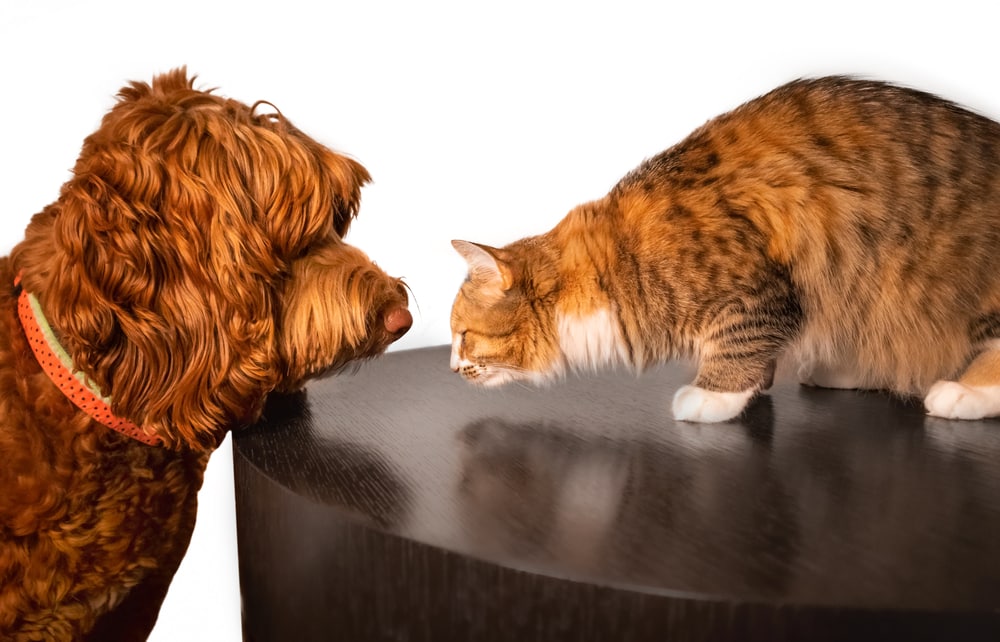
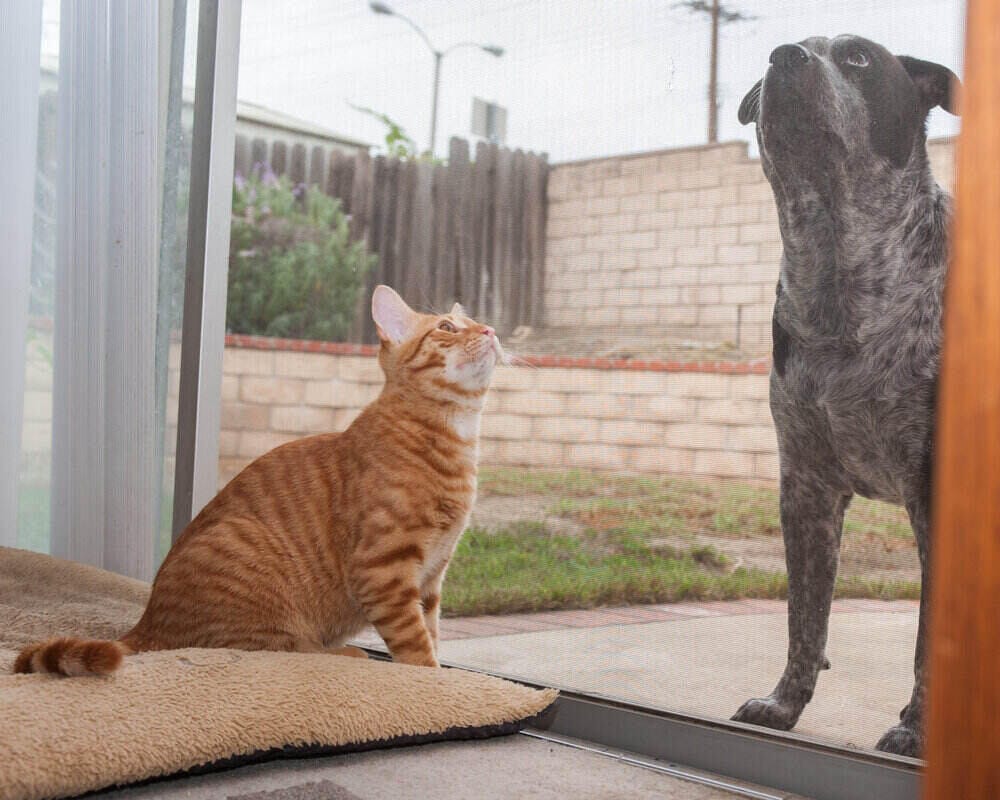
Even though your new cat and family dog have not come face to face, they know about each other’s existence. It’s time for them to see each other, although it is crucial not to initiate any physical interaction.
Your pet gate or cage will come in handy during this introductory phase. Consider it an official date and make it as enjoyable as possible. If you use food to make the session less tense, don’t put either pet’s food and water bowls too close together. Some distance will ensure they can still whiff each other’s scent without getting too upset to eat.
If the first date succeeds, repeat the session for two consecutive days. Gradually reduce the distance between either pet’s food bowls but prevent physical confrontations by maintaining the pet gate or cage barrier.
6. Schedule Non-Physical Play Dates
If your pets can tolerate each other’s presence during food dates, it’s time to let them spend more time together. You’ll still need the pet pen or gate to limit physical contact between the two. Also, it would be ideal if you sought the help of a friend or a family member.
Pet toys can work wonders at this point. Play with your dog as your friend plays with the new cat, and switch places after five minutes. Limit the play session to a maximum of 30 minutes. Also, use treats to encourage each pet to focus on the games, not each other’s presence.
7. Graduate to One on One Meetings
You can now schedule a one-on-one meeting if the non-physical play sessions are working just fine with no growling or hissing. Ensure both pets are well-fed and your pup has gone for a walk to release pent-up energy.
While it is perfectly okay to let your cat loose, your pup must remain on a short leash.
Let your cat choose when to come closer and explore your dog. Command your pup to remain in the “stay” position and constantly reward it for obeying you. You could praise it, pet it or offer a treat.
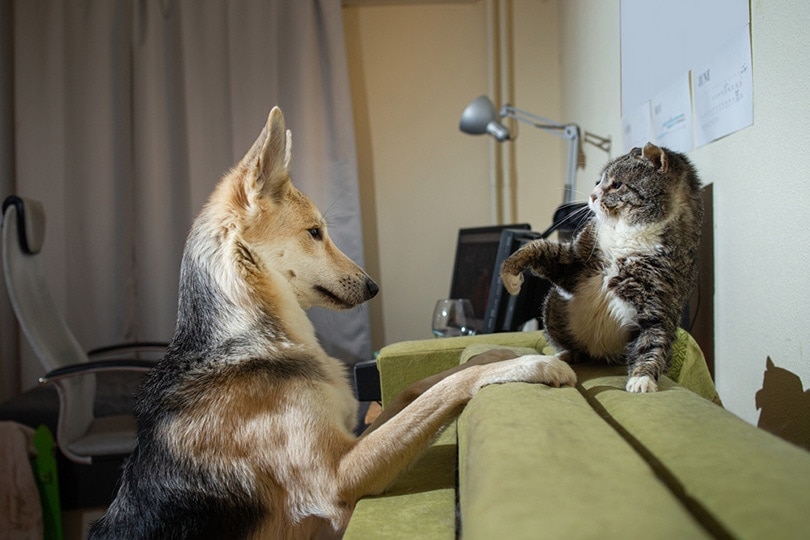
Unfortunately, the first one-on-one session can be unpredictable. Be prepared for the worst and end the session immediately if your cat seems overly scared or your dog shows signs of aggression. Schedule non-physical dates for a couple of days and try a one-on-one meeting for a second time.
8. Don’t Let Your Guard Down
Keeping your dog on a short leash is vital until you are sure both pets can tolerate each other. Also, ensure your kitty has a convenient escape route just in case your pup makes it feel unsafe. Only allow the pets to interact under supervision.
Once your pets remain calm in each other’s presence, you can play with them simultaneously. Be wise in how you split your attention between the two to prevent the risk of fostering jealousy. If your dog seems jealous, take it outside for more walks and reassure it of your love.
Don’t let your guard down, and allow unsupervised interactions until your pets learn to get along. You’ll need to be patient because this may take weeks or months.
FAQ
How Long Does It Take for a New Cat to Get Along With the Family Dog?
The period needed for a new cat to warm up to your family dog and vise-versa generally takes two to three weeks. Some pairs work things out in a few days, while others take longer. It is also not unusual for some cat-dog relationships to never work, although this is often rare. It can take a few months before the family pets move from acquaintances to best buddies.
How Do I Tell If My New Cat and Family Dog Are Getting Along?
The line between play and predatory actions is pretty blurry in pets. This makes it crucial to constantly supervise play sessions between your dog and the new cat, at least for the first few months. Also, use training and positive reinforcement to address the situation if your dog shows aggression or attempts to stalk or chase the new cat during play sessions.

Are My Household Pets Friends or Do They Merely Tolerate Each Other?
With some effort and luck, your new cat and family dog will eventually become friends. Training your dog on how to behave around the family cat takes weeks. Also, your kitty needs nearly the same amount of time to adapt to the presence of your pup. Initially, the pets will tolerate each other and maintain mutual respect. However, they can gradually grow closer and melt to each other’s charms.
Conclusion
Making your new cat and family dog an inseparable duo is possible. A proper introduction is key to ensuring the welfare of both pets. An excited or aggressive dog can easily injure your kitty. Also, a nervous and frightened cat can use its claws to defend itself. It is imperative to take things slow and make safety your top priority.
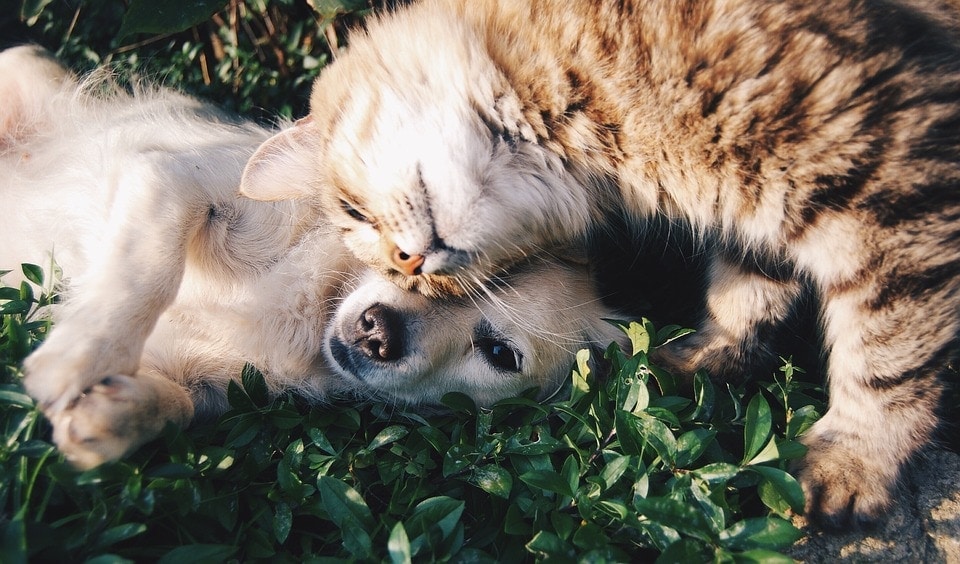
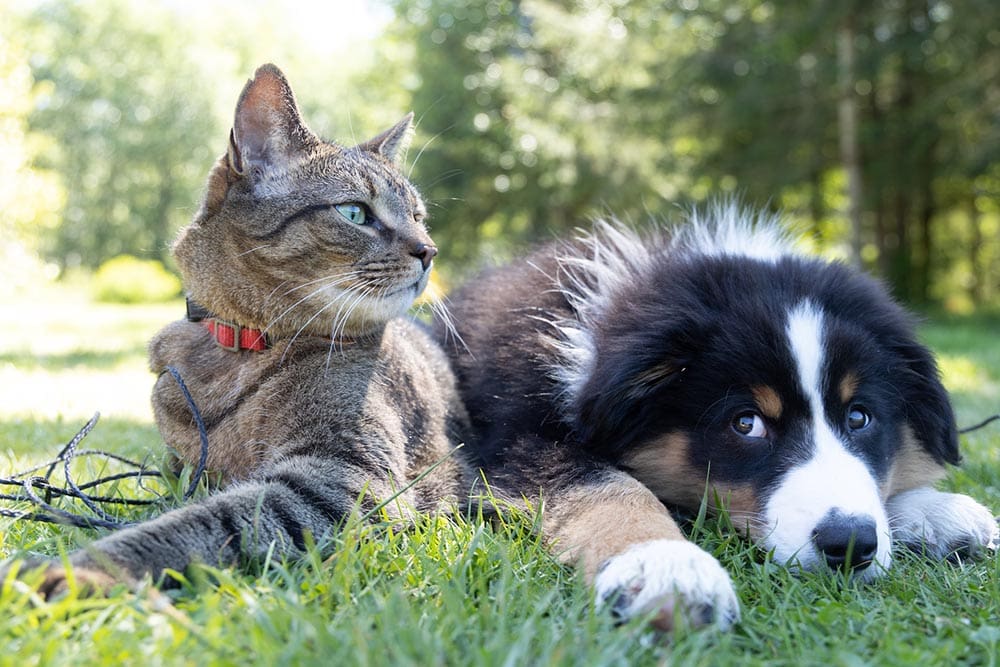
Cat-dog relationships work.
And when they do, nothing is as heartwarming as seeing your little kitty curl up with your oversized dog for a quick afternoon nap. While your cat will let your dog nip and pull it, your pup will not mind letting your cat use its tail as a plaything!
See Also: How To Introduce a Puppy to Cats?
Featured Image Credit: New Africa, Shutterstock
Get Hepper In Your Inbox


Pet care tips from our vets and experts, straight to your inbox.
You may opt-out at any time. View our Privacy Policy for more information.

Nicole is a lover of animals of all sizes but is especially fascinated with the feline variety. She’s the proud mom of Baby, a Burmese, and works every day so he can relax in the sunshine or by the fire. She’s always had a cat in her home and has spent countless days with others, observing behaviors and softening up even the grouchiest of the lot. Nicole wants to share her kitty expertise with you so you and your cat can live happy, healthy, and care-free.
Join the conversation
Ask a question, share your story, or send private feedback.