Hepper is reader-supported. When you buy via links on our site, we may earn an affiliate commission at no cost to you. Learn more.
Are Samoyeds Good With Cats? Facts & FAQ

In this article
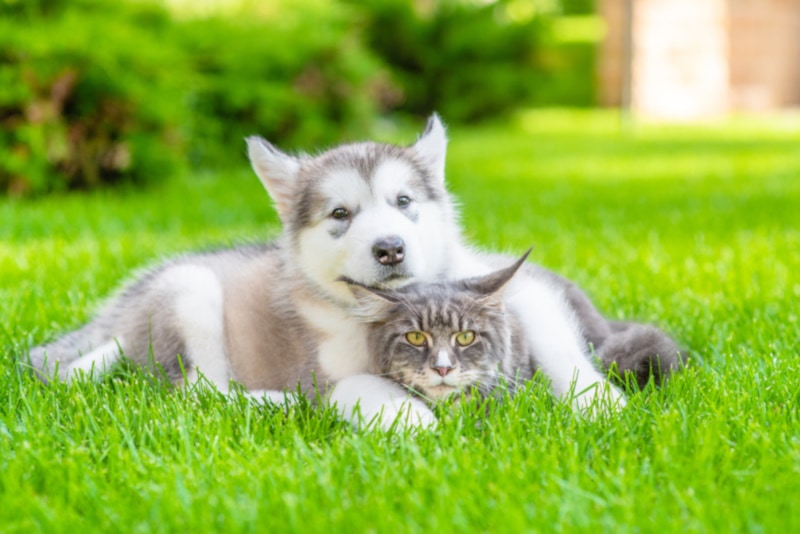
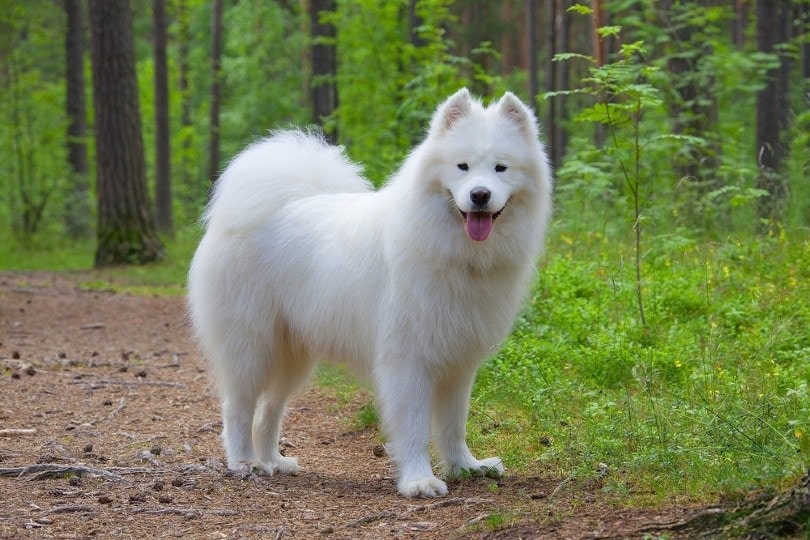
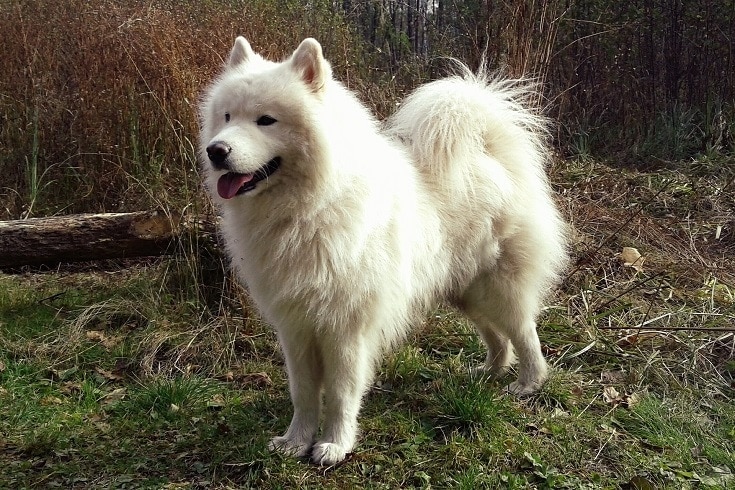
According to the American Kennel Club (AKC), Samoyeds are a social breed with a high playfulness level. These dogs are open to strangers and adapt well to most environments. If you train your Samoyed early in life, they will cohabit with a cat without much difficulty.
Introducing your Samoyed to felines can be a time-taking process. But once your Samoyed has befriended the cat, you won't have any issues with both animals in the same house.
To accomplish this feat, you must know how to introduce a cat to a Samoyed. We've got you covered in this guide.

Do Samoyeds Have a High Prey Drive?
Since Samoyeds have a watchdog nature, they have a high prey drive. If they see a small animal or a moving object, they will usually chase it. Their stubbornness will often make them show selective hearing in such circumstances.
Therefore, you must train your Samoyed well to ensure they respond to your commands. Recall training can help accomplish this. Through recall training, you can maximize the likelihood of your Samoyed listening to you when you stop them from chasing an animal.

How to Introduce a Samoyed to a Cat
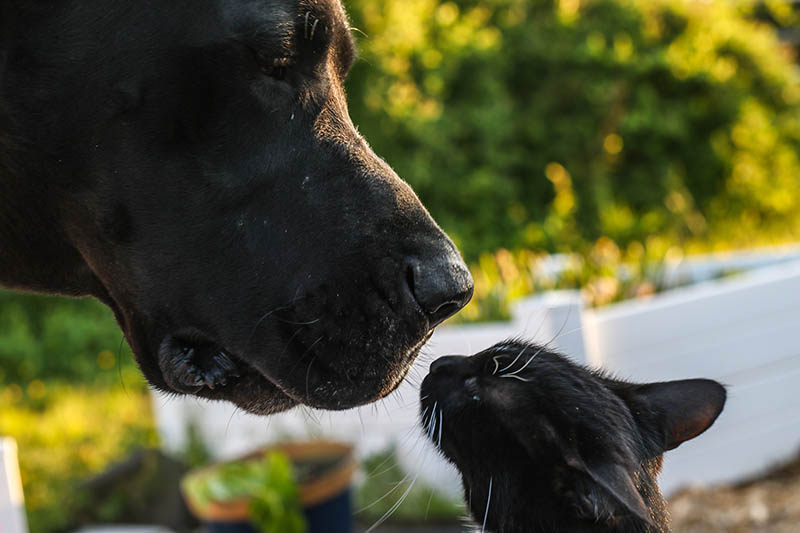
If you introduce your Samoyed to a cat successfully, you're all set to have a friendly cat-dog duo in your house. Here's how to make this happen.
1. Separate Them
Do not introduce your dog and cat immediately. Instead, start by establishing a safe place for both animals. It will help them acclimate to new environments without feeling overwhelmed.
If there's a room in your house your dog does not frequent, choose that as the place of introduction for both animals. Avoid introducing them in a place the resident animal, which is the Samoyed in this case, is accustomed to.
Once you bring a cat home, quarantine them for four days. Also, get a vet to conduct a health assessment and rule out any potential health risks.
2. Rotate Them
A sure-shot way to acclimate both animals is to confine one of them and let the other roam around the house. Keep your dog in a separate room or a backyard and let your cat go through all rooms in the house. Then, confine your cat to a room and allow your dog to roam freely.
You can also rotate both animals' bedding or let them get each other's whiff under the door. The key is to let them get accustomed to each other's noise and scent without making them meet face-to-face.
3. Time to See Each Other
After you're sure both animals are acclimated, let them see each other. However, don't let them come in direct contact. Instead, keep a barrier, like a pet gate or a glass door, between them. If one of the two animals is too excited or jumpy, use a piece of furniture as a barrier.
Since both the Samoyed and the cat will live under the same roof, you must let them associate with each other over shared activities. Some examples include playtime and meals.
For example, you can feed both of them at the same time. Keep a distance between them, though. Like most other dogs, Samoyeds also exhibit resource-guarding behavior. Here are some signs of resource guarding in dogs:
- Refusing to let go of food items
- Being grumpy when told to move from an area
- Thieving
- Eating quickly
If you notice resource guarding in your Samoyed, hire a qualified trainer and get relevant advice from a vet. They will tell you how to teach your dog to share its resources peacefully and not exhibit aggressive behavior.

4. Introduce Them While on a Leash
If you notice calm body language from both pets, you can introduce them without a barrier now. However, keep them on a leash to prevent accidents.
Keep an eye on your Samoyed's body language, such as their stance, barking, and pacing. They should not be stiff, nor should their gaze be focused intensely on the cat. Instead, their tail and body position must be loose.
Also, check your cat's body language. Their tail should be in a neutral position, and their ears should face forward. Let your cat approach the dog and investigate them in their comfort zone. If your cat is swishing their tail or crouching behind an object, they are stressed. You need to break up the pair and begin the interaction at another time.
Hissing, growling, lunging, and barking are all warning signs. If any of the two animals show these signs, it's a cue to separate them.
5. Reduce Supervision
It will take a few leashed interactions for your dog and cat to be ''normal'' around each other. If you think they're calm and comfortable, let them be around each other while still keeping an eye on each other. However, you can slowly start to minimize supervision once you start to trust each animal.
Start gradually, though. For example, go outside the room, but stay within earshot to intervene in case something goes wrong inside. After some time, increase the duration of your absence, but don’t leave the two alone for hours on end.
When to Hire a Professional
Some Samoyed-cat pairs are just not meant to be. You can try to train your dog and cat, but if they are naturally aggressive or incompatible with each other, you'll have a hard time keeping them civilized in the same house.
However, if you think there's a chance both animals can coexist, but you're lacking in training skills, bring in a professional. Hire a trainer or behavioral expert to help your pets get along.
Does Socializing Training Help a Samoyed Get Along With Cats?
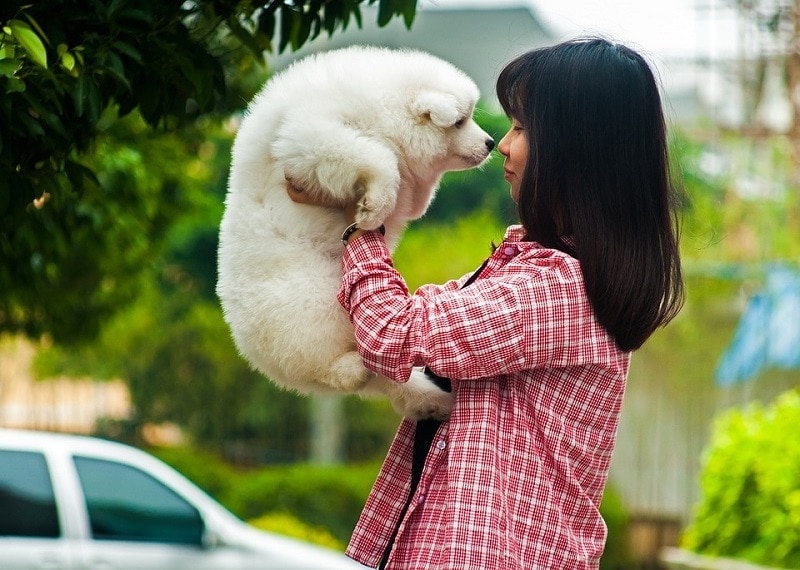
Socialization training can help your Samoyed be good with cats throughout their life. If your dog has different experiences and exposures early in life, it will be less uncomfortable and aggressive upon interacting with a cat.
Well-socialized pups grow up to become happy and confident dogs with high adaptability. Begin socialization training for your Samoyed from 7 weeks of age. Here are some tips.
Mistakes to Avoid When Introducing a Samoyed to a Cat
A proper introduction can make all the difference in getting your Samoyed acclimated to a cat-containing surrounding. The following mistakes can disrupt this process.
Letting Your Samoyed Chase the Cat
Dogs, especially Samoyeds, like to chase moving objects. The cat will run away from your Samoyed out of fear. If this becomes a habit, your dog will think of it as a playful activity, repeating the chasing behavior. Over time, this can make your cat fearful of the Samoyed.
Avoid this by stopping the chase as soon as it begins. Train your dog to ''stop'' and ''come'' to you when you command them to do so.
Putting Their Food Together
Resource-guarding behavior is common in dogs. Keeping your dog's and cat's food together can result in the cat competing with your Samoyed for food.
Keep both animals' food and water bowls in separate places. When you hand-feed them treats, do that separately too. It will help both pets get individual quality time.

Should You Leave a Samoyed and Cat Alone for Long Periods?
It's not safe to leave a dog and cat alone for an extended time, regardless of breed. Even if you are confident both animals are super friendly, you should still not leave them alone unsupervised.
It's okay to be out of the room when both animals are inside if you're sure your cat has a safe space to go to if they feel unsafe. For example, if there are cat shelves or cat trees in the room, your cat can escape to these higher-up spaces if the Samoyed is being problematic.

Conclusion
Samoyeds are very friendly toward everyone, from other dogs and humans to fellow pets. If you've planned to bring a cat into the house, be prepared to introduce both pets in a proper manner.
Keep in mind that progress isn't a linear process. If one or both animals exhibit stress, separate them and start again. Don't force two unwilling animals to interact. If you see excessive resistance, get a professional involved.
Sources
Featured Image Credit: Ermolaev Alexander, Shutterstock
Get Hepper In Your Inbox


Pet care tips from our vets and experts, straight to your inbox.
You may opt-out at any time. View our Privacy Policy for more information.

Jeff is not only a writer but also a tech professional with lots of experience leading teams at various Fortune 100 startups. Jeff's hobby is photography but his real passion are his pets, whom he loved to spend time with.
Join the conversation
Ask a question, share your story, or send private feedback.