Hepper is reader-supported. When you buy via links on our site, we may earn an affiliate commission at no cost to you. Learn more.
Black Great Dane: Facts, History & Pictures
In this article
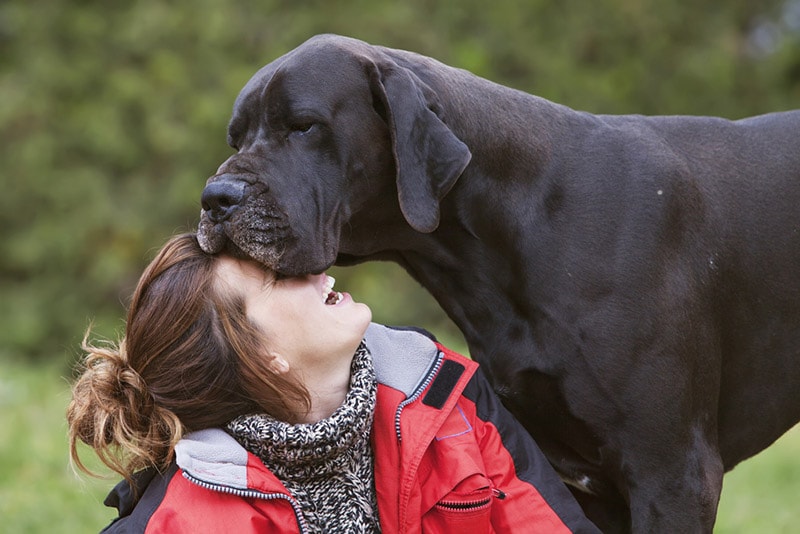
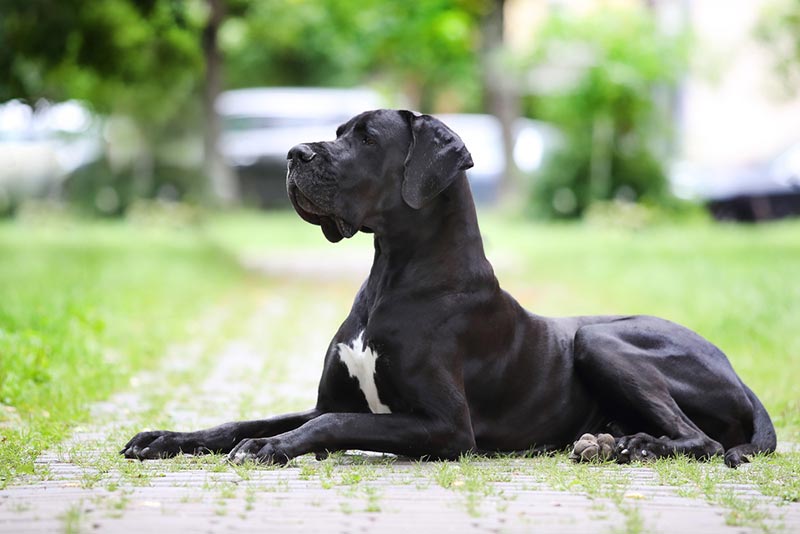
The Black Great Dane is large and affectionate. It might look intimating, but it’s a gentle soul that makes a fantastic family pet. There is, of course, more to a Great Dane. Where do they originate from? And what makes this giant such a wonderful family pet? We have answers to these questions and more.

The Earliest Records of the Black Great Dane in History
Great Danes may go back as far as 3000 B.C., where drawings of dogs that look very similar were found on Egyptian artifacts. They were also depicted in Babylonian temples around 2000 B.C. and Chinese literature in 1121 B.C.
From there, it’s believed that Assyrians traded their dogs to the Romans and Greeks, who bred them with other breeds. Ancestors of the English Mastiff were probably involved somewhere with the breed development, and some believe the Irish Wolfhound and Greyhound played roles.
Originally, Great Danes were known as Boar Hounds, and that was what they were bred to hunt. In the late 1600s, German nobles started keeping the most handsome dogs in their homes. Breed historians believe we have the Germans to thank for refining the breed into what we know and love today.
The Great Dane became known in the 1700s in Denmark when a French naturalist saw a slimmer, Greyhound-like Boar Hound and called it a “Grand Danois.” This eventually became the Great Danish Dog.
How Black Great Danes Gained Popularity
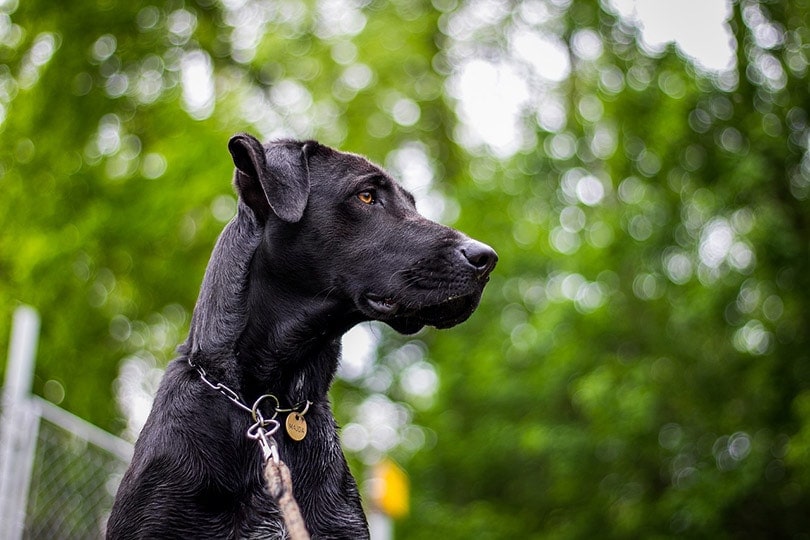
While the Great Dane was originally bred to hunt wild boar, they probably wouldn't be as good at it today. An aggressive dog was necessary to track such a large, wily animal, and throughout the late 1800s, the breed was further refined by wealthy German breeders. They turned their attention to the Great Dane’s temperament and turned the ferociousness to gentleness. Now, Great Danes are known to get along with humans and other animals.
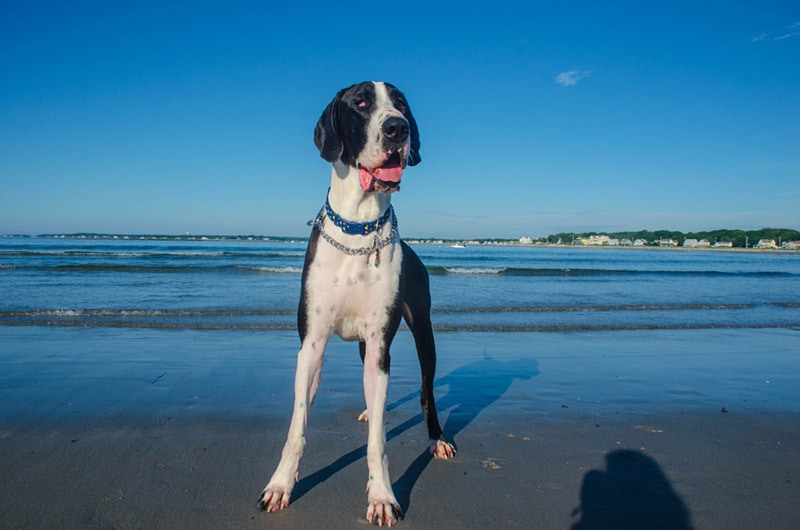
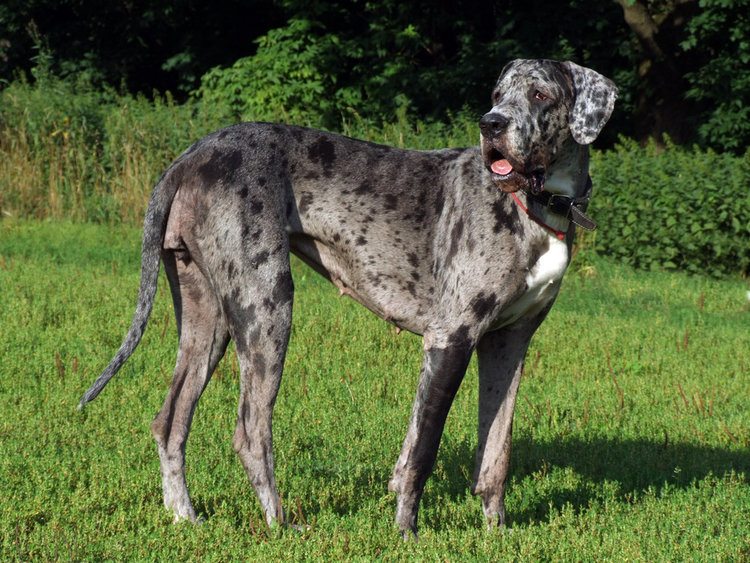
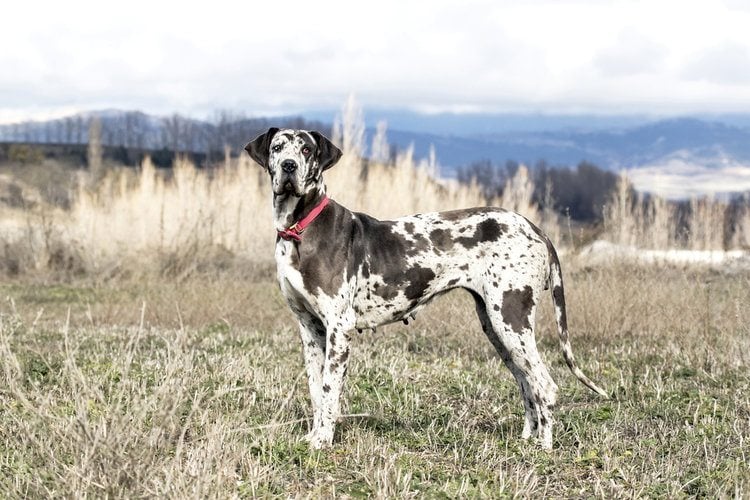
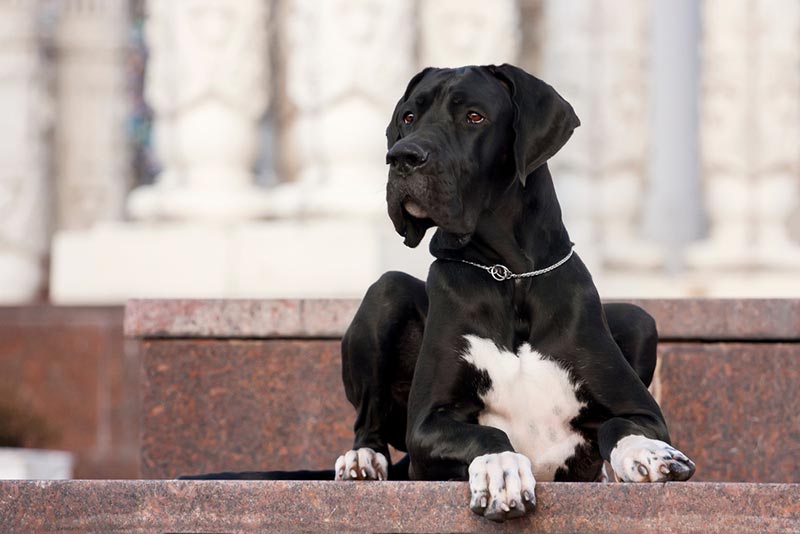
The date that Great Danes came to America is disputed, but in 2021 they were ranked the 17th most popular breed in the United States. Black Great Danes are trickier to produce than other Great Danes. Generally, black Great Danes have small white blotches over their faces, toes, or chests. As a result, they’re typically confused with the mantle variety of this breed.
Formal Recognition of the Black Great Dane
While we have no date for when Great Danes came to the United States, we know the breed was officially recognized by the American Kennel Club (AKC) in 1887. The AKC acknowledges 10 color variations of the Great Dane, including the black Great Dane.
The Dog Registry of America (DRA), the United Kennel Club (UKC), and the North American Purebred Registry (NAPR) also recognize the black Great Dane. While some allow black-coated dogs with white streaks to participate in dog shows, others consider it an undesirable trait and prefer all-black Great Danes.
Top 3 Unique Facts About Black Great Danes
1. They’re Gentle Canines
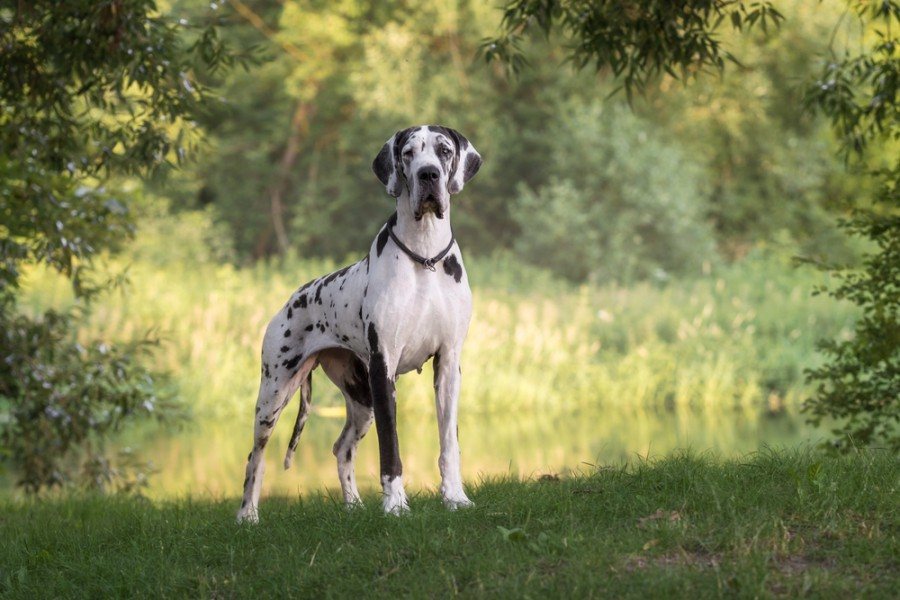
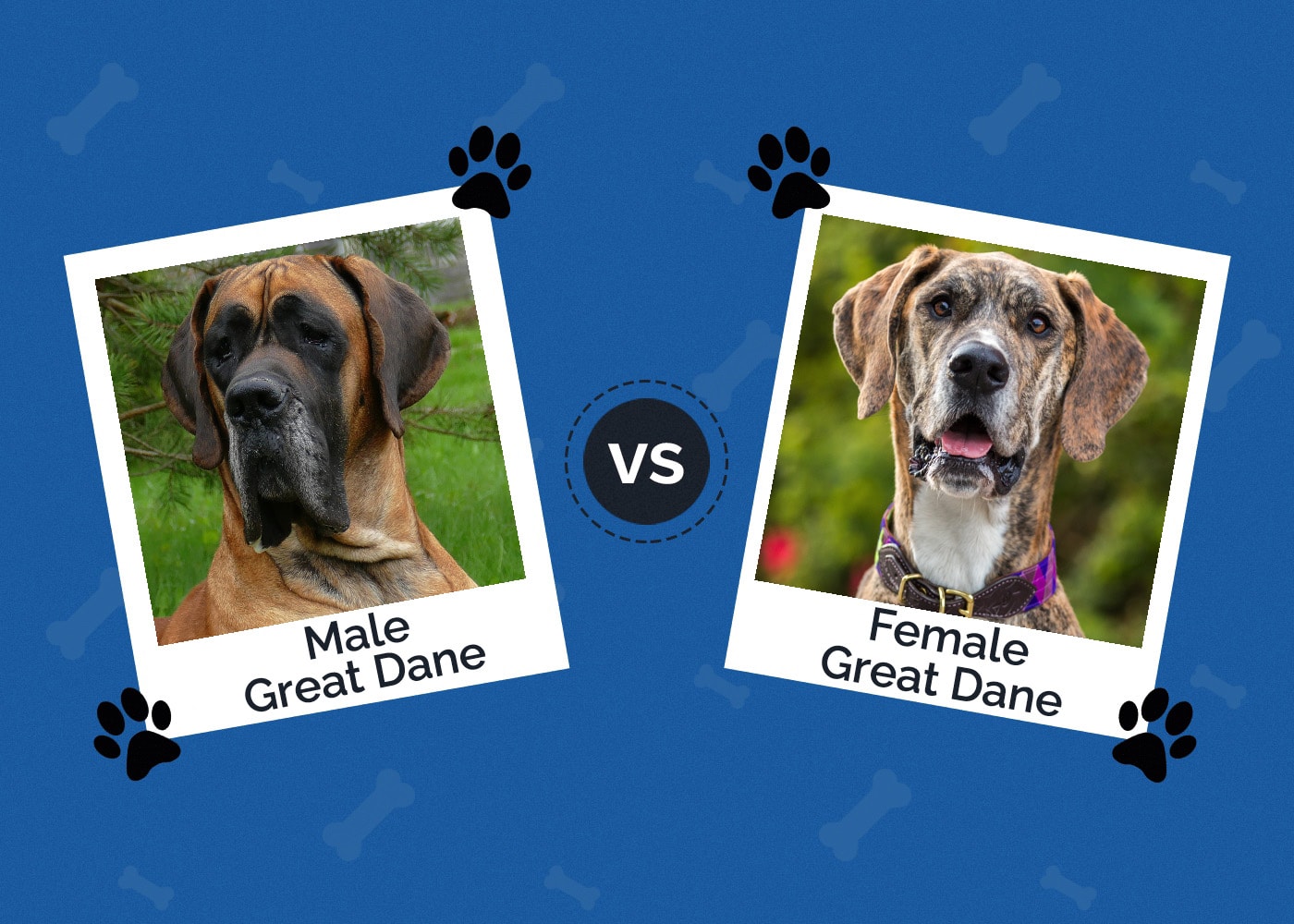
Females reach up to 30 inches at the shoulder and weigh up to 140 pounds, while males get up to 32 inches and weigh a whopping 175 pounds. They tower over many humans when they’re on their hind legs. Despite this giant size, they are elegant, affectionate dogs.
2. They’re Not Ferocious
Black Great Danes are affectionate and make wonderful family pets. While their ferocious natures were bred out of them, they won't hesitate to protect their family from a threat. They are good with kids, but they are so big that their wagging tails can knock over small children.
3. Great Danes Were Once Thought to Ward Away Evil Spirits and Ghosts
There’s a reason they picked Scooby Doo to be a Great Dane! He was the perfect companion, and he helped his friends hunt ghosts and unravel mysteries. Originally, the cartoon’s creators were considering a Sheepdog and a Great Dane, and the Great Dane won because they wanted to avoid an overlap with Hot Dog from the Archie comics.
Does a Black Great Dane Make a Good Pet?
If you want a Black Great Dane in your life, you will need the space to accommodate this gentle giant. Great Danes need to have room to move around and exercise, and you need to be prepared to put in the time for obedience training to ensure they are manageable when they are fully grown.
Great Danes are known for being loving and tolerant. They make wonderful family pets, and if you socialize them early, they get along with other animals. They will need supervision around children and vulnerable adults because sometimes they are unaware of their own strength.
Your black Great Dane will shed a lot, so you will need to keep on top of brushing their coat regularly. Due to their size, they also eat more than other breeds, which will cost you more. But then everything about a bigger breed will cost you more: beds, collars, harnesses, and coats for winter. There is also the added heartache that this breed tends only to live around 8 years, thanks to their large size.
Conclusion
The black Great Dane is beautiful, graceful, and gentle. They have a long history with humans, and although they started as hunters, they became loyal family pets. They are not the ferocious boar hunters they once were, but good luck to the person who threatens a Great Dane’s family because the dogs are incredibly protective. They have a relatively short life span of only 8 years but will take up a huge space in your home and heart.
Featured Image Credit: Dulova Olga, Shutterstock
Get Hepper In Your Inbox


Pet care tips from our vets and experts, straight to your inbox.
You may opt-out at any time. View our Privacy Policy for more information.

Kerry-Ann lives in Scotland and wishes her garden was bigger so she could have her very own Highland cow. But her dogs probably wouldn’t like that very much. She has a La Chon called Harry who was poorly with a liver shunt when he was a puppy. It wasn't likely he would make it into adulthood, which was difficult, but he beat the odds and is a healthy old man now. She also has a Pug called Maddie who is a big foodie. She’s small, sassy, and every day she finds a new way to mess with her brother.
When she isn’t writing you can find Kerry-Ann going for long walks when the weather isn't bad, reading, or watching cartoons when she should be tidying her house. She would one day like to be a tourist in her own country and travel through the Highlands with her family.
Join the conversation
Ask a question, share your story, or send private feedback.