Hepper is reader-supported. When you buy via links on our site, we may earn an affiliate commission at no cost to you. Learn more.
Black Ragdoll Cat: Facts, Origin & History (With Pictures)

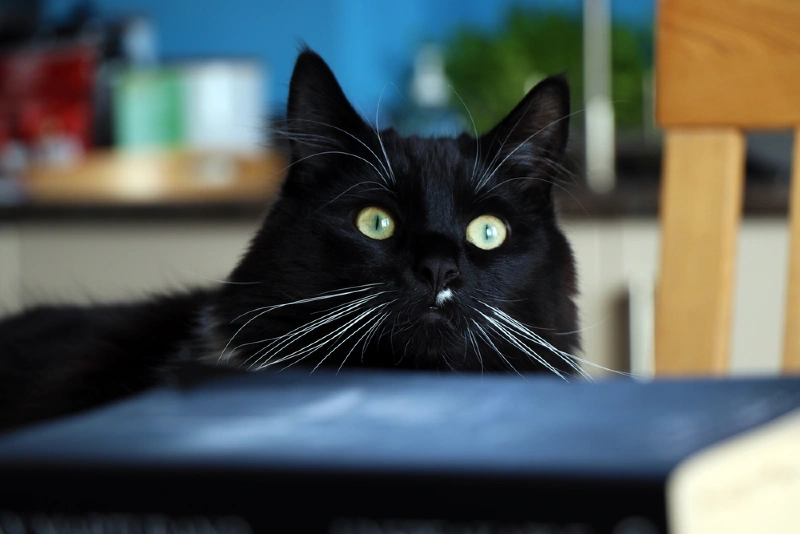
Beautiful, sweet-natured, and diverse in terms of coat color and patterns, Ragdoll cats are the ultimate triple threat. Though black is not recognized by Cat Fanciers’ Association (CFA) as a Ragdoll color—as is the case with other solid coat colors—you can still get black Ragdolls. They’re pretty rare compared to their recognized standard color counterparts, though.
If you’ve recently acquired a gorgeous ebony Ragdoll cat and are curious about the history of this wonderful breed, read on to find out more.

The Earliest Records of Black Ragdolls in History:
The Ragdoll breed first made an appearance in the 1960s, making it a relatively modern breed. A Californian breeder by the name of Ann Baker was responsible for the Ragdoll’s development.
Baker started out by breeding a stray, longhaired, white female cat called Josephine to other local cats. A male Birman-like cat named Daddy Warbucks was later bred to Buckwheat, one of Josephine’s kittens. Along with Buckwheat’s half-sister, Fugianna, and Blackie, one of Josephine’s sons, these cats were responsible for the Ragdolls we know and love today.
The breeding stock chosen by Baker chosen is said to have been made up of cats with excellent temperaments, which played a big factor in their selection. The Ragdoll’s sweet temperament is a big part of what makes them so appealing to cat lovers today.
How Black Ragdolls Gained Popularity
Ragdolls grew in popularity with breeders sometime during or after the 1960s for their quiet and gentle temperaments and no doubt also for their striking features. Their popularity with the public soon flourished and they became and have remained much-loved family cats in many homes around the world.
The traits that first attracted breeders are the same ones that made Ragdolls sought-after companion cats—they’re well-known for being placid, good-natured, and friendly cats, making them typically well-suited to families with children and other pets. These cats like life in the slow lane but they’re still playful and fun-loving, which offers a wonderful balance.
Formal Recognition of Black Ragdolls
The color black is not considered a standard Ragdoll color, so black Ragdolls are not recognized by the Cat Fanciers’ Association or The International Cat Association (TICA). This is surprising to some and appears to have stirred debate among Ragdoll lovers.
The CFA only fully recognized the Ragdoll in the year 2000. The association lists six Ragdoll color patterns as standard—seal, blue, chocolate, lilac, red, and cream—along with a variety of coat patterns (colorpoint, mitted, van, and bi-color) and point types (solid, tortie, torbie, and lynx).
The Top 3 Unique Facts About Black Ragdolls:
1. Ann Baker Included Black Cats in Her Breeding Program
Though solid black Ragdolls aren’t recognized by major organizations today, Ann Baker used black cats to develop the Ragdoll breed in the 1960s.
2. Ann Baker Believed Josephine Was Genetically Tampered With
Known for her eccentricity, Ann Baker, the original Ragdoll breeder, was convinced that her breeding program matriarch, Josephine, had had her genes altered by medical professionals following a road accident. Baker believed this caused future kittens to be “limp”. Ragdolls are still known for being limp when picked up, which shows how relaxed they are in human company.
3. Ragdolls Are Named for a Special Reason
Ragdolls’ chilled-out, docile personalities and tendency to flop contentedly in your arms when you hold them inspired naming them after the ragdoll toy.

Does a Black Ragdoll Make a Good Pet?
Ragdolls in all patterns and colors make great family and companion cats. These cats are famous for their people-loving and relaxed personalities and cheerful dispositions. They’re the kind of cats that love human company but aren’t clingy to the point of constantly demanding your attention. These traits make them a popular choice for families both large and small, including those with other pets and children.
All that said, it’s always crucial that Ragdolls are gradually socialized with other pets when you bring them home so as not to overwhelm them. It’s also important that children learn how to gently interact with the sweet-natured Ragdoll. In spite of these cats’ typically easygoing temperaments, small children should always be supervised around them.
Final Thoughts
To recap, though black Ragdolls aren’t accepted by major cat associations and aren’t all that common, you can still find them. You can also find black and white Ragdolls and black Ragdolls with lighter shading. Color aside, the Ragdoll breed as a whole is something truly special on account of their famously lovely personalities, soft, silky coats, and all-around adorableness.
Get Hepper In Your Inbox


Pet care tips from our vets and experts, straight to your inbox.
You may opt-out at any time. View our Privacy Policy for more information.
Kit Copson is a freelance writer and lifelong animal lover with a strong interest in animal care. She has parented various furry beings over the years and is currently a proud cat mom of two—one skittish but adorable Domestic Shorthair and very chilled (unless hungry) Siamese and a —and dog mom of one—an adopted Bichon Poodle cross. When not writing about or spending time with pets, Kit can be found doodling in her sketchpad, reading, or more often than not, drinking tea.
Join the conversation
Ask a question, share your story, or send private feedback.