Hepper is reader-supported. When you buy via links on our site, we may earn an affiliate commission at no cost to you. Learn more.
Blue Sphynx Cat: Facts, Origin & History
In this article
The Sphynx cat is popularly known for its lack of fur. This hairlessness is the result of a genetic mutation that was then developed through selective breeding in the 1960s. Basically, breeders found two hairless cats and bred them together, which eventually led to a whole bunch of kittens with this genetic mutation.
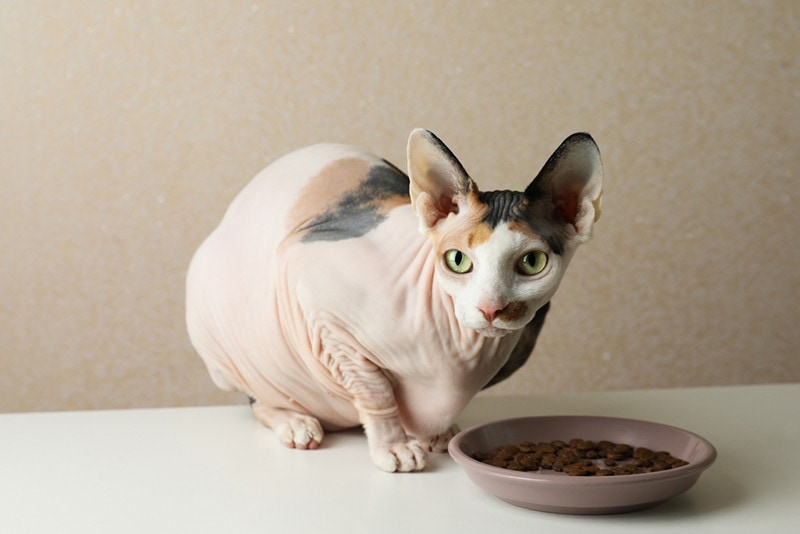
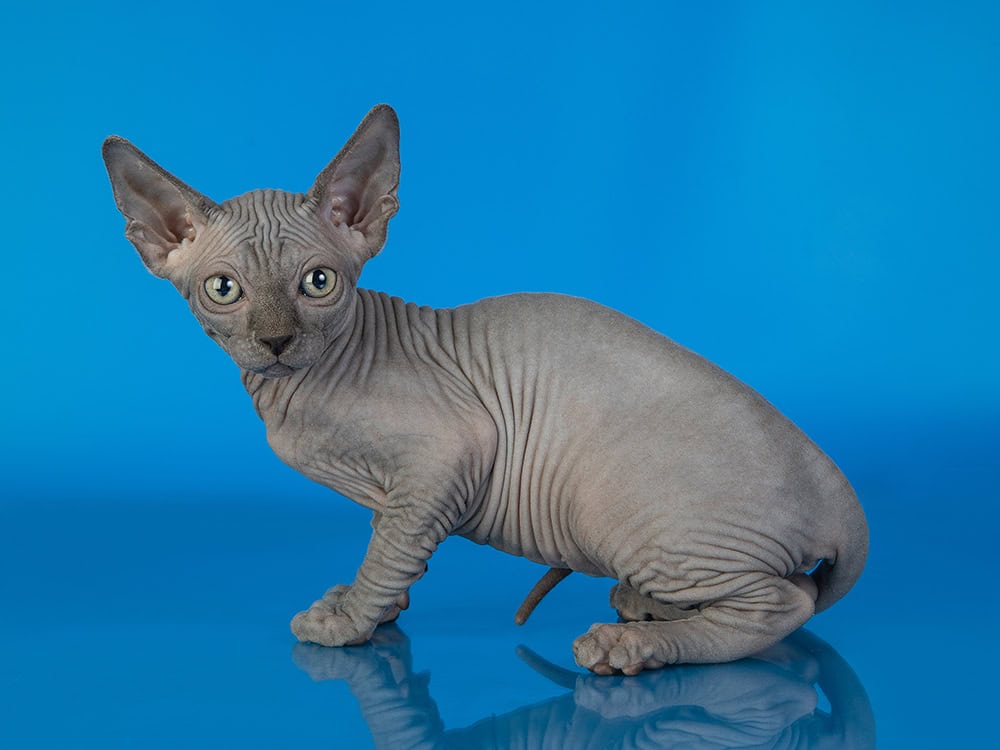
Despite their reputation, this breed is not actually completely hairless. Most of them do have a small amount of fur. Though their fur is not clearly visible, their markings and coloration are apparent on their skin.
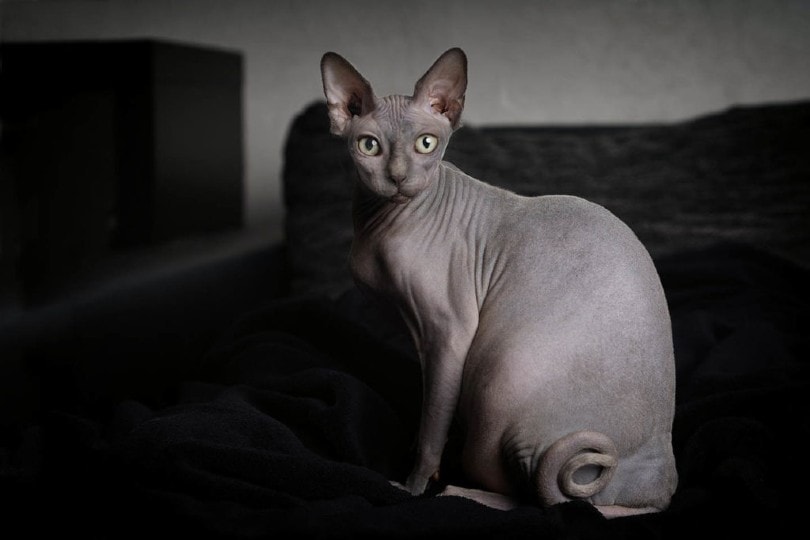
While this breed was being developed, breeders were mostly focused on keeping these cats hairless and avoiding health problems. Coloration wasn’t a big consideration. For this reason, the Sphynx is available in many different colors today, including blue. This coloration is often a bit more on the grey side, though, largely due to how the color displays on their skin. Without the fur, they are not quite as blue as other felines.

Origins & History
Hairless cats have been reported throughout history. There are actually a few different breeds of hairless cats. However, despite their similarities, many of these breeds developed independently of each other. The Sphynx is not related to the Peterbald, for instance.
The Sphynx itself has been bred since the early 1960s. Breeders developed them from two different families of hairless cats. One of these families was a series of stray cats found in Toronto, Canada, and the other was a family of barn cats in Wadena, Minnesota. These two families were brought together to lay the foundation of the breed.
Early on, this breed faced a lot of problems. Their genetics are a bit complicated. The hairless gene is recessive, which means that both parents have to have it. However, many cats ended up being sterile and unable to breed. Obviously, when you’re trying to make a new breed of cats, this is a problem.
Many kittens also died young due to the extremely small gene pool. Females were prone to convulsions and early deaths. Quite a few kittens did not develop correctly and were stillborn. To improve the health of the breed, more found hairless cats were added to the bloodline over time. Today, they are much healthier.
Top 3 Facts About the Blue Sphynx Cat
1. They aren’t completely hairless.
These cats are a bit fuzzy. They aren’t absolutely, completely hairless. In fact, their genetics don’t actually prevent them from growing any hair. Instead, it just makes it so that the hair grown is very damaged and able to be dislodged easily. Because of this, they never actually grow a coat. Their hair simply falls out when it is very short and nothing more than peach fuzz.
Often, it is assumed that all hairless breeds came from the same place. However, this is not true. The hairless gene has randomly occurred several times throughout history. All the hairless breeds today developed independently as the result of random mutations. The Sphynx is not related to any of the other hairless breeds out there today. Instead, it is most closely related to the American Shorthair.
3. The Sphynx is not maintenance-free.
Many people see the lack of a coat and assume that this breed is maintenance-free. However, that is not the case in the least. They tend to build up body oils quickly, as they have no fur to absorb these oils. Therefore, they need regular bathing. They also cannot conserve body heat very well, which means that they may need to wear a sweater. In sunny areas, sunscreen is sometimes required.


Appearance
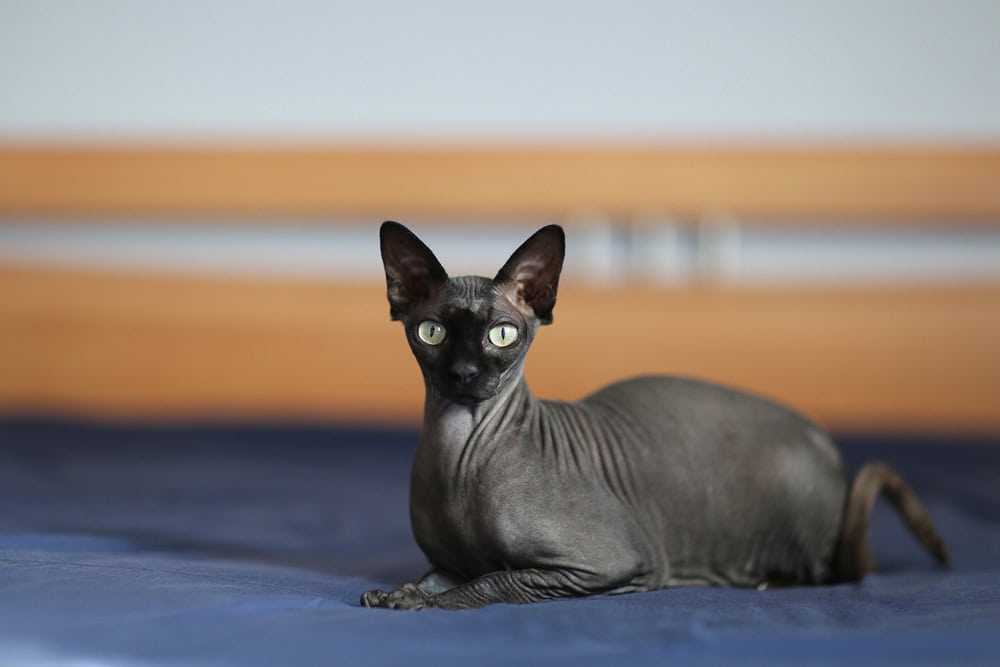
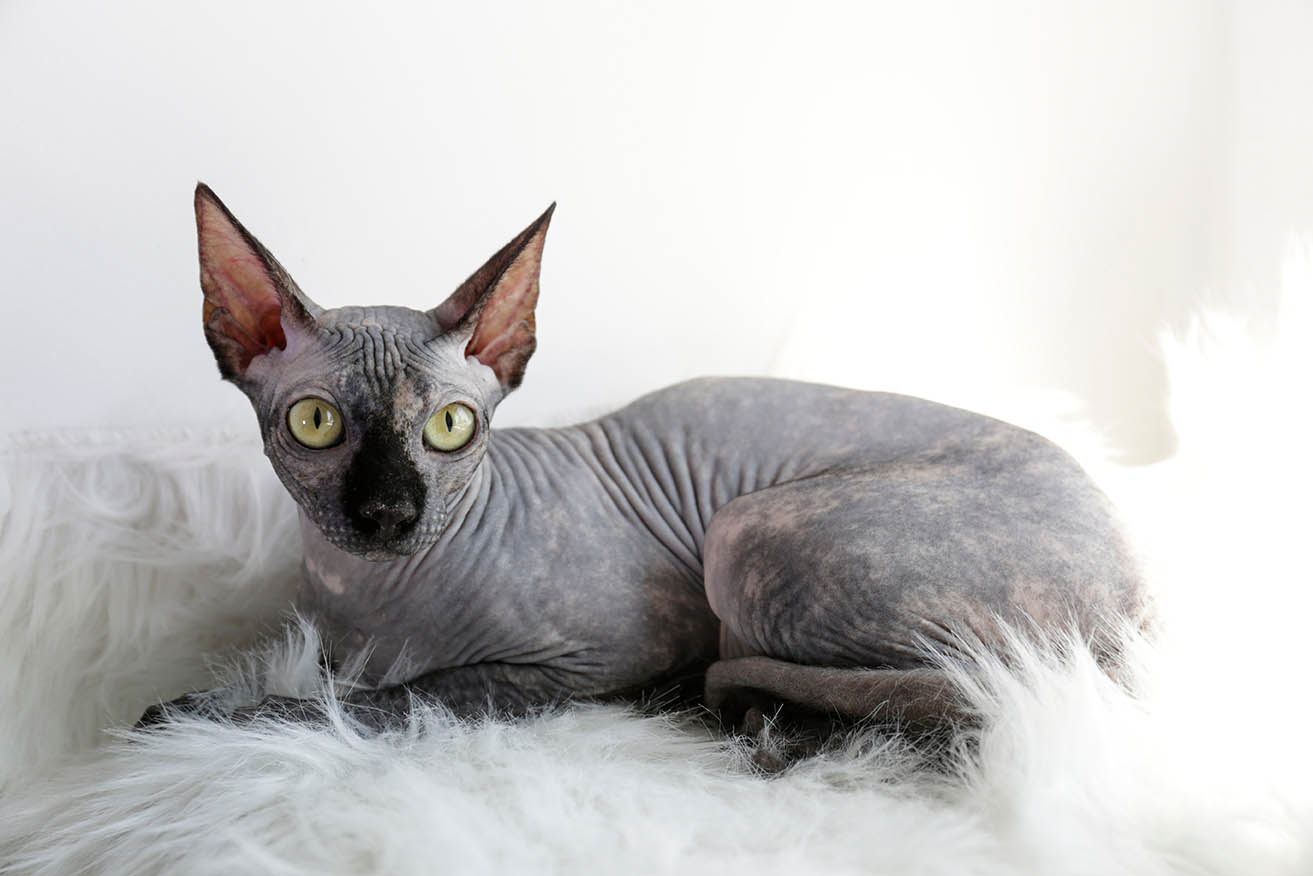
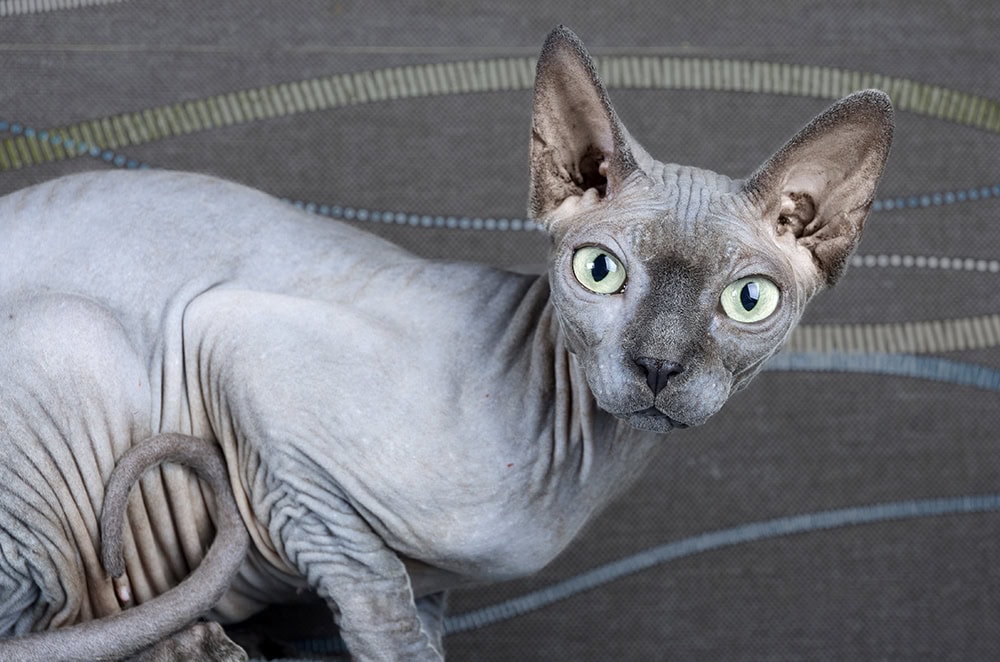
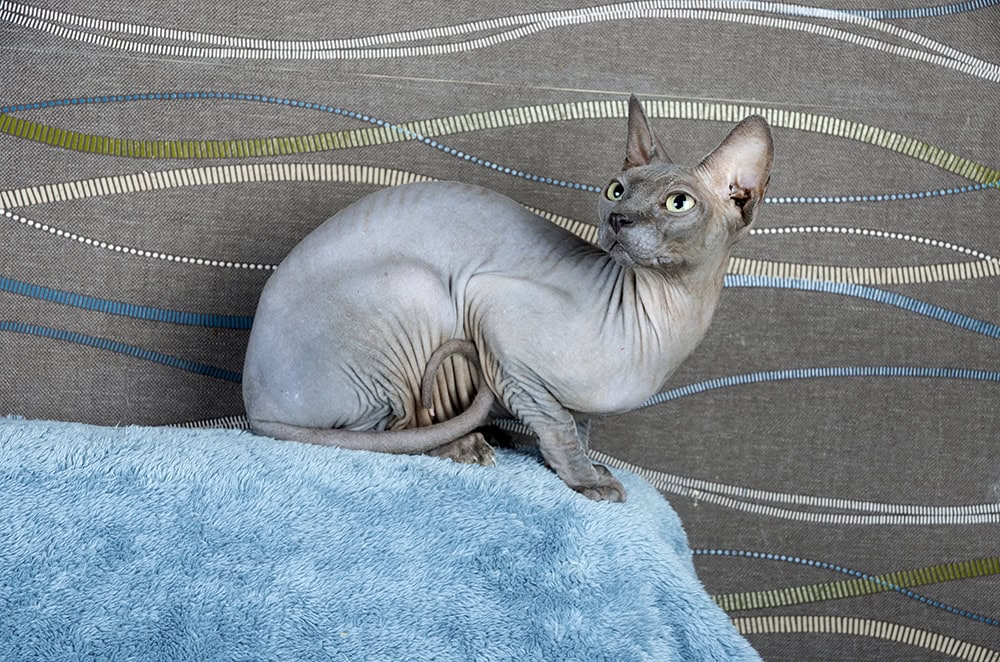
The blue Sphynx is often a bit more grey than blue. This trait is due to how the blue color shows up on their skin. It tends to be a bit darker than it would be on their coat, which makes it appear to be mostly grey. They are tinted blue, but you aren’t going to get the same blue color as you would from a British Shorthair, for instance.
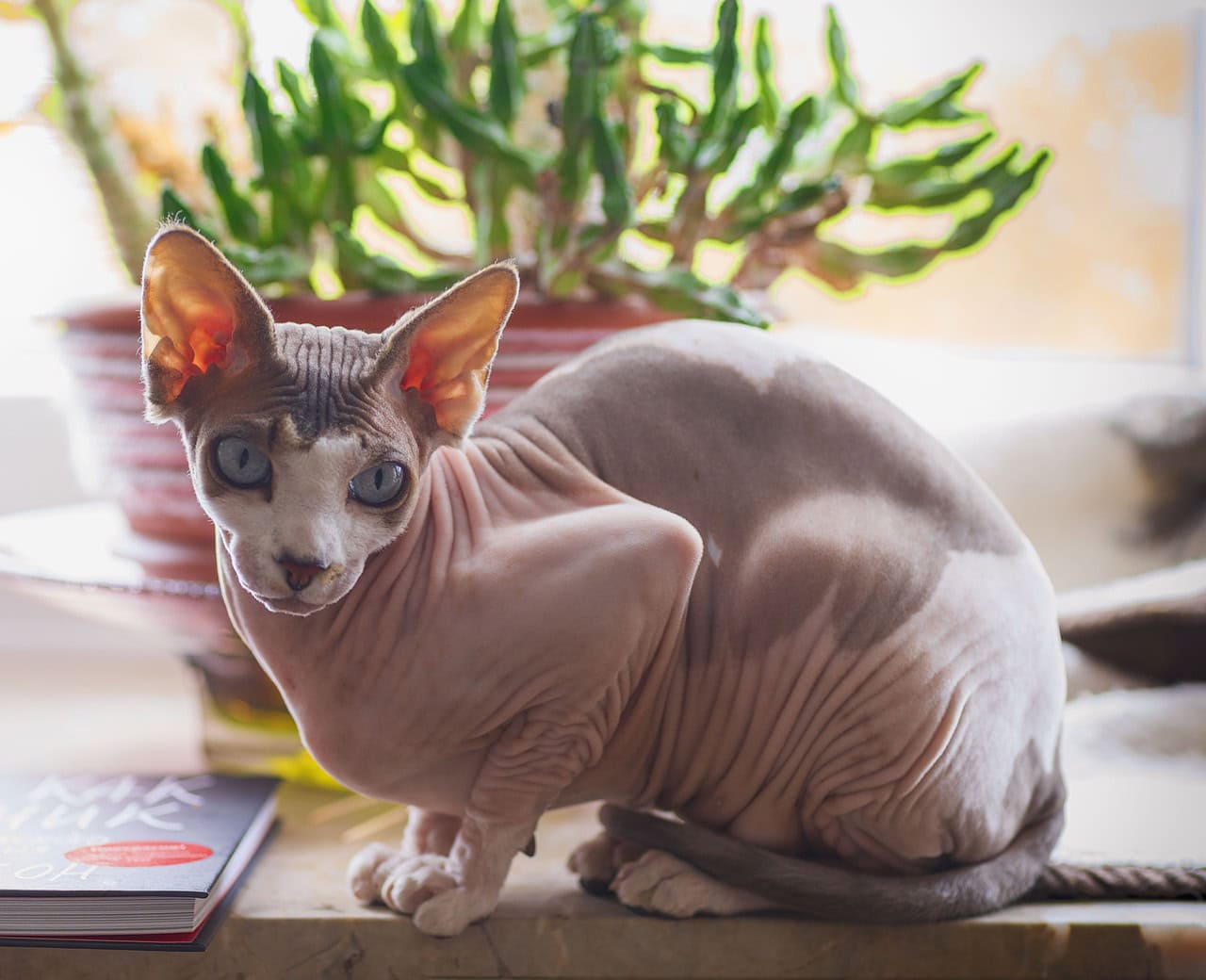
They have very wedge-shaped heads with large ears. Their very large ears often have some hair on the inside, but the outside is mostly hairless. Their eyes are quite large and “lemon-shaped,” according to guidelines from The International Cat Association.
Their paw pads will be thicker than other cats. On this particular coloration, their pads and nose will both be blue.
Their tail is often described as “whip-like.” Sometimes, they may have a puff of hair on the end of their tail. Some may even have fur all over their tail.
Where to Buy
You typically need to purchase these cats from a breeder. They aren’t usually found at animal shelters or anything of that sort. This is largely because most cats that are adopted come with an adoption contract, which requires that they are returned to the breeder if the owner can no longer care for them. Therefore, most cats do not end up at a shelter or rescue.
We highly recommend doing your research before adopting any kitten. These cats are somewhat prone to health problems, so it is important to purchase from a breeder that carefully breeds all of their felines. Otherwise, you may end up with a sick kitten.
You should also expect to pay a pretty penny for these cats, as they are usually quite expensive. Most will cost a few thousand dollars at least.

Conclusion
The Sphynx is absolutely a unique cat. The blue coloration is somewhat common, allowing you to find these felines easily from the right breeder. There are quite a few breeders that specialize in this coloration, so you should have no trouble finding a feline that fits what you’re looking for.
However, because this breed is a bit more expensive than most, you should prepare to pay a few thousand dollars for this breed. This price tag is true even if you are purchasing a more common color like blue.
You might also be interested in:
Featured Image Credit to: Joanna Zaleska, Shutterstock
Get Hepper In Your Inbox


Pet care tips from our vets and experts, straight to your inbox.
You may opt-out at any time. View our Privacy Policy for more information.

Kristin is passionate about helping pet parents create a fulfilling life with their pets by informing them on the latest scientific research and helping them choose the best products for their pets. She currently resides in Tennessee with four dogs, three cats, two fish, and a lizard, though she has dreams of owning chickens one-day!
Join the conversation
Ask a question, share your story, or send private feedback.