Hepper is reader-supported. When you buy via links on our site, we may earn an affiliate commission at no cost to you. Learn more.
Is It True That Cats Can Be Allergic to Catnip? Feline Facts & Alternatives (Vet-Reviewed Info)



In this article
Curious if catnip will get the best of your cat? No need to worry. No strong evidence points to cats' allergies to the plant, and they can’t become addicted. Still, there's a very small number of cats who might have an allergy to it, as it is possible for a cat to be allergic to a plant or a compound in the plant.
Although it is not common for cats to be allergic to catnip, catnip is considered toxic for cats in a strict sense 1. Consumption of catnip in high amounts can lead to adverse effects, such as diarrhea and vomiting.
The natural toxicity of the plant might make allergies difficult to pinpoint or diagnose. However, it is also thought that cats evolved to be drawn to catnip, and therefore, an allergy is very rare and likely not going to exist in cats. Read on as we explore catnip in more detail.

All About Catnip
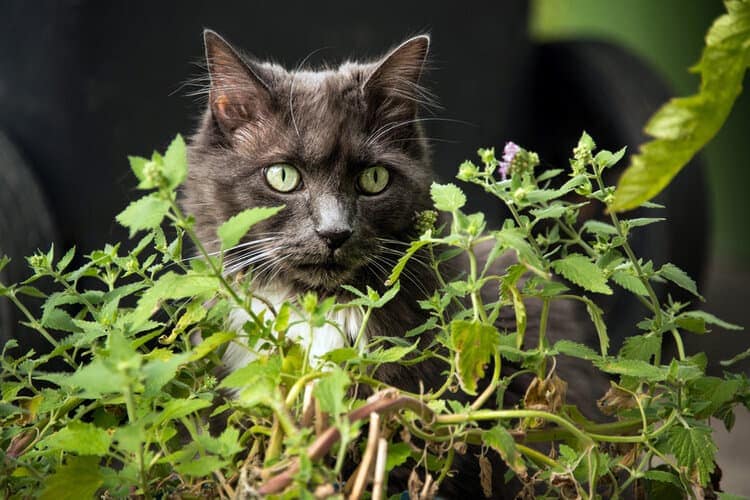
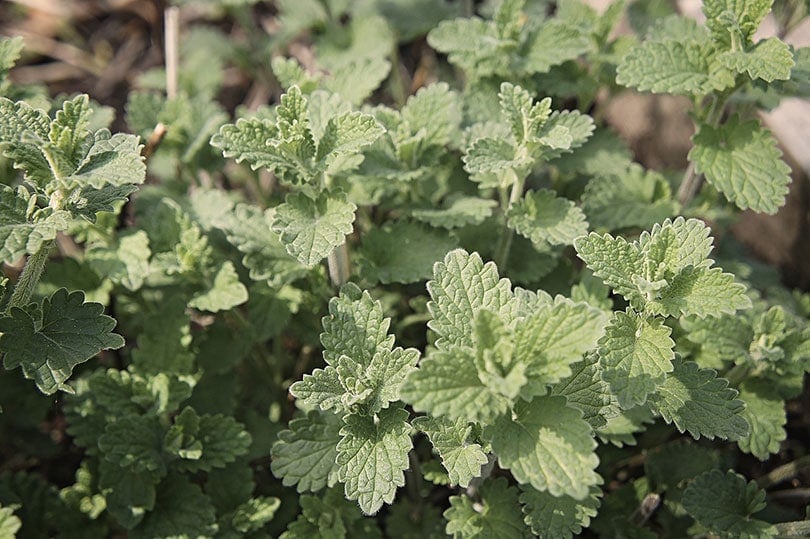
Catnip (Nepeta cataria) is part of the mint family Lamiaceae, the same family that includes the delicious herbs spearmint, peppermint, and basil.
Plants within this family are known for being highly fragrant because of their powerful volatile compounds known as nepetalactone. You know what we're talking about if you have smelled fresh mint before! These compounds are also natural insect repellents.
Nepetalactone is a feline attractant and, when sniffed by a cat, attaches to receptors in their nose. This substance is a psychoactive compound for felines and can elicit behaviors we associate with a “high”. Its effects last for about 5 to 15 minutes in felines that are sensitive to it. After this, cats go into a period of withdrawal for about 2 to 3 hours. During this time, they’re immune to the effects of the catnip and they are also often quite sedated or mellow; many cats tend to doze off when this happens.
Around two-thirds of all cats respond to catnip, and the ability to respond to it is considered hereditary. Kittens usually show no response to catnip until they are about at least 6 months old. Catnip is not addictive, and therefore, cats that don’t respond to catnip at all cannot be “trained” to respond to it.
Why Catnip Allergies Are Difficult to Diagnose
Though catnip is a toxin when consumed in high amounts by a cat, it isn’t a well-documented allergen for them. It might be difficult to diagnose catnip as an allergen due to its toxicity in high amounts.
A generally accepted theory based on published research in 2021 2 suggests that cats have evolved to respond to plants that contain nepetalactone by licking them and rubbing them on their fur. This would, in turn, prevent the cats from some disease-causing insects because the compound's natural role in the plant is to act as an insect repellent.
Many cats are ambush predators; they hunt their prey by stalking them. Stalking requires being slow and patient. Though this would allow a cat to creep up on their prey, it would also allow insects to bite the cats more easily when they were doing so. This further reinforces the idea that cats are drawn to catnip (and other plants in the genus) to fulfill the evolutionary need to be able to find a way to handle insects better to increase their odds of success in hunts.
As the ability to respond to catnip is hereditary, it would also make sense for a cat to have evolved to not be allergic to a plant that they used for hunting success. This makes a compelling argument as to why a cat may theoretically be allergic to catnip, despite there being little to no evidence of a proven allergy in a pet cat.
Sniffing vs. Chewing
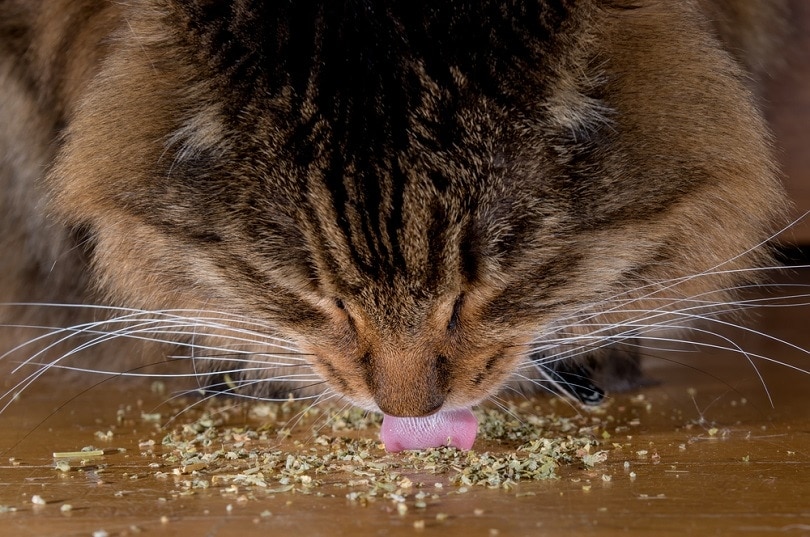
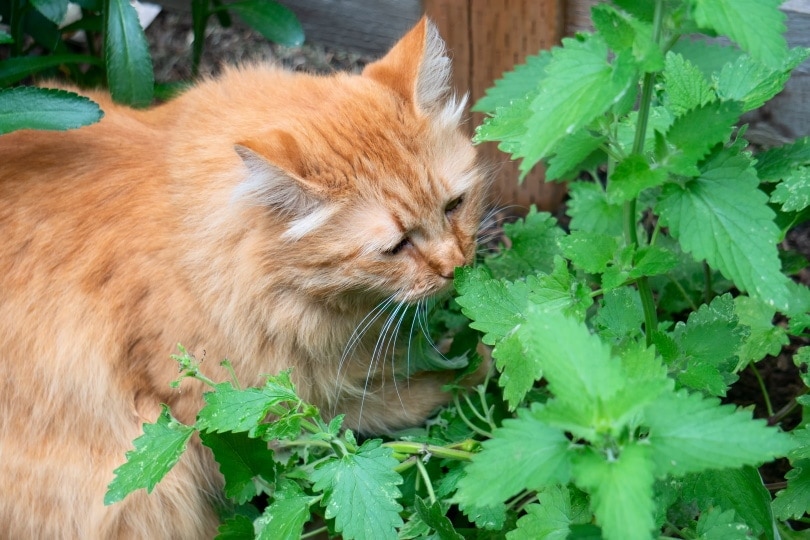
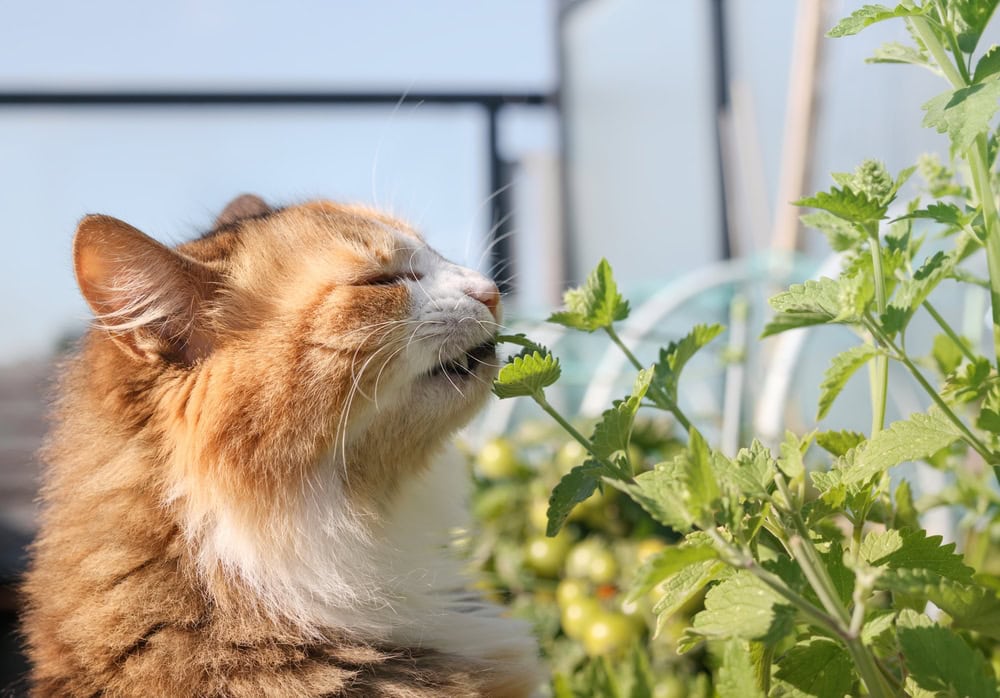
Some cats like to sniff the plant. Others want to chomp down on the leaves and stems. Oral ingestion does not offer any effects as far as a “high” is concerned.
Eating the plant results in a more mellow behavior (though it may still excite some cats, as they would probably sniff the plant before eating it), whereas sniffing offers the catnip craze everyone hears so much about. Sniffing is the only proper way for a cat to experience the high.
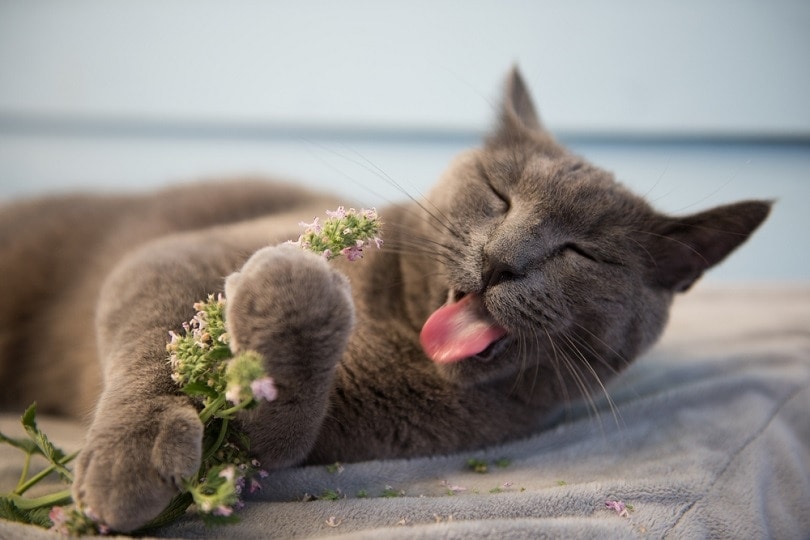
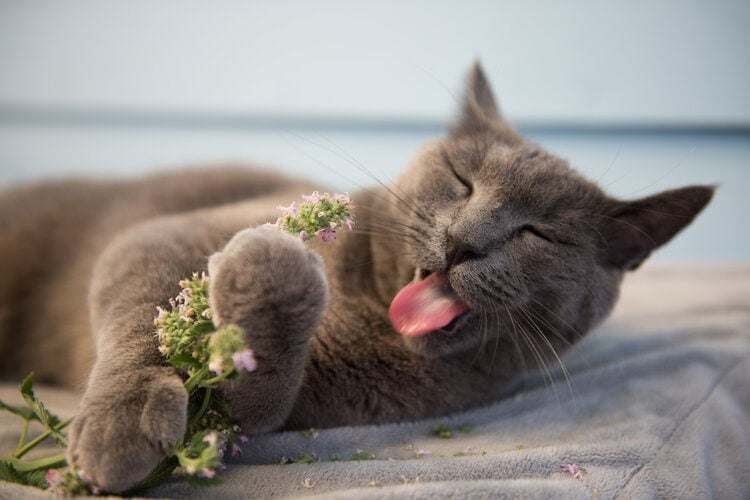
In any case, all cats react differently to the plant, but common effects include:
- Rubbing on the plant
- Rolling around
- Biting or scratching
- Drooling
- Swatting
- Zoomies
- Napping
- Vocalizations
After the euphoric experience, your cat may fall into a couch lock for 2 to 3 hours.
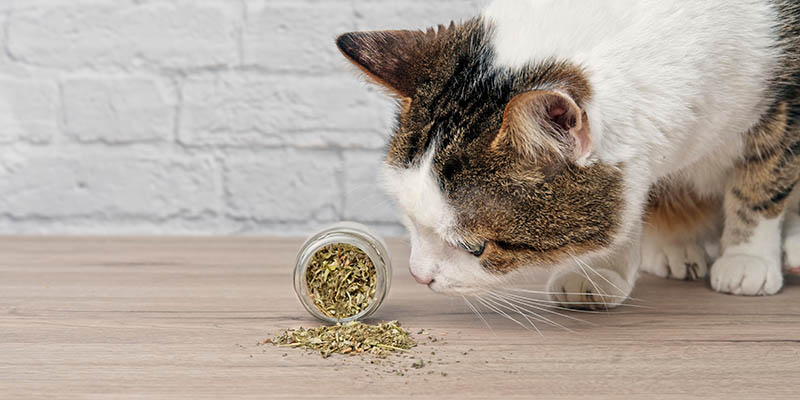
Dried, Fresh, and Oil
Fresh catnip is far more potent than dried crisps, so you won’t need to offer as much to your cat. Only a few leaves or a couple of clippings will do.
You can also find catnip oil, the most concentrated version of catnip. Catnip oil is often too strong for cats and can lead to vomiting and diarrhea. If this is the case with your cat, be careful with how much you give your cat to avoid unpleasant side effects.
The best toys will give your cat hours and hours of exercise and entertainment. Our Hepper Catnip Stick Toys are packed with 100% organic catnip and shaped like prey to give your cat both mental and physical stimulation. Plus, they're as nice to look at as they are sturdy and fun!

- No Filler - Like all the best cat toys our is stuffed with 100% organic catnip. Cheap cat toys with filler leave your cat bored and disinterested. Our pets deserve to be excited and engaged.
- Flexible Play - Simple plush shape is great for biting, scratching and pawing. It can start life as a teething toys for kittens then soon your furry friend will be using it as a cat kick stick. Play for any mood
- Durably Designed - Our cat safe toys are hand-stitched with a double-lined exterior construction for hours of playtime, perfect cat kicker toys for cats indoors and even outdoors. Your cat will tire out before the toy does!
How Much Catnip Can I Offer My Cat?
There is no specific measurement for offering catnip, but cats do not need much to experience the euphoric feeling. It’s best to start with small dosages and see how your cat reacts.
If you’re wondering why your cat is vomiting or experiencing diarrhea, they may have consumed too much catnip. Sometimes, this happens when cats have unlimited access to live plants or high potencies, like catnip oil.
If your cat seems distressed after consuming catnip, it’s best to consult your veterinarian for advice.
What Else Affects Cats Like Catnip?
If you don’t like the effects of catnip (or your cat isn’t affected by it), you can try the three plants below.
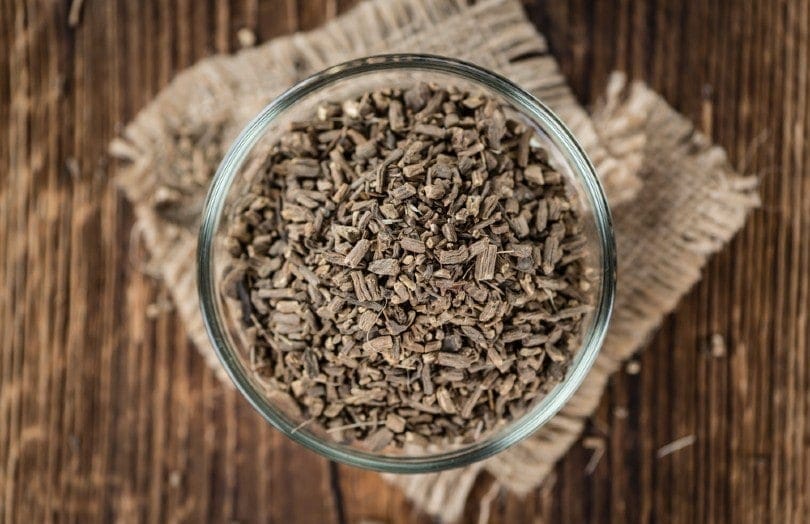
- Valerian: Valerian (Valeriana officinalis) has been used as a human sedative for thousands of years. A study published in 2017 revealed that Valerian affected 50 out of 100 cats. The effect was a nice high, followed by sleepiness. This may be a better option for those looking for something more mellow than catnip.
- Silvervine: Silvervine (Actinidia polygama) is a member of the kiwi family and offers a euphoric high similar to catnip. The high may even be stronger than catnip, lasting up to 30 minutes, so offer it in small quantities. The high may even be stronger than catnip, lasting up to 30 minutes.
- Tatarian Honeysuckle: The same study that tested Valerian revealed feline favoritism for Tatarian honeysuckle (Lonicera tatarica). However, some states have outlawed the plant because it’s highly invasive.
Conclusion
We want to care for our cats in the best way possible, so it is natural to worry about what our cats eat and sniff. Thankfully, cats aren’t known to be allergic to catnip, but that does not mean they can’t have negative side effects from time to time.
Remember, you can always try the other herbs if catnip doesn't sit right with you and your cat.
Sources
https://www.petmd.com/cat/general-health/does-catnip-make-cats-high
https://www.aspcapetinsurance.com/resources/what-does-catnip-do-to-cats/
https://www.britannica.com/topic/list-of-plants-in-the-family-Lamiaceae-2035853
https://www.mda.state.mn.us/plants/pestmanagement/weedcontrol/noxiouslist/tatarianhoneysuckle
https://www.webmd.com/vitamins/ai/ingredientmono-870/valerian
https://www.petmd.com/cat/general-health/silver-vine-plant-alternative-catnip
Featured Image Credit: lwccts, Pixabay
Get Hepper In Your Inbox


Pet care tips from our vets and experts, straight to your inbox.
You may opt-out at any time. View our Privacy Policy for more information.
Cassidy is a vet tech and pet sitter who has more recently become a pet writer. She loves cats and dogs and has had dozens of pets over the years. Her specialty is the human-animal bond.
Cassidy and her husband currently live in Kansas with a German Shepherd named Raven, two cats named Lucy and Streudel, and several backyard chickens.
Join the conversation
Ask a question, share your story, or send private feedback.