Hepper is reader-supported. When you buy via links on our site, we may earn an affiliate commission at no cost to you. Learn more.
How Far Away Can My Cat Smell Catnip? Science-Based Facts & Advice
In this article
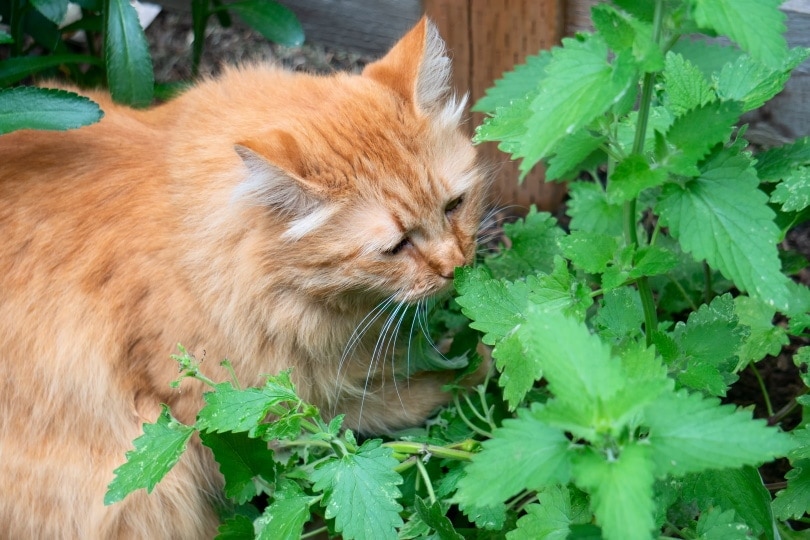
Catnip is a source of pleasure for many cats and a source of amusement for owners watching their cats enjoying it. Sometimes, you bring home a new packet of catnip that is completely sealed, yet your cat still seems to be able to smell it. So, how far away can cats actually smell this stuff?
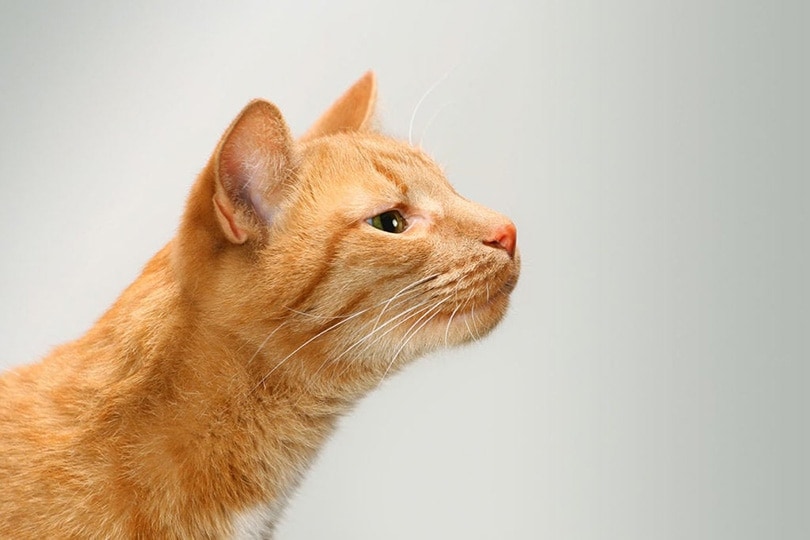
Cats have powerful senses of smell, and it’s believed that they can smell as far as 1.5 to 4 miles away.1 This means it doesn’t take much for a cat to sniff out catnip from a distance!
Here, we get into everything catnip and cats and how well they can sniff things out. We also examine why some cats don’t respond to catnip and what the alternatives are.

How Strong Is the Cat’s Sense of Smell?
Cats have an organ on the roof at the front of their mouth called the vomeronasal organ, also known as Jacobson’s organ.
It contains ducts that lead to both the mouth and nose, which essentially means the vomeronasal organ is a scent analyzer.
When cats inhale an interesting scent, they investigate it by using their tongue to move the scent over the vomeronasal organ, which will then move up to the brain.
You’ll see your cat open their mouth for a bit, which is called the Flehmen response, a form of analyzing the scent but also tasting it to a certain degree.
Many cats will curl up their upper lips, which is how they allow maximum exposure for the scent to hit the vomeronasal organ, so they get as much information from it as possible.
Cats have 200 million scent receptors inside their noses, while humans have 6 million. This demonstrates how sensitive their sense of smell is. Cats can even smell pheromones, which is something that we certainly can’t do!
How Far Can Cats Smell?
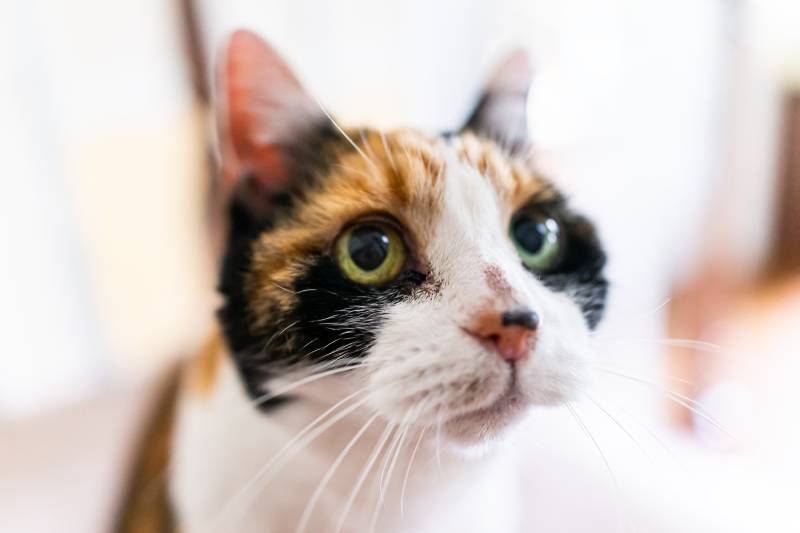
Cats can smell as far as 1.5 to 4 miles, a number that came from a study that tested a number of cats and their ability to find their way home. One cat was taken blindfolded and driven 1 to 3 miles from home by car, and they managed to find their way home seven times in a row.
This means cats can find their way home even when they don’t know where home is, and part of what helps them is their sense of smell.
Catnip contains a molecule called nepetalactone, which gives off the aroma that cats are so drawn to. Herbalist Debs Cook states that cats are so sensitive to the nepetalactone odor that they can smell it even if it’s only 1 part per 1,000,000,000,000 (1 trillion) in the air!
What Exactly Is Catnip?
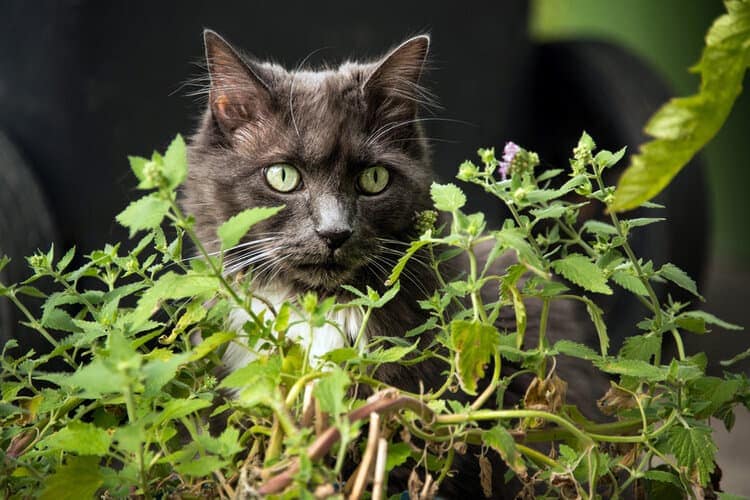
Catnip (Nepeta cataria) is a perennial herb that originated in Asia and Europe but is grown around the world today. It’s a member of the mint family but is considered an invasive species in some parts of the United States.
Beyond getting cats excited, catnip is used as a seasoning and a medicinal tea for colds and fevers in some parts of the world.

Why Do Cats Love Catnip?
While some cats might ingest it, the odor is what draws most cats to it in the form of the nepetalactone chemical. It’s similar to a pheromone-type chemical and causes a euphoric state in most cats.
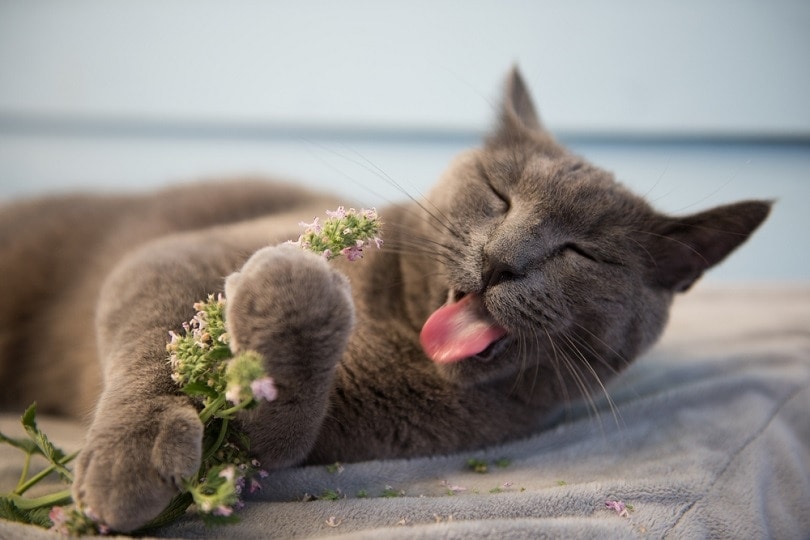
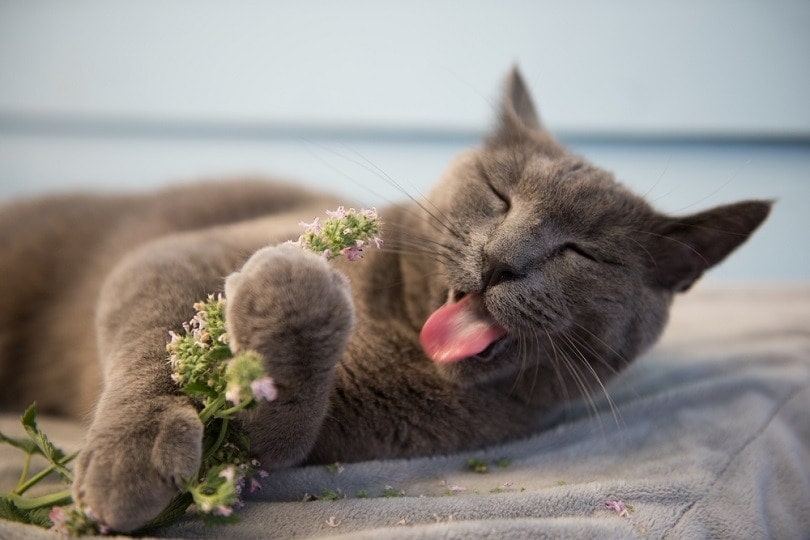
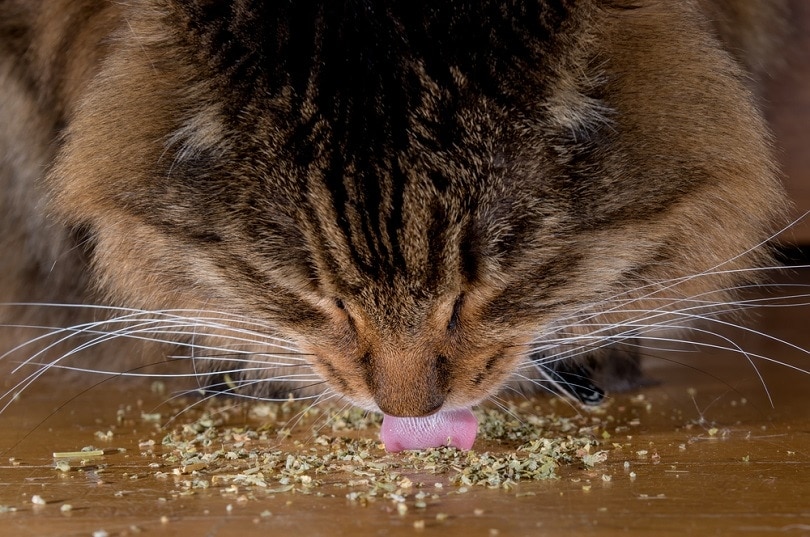
The effects tend to last between 5 and 15 minutes, but it might just be a few minutes overall. Some cats will roll in it, lick it, and rub it while clutching it in their paws.
Some cats tend to drool and just lie in it, while others will start to run laps around the house — a boosted version of the zoomies!
Do All Cats Love Catnip?
It’s estimated that only 70% to 80% of cats actually respond to catnip. The cats that react to it are thought to have an inherited genetic trait that increases their sensitivity to catnip.
You can try a couple of alternatives for cats that don’t seem that interested in catnip. They will sometimes react to silver vine.
There’s also Tatarian honeysuckle and valerian, but silver vine seems to be the most favored by cats. In fact, some cats will respond more to silver vine than even catnip. Silvervine is typically given in wooden stick form, and your cat should be monitored while chewing on it.
You should also be aware that kittens do not react to catnip either. Generally, it’s only once kittens are between 6 months to 1 year that they will start to respond to catnip.
However, if you believe that your cat doesn’t seem to react to catnip, it might be stale, or your cat might be responding in an unexpected way. We all expect cats to act strangely when they encounter catnip, but many cats will just “zone out” and relax, so it’s still possible that your cat is sensitive to it.
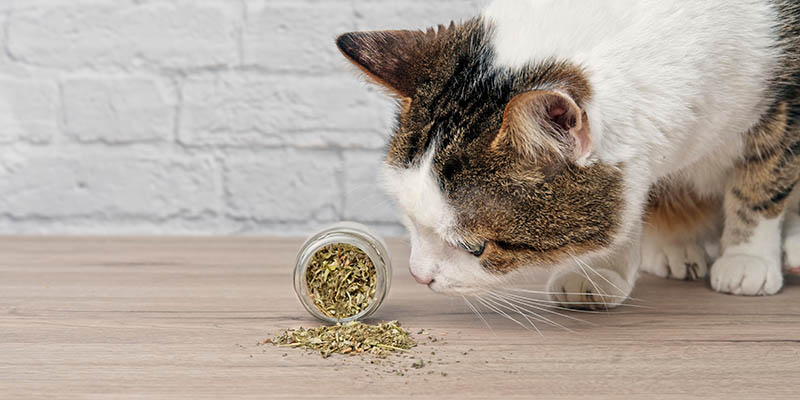
Conversely, it might be stale, which often happens with mass-produced catnip toys. Fresh catnip is strong smelling to the point that even you should be able to smell it. If you’ve been using catnip that smells like nothing, try aiming for toys or catnip made with fresher products.
Our Pick for Best Catnip Toy:

- No Filler - Like all the best cat toys our is stuffed with 100% organic catnip. Cheap cat toys with filler leave your cat bored and disinterested. Our pets deserve to be excited and engaged.
- Flexible Play - Simple plush shape is great for biting, scratching and pawing. It can start life as a teething toys for kittens then soon your furry friend will be using it as a cat kick stick. Play for any mood
- Durably Designed - Our cat safe toys are hand-stitched with a double-lined exterior construction for hours of playtime, perfect cat kicker toys for cats indoors and even outdoors. Your cat will tire out before the toy does!
Catnip toys are a lot of fun for most cats, but you do want to find a high-quality version. Our Hepper Catnip Stick Toys are double-bagged and bite-proof, perfect for even the sharpest claws and teeth. They're also full of 100% organic catnip, shaped like your cat's natural prey, and hand-made in the USA.
Is It Safe to Give Cats Catnip?
Catnip is perfectly safe for cats and is not addictive in any way. The following are a few of the benefits that catnip provides:
The 5 Final Tips
1. Limit the Amount
While cats can’t technically overdose on catnip, it is still usually a good idea to limit it, particularly if it is fresh. Too much catnip could lead to stomach upset and dizziness.
2. Use Appropriate Catnip
Only give your cat products that are made specifically for cats. Don’t use things like catnip oil, and avoid fresh catnip that has been sprayed with pesticides.
3. Don’t Use It Constantly
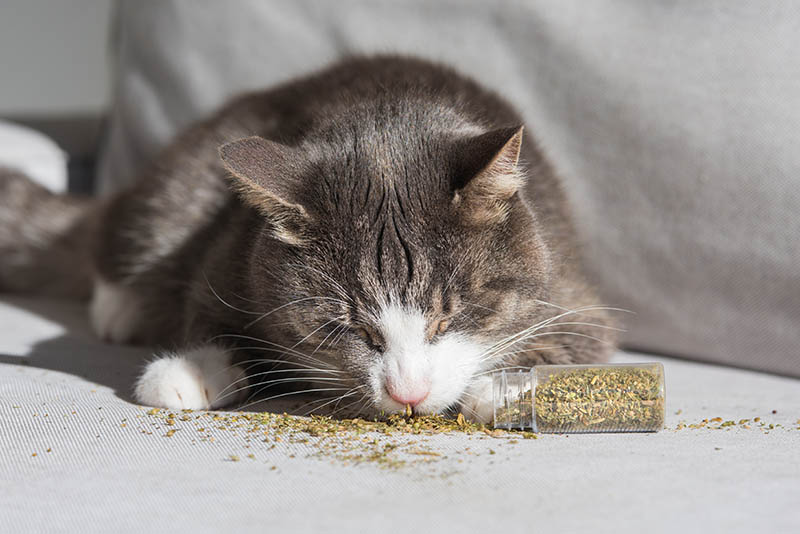
While cats only play with catnip for 5 or so minutes, the effects can last around 10 minutes and eventually fade. But it can take hours before cats can feel the effects again when they return to the catnip.
4. Don’t Give It to Aggressive Cats
If you have a cat that tends to be a bit grumpy and aggressive, don’t give them catnip. For cats to essentially lose their inhibitions while under the influence of catnip, you might see their bad behavior get worse.
5. Don’t Give It to Pregnant Cats
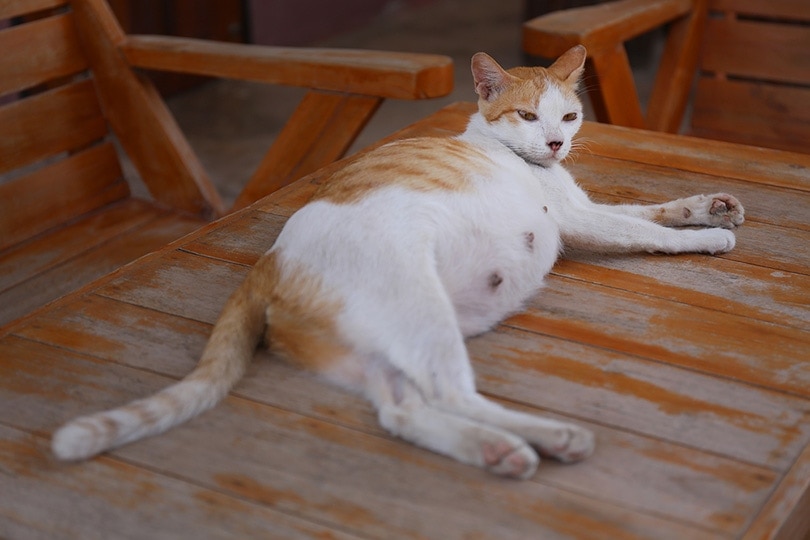
Finally, don’t give catnip to pregnant cats, as it is known to kick off contractions and can lead to premature labor.
Conclusion
The long and the short of it is that technically, a cat might be able to smell catnip from up to 4 miles away. But this is something that has never been tested, and there is no way to be sure.
That said, there is no question that if you have fresh catnip in your bag, it won’t take long before your cat knows that you have some and will request it loudly.
Even big cats like tigers and lions react to catnip, so it is no wonder that this herb has been given such an appropriate name!
Sources
Featured Image Credit: Lightspruch, Shutterstock
Get Hepper In Your Inbox


Pet care tips from our vets and experts, straight to your inbox.
You may opt-out at any time. View our Privacy Policy for more information.

Kathryn was a librarian in a previous lifetime and is currently a writer about all things animals. When she was a child, she hoped to work in zoos or with wildlife in some way, thanks to her strong love for animals. Unfortunately, she's not strong in the sciences, so she fills her days with researching and writing about all kinds of animals and spends time playing with her adorable but terribly mischievous tabby cat, Bella. Kathryn is hoping to add to her family in the near future – maybe another cat and a dog.
Join the conversation
Ask a question, share your story, or send private feedback.