Hepper is reader-supported. When you buy via links on our site, we may earn an affiliate commission at no cost to you. Learn more.
Can Cats Eat Paprika? Vet-Verified Nutrition Facts & Safety Tips


In this article
Paprika is a spice most of us have in our spice cabinets at home. It is made from dried peppers belonging to the Capsicum annuum species, which includes sweet peppers, poblano peppers, and other types.1 Some types of paprika are hot, while others are sweet and mild. They add flavor to deviled eggs, potato salad, and more.
Let’s say you’re a cat parent, and your cat is taking a stroll on the countertop. While making your favorite dish, you spilled a little paprika, and your feline just licked it up. Should you be concerned? Can cats eat paprika? The answer depends on the type of the paprika in question, but to be safe, our blanket response is to avoid it. To further explain, let’s dive deeper into this spice.

Can Cats Eat Paprika?
Paprika is made from different types of dried peppers. If the paprika you have on hand is made from hot peppers, do not give it to your cat. This type of paprika contains capsaicin and other derivatives from capsaicin which are responsible for paprika’s irritant power. Consuming hot paprika will irritate your cat’s mouth and digestive system and may cause drooling, vomiting, and diarrhea.
If you put paprika in your cat’s food, odds are your cat will turn their nose up and run. Gardeners often use paprika to deter cats from getting into their gardens because cats hate the smell of the spice, so there’s no reason to add it to your cat’s food.
If you put paprika in your cat’s food, odds are your cat will turn its nose up and run. Gardeners often use paprika to deter cats from getting into their gardens because cats hate the smell of the spice, so there’s no reason to add it to your cat’s food.
Paprika does have health benefits for humans. It is loaded with minerals and vitamins such as vitamin A, vitamin E, and vitamin B-6. It has antioxidant properties, can improve cholesterol and blood sugar levels, and holds anti-inflammatory properties. However, cats are obligate carnivores, and they mainly require animal-based protein to be healthy. They don’t obtain any health benefits from foods that come from plants, such as paprika.

What Spices Can Cats Not Eat?
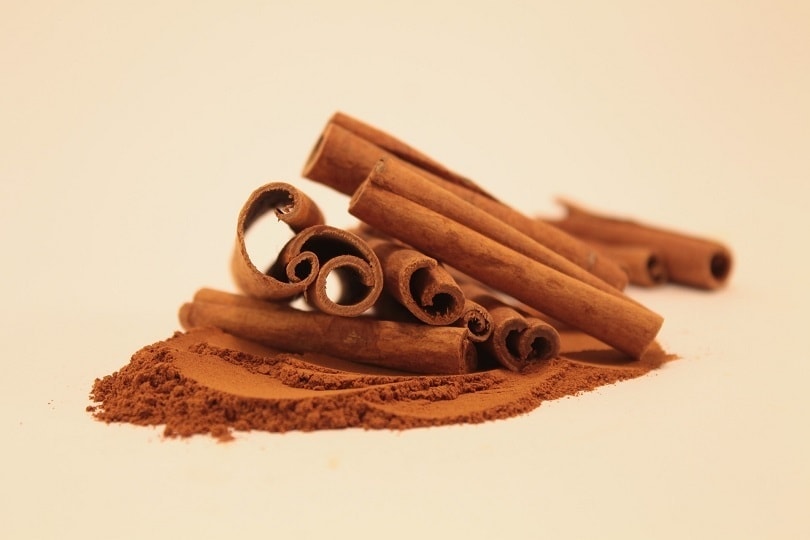
Certain spices are toxic to cats and should be avoided at all costs. If consumed, some spices can cause different health problems. Let’s take a look at the ones that cats should never consume.
Spices and Seasonings That Are Toxic to Cats:
Cats are curious creatures, and a time may come when you need help if they accidentally ingest a toxic spice. For this reason, it is best to put spices away where your cat cannot get to them. If your cat eats something toxic or something you are not sure whether it is toxic or not, call animal poison control or your veterinarian for help on what to do. Certain poisons have an immediate effect on your cat such as drooling, vomiting, lethargy, rapid breathing, or an unsteady gait, while others take days to appear, such as hemolytic anemia caused by garlic toxicity.
Can Cats Have Any Seasoning?
Cats do not require any seasoning in their food to be healthy. However, if, for some reason, your cat ends up eating seasoned food, here is a list of herbs your cat can safely eat.
Spices That Are Safe for Cats:
What Other Human Foods Should I Avoid Giving My Cat?
As much as it may be tempting to let your cat eat whatever you’re eating, you need to err on the side of caution, as some foods can make your cat very sick, and some may even be fatal. Here are some foods to always avoid.
Foods That Are Toxic to Cats:
Now that you know what you can safely feed your cat, it’s just as important to find a bowl that supports their health and well-being. With whisker-friendly bowls and a wide tray to catch any spills, our Hepper NomNom Cat Bowl is our favorite option.

- NO MESS - The 360° tray on this cat food and water bowl set has a raised design to catch and contain stray crumbs and drips. Protect your indoors and floors from wet and messy meals!
- WHISKER FRIENDLY - Shallow and wide metal containers with flat bottoms ensure your kitty can enjoy mealtime free from whisker fatigue!
- CHEW-SAFE MATERIALS - Kittens and cats love chewing on silicone and soft rubber - but it's a choking hazard. Our cat feeding station materials are anti-chew for a 100% safe feeding frenzy!
Final Thoughts
As we’ve mentioned, cats are obligate carnivores and their diet should be based on animal protein. As a rule of thumb, the safest option is to stick to a well-balanced and complete cat food to meet their nutritional requirements. The first ingredient on the diet’s list should be high-quality animal protein, such as turkey, chicken, beef, or salmon. The diet you choose should be vet-approved and treats should not comprise more than 10% of a cat's calorie intake.
Remember to keep your spices locked away so your kitty cannot access them. If you are cooking with paprika or other spices, it is best to ensure your countertop is free from any spices that might have spilled onto the surface for your cat to lick up, especially if your paprika is made from hot peppers. You're probably safe if your paprika is made from sweet peppers, but we don’t recommend risking it.
Featured Image Credit: Billion Photos, Shutterstock
Get Hepper In Your Inbox


Pet care tips from our vets and experts, straight to your inbox.
You may opt-out at any time. View our Privacy Policy for more information.
Rachel Giordano is a writer and musician out of Pensacola, Florida, living there with her partner and their two dogs, Aero, a Border Collie/Sheltie mix, and Sophie, a Boston Terrier. Rachel has a Bachelor of Arts degree in communication and enjoys writing about all types of animals. When Rachel’s not dedicating her time to writing about animals, she enjoys writing thriller/suspense novels. A writer by day and a musician by night, she's passionate about educating the public about the requirements and needs of all types of animals.
Join the conversation
Ask a question, share your story, or send private feedback.