Hepper is reader-supported. When you buy via links on our site, we may earn an affiliate commission at no cost to you. Learn more.
Can Cats Eat Bell Peppers? What You Need to Know!

In this article
Bursting with flavor, red, yellow, green, and orange bell peppers find their way into many cuisines from all over the world. Whether you like them raw or ground into paprika, bell peppers can go a long way in enhancing a recipe and creating more flavor.
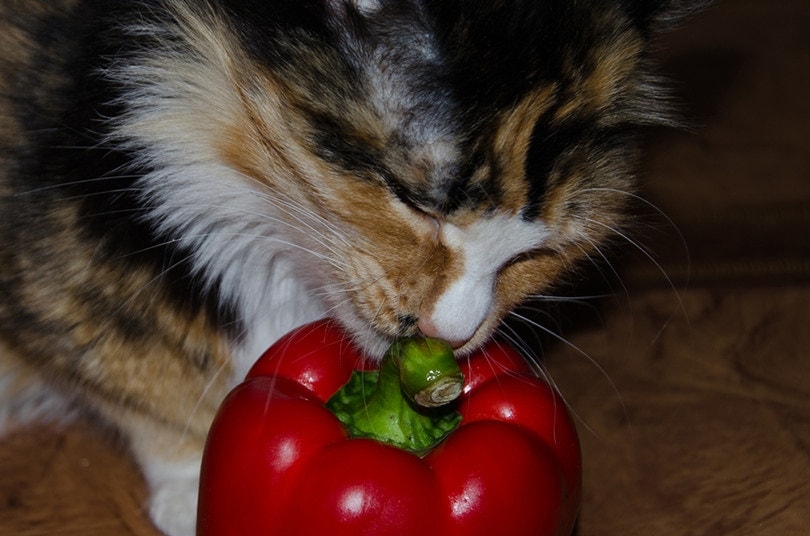
Cats tend to be curious of human food, so can cats eat bell peppers? Yes, cats can eat bell peppers, but only in small quantities. Bell peppers aren’t toxic to cats, but large quantities can lead to digestive upset.

Should Cats Eat Bell Pepper?
The colorful bell pepper flavorful but not spicy, which makes them appealing to cats. These peppers are sweet and have plenty of nutritional value for humans, such as high vitamin content and minerals, but those benefits don’t necessarily transfer to cats.
Many vitamins present in bell peppers are naturally produced by cats’ own bodies, and quality commercial cat food provides all the nutrition they need. If your cat likes bell peppers, you can give it tiny pieces of plain pepper with no seasoning, oil, or dressing.
Only give a few pieces of pepper to start. If your cat eats it without signs of digestive upset like diarrhea or vomiting, you can occasionally give small portions of bell peppers. However, this is intended as a treat, not a supplement to your cat’s diet.
There’s also no significant difference between the colors of the bell peppers, so you can safely feed any variety to your cat.
Can Cats Eat Other Peppers?
Bell peppers are sweet, not spicy, and generally not harmful for your cats. However, this doesn’t mean that all peppers are safe for your cat.
Black pepper, either whole or in its ground form, is not ideal for your cat. Most cats won’t be interested in something with a strong odor like black pepper, but it is safe to give your cat pieces of food that have a little ground black pepper on them. But black pepper can be hazardous to your cat’s health in larger amounts.
Any hot pepper, including cayenne, jalapeno, and habanero, should never be fed to your cat. These peppers have high heat indexes that can cause a burning or “hot” sensation for humans and irritate eyes and mucous membranes, and the same is true for your cat. In general, cats have a more sensitive sense of smell and may experience irritation or digestive upset from hot peppers.
Finally, there’s lemon pepper. While not strictly a pepper, lemon pepper is a combination of ground black pepper and lemon zest. Lemon and other citrus fruits can harm cats because they contain toxic compounds that are poisonous to domestic pets. Though these compounds exist in small quantities in lemon pepper, it is best to avoid giving it to your cat altogether.
What Human Foods Are Safe for Cats?
While it is always best to feed quality cat food and appropriate commercial cat treats, it can be tempting to share your meal with your cat sometimes. You have to be smart about feeding human foods to cats, however, since many things we enjoy may be toxic for your cat.
As carnivores, cats always enjoy meat treats. You can feed chicken, turkey, beef, lamb, venison, or deli meats to cats in small quantities, if it is plain and cooked without oils or spices and seasoning. Never feed raw or spoiled meat to your cat, since it can lead to gastrointestinal issues or health concerns.
Fish is also a good option. Different types of fish contain high quantities of omega fatty acids, which help with immune health, skin and coat health, and vision health. Canned or cooked fish is safe for your cat, but avoid feeding sushi, breaded fish, or fish with a lot of spices, seasoning, or sauces. When feeding canned fish, avoid options in oil and opt for those in water.
Cats may enjoy small portions of whole grains, which may contain digestible protein, fiber, vitamins, minerals and essential fatty acids. You can feed corn, cornmeal, brown rice, wheat berries, or barley, all of which may need to be mashed. Grains should always be cooked before you feed them to your cat.
You could also feed cooked eggs to your cat on occasion. Like meat, eggs have a lot of protein and benefits for cats, but they should never be fed raw or undercooked. Limit eggs to small portions, however, since the high fat content can cause gastrointestinal upset.
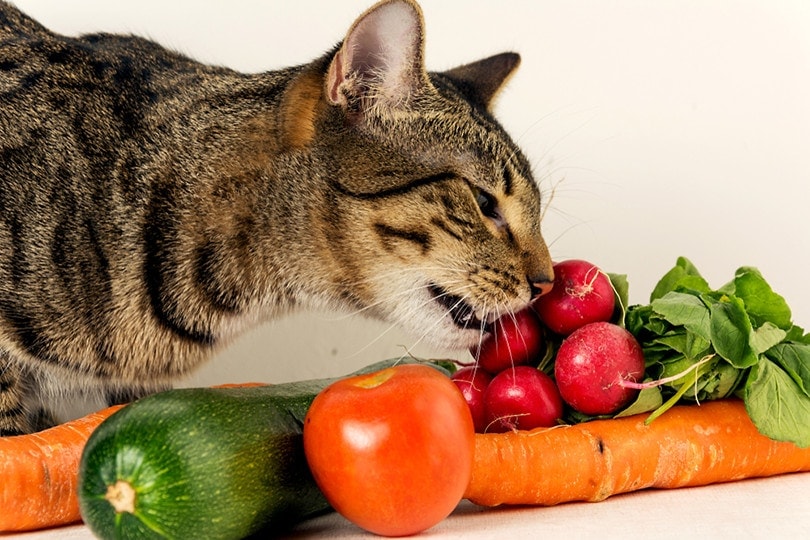
Cats can’t taste sweet flavors, but they may enjoy some vegetables. Cucumber, broccoli, or other leafy greens may be good for your cat and offer a lot of vitamins, fiber, and water content – assuming your cat likes to eat them. Vegetables should be plain and cooked before feeding to your cat.
Now that you know what you can safely feed your cat, it’s just as important to find a bowl that supports their health and well-being. With whisker-friendly bowls and a wide tray to catch any spills, our Hepper NomNom Cat Bowl is our favorite option.

- NO MESS - The 360° tray on this cat food and water bowl set has a raised design to catch and contain stray crumbs and drips. Protect your indoors and floors from wet and messy meals!
- WHISKER FRIENDLY - Shallow and wide metal containers with flat bottoms ensure your kitty can enjoy mealtime free from whisker fatigue!
- CHEW-SAFE MATERIALS - Kittens and cats love chewing on silicone and soft rubber - but it's a choking hazard. Our cat feeding station materials are anti-chew for a 100% safe feeding frenzy!
Key Takeaways
Cats are curious and may be interested in what you’re having for dinner, but not every human food is safe for cats to consume. Though cats can safely eat bell peppers, give them as an occasional treat and keep the portions small. When in doubt, avoid giving your cat human food and stick with commercial cat treats.
Get Hepper In Your Inbox


Pet care tips from our vets and experts, straight to your inbox.
You may opt-out at any time. View our Privacy Policy for more information.
Oliver (Ollie) Jones is a zoologist turned freelance animal writer living in South Australia with his partner Alex and their mini zoo consisting of many aquatic creatures, dog Pepper, and of course, cat Steve. Ollie is originally from the USA and holds a Master's degree in wildlife biology. He hopes to share his feline knowledge and expertise with people so they can share in his passion and help their cats live their best lives.
Join the conversation
Ask a question, share your story, or send private feedback.