Hepper is reader-supported. When you buy via links on our site, we may earn an affiliate commission at no cost to you. Learn more.
Can Cats Eat Parsley? Vet Reviewed Health & Safety Guide


In this article
As pet owners, we like to provide our cats with the best possible diet, and while they are obligate carnivores, they do eat other things, including fruits, vegetables, grass, and herbs. Since parsley is a popular ingredient in the meals people eat, you might wonder if it's safe for cats to eat it as well. Unfortunately, the answer is not as clear-cut as many other food items, so keep reading while we discuss the benefits and possible hazards you should consider to help you be better informed.

Potential Benefits of Parsley for Cats
There are a few potential benefits from consuming parsley. Here are some of those potential benefits:
Fiber
Parsley is an excellent source of fiber that can help balance your cat's sensitive digestive system. Fiber helps regulate the amount of water in the digestive tract, which can help reduce the frequency of constipation and diarrhea. Fiber is essential to keeping your cat healthy.
Vitamins and Minerals
Parsley has several vitamins and minerals that might add to your cat’s nutrition. These micronutrients include magnesium, zinc, and choline.
Antioxidants
Parsley is a great source of antioxidants, as it contains many carotenoids like beta-carotene, lutein, and zeaxanthin, which protect their eyesight. It also contains vitamin C, a powerful natural antioxidant. Although vitamin C is not essential for cats to consume in their diet, a boost is great for their immune system.
How Does Parsley Harm Cats?
Sunburn Dermatitis
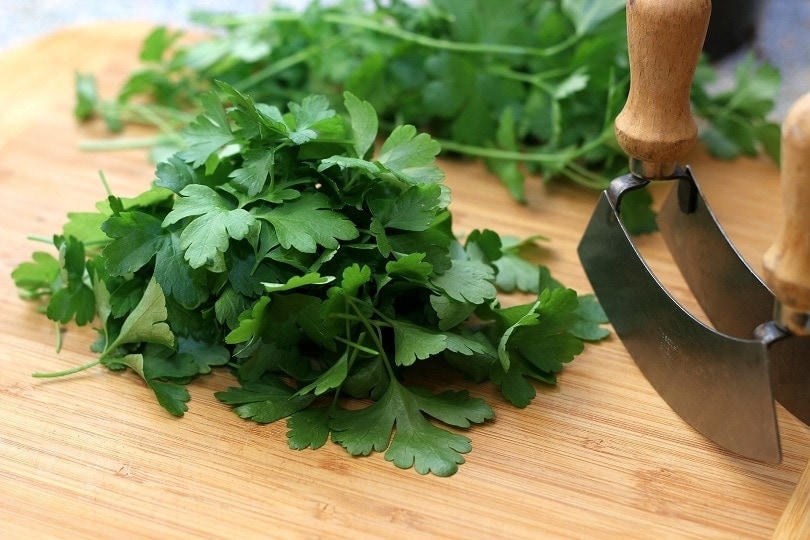
The ASPCA lists parsley as a toxic plant to cats, dogs, and horses but states that you need to eat quite a lot of parsley to reach toxic levels. However, did you know that parsley can make humans and animals more sensitive to sunlight? The increased risk of sunburn is one of the main reasons that people are afraid to feed parsley to their pets, especially in hairless breeds like the Sphynx that get more sunlight than most cats.
Should I Feed My Cat Parsley?
While the ASPCA lists parsley as a toxic plant, it admits that it takes a considerable amount to be harmful. However, for most of us pet lovers, even minimal danger is too great, so we recommend choosing another herb to offer to your pet. If you have found your cat eating some off the counter or from your garden, it will likely be fine as most cats don't like the flavor enough to eat a large amount which causes health problems.
We should also mention that parsley is an ingredient in some popular cat food brands, like Blue Buffalo, which many people regard as a high-quality, healthy food for both cats and dogs, so determining if parsley is safe is not easy.
What Are Some Safe Alternatives to Feeding My Cat Parsley?
These cat-safe alternatives will also provide your cat with fiber, vitamins, minerals, and antioxidants, so they should be your first choice instead of parsley. Also, cats are more attracted to them.
Catnip
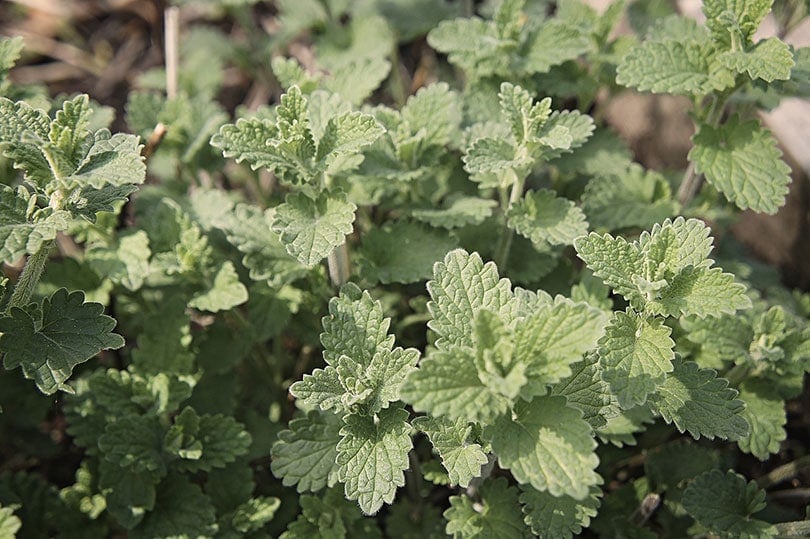
One of the most time-tested and safest herbs you can feed your cat is catnip. You can purchase any of the commercial brands available in the grocery store. However, if you have a green thumb, we highly recommend growing some in your garden, as the catnip you receive will be of much higher quality, and your cat will enjoy it more. The downside to growing this herb around your home is attracting other cats.
Cat Grass
These cat-safe alternatives will also provide your cat with fiber, vitamins, minerals, and antioxidants, so they should be your first choice instead of parsley. Also, cats are more attracted to them.
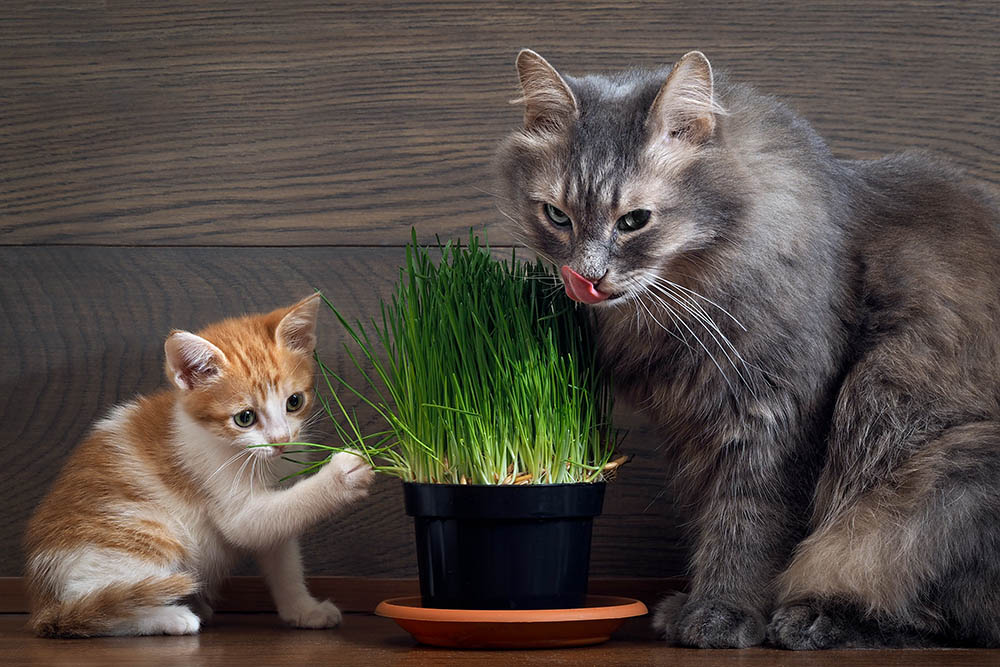
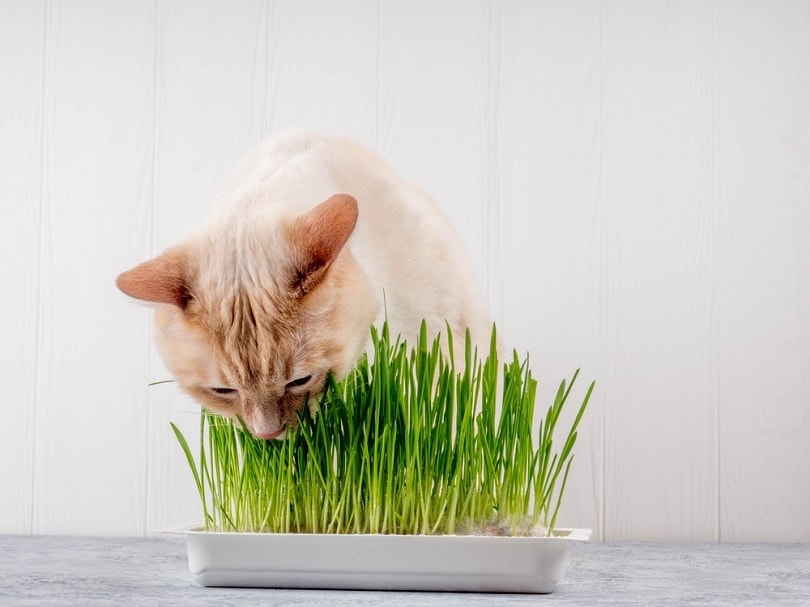
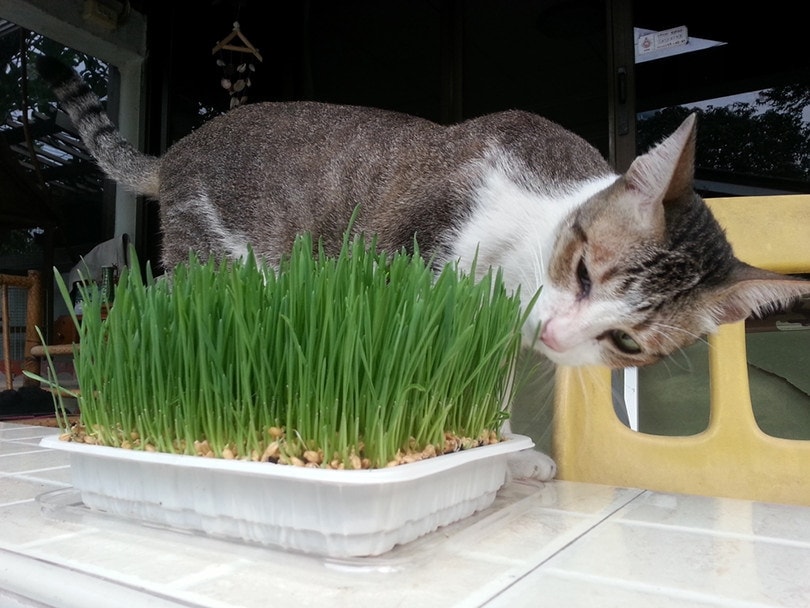
Cat grass is another excellent choice if you are looking for a plant that's safe for your cats to eat. Cat grass is inexpensive, and there are several varieties, so you can experiment a bit while you find the one your cat enjoys most. Many commercial brands provide you with a growing tray that makes it easy to grow the grass in your home for your indoor pets.

Conclusion
While the ASPCA lists parsley as toxic to cats, dogs, and horses, the amount required to be a health risk is more than most cats usually eat, especially on accident. So, there is likely no danger in small quantities, and many cat food brands even have it listed among the ingredients.
However, we would avoid making it part of their daily diet. Remember that when considering your cat’s health, it's always best to err on the side of caution.
We hope you have enjoyed reading this short guide and found the answers to your questions.
Featured Image Credit to: Pixabay
Get Hepper In Your Inbox


Pet care tips from our vets and experts, straight to your inbox.
You may opt-out at any time. View our Privacy Policy for more information.
Ed Malaker is a veteran writer who has contributed to a wide range of blogs that cover pets, tools, guitars, fitness, and computer programming. When he’s not writing, Ed is usually performing DIY projects around the house or working in the garden. He’s also a musician and spends a lot of time helping people fix their guitars and composing music for independent films.
Join the conversation
Ask a question, share your story, or send private feedback.