Hepper is reader-supported. When you buy via links on our site, we may earn an affiliate commission at no cost to you. Learn more.
Can Cats Eat Zucchini? Vet-Reviewed Facts and Tips


In this article
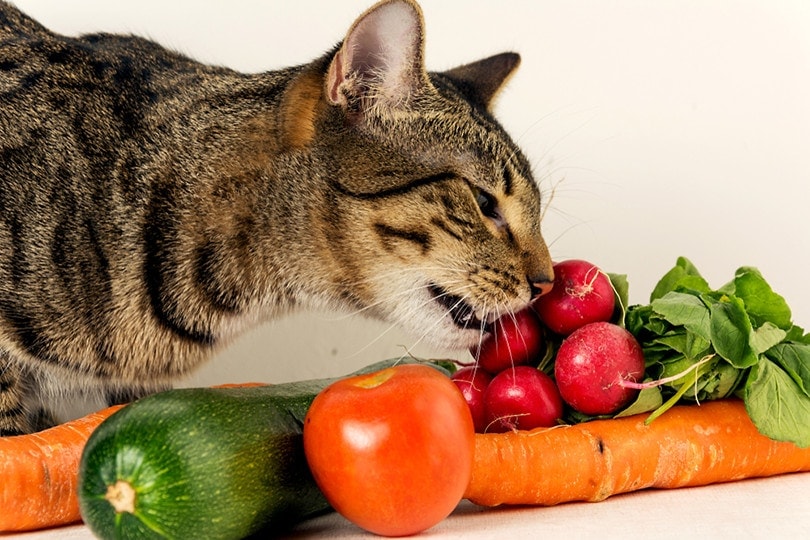
Zucchini is a safe and healthy food for cats to eat. Cats can be picky,though, so whether your cat likes the taste of zucchini is another question!
If your cat does like to eat it, raw and cooked zucchini is fine. If you opt to cook it, just make sure it’s plain, as it’s generally not a good idea to feed cats foods like excessive oils, garlic, onion, and spices.
Let’s look at the health benefits of zucchini and how a little zucchini can be a good addition to a cat’s normal meat-based diet.

Health Benefits of Zucchini
Zucchini is a type of summer squash that is low in calories but high in nutrients, antioxidants, and fiber. It is also a good source of magnesium, potassium, and folate. Zucchini contains various antioxidants that are valuable in the protection of tissues and the prevention of disease, including zeaxanthin and lutein (these are also good for eye health).
One cup of zucchini has around 20 calories and 1 gram of fiber, which is good for digestive health. Extra fiber in a cat’s diet is a good way for them to keep a healthy gastrointestinal microbiome and prevent constipation and hairballs.
Overall, zucchini is a healthy addition to your cat’s diet. You may even see tiny pieces of zucchini, along with carrots, peas, and spinach, in certain varieties of commercial cat food.
How to Cook Zucchini for Cats
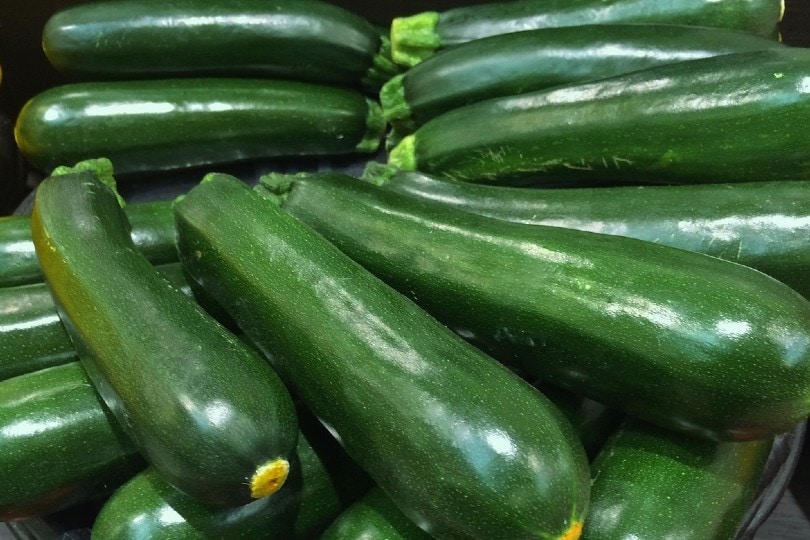
Either raw or cooked zucchini is fine for your cat to eat. You can dice raw zucchini into small pieces and serve them as snacks or add them to your cat’s regular food.
You can also offer plain, cooked zucchini to your cat. If you made some for yourself, avoid feeding it to your cat if it has other ingredients like garlic, onion, or tomato.
To cook zucchini for your cat, you can steam, boil, or bake it and then cut it into small, diced pieces. You can also purée it in the blender, as some cats may prefer it that way.
How to Get Your Cat to Eat Zucchini
If your cat likes to eat zucchini, count yourself lucky! Cats can be finicky eaters, so it can be hard to incorporate zucchini or other vegetables into their diet if they don’t like the smell or taste.
The key thing to keep in mind is to start with small amounts and introduce them gradually.
Cats are obligate carnivores, which means they need to eat an animal protein-based diet. They don’t need to eat vegetables, but they do require meat.
Any zucchini or other vegetable that you feed your cat should be served in small amounts. You can add a spoonful of cooked or raw zucchini to your cat’s wet food. You can also top dry food with a few small pieces; just make sure it’s cooled first.
If your cat is not a fan of zucchini, start introducing it very gradually. You can start with one or two tiny pieces mixed in with your cat’s regular food. If your cat eats the food and leaves the zucchini behind, you can try incorporating a teaspoonful of mashed zucchini into wet food.
What Vegetables Can Cats Eat?
What if you’ve tried everything and your cat just doesn’t like zucchini? Are there any other vegetables that are good for cats?
You can try winter squashes like pumpkin. If you don’t cook it yourself, be sure that any canned pumpkin you buy is plain and not spiced for pumpkin pie.
Peas and carrots are also good to add to your cat’s food. Make sure the carrots are either raw and shredded or cooked and diced into small pieces before serving.
Broccoli, green beans, and spinach are other vegetables you can add to your cat’s diet. Try steaming them and then cutting them into bite-sized pieces before offering them to your cat.
Do Cats Need Vegetables in Their Diet?
Cats do not need to eat zucchini or other vegetables, but they do need to eat a diet that consists mainly of animal proteins like poultry, fish, or beef.
As obligate carnivores, cats need specific nutrients found in meat to survive, but they can eat certain vegetables as add-ons to their meat-based diet. Many vegetables are safe and healthy for cats to eat, including zucchini.

Conclusion
If you wish to include plant matter in your little carnivore’s diet, you should know that zucchini is safe for cats and can be a nutritious addition to their meals. If your cat won’t eat it, try other vegetables like carrots or peas. If your cat doesn’t like any vegetables, you can always plant cat grass, as even the pickiest eaters enjoy nibbling on a little grass occasionally.
See Also:
Featured Image Credit: outsideclick, Pixabay
Get Hepper In Your Inbox


Pet care tips from our vets and experts, straight to your inbox.
You may opt-out at any time. View our Privacy Policy for more information.
Lisa is a California-based pet writer who has a master’s degrees in English and library science and experience in both academic librarianship and non-profit research, indexing and abstracting, as well as information resource management. In 2014 she changed careers and became a full-time pet writer, where she is able to apply her research skills. Lisa volunteers with a local pet charity, enjoys gardening, and curling up with a good book alongside her two big and fluffy Norwegian Forest Cats.
Join the conversation
Ask a question, share your story, or send private feedback.