Hepper is reader-supported. When you buy via links on our site, we may earn an affiliate commission at no cost to you. Learn more.
Norwegian Forest Cat Breed: Info, Pictures, Temperament & Traits
In this article
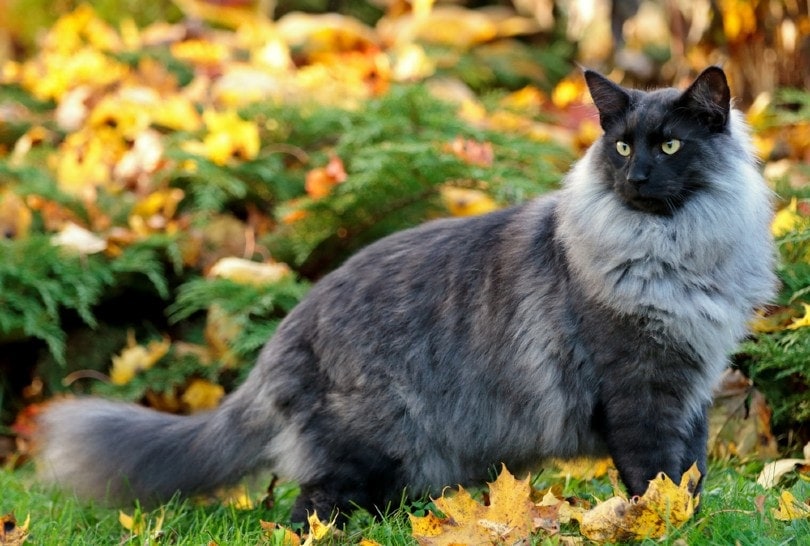
The Norwegian Forest cat is a domesticated breed that originated in Northern Europe. Today, the breed is a popular pet around the world. They are built to withstand cold temperatures, but they can do well in warm climates if they have access to temperature-controlled environments. These cats have a thick, hardy appearance that makes them look adventurous, but really, they like to snuggle up as much as they enjoy being active.
Breed Overview
Height:
Weight:
Lifespan:
Colors:
Suitable for:
Temperament:
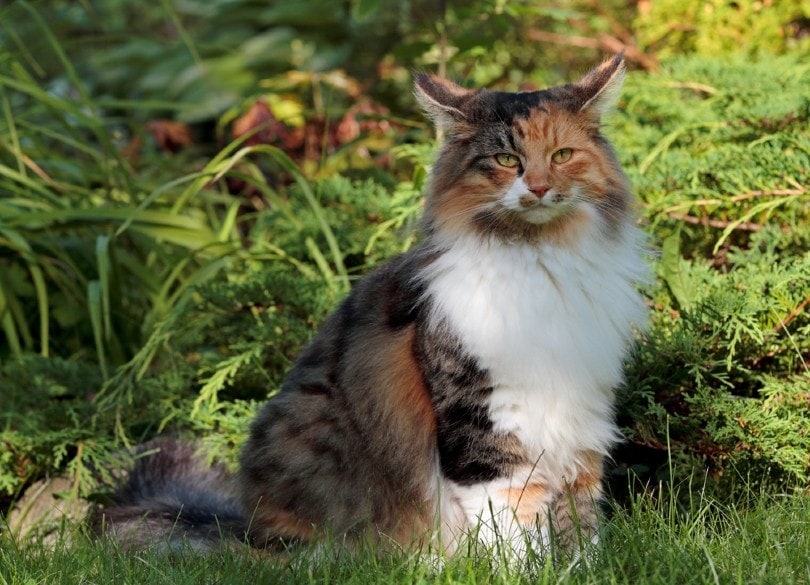
This purebred cat is a natural hunter and will effectively rid the house of pests like cockroaches and rats throughout the year. They can be almost any color and pattern in existence, but there are common options such as white, black, silver, tortoiseshell, tabby, and bicolor. Do you want to learn more about this mighty cat breed? We have you covered!

Norwegian Forest Cat Characteristics
Norwegian Forest Kittens
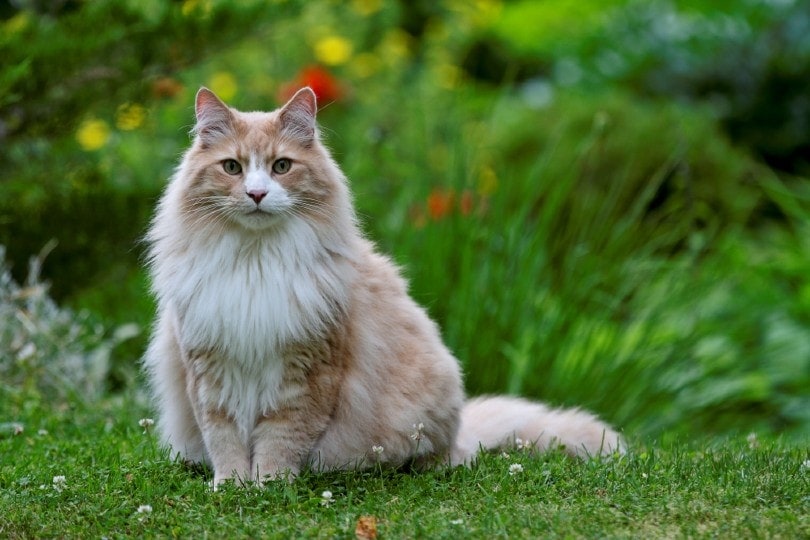
Norwegian Forest kittens are adorable. They’re thick and fluffy, lovey-dovey, and extra curious. As they age, their personalities, temperaments, and activity levels will change a little. Here are a few stats that should give you an idea of what to expect from this breed of cat when they are fully grown:
Temperament & Intelligence of the Norwegian Forest Cat
These cats are loving, loyal, considerate, gentle, patient, and affectionate. However, they are finicky, and they prefer to choose what they do and don’t do throughout the day. If they want to lay on a lap, they will do whatever it takes to make that happen. If they want to spend time on their own, they will turn their noses up at everyone and hide away in their personal safe space.
The Norwegian Forest cat is curious and has a natural tendency to hunt, so owners should not be surprised if they find a dead rat lying outside the front door occasionally. These cats are curious and love playing with toys. They are joyful yet cautious, making them awesome pets that is unpredictable yet reliable at the same time.
Are These Cats Good for Families? 👪
This cat breed is an excellent pet choice for families of all shapes, sizes, and ages. They love the attention of people no matter their age. They enjoy playing with kids, and they like snuggling up with adults just as much. They also enjoy having plenty of alone time, so families do not have to worry about focusing all their attention on their cats throughout the day. Some Norwegian Forest cats will even stand guard outside of a toddler’s crib to ensure their safety during the night!
Does This Breed Get Along with Other Pets?
Generally, the Norwegian Forest cat gets along well with other animals. They do have a natural prey drive, so they might try chasing after pets such as rats, hamsters, guinea pigs, and ferrets. However, if they are introduced to small animals while still babies, they can learn to accept these types of animals and amicably live with them in the same household setting.
The same goes for other cats and dogs. The Norwegian Forest cat has no problem getting along with any other cat or pooch, no matter their size, if they understand how to socialize from a young age. Any other animal introduced to this breed must be well socialized too.

Things to Know When Owning a Norwegian Forest Cat
There are still plenty of things to learn about this magnificent cat breed before deciding whether to acquire one as a pet of your own. Here is everything that you need to know about this breed’s diet requirements, exercise regimens, training abilities, grooming needs, and possible health problems.
Food & Diet Requirements
These cats are carnivores, like all cats. They require a high-protein diet and do not need a high concentration of fruits, vegetables, and grains to thrive. The typical Norwegian Forest cat should be offered at least 1 cup of commercial dry food (or the equivalent of wet or homemade food) every day. Any commercial food that this breed is fed should include real animal meat as the first ingredient. Avoid food that includes grains, fillers like corn and soy, and artificial ingredients.
Exercise 🐈
These are active cats, even though they like to lounge around during the day. Therefore, they should have access to a variety of different toys and engage in gameplay with their human counterparts multiple times a day. Luckily, these cats like alone time, so nobody in the household has to give their life up just to take care of their cat.
Spending a few minutes a day interacting with the cat and ensuring that there are plenty of activities for them to take part in throughout the house should be enough exercise for this vivacious breed.
Training 🧶
These cats are extremely intelligent and take well to training. However, they will only perform when they feel like it. Therefore, it is important to make sure that your cat is in a good mood, has been exercised, and has been well fed before any training session starts. Treats and praise are the most accepted things by these cats during training time.
You can teach your new Norwegian Forest cat to come when called, use the bathroom in the right place, get groomed, play with specific toys, and interact in certain ways when requested to.
Grooming ✂️
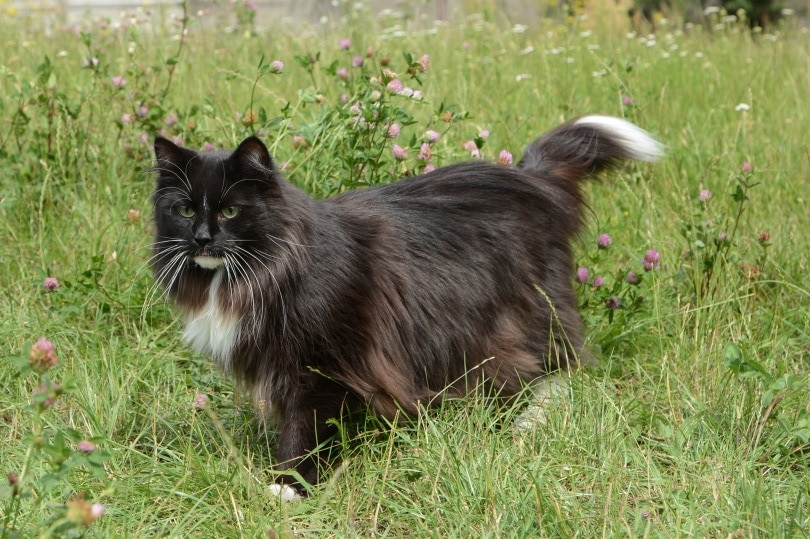
Since this breed has longer hair, it should be combed or brushed at least once a week to keep mats and tangles from developing. They do not typically need haircuts, but if they live in a hot and humid area, their owners might consider a regular trim. Nails can be trimmed twice a month to keep them short and smooth, and teeth can be brushed or dental treats can be offered once a month.
Health and Conditions 🏥
You can expect your Norwegian Forest cat to be healthy throughout their life, but there is a small chance that they may develop a health condition that they are susceptible to due to genetics. These include:
Male vs. Female
There are only a few differences that owners tend to notice between male and female Norwegian Forest cats. First and foremost, females tend to be easier to potty train simply because boys like to mark their territory more often. Second, males are typically more territorial than females, yet the girl Norwegians are usually more independent than boys.
3 Little-Known Facts About the Norwegian Forest Cat
There are many tidbits to learn about the Norwegian Forest cat. Here are just a few fun and interesting things that you should know about this exotic, loving purebred cat.
1. They Moved to Norway in 1,000 A.D.
The Vikings brought a few Norwegian Forest cats to Norway around the year 1000 AD. These cats quickly became popular throughout the country and were bred regularly to create a robust community of this breed. Since then, the cats have been imported around the world and have received just as great a reception.
2. They Are Relatively New to the United States
These cats were not introduced to the United States until the late 1970s when a pair was imported to mate and start producing. This breed was officially recognized by the Cat Fancier’s Association less than 15 years later.
3. They Are Thought to Be Magical
Since these cats can climb up steep terrain, jump high, and show extremely agile movements, these cats have been thought to be magical throughout history. However, nobody has been able to attribute any type of magic to this particular breed—as of yet!
Conclusion
The Norwegian Forest cat is sophisticated, curious, loving, loyal, and beautiful. This cat breed can fit in well with almost any type of household and does not mind sharing their home with other animals. What more could you ask for? These cats come in a wide range of colors and patterns, and they are generally healthy throughout their lifetime. Just make sure that you get to know the seller of your new kitten before committing to a purchase.
See Also:
Featured Image By: Steven Iodice, Pixabay
Get Hepper In Your Inbox


Pet care tips from our vets and experts, straight to your inbox.
You may opt-out at any time. View our Privacy Policy for more information.

Rachael has been a freelance writer since 2000, in which time she has had an opportunity to research and write about many different topics while working to master the art of fusing high-quality content with effective content marketing strategies. She lives off the grid in Hawaii with her husband, her garden, and her rescue animals including 5 dogs, a cat, a goat, and dozens of chickens. She is an artist at heart and loves to read, paint, and make jewelry in her spare time. As a vegan, Rachael is obsessed with helping animals in need both in her community and anywhere in the world where she feels she can make a difference. Animals also happen to be her favorite topic to write about!
Join the conversation
Ask a question, share your story, or send private feedback.