Hepper is reader-supported. When you buy via links on our site, we may earn an affiliate commission at no cost to you. Learn more.
Can a Cat Get a Concussion? Our Vet Explains

In this article
From children on the playground to professional athletes—concussions can affect people of all shapes and sizes. But what about our feline companions? Do they “always land on their feet”, as the saying goes?
Unfortunately, the answer is no, they do not always land on their feet. Cats are susceptible to traumatic brain injury, or concussion, similar to humans and other companion animals, as well as brain injury secondary to trauma, which is seen commonly in veterinary general practice.1
The following article will discuss concussions in felines, the symptoms and causes of this condition, diagnostic and treatment information, as well as what you can expect if your cat sustains a traumatic brain injury.

What Is a Concussion?
A concussion is a traumatic brain injury (TBI) that affects the normal function of the brain. In a concussion, sudden movement causes the head to quickly move back and forth, often the result of a sharp blow or hit to the head. This rapid movement causes the brain to bounce or twist within the skull, leading to chemical changes and cell damage within the brain.
In humans, TBIs are graded as mild, moderate, or severe, and are often evaluated using the Glasgow Coma Scale (GCS). A concussion is typically considered a mild TBI. A modified version of the GCS is used in veterinary medicine to assess head trauma patients at presentation and to evaluate their response to treatment.
Concussion Symptoms in Cats
Symptoms of brain injury in felines are diverse, and may include the following:
To check your cat for a concussion, evaluation for the presence of any of the above-noted symptoms is prudent. Many of the listed signs can be observed by owners at home. However, signs of a mild brain injury may be subtle, and not as easily recognized. If you are concerned that your cat may have a concussion, immediate evaluation by a veterinarian is recommended.
What Causes a Concussion?
Head trauma in felines may be caused by a variety of events. Common causes include being hit by a car, and falling from a significant height. In felines, the latter cause may also be referred to as “high-rise syndrome”, a term coined in the 1980s to describe the constellation of injuries sustained in cats that had fallen from buildings.
While these two causes of TBIs in cats are noted frequently, any traumatic event has the potential to cause a concussion in felines, including:
If you have witnessed your cat sustain any sort of traumatic injury, a prompt visit to the veterinarian is in order. Even if they initially appear free from concerning symptoms, further evaluation to ensure their good health is important.

Concussion Diagnosis in Felines
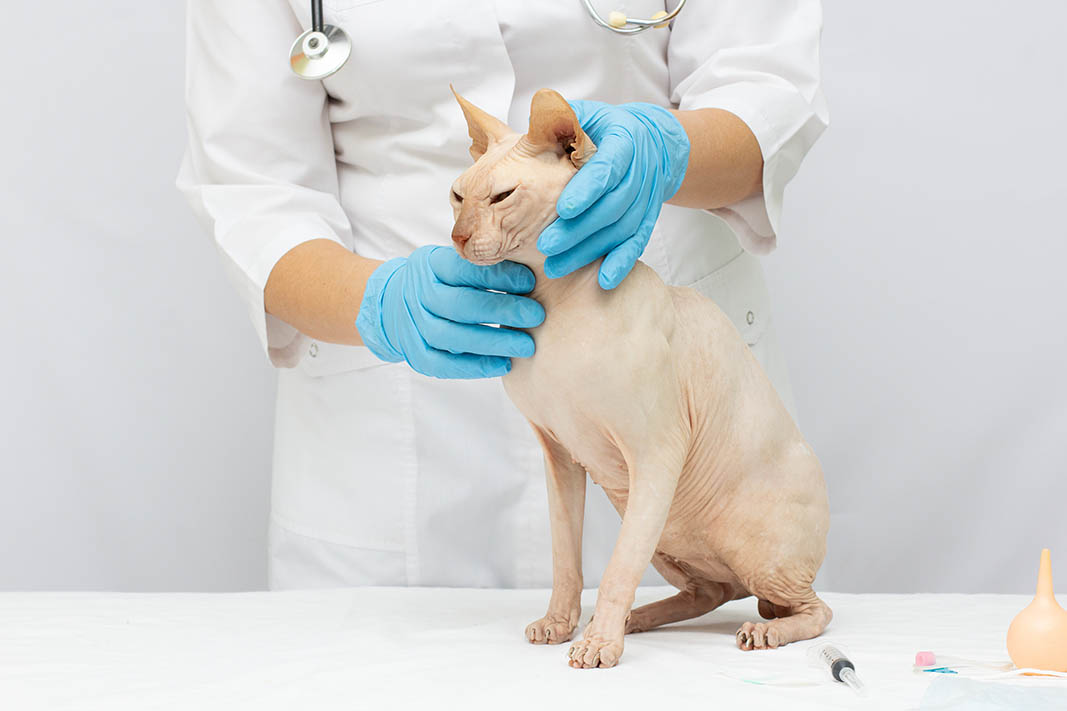
To diagnose your cat with a concussion or TBI, your veterinarian will first obtain a thorough history, including a description of any traumatic event witnessed, and symptoms noted at home.
They will then perform a full physical exam, and will likely assess the following components of the modified GCS mentioned above:
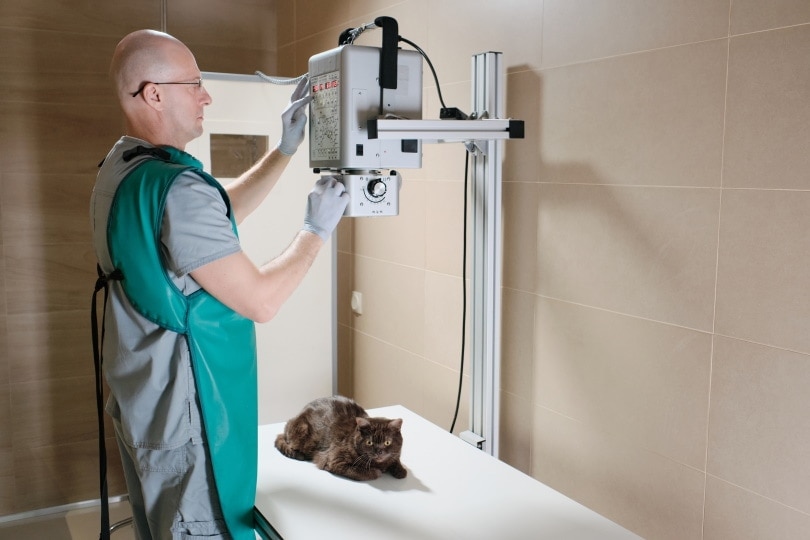
Diagnostic testing such as blood work, blood pressure, or X-rays may also be recommended for further evaluation of your cat. It is important to remember that, in felines with evidence of head trauma, injury to other areas of the body may also be present and require treatment as well.
Advanced imaging, such as computed tomography (CT), may also be recommended for further evaluation of the brain, and to determine whether medical versus surgical treatment is needed for a TBI.
How Is a Concussion Treated?
Treatment recommendations for feline concussions depend on the severity or extent of the injury. Common treatment recommendations for cats suffering from head trauma include intravenous fluids, pain medication, and oxygen support.
Medications such as osmotic diuretics (to reduce brain swelling), and anticonvulsants (to control seizures) may also be used. Lastly, decompressive surgery to reduce pressure within the skull can be considered in felines with severe head injuries.
Concussion Prognosis in Cats
The prognosis for cats that experience a TBI is variable and largely depends on the severity of the injury. Young, otherwise healthy felines with mild concussions tend to have a good prognosis, and can often make a full recovery. Older cats, those with concurrent injuries, or those with evidence of more severe head trauma generally have a guarded to poor prognosis.
Closing Thoughts
In conclusion, head trauma and subsequent concussion are seen relatively frequently in our feline friends. Prompt assessment and medical treatment administered by your veterinarian will provide the best opportunity for your cat to recover from this concerning, albeit common condition.
Sources
Featured Image Credit: Tom Wang, Shutterstock
Get Hepper In Your Inbox


Pet care tips from our vets and experts, straight to your inbox.
You may opt-out at any time. View our Privacy Policy for more information.

Dr. Leigh is a US-based veterinarian with over 9 years of experience. She is a lifelong animal lover who grew up with all kinds of pets, including dogs, hamsters, and fish. Leigh received her Doctor of Veterinary Medicine degree from the University of Minnesota and has specialized in shelter medicine and small animal clinical practice ever since. She enjoys small animal preventative medicine and surgery and loves helping pet owners by sharing her knowledge on a wide variety of veterinary topics. Leigh lives with her husband, two young children, and Hershey, her elderly pug mix. Outside of work Leigh likes traveling, reading, and hanging out with her family.
When Dr. Leigh was a child, her passion for animals started. She grew up tending to hamsters, guinea pigs, rats, fish, and dogs. She now shares her home with her husband, her two young children, and Hershey, her geriatric pug mix. When she's not working, Leigh loves spending time with her family, reading, and traveling.
Education
Leigh graduated from the University of Minnesota, where she received her Doctor of Veterinary Medicine degree. She has worked in both small animal clinical practice and shelter medicine since graduation.
Experience
Dr. Leigh has over 9 years of veterinary experience. She enjoys small animal preventative medicine and surgery and is passionate about helping pet owners through sharing her knowledge on a wide variety of veterinary topics.
Check out some of our top posts written by our veterinarian team:
Can I Put Vaseline on My Cat’s Paws? Is It Safe?
Join the conversation
Ask a question, share your story, or send private feedback.