Hepper is reader-supported. When you buy via links on our site, we may earn an affiliate commission at no cost to you. Learn more.
Can Dogs Eat Clams? Facts & Safety Guide (Vet Answer)

In this article
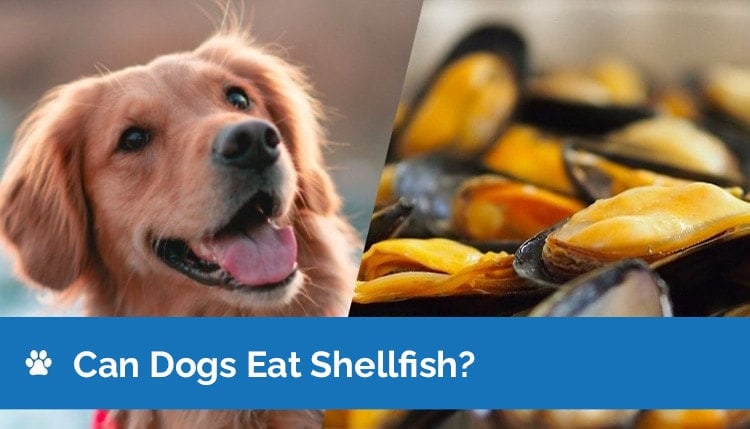
Can your dog eat clams? The short and simple answer is yes, they can, in very small amounts, if cooked and prepared adequately. However, there are several important factors to take into consideration before giving your dog any type of shellfish. While clams and other shellfish may have great benefits, their intake should be kept to a minimum and they should never be offered raw.
Like humans, your dog may be allergic to shellfish, so you should take extra caution at first, whenever introducing a new source of food. Also, do not assume something is safe for your dog just because you can eat it. Their bodies and metabolism are different from ours.
Shellfish, including clams, are one of the most nutrient-dense foods in the world. Of course, clams can benefit some dogs as an occasional snack. Let’s take a deeper look into the risks and benefits of clams, to help you decide if they are worth being added to your pooch’s treat list.

What Exactly Are Clams?
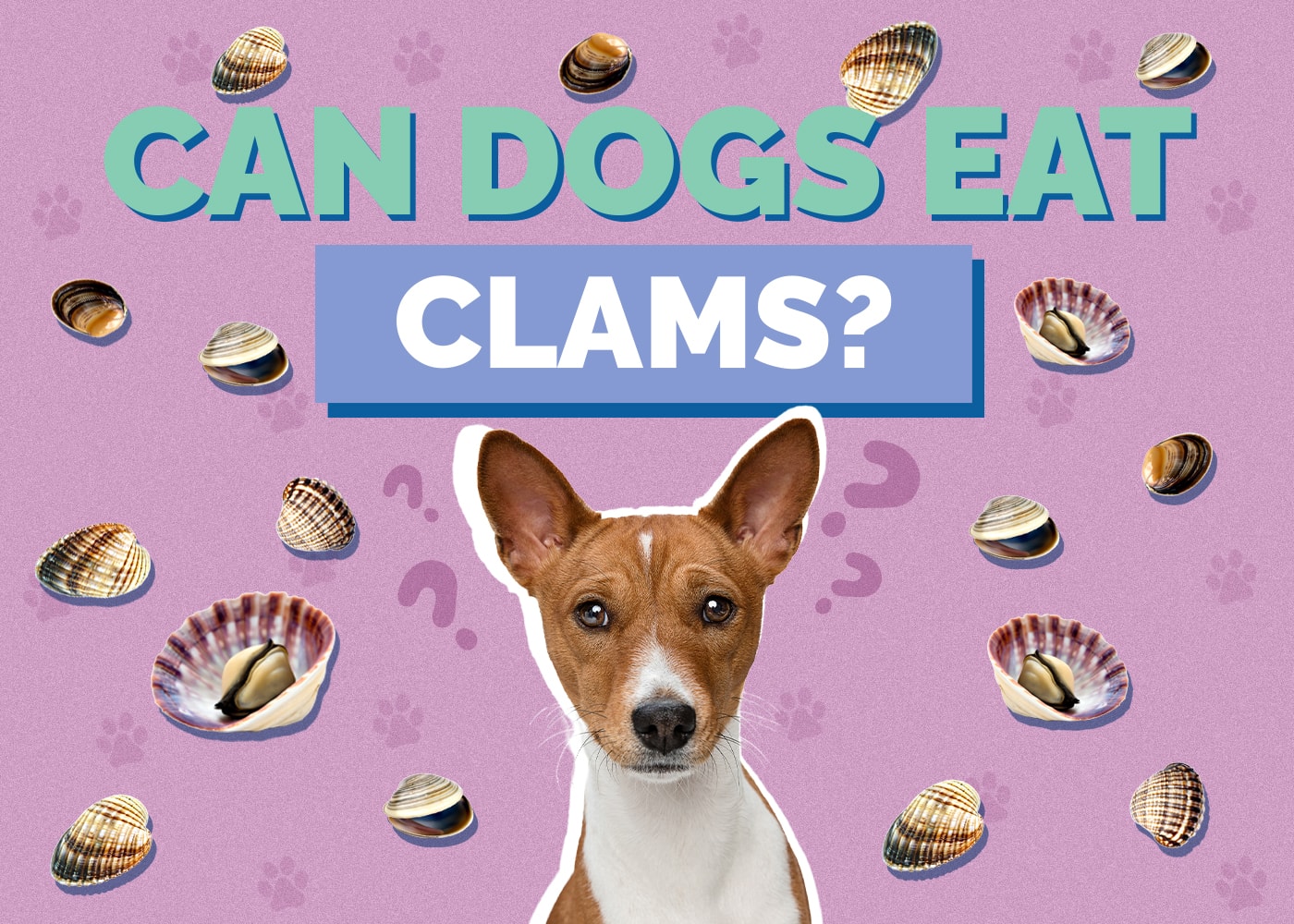
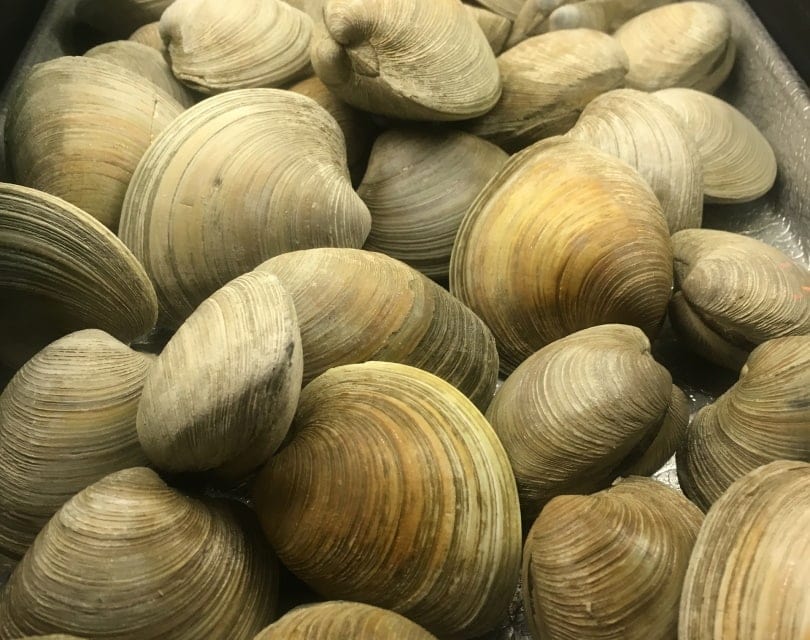
Most people are familiar with common shellfish favorites like mussels and oysters, but clams are a slightly rarer dish. Clams can be found in both fresh and saltwater. True clams are bivalves, belonging to mollusks, with equal shells closed by muscles at opposite ends of the shell. They use a powerful, muscular foot to burrow beneath the surface of the water to depths of about 0.6 meters (2 feet).1
There are thousands of different species of clam that vary widely in size. Clams have basic internal organs and simple digestive and circulatory systems. People enjoy eating clams raw, as well as cooked, and they have a rubbery texture and somewhat fishy flavor. However, your dog should never be offered any raw shellfish. As we mentioned before, dogs cannot eat the same foods as we can, and they cannot eat raw shellfish. Even you can get very ill from eating raw clams.
Clams and bivalves in general are thought to be one of the longest-living animals; the oldest documented clam in the world was believed to be around 507 years old. The clam was still alive when found but suffered an ironic death when researchers tried to deduce its age.2
Health Benefits of Clams
As most dog owners are aware, your pooch wants to eat whatever it is you are eating, and they will often give you a convincing look that can easily coerce you into sharing. When it comes to cooked clam meat, sharing a few bites shouldn’t pose any problems but should be kept to a minimum — ideally not more than one clam. Clams do have great health benefits, though, and as the occasional treat offered in moderation, they can be given to your pooch.
However, keep in mind that the nutritional value of a single clam is not sufficient to actually provide your pooch with a significant amount of nutrients. A balanced and complete diet formulated by the Association of American Feed Control Officials (AAFCO) guidelines is all your dog needs in terms of beneficial vitamins and minerals. Everything else is just a fun and healthy snack, rather than something nutritionally significant. Some of the health benefits of shellfish have been established in humans, and these have been extrapolated to dogs, but real evidence of its safety and application in our canine companions is currently lacking.
These benefits in humans include:
Clam Health Concerns
While a small amount of thoroughly cooked clam meat is generally considered safe as an occasional treat for most dogs, there are a few concerns to be aware of.
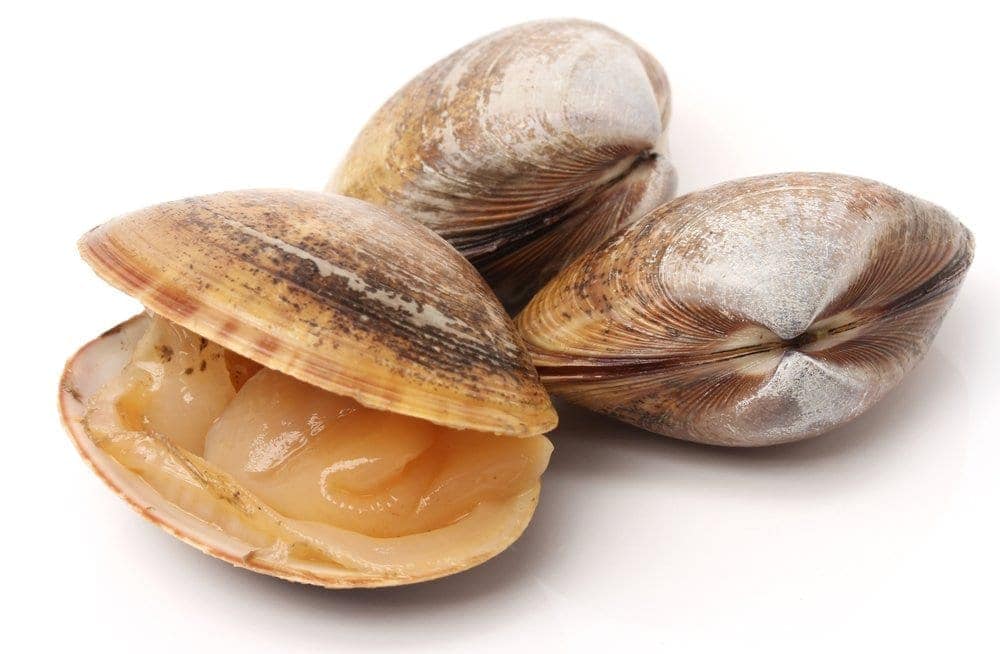
It goes without saying that while it may be safe for most dogs to eat a small amount of cooked clam meat every once in a while, the shells are out of bounds. They can get stuck in your dog’s throat, esophagus, and digestive tract and potentially cause serious harm. Your dog can fracture a tooth trying to break them. We recommend giving your dog only small amounts of meat and not regularly.
Preparing Clams
So, we’ve seen that clams may be safe for your dog, but the question remains: Will they even eat them? Of course, this is largely dependent on preparation. Clams have a rubbery texture that some dogs may love to chew on but that other dogs may hate. Speak to your vet about offering clam meat as a treat to your dog.
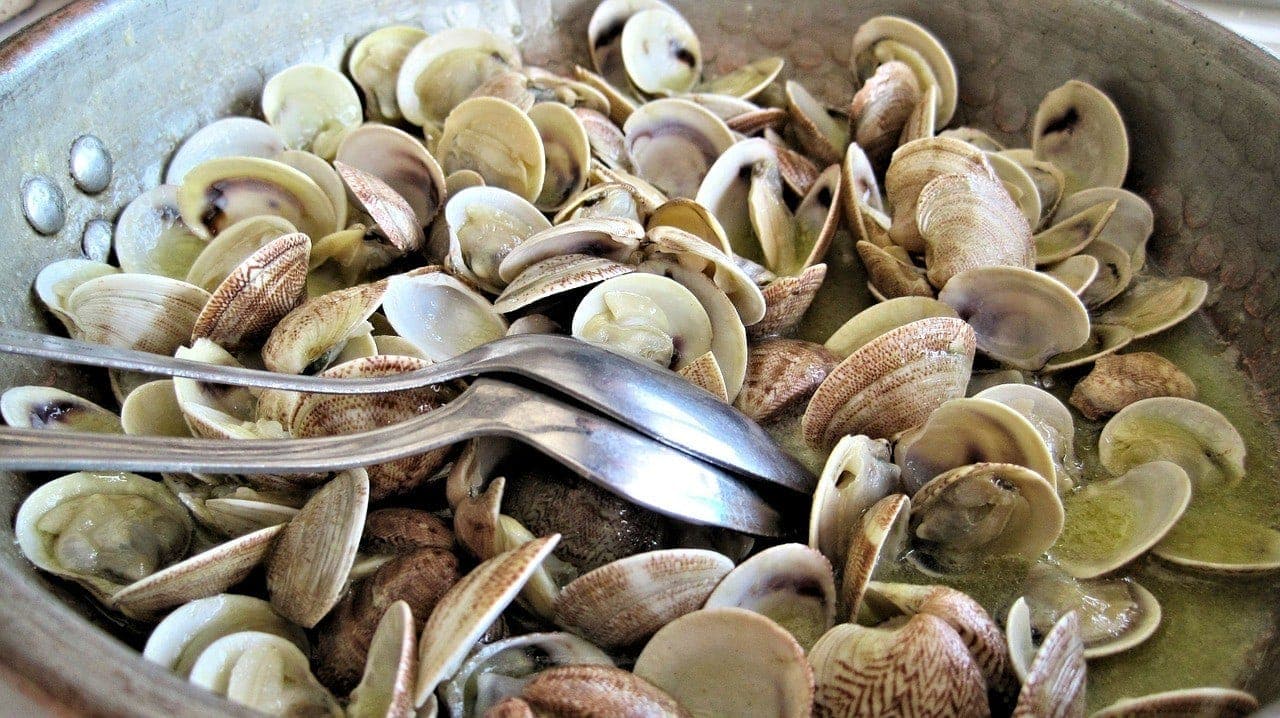
Firstly, the clams should be cleaned thoroughly and free from any fragments of the shell. Remove the siphon, neck, and gills to minimize the risk of paralytic shellfish poisoning. The clams should ideally be cooked well, to avoid any contamination. Once they are cooked, they can be simply mixed into your dog’s regular food or offered as a very small treat. We recommend no more than one small-sized clam for an average dog. If your pooch won’t eat them, try mashing them into the food to conceal the texture, or consider other safe treat options.
Final Thoughts
With the right precautions, including preparing the meat properly and being aware of some of the risks associated with shellfish, cooked clam meat is generally considered safe for most dogs to eat. It contains a host of nutritional ingredients, such as B vitamins, mainly B12, omega-3 fatty acids, iron, lean protein, and vitamin C. However, remember that these amounts are not really sufficient to be a relevant source of nutrients for your dog and should not be seen as such. This is rather just a small occasional treat.
There are a few health risks associated with giving even thoroughly cooked clam meat to your dog, but these can be largely avoided by getting them from a good source and not feeding your dog too much. First speak to your vet to see if this is safe for your dog, depending on their age, medical history, and health status.
In conclusion, yes, most dogs can eat cooked clam meat, offered sparingly and occasionally, but these treats are not a replacement for a healthy and balanced diet.
See also:
Sources
What’s the Difference Between Clams, Mussels and Oysters? - Ocean Conservancy
Mercury Levels in Commercial Fish and Shellfish (1990-2012) | FDA
Part 2 - Basic bivalve biology: taxonomy, anatomy and life history
CLAMS have more vitamin B-12 per serving than any other food
Total Amino Acids in Clams (Raw) and Cooked Clams and Mollusks Clam Mixed Species Canned Liquid
Environmental Benefits - Florida Shellfish Aquaculture Online Resource Guide
Paralytic shellfish poisoning and palytoxin poisoning in dogs
Featured Image Credit: Needpix
Get Hepper In Your Inbox


Pet care tips from our vets and experts, straight to your inbox.
You may opt-out at any time. View our Privacy Policy for more information.
Dr. Maja has over 8 years of veterinary experience working with various animal species in the United Kingdom and the Channel Islands, from dogs, cats, rabbits, guinea pigs, to cows, goats, sheep, pigs, and poultry. Maja is very enthusiastic about veterinary volunteering work and often helps in neutering projects for stray animals in Greece. She has a wide range of skills in the fields of animal medicine and surgery, diagnostic imaging, endoscopy, microscopy and other aspects of clinical work. She is very passionate about animals and their health and loves to help our readers with any questions or issues with their four-legged family members and other animal companions. Her passion is small animal medicine and emergency work, while she also has a great interest in animal welfare. Dr. Platiša received her veterinary training and degree from the Faculty of Veterinary Medicine, University of Zagreb, Croatia, in 2015.
Maja joined us in March 2023 as our in-house veterinarian. She is very passionate about animals and their health and is very happy to help our readers with any questions or issues with their four-legged family members and other animal companions. Her passion is small animal medicine and emergency work, while she also has a great interest in animal welfare.
Education
Maja received her veterinary training and degree from the Faculty of Veterinary Medicine, University of Zagreb, Croatia, in 2015.
Experience
Maja Platisa is a veterinarian with 8 years of experience working with various animal species in the United Kingdom and the Channel Islands, from dogs, cats, rabbits, guinea pigs, to cows, goats, sheep, pigs and poultry. Maja is very enthusiastic about veterinary volunteering work and often helps in neutering projects for stray animals in Greece. She has a wide range of skills in the fields of animal medicine and surgery, diagnostic imaging, endoscopy, microscopy and other aspects of clinical work.
Join the conversation
Ask a question, share your story, or send private feedback.