Hepper is reader-supported. When you buy via links on our site, we may earn an affiliate commission at no cost to you. Learn more.
Can Dogs Eat Granola? Vet Reviewed Nutrition Facts & Safety Guide


In this article
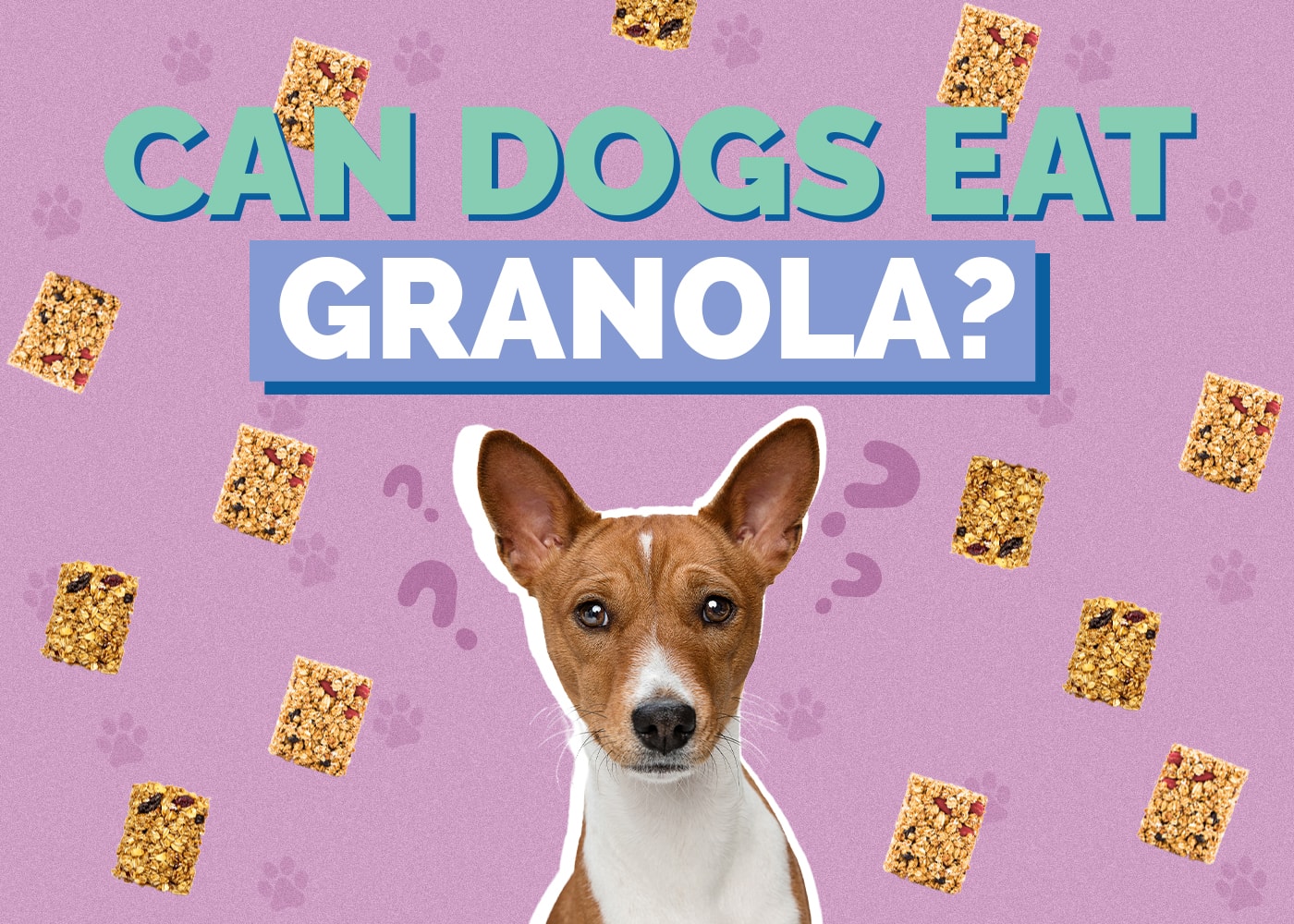
With a laundry list of healthy ingredients like oats, whole grains, dried fruit, and nuts, granola probably sounds like the perfect healthy snack for dogs and their owners. What could be simpler for the adventurer and their dog than sharing a granola bar on a long, grueling hike? But is it safe for dogs to eat granola?
While most granola is not toxic for dogs, it can be tricky because it differs from recipe to recipe and from brand to brand. However, it’s generally not recommended to give your pup granola. Read on to learn more.

Why Shouldn’t Dogs Eat Granola?
There are several reasons why you shouldn’t offer your pup granola.
1. Toxic Ingredients
Commercially prepared granola contains numerous ingredients, many of which could be potentially dangerous for your dog. Things like chocolate, raisins, and xylitol are often found in store-bought granolas. While they add sweetness, these ingredients are extremely toxic—even deadly—to dogs.
Other potentially dangerous granola ingredients include:
- Artificial sweeteners
- Macadamia nuts
- Pecans
- Nutmeg
2. High Sugar Content
Store-bought granola is so yummy because it is loaded with sugar. Though the ingredients adding the sweetness—maple syrup and honey—are healthy in small quantities, they are often too highly concentrated in granola, outweighing all the potential health benefits.
Food with much sugar is naturally high in calories. Since every granola recipe differs from the next, you’ll need to read the nutritional information and serving size to determine the caloric content of your granola. Feeding your pet large amounts of calorically dense foods is unhealthy as it can lead to obesity and related conditions.
Additionally, feeding your dog too much sugar can cause blood sugar problems.

3. High in Fiber
Granola can be high in dietary fiber. While this can be good for some dogs (see Oats section below), too much fiber can cause digestion issues and diarrhea.
4. High in Sodium
Much of the granola you can buy in stores is high in sodium. Too much salt in your pup’s diet can cause dehydration and, in severe cases, even lead to salt poisoning.
5. Unnecessary Ingredients
Dogs are omnivores, meaning they can digest animal and plant materials. While dogs can handle most fruit in their diet, they don’t need them. Of course, the occasional fruit as a treat is okay provided your dog is healthy. Ask your veterinarian before supplementing your pup’s diet with fruit, as it could be dangerous for dogs with health conditions like obesity, diabetes, or bladder stones.

6. Potential Allergens
Granola is a mixture of wheat and grains, which may trigger allergies in some dogs. However, according to VCA Animal Hospitals, the most common food allergen seen in dogs is proteins (e.g., dairy, beef, chicken, etc.), though other substances and additives can be problematic.

Are There Any Health Benefits to Offering Granola?
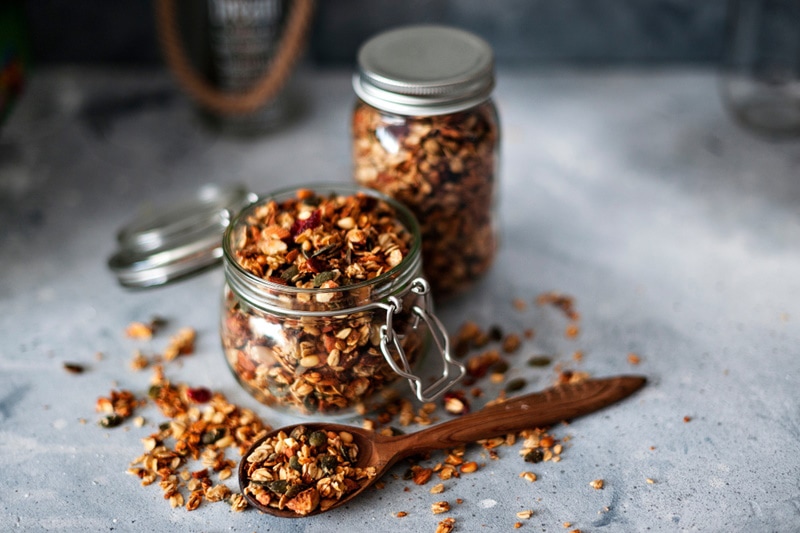
There may be several health benefits of homemade granola, depending on the ingredients you use. Let’s take a look at a few of the most beneficial options.
Oats
Grains commonly used in granola, like oats, are perfectly fine for dogs to eat in moderation. Oats are a great alternative carbohydrate for dogs with wheat or grain sensitivities.
Oats are also rich in B vitamins and omega-6 fatty acids, which play a role in skin and cell health. They are also high in soluble fiber, making them suitable for some dogs with digestive issues or needing help regulating their blood glucose levels.
Puffed Rice
Puffed rice is made by puffing milled parboiled rice. It can be a safe carbohydrate source for dogs, provided it doesn’t take up a big portion of their diet. However, this carb contains little to no vitamins or minerals and no protein. Brown puffed rice uses the entire grain, so it’s richer in vitamins and minerals, but it can be more challenging for dogs to digest. Brown rice is a natural fiber source and high in vitamins D and B.
Seeds
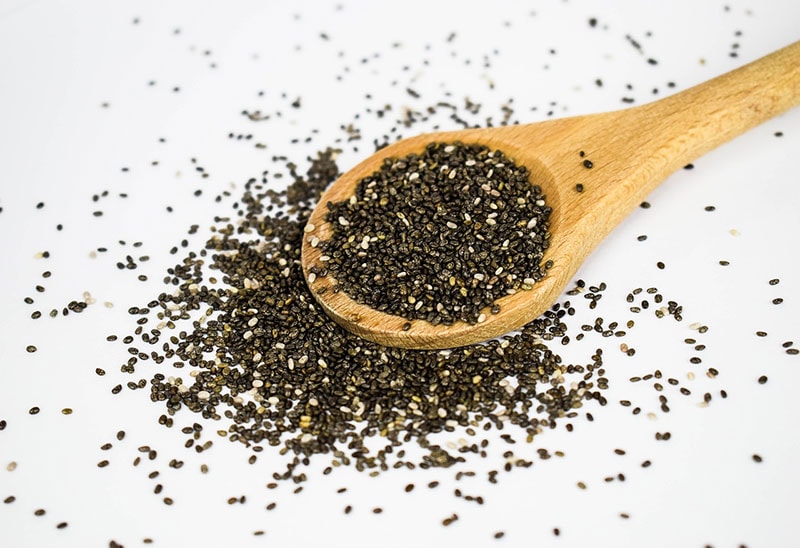
Another common ingredient in granola is seeds. Flaxseeds are loaded with omega-3 and omega-6 fatty acids essential for normal physiological functioning and cell membrane structure. Pumpkin seeds are chock full of fiber, protein, and vitamin E, which dogs need to help boost their ability to neutralize free radicals. Chia seeds are a “superfood” rich in omega-3s, fiber, and protein.
Can Dogs Eat Granola Bars?
Commercially made granola bars are chock full of potentially dangerous ingredients for dogs, like chocolate chips or xylitol. It’s best to steer clear of them altogether unless you make your own at home.
How to Safely Offer Granola to Your Dog
If the pros outweigh the cons, you’ll need to consider several things before offering your pup granola.
What Should I Do If My Dog Ate Granola?
The first thing you need to do is check the ingredient list of any store-bought granola to see if it contains any potentially harmful ingredients. If not, you can call your veterinarian for advice, but chances are you’ll be advised to monitor your pup for any symptoms of gastrointestinal upset. If the granola it ate does contain ingredients like raisins, chocolate, macadamia nuts, nutmeg, pecans, or xylitol, you should take your dog to the vet as soon as possible. These foods are toxic for dogs and can cause very serious repercussions.

Final Thoughts
While store-bought granola can be non-toxic for dogs, it’s not the healthiest treat to offer your pet. If your dog likes granola, we highly recommend making your own so you can control everything in the recipe. This way, you can avoid including potentially toxic foods and focus on adding only the safest and healthiest ingredients.
Sources
https://www.akc.org/expert-advice/nutrition/can-dogs-eat-oatmeal/
https://www.hillspet.com/dog-care/nutrition-feeding/can-dogs-eat-brown-rice?lightboxfired=true
https://www.purina.com/articles/dog/nutrition/vitamin-e-for-dogs
https://www.akc.org/expert-advice/nutrition/benefits-high-fiber-dog-foods/
https://www.petmd.com/dog/nutrition/evr_dg_whats_in_a_balanced_dog_food
Featured Image Credit: Olena Rudo, Shutterstock
Get Hepper In Your Inbox


Pet care tips from our vets and experts, straight to your inbox.
You may opt-out at any time. View our Privacy Policy for more information.
Chantelle's life revolves around two passions: writing and animals. Raised on the prairies of Canada amidst a menagerie of pets, she now lives with five cats, two guinea pigs, and a bearded dragon. Together with her husband and child, Chantelle delights in being an exemplary animal parent, going as far as installing wall-mounted cat shelves to give their cats an indoor playground. When she's not cozying up with her cats or snapping their amusing antics, she enjoys venturing into the Rocky Mountains, binge-watching her favorite Netflix shows, and indulging in spontaneous reading adventures.
Join the conversation
Ask a question, share your story, or send private feedback.