Hepper blog

Search our database of over 9,984 posts with up-to-date information from our experts and veterinarians.

Hepper is reader-supported. When you buy via links on our site, we may earn an affiliate commission at no cost to you. Learn more.

Can Dogs Eat Granola? Nutrition Facts & Safety Guide

By Nicole Cosgrove
Share
Can Dogs Eat granola-bars

With a list of healthy ingredients like oats, whole grains, dried fruits, nuts, honey, and coconut, granola bars sound like the ultimate healthy snack, both for you and your pooch. But can dogs eat granola bars? Are they safe for your canine companion?

Dogs can eat granola bars but they probably shouldn’t. The reason is not as simple as you’d think either because granola bars have many different ingredients that differ greatly with every manufacturer. While most of the ingredients are good for us and may seem great for your pooch, certain ingredients in these bars should not be given to your dog, at least not regularly. In this article, we’ll explore the ingredients that most commercial granola bars contain and whether your dog should be eating them.

What’s in a granola bar?

Dog lovers know how much dogs love to gnaw and chew, especially during their early growth stages. This makes it seem like a chewy granola bar full of “healthy” ingredients is a great snack for your beloved pooch. But, if you look a bit closer at the ingredients inside most granola bars, you may quickly change your mind. Most commercial granola bars contain the following ingredients in some form: whole grains, oats, puffed rice, nuts, dried fruits, seeds, and of course, sugar, flavorings, preservatives, and artificial sweeteners, in some cases.
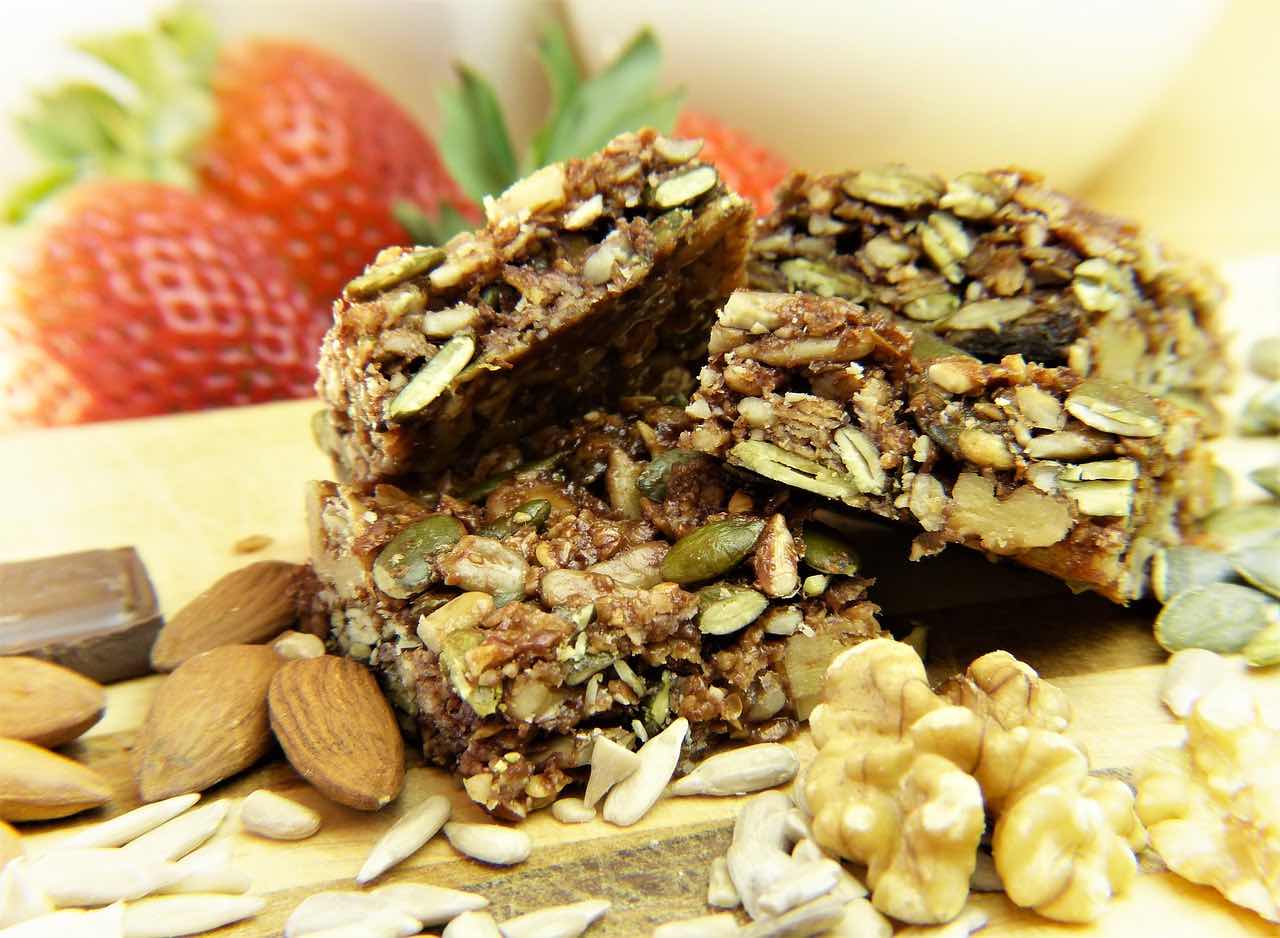
granola bar
Image credit: Silviarita, Pixabay

Potential health benefits

While granola bar ingredients can differ widely, there are few commonly found ingredients that are potentially beneficial for your pooch. These include:

  • Cooked oatmeal has potential benefits for dogs and served in moderation, can be a healthy addition to their diet. Dogs can benefit from a small amount of carbohydrates, and oats are an especially good choice for dogs with grain sensitivities. Oats contains vitamin B, which helps maintain a healthy skin and coat, and a type of omega-6 fatty acid called linoleic acid.
  • Puffed rice. Puffed rice contains few vitamins and no protein, but it is a great gluten-free option for dogs with digestive issues. Rice is a good source of insoluble fiber, which can help prevent constipation. Brown rice in particular also contains vitamins D and B, which are essential to cardiovascular health.
  • Granola bars can contain many different seeds, some of which are a great addition to your pooch’s daily diet. These may include flax seeds, which are packed with omega fatty acids, protein, and fiber. Some may also contain pumpkin seeds, which are packed with nutritional benefits like iron, calcium, and B vitamins but are also a natural de-wormer. Lastly, chia seeds have many benefits too, including being high in fiber and omega fatty acids.

Of course, all these ingredients can easily be separately given to your dog without the potential concerns of the other ingredients in granola bars. Let’s take a look at what those are.

sad dog on floor
Image Credit: Fran__, Pixabay

Potential health concerns

Like most commercial human foods, granola bars contain hidden ingredients that can be potentially harmful to your pooch if consumed in large quantities. These include:
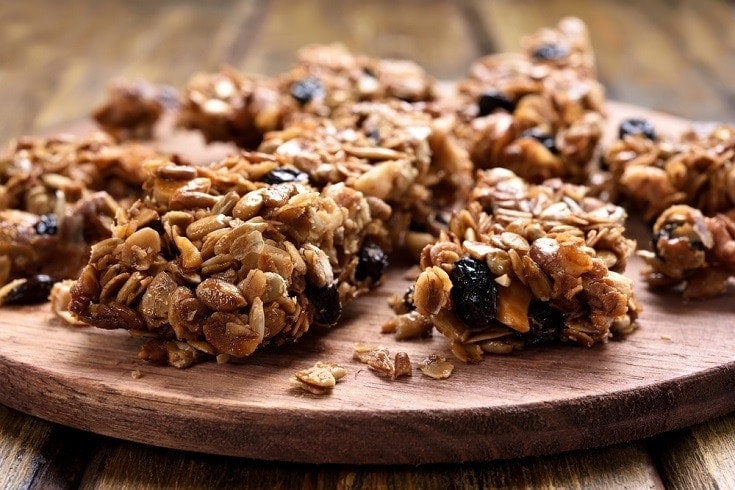

  • Dogs are omnivores and can tolerate various foods, including grains. However, there is evidence that grains can cause digestive issues in some dogs, especially in excess. Grains like corn, wheat, and soy may not necessarily be bad for your dogs on occasion, but there are better options to give them. Nutrient-dense calories that come from animal-based sources offer more nutrition without the potential digestive issues.
  • While some dogs can tolerate fruit fairly well, the fact is that they simply do not need it in their diet. Some fruits like blueberries have potential benefits, but cherries and grapes, in particular, should be strictly avoided, as they can cause serious problems in canines.
  • Some nuts, such as peanuts and almonds, may be fine to give your dog on occasion. But other nuts commonly found in granola bars, like cashews, pecans, and walnuts, can cause vomiting, diarrhea, and even seizures in excess.
  • Refined sugar is not good for you in excess and is definitely not good for your dog, as it can cause stomach issues, obesity, teeth cavities, and diabetes. While some granola bars are “sugar-free,” they can still contain artificial sweeteners, like xylitol, which is extremely toxic to dogs.
Granola
Photo Credit: Tatiana Volgutova, Shutterstock

Conclusion

While you will probably not need to rush to the vet should your dog eat a few bites of your granola bar, it is not a snack that should be given to your pooch regularly, if at all. There may be a few ingredients that have some benefit, but these can easily be substituted into your dog’s diet separately. Plus, granola bars have widely differing ingredients, and many of these can be potentially harmful to your beloved pooch.

See also:


Featured Image Credit: Tatiana Volgutova, Shutterstock

Get Hepper In Your Inbox

Pet care tips from our vets and experts, straight to your inbox.

List

Select all that apply.

You may opt-out at any time. View our Privacy Policy for more information.

Nicole Cosgrove
Authored by

Nicole Cosgrove

Join the conversation

Ask a question, share your story, or send private feedback.
Rate this post
Required to post. Only our editors see your rating.
Who should see this?

A human reviews every comment before it appears. Your email is never published.

Picked to go with this article

Can Dogs Eat Granola? Vet Reviewed Nutrition Facts & Safety Guide

Can Dogs Eat Granola? Vet Reviewed Nutrition Facts & Safety Guide

With a laundry list of healthy ingredients like oats, whole grains, dried fruit, and nuts, granola probably sounds like the perfect healthy snack for dogs and…

Chantelle Fowler
By Chantelle Fowler ·
Can Dogs Eat Fruit Snacks? Vet Reviewed Facts You Need to Know!

Can Dogs Eat Fruit Snacks? Vet Reviewed Facts You Need to Know!

Fruit Snacks are a popular candy choice, often coming in the form of a gummy with a fruit flavor. They are a fun treat for adults and kids alike. They come in…

Nicole Cosgrove
By Nicole Cosgrove ·
Can Dogs Eat Cereal? Is Cereal Safe for Dogs?

Can Dogs Eat Cereal? Is Cereal Safe for Dogs?

Few things are more enjoyable to us than the crunch of a good cereal, and the sound of your morning munching might make your dog come running for his share. Be…

Nicole Cosgrove
By Nicole Cosgrove ·
Can Dogs Eat Teddy Grahams? Health Concerns Reviewed

Can Dogs Eat Teddy Grahams? Health Concerns Reviewed

Teddy Grahams have long been a childhood snack favorite. While people love Teddy Grahams, they're made from graham crackers and, therefore, may not be the best…

Patricia Dickson
By Patricia Dickson ·

Keep reading

More stories you might like

Can Dogs Eat Cheerios? Are Cheerios Okay for Dogs to Eat?

General Mills Cheerios is a staple food in many homes, and it's not unusual to wonder if your dog can eat them. The short answer is yes. Your pet can eat Cheer…

Nicole Cosgrove
By Nicole Cosgrove ·
Can Dogs Eat Cheerios? Are Cheerios Okay for Dogs to Eat?

Can Dogs Eat Barley? Our Vet Explains The Nutrition Facts

When you are looking at dog food ingredients, you may see barley and wonder just what this grain is and whether it is perfect for your pooch. Barley seems to b…

Dr. Luqman Javed
By Dr. Luqman Javed ·
Can Dogs Eat Barley? Our Vet Explains The Nutrition Facts

Can Dogs Eat Cookies? Vet-Approved Nutrition Facts & Info

Some of our dear dogs think it’s their sole responsibility to watch us like a hawk as we bake up a batch of cookies. And if your back is turned and they happen…

Emma Stenhouse
By Emma Stenhouse ·
Can Dogs Eat Cookies? Vet-Approved Nutrition Facts & Info

Can Dogs Eat Nuts? Facts, Types & Safety Guide

There are some dogs out there that will eat almost anything given the chance. (Here’s looking at you Labradors.) However, there are some things they shouldn’t…

Nicole Cosgrove
By Nicole Cosgrove ·
Can Dogs Eat Nuts? Facts, Types & Safety Guide

Can Dogs Eat Crackers? Vet-Reviewed Nutrition Facts & FAQ

Crackers make a quick, satisfying snack for humans, and they seem to be the perfect size for a doggie treat. You may have noticed your pup staring at you longi…

Nicole Cosgrove
By Nicole Cosgrove ·
Can Dogs Eat Crackers? Vet-Reviewed Nutrition Facts & FAQ

Can Dogs Eat Fig Newtons? Health & Safety Facts

Fig Newtons are extremely delicious, so, understandably, you’d never want to share, but if anyone could convince you to part with one, it’d be your pooch. Afte…

Nicole Cosgrove
By Nicole Cosgrove ·
Can Dogs Eat Fig Newtons? Health & Safety Facts

Can Dogs Eat Peanut Butter? Vet-Verified Facts & FAQ

It doesn’t seem possible, but somehow, your dog can recognize the sound of the peanut butter lid getting unscrewed. Every time you go for a spoonful, in comes…

Quincy Miller
By Quincy Miller ·
Can Dogs Eat Peanut Butter? Vet-Verified Facts & FAQ

Can Dogs Eat Cranberry Sauce? Vet Approved Nutrition Facts & Safety Guide

Dogs are America’s favorite pets, and they often like to stay near their family members, especially during dinner, when they might get a few scraps from the ta…

Ed Malaker
By Ed Malaker ·
Can Dogs Eat Cranberry Sauce? Vet Approved Nutrition Facts & Safety Guide