Hepper is reader-supported. When you buy via links on our site, we may earn an affiliate commission at no cost to you. Learn more.
Can Dogs Eat Limes? Health & Safety Facts

In this article
Many people treat their dogs like just another member of the family, feeding them scraps from their own plates after meals. For the most part, dogs have a very strong constitution and can handle a diverse array of foods. But not everything you eat is safe for your dog.
In fact, limes are toxic to dogs, so the lime you just squeezed into your drink or over your burrito might be a nice spritz of flavor for you, but for your dog, it could be poison.

Are Limes Toxic For Dogs?
As it turns out, limes are not a food that dogs can eat. According to the ASPCA, limes are toxic to dogs.1 In fact, they’re even toxic for cats and horses as well.
But that doesn’t mean your dog will die if it tastes a lime. Most dogs will survive a small taste of a lime. How your dog reacts to it will depend on several factors, such as the size of your dog, how much lime it ate, and what part of the lime it ate.
It’s worth noting, your dog doesn’t even need to eat the lime to get sick. The compounds in a lime are toxic enough to your dog that it can even absorb them through contact with its skin.
Lime Poisoning Symptoms
So, how do you know if your dog has been poisoned by eating a lime? What symptoms should you look out for? The severity of your dog’s symptoms will depend on how much lime it was exposed to. But many negative effects can be experienced.
Most likely, your dog will have an upset stomach. If they ate more than just a taste, they might experience diarrhea, lethargy, or excessive drooling. More severe symptoms include liver failure, collapse, tremors, vomiting, and loss of coordination.
At the most dangerous end of the scale, lime poisoning can even result in sudden death for your pooch.
Lime Poisoning Through Contact
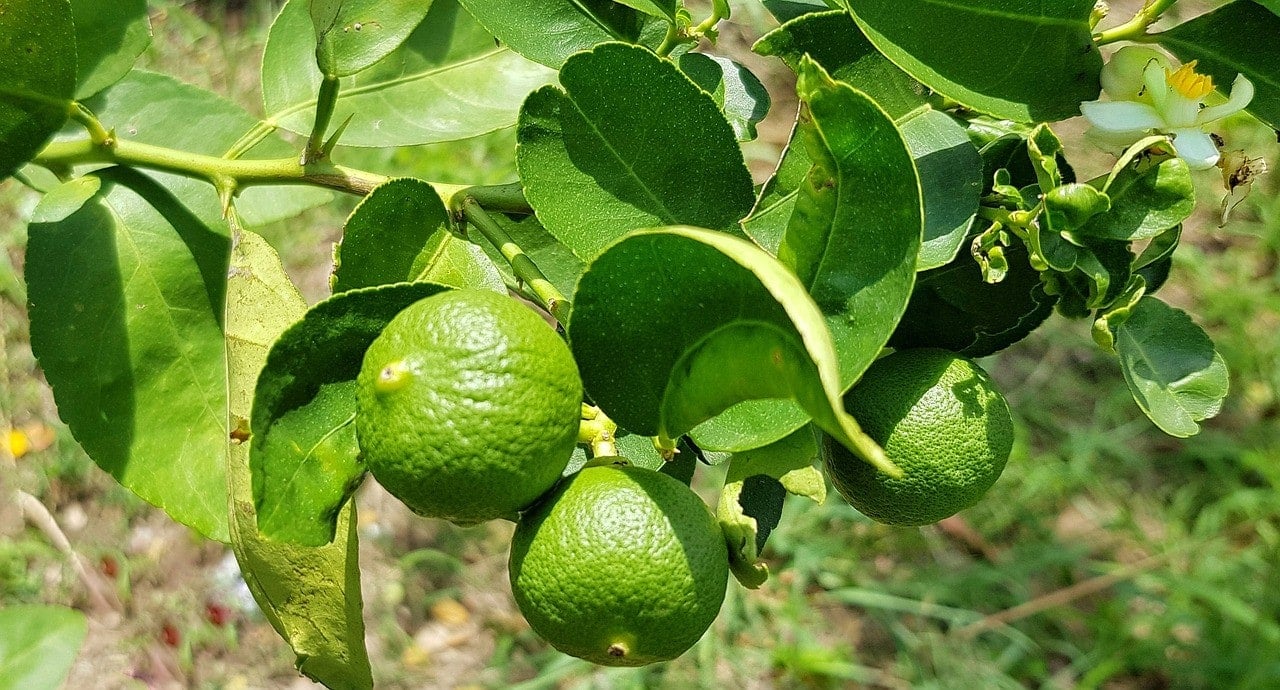
Since limes are so toxic to your dog, they can actually have a reaction just by coming into contact with the compounds present in limes. This includes touching the leaves of a lime tree.
Many people keep fruit trees, particularly citrus, growing in their backyards. But if your dog rolls around on those fallen lime tree leaves, it can be exposed to just as many of those harmful compounds that can cause a negative reaction. If your dog has come into contact with limes or lime leaves, look for rashes, red spots, or skin irritation.
Should this happen, you’ll want to give your dog an immediate bath after exposure. Using soap and water, thoroughly wash their coat and skin to remove any trace of the lime’s chemical compounds.

Why Are Limes Poisonous to Dogs?
We’ve established that limes are bad for dogs. But why?
There are three main compounds inside of a lime that are toxic for your pup. Two of these, limonene and linalool, are essential oils.
Limonene
Limonene is one of the main components that gives citrus its scent. It’s used for flavoring and fragrances in many products.
Linalool
Linalool also contributes to the citrus scent. Similar to limonene, linalool is used as a fragrance in soaps and lotions, but it’s also used as an insecticide.
Both of these compounds are highly toxic to dogs. They’re both found in high concentrates in the peel of the lime, but they’re in the flesh of the lime as well. Even the leaves of the lime tree are high in these compounds, which is why they can be toxic for dogs to touch.
Psoralen
This one isn’t an essential oil, but it’s still toxic for dogs. This is a phototoxic compound that’s found in limes and other citrus plants. In humans, it’s used to treat skin conditions. In dogs, it can cause all sorts of adverse reactions including phototoxicity.


Don’t Limes Have Any Health Benefits?
For us, limes can pose all sorts of health benefits. But for our dogs, it’s a different story. Still, dogs need vitamin C just like we do. And just like us, they need some of it from their food sources.
Vitamin C can help boost your dog’s immune system, fighting sickness, infection, bacteria, and toxins. It’s also great for reducing allergies. Moreover, it can help keep your dog’s coat looking luscious. It also helps maintain bone and joint health in your dog. Finally, it can even help prevent common joint issues like hip dysplasia.
But your dog will need to get vitamin C from other sources. The perils of lime consumption for your dog are just too great.

Can My Dog Eat Any Other Citrus?
If limes are a no-go, what about lemons or other sour citrus fruits? Well, lemons are very similar to limes, even containing the same compounds that can be poisonous for your dog. Psoralen, linalool, and limonene are all present in lemons just as they are in limes.
But as it turns out, oranges are actually a safer alternative. You still want to keep the amounts moderate, but a few bites of orange are completely safe for your dog.
If you want to provide your dog with some natural vitamin C, there are still plenty of other fruits and vegetables that can do so.
Aside from oranges, you can also try pineapple, kiwi, and asparagus. All of these are safe for your dog to eat and can still provide high levels of vitamin C.
Can Limes Kill Dogs? What to Do if Your Dog Eats One!
If your dog has been exposed to a lime and you’re worried about their health, don’t panic. It could be toxic, but chances are high your dog will just be sick for a while. First, try to determine how much your dog has eaten. Larger dogs can handle a lot more of the fruit before it becomes toxic. For small dogs, a small amount can be dangerous.
If you think that your dog didn’t eat too much, then you can wait to see how they react. Make sure they drink plenty of water to flush it through their system. You could also withhold food for up to 24 hours and see how your dog reacts.
On the other hand, if you feel that your dog has ingested a lot or had high levels of exposure, then you should call a veterinarian immediately. If left untreated, it could potentially be quite dangerous for your dog.

Final Thoughts
Though limes may seem like a perfectly safe fruit, the truth is, they’re not safe for your dog. While a little taste of a lime isn’t likely to kill a large dog, enough exposure can be deadly. Even exposure to your dog’s skin is enough to cause a reaction.
So be sure to keep the limes away from your dog and look for better alternatives that won’t impact their health like oranges or asparagus.
Featured Image Credit By: Peakpx
Get Hepper In Your Inbox


Pet care tips from our vets and experts, straight to your inbox.
You may opt-out at any time. View our Privacy Policy for more information.

Nicole is a lover of animals of all sizes but is especially fascinated with the feline variety. She’s the proud mom of Baby, a Burmese, and works every day so he can relax in the sunshine or by the fire. She’s always had a cat in her home and has spent countless days with others, observing behaviors and softening up even the grouchiest of the lot. Nicole wants to share her kitty expertise with you so you and your cat can live happy, healthy, and care-free.
Join the conversation
Ask a question, share your story, or send private feedback.