Hepper is reader-supported. When you buy via links on our site, we may earn an affiliate commission at no cost to you. Learn more.
Can Hamsters Eat Cat Food? Vet-Approved Nutrition Guide


In this article
Hamsters might be relatively low-maintenance pets, but they must eat the proper diet to stay healthy. If you also have a cat at home, you might wonder if it’s okay for your hamster to eat cat food. While cat food may not be toxic to hamsters, it’s not healthy or nutritionally correct for them either.
Keep reading to learn why cat food shouldn’t be a significant part of your hamster’s diet and which foods make better treat options. We’ll also cover the basics of a healthy hamster diet.

Why Cat Food Is a Bad Idea for Hamsters
The simple reason hamsters shouldn’t eat cat food is that they have much different nutrition requirements than kitties. Hamsters are omnivores that eat a mix of plants and insects in the wild. The ideal commercial hamster food should contain the following:
- 35-40% carbohydrates
- 15-25% protein
- 4-5% fat
In contrast, cats are true carnivores that are adapted to absorb nutrients primarily from animals. Nutritional needs among cats vary, but general guidelines are as follows:
- At least 26% protein
- At least 9% fat
- Less than 10% of calories from carbohydrates
As you can see, cats and hamsters have very different nutritional requirements. They also require different levels of vitamins and minerals. Cat food formulated to meet feline needs is not appropriate as a primary hamster diet.
Can Hamsters Eat Cat Food as a Treat?
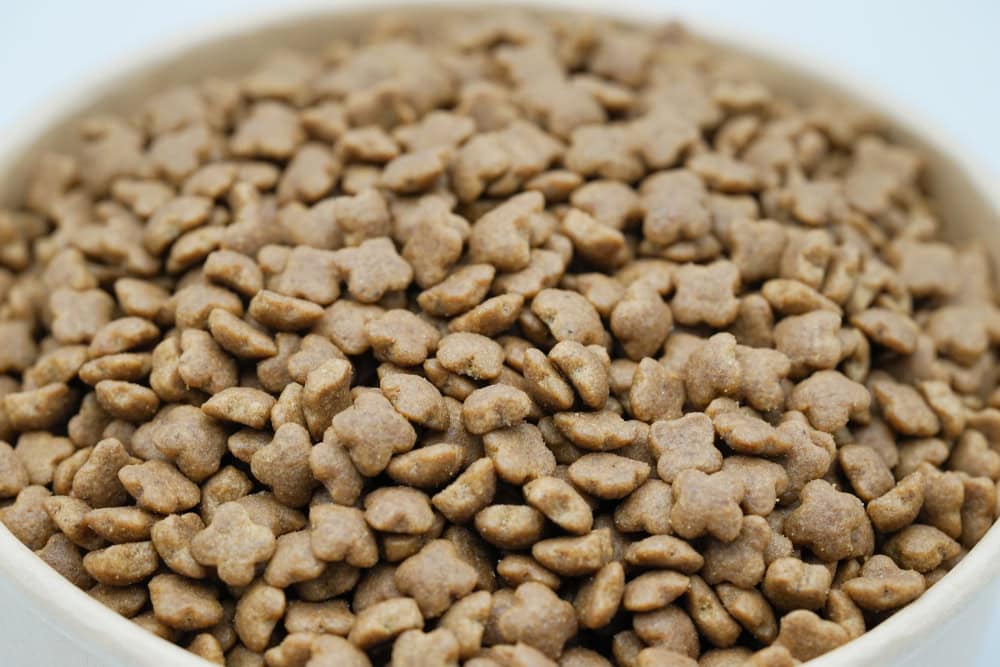
In theory, hamsters could eat cat food as a treat, but it’s not the best choice. Because it’s usually higher in fat than most hamster foods, eating cat food could lead to obesity over time. Like any pet, you want to ensure your hamster gets most of their calories from nutritious sources.
Cat food provides calories without much nutritional benefit to your hamster. Every calorie wasted on cat food is less available for foods that your hamster actually needs to stay healthy.
What Should Be My Hamster’s Main Food Source?
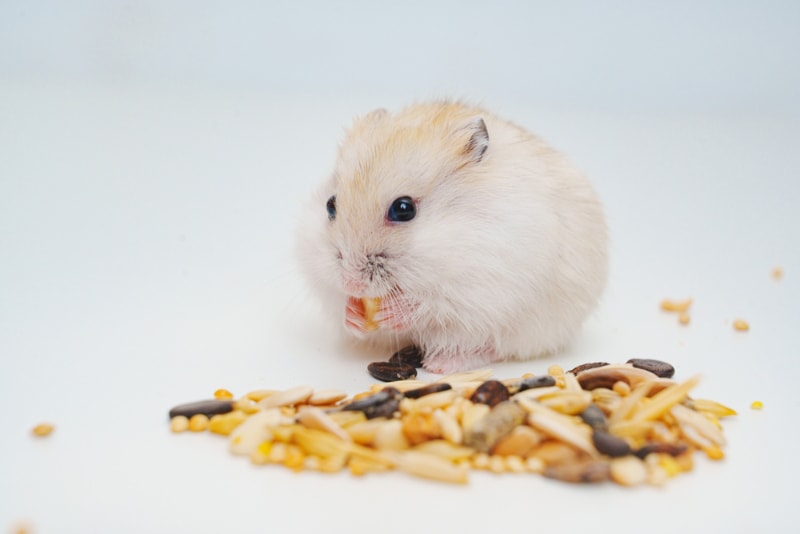
Hamsters should primarily eat a commercial pellet diet formulated for hamsters. Look for a food that contains the minimum nutrient levels we discussed earlier in the article. It’s best to avoid food mixes made primarily of seeds, nuts, and dried fruit.
Even when they’re made for hamsters, these seed diets lack essential nutrients and contain more fat and sugar than your pet should be eating regularly. Hamsters tend to pick out their favorite bits too, making the diet even more unbalanced.
What Treats Can I Give My Hamster?
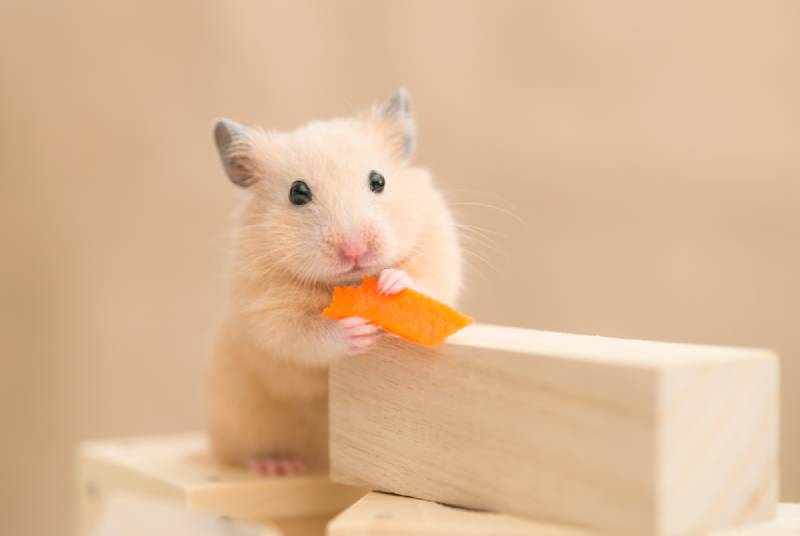
Instead of cat food, offer your hamster small amounts of fruits, vegetables, grains, and animal protein, like boiled eggs, as treats.
Some safe options include the following items:
- Leafy greens
- Apples
- Carrots
- Cucumber
- Peas
- Bananas
Serve these foods in moderation only, especially fruit. They generally aren’t necessary if your hamster eats a balanced pellet diet, but they provide variety and enrichment for your pet.
Are There Any Foods Hamsters Shouldn’t Eat?
Hamsters shouldn’t eat citrus fruits, chocolate, or any food high in sugar and fat. Check with your vet before offering your hamster any unfamiliar food to make sure it’s safe.

How Much Should My Hamster Eat?
Most hamsters should eat about 1/8–1/3 cup of pellets each day. However, dietary needs vary between species and by age, size, and overall health. Ask your vet to help you calculate how much to feed your hamster. Hamsters are nocturnal, so try offering them food at night. Remove any uneaten fresh food promptly so it doesn’t spoil.
Conclusion
Although it might be convenient for you, hamsters shouldn’t eat cat food because it isn’t nutritionally appropriate for them and could cause health issues if fed long-term. Stick with feeding your hamster a pelleted rodent diet and the occasional healthy treats. Like humans, hamsters can suffer from diabetes, obesity, and other medical problems if they don’t eat the proper diet. Talk to your vet if you’re concerned your pet isn’t getting the nutrition they need.
Sources
https://www.rspca.org.uk/adviceandwelfare/pets/rodents/hamsters/diet
https://www.petmd.com/exotic/nutrition/evr_ex_hm_what-can-hamsters-eat
https://www.petmd.com/cat/nutrition/cat-nutrition-what-makes-nutritional-cat-food
https://www.petmd.com/exotic/nutrition/evr_ex_hm_what-can-hamsters-eat
https://supremepetfoods.com/products/science-selective-hamster-food/
Featured Image Credit: Ultraskrip, Shutterstock
Get Hepper In Your Inbox


Pet care tips from our vets and experts, straight to your inbox.
You may opt-out at any time. View our Privacy Policy for more information.
A lifelong lover of all creatures great and small, Elizabeth got her first cat at 5 years old and at 14, she started working for her local veterinarian. After spending more than 20 years working as a veterinary nurse, Elizabeth decided to step away to become a stay-at-home parent to her daughter. Now, she is excited to share her knowledge with our pet parents. Elizabeth lives in Iowa with her family, including her two fur kids, Linnard, a husky mix and Algernon, the worldʻs most patient cat. When not writing, she enjoys reading, watching soccer, and spending time outdoors with her family.
Join the conversation
Ask a question, share your story, or send private feedback.