Hepper is reader-supported. When you buy via links on our site, we may earn an affiliate commission at no cost to you. Learn more.
Cat Eye Discharge: Understanding What is Normal (Vet Answer)

In this article
Just as in the case of human eyes, a cat’s eyes are physically protected with eyelids. What you probably didn’t know is that while humans have only two eyelids, cats have a third eyelid called the nictitating membrane. Likewise, just as in the case of humans, cats have glands that produce tears and in addition, cats' eyes have specialized glands that produce mucoid and oily substances.
The combination of these glandular secretions known as "tear film" has the function of lubricating and protecting the eye, keeping it moist, and washing off any dirt, irritating substances, small foreign objects, bacteria, etc.
In this way, tears are constantly produced and then drained into some ducts in the lower corner of the eyes, near the nose. This is how normally tears are drained into the nose and throat without spilling over the eye.

Is Eye Discharge Normal in Cats?
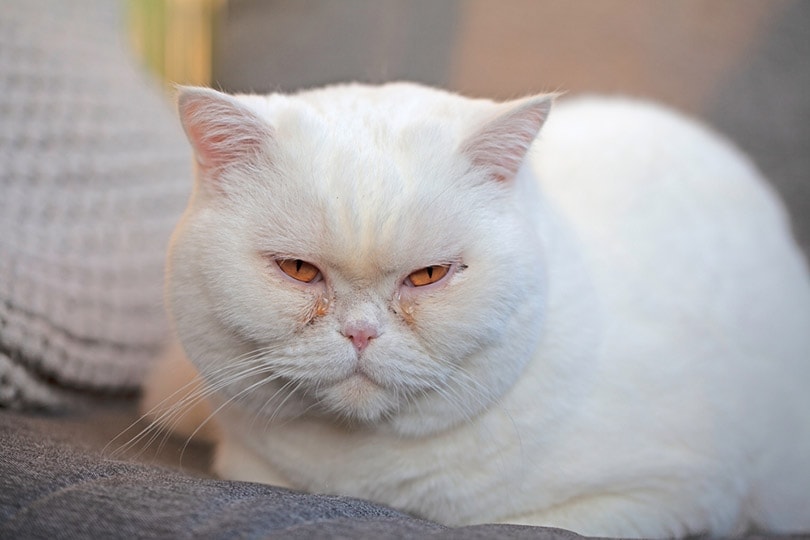
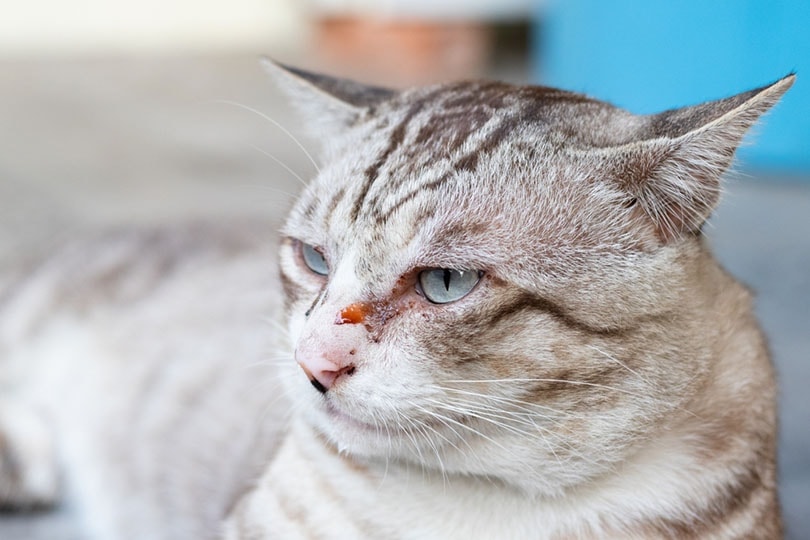
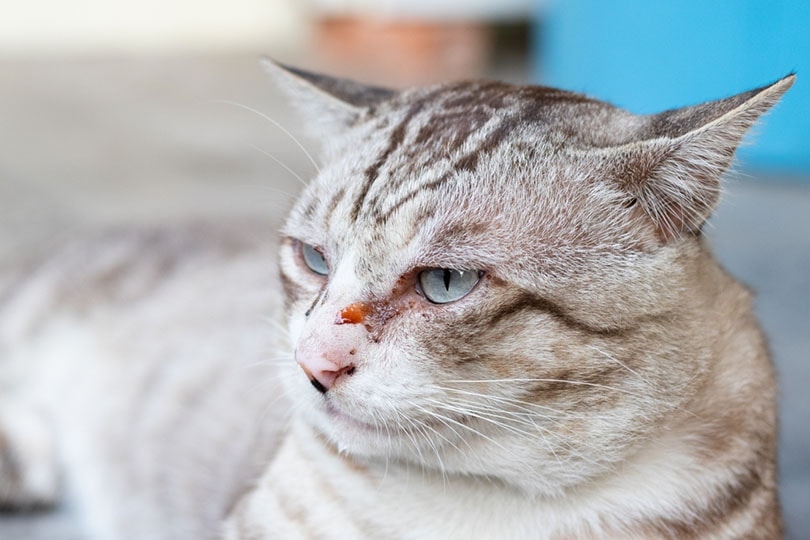
Eye discharge is not a disease itself but it might be a symptom. If you have noticed eye discharge on your cat only once this is most likely caused by something irritating the eyes. Tears are produced at a faster rate to try to wash off the irritation. This is when we see watery eye discharge. Once the irritation cause is removed, eye discharge should stop.
Occasional mucoid discharge, especially after sleep, is also normal. You can use a clean cotton ball and lukewarm drinking water to clean the eye. Be gentle and use a fresh cotton ball for each eye. If everything is normal, after cleaning the eye you should not see any more discharge for at least a few days.
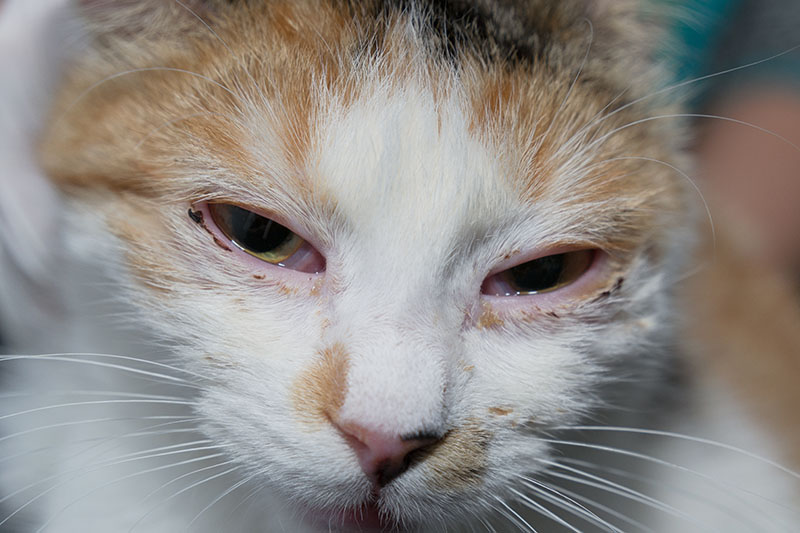
On the other hand, if you have noticed the fur under your cats’ eyes constantly looks moist or wet, or if the eyes have a mucoid or crusty-looking recurrent discharge around; this is most likely an indication of a medical issue. In this case, you should bring your cat to the veterinarian to have its eyes checked. The treatment will depend on what is the medical problem causing the eye discharge.
Other clear signs of an underlying medical issue are:
What Can Cause Eye Discharge In Cats?
There are several reasons why your cat might be having excess eye discharge, including:

How Will the Veterinarian Treat My Cat?
Because eye discharge is not a disease but a symptom, the veterinarian will have to perform a good examination of your cat’s eyes to diagnose what is causing the discharge. In some cases, it is possible that besides the visual examination, the veterinarian will have to collect samples and perform a diagnostic test with a green substance called fluorescein.
Sometimes to successfully achieve checking and sampling the cat’s eyes, or to perform certain possibly needed procedures to treat the problems, the cat might need to be sedated or even anesthetized.
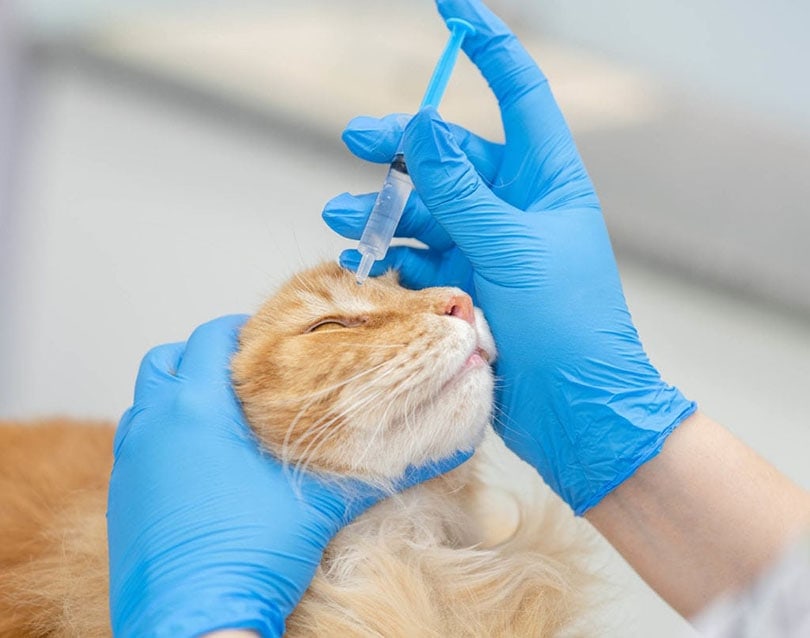
The treatment will depend on the underlying cause of the discharge, from the application of eye drops or eye ointments to some invasive medical procedures or even surgery. Your veterinarian will let you know what is the best solution for your cat.
Important Notes & Vet Recommendations:
Final Thoughts
The tear film has a protective function in your cat’s eyes and the occasional eye discharge is normal. If the cat’s eyes have recurrent discharge, this is a sign of an underlying medical issue and as a good cat owner, you should bring your pet in for a veterinary check.
Related Reads:
Why Do Cats’ Eyes Glow in the Dark? Science-Based Facts & FAQ
Why do Cats’ Pupils Get Big? Learn the Meaning of Feline Eye Changes
Featured Image Credit: Natalya Kokhanova, Shutterstock
Get Hepper In Your Inbox


Pet care tips from our vets and experts, straight to your inbox.
You may opt-out at any time. View our Privacy Policy for more information.
Paola Cuevas is a veterinarian and animal behaviorist, with over 18 years of experience working with a variety of species. Her passion is animal welfare and focuses on the importance of preventive medicine. Paola has skills in the fields of nutrition, microscopy, clinical pathology, diagnostic imaging, and endoscopy as well as extensive experience in animal training through positive reinforcement. As our in-house veterinarian, Paola is very happy to share her knowledge and experience with our readers and hopes to be helpful with any issue presented by your non-human family members.
Dr. Paola is our Senior In-House Veterinarian at Hepper, and she loves sharing her knowledge and experience with our readers. Paola hopes to provide helpful information for any issue presented by your fur babies.
Her passion is animal welfare and she focuses on the importance of preventive medicine.
Education
Paola graduated from the University of Guadalajara, Mexico.
Experience
Dr. Cuevas has over 18 years of veterinary and animal behaviorist experience and has worked with a variety of species, from companion animals to exotics. She has skills in the fields of nutrition, microscopy, clinical pathology, diagnostic imaging, and endoscopy as well as extensive experience in positive reinforcement animal training.
Things You Didn't Know About Dr. Paola:
As a student, Paola received an outstanding student scholarship. She had the opportunity to travel to Canada and learn about aquaculture diagnostics and pathology.
Paola and another colleague trained gentoo penguins to recognize shapes and colors and their project achieved an international first-place award in research.
Paola has trained several species of animals to voluntarily accept medical procedures such as ultrasound examinations, X-rays, and the collection of biological samples with the goal of improving their healthcare without additional stressors or the need for physical restrain.
Join the conversation
Ask a question, share your story, or send private feedback.