Hepper blog

Search our database of over 9,984 posts with up-to-date information from our experts and veterinarians.

Hepper is reader-supported. When you buy via links on our site, we may earn an affiliate commission at no cost to you. Learn more.

Why Are My Cat’s Eyes Watering? 7 Possible Reasons

By Nicole Cosgrove · Reviewed & fact-checked by Dr. Lorna WhittemoreVet Approved
Dr. Lorna Whittemore
Reviewed & Fact-Checked byDr. Lorna WhittemoreVeterinarian
Lorna is a Scottish vet who has lived, studied, and worked on three continents and has a love of travel. With 20 years of experience in small animal medicine andsurgery, both in the charity and private sector. Gaining a further qualification in feline medicine has given her a continued sense of amazement at the fabulous animals. Currently living in Cape Town, South Africa, with her family and expanding number of pets allows her to spend time in and around nature where she is at her happiest. With a love for learning, Lorna is enjoying researching, editing, and fact-checking for Hepper veterinary editorial team and truly feels that she has the best job in the world!View authorThe information is current and up-to-date in accordance with the latest veterinarian research. Read about our vets
Share
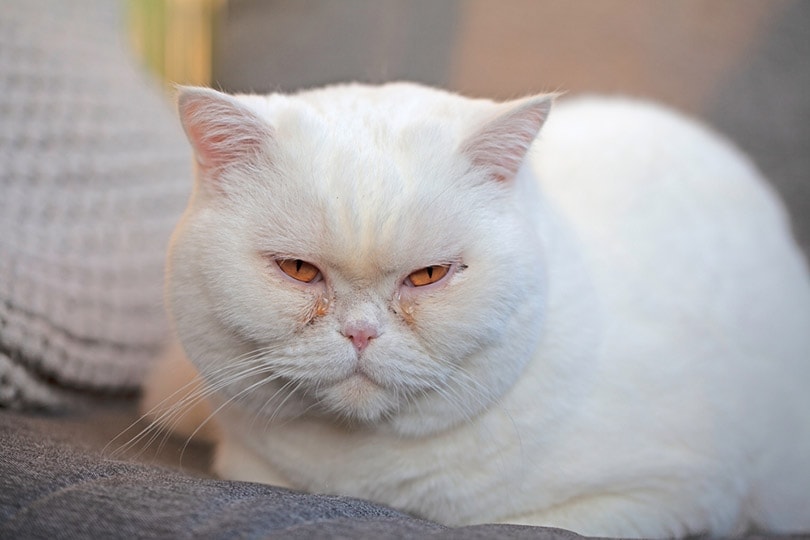
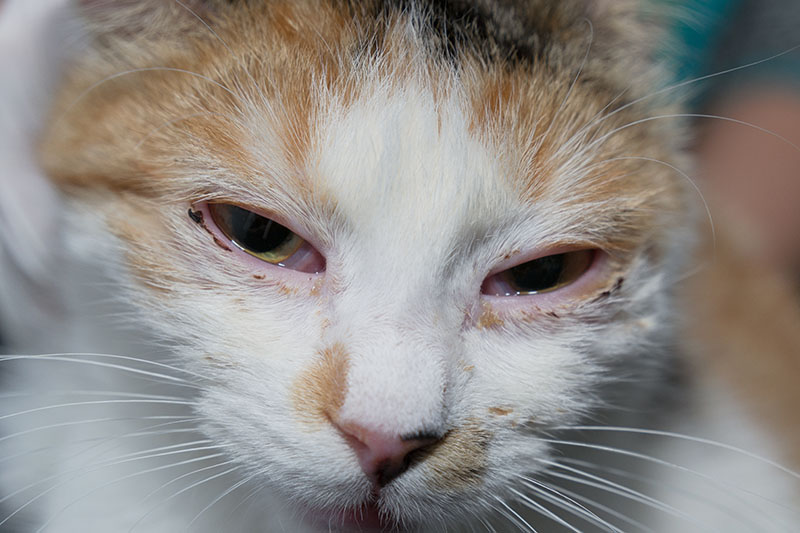
a white british shorthair cat with watery eyes discharge

Are your cat’s eyes watering? It can be scary to realize that something is not quite right with your pet—especially if you do not know what is causing it.

First, try to determine if your cat is in pain. There are times when it is normal for a cat’s eyes to water. Just like human eyes, cat eyes will water to clear debris and add moisture. If your cat’s eyes seem to be running more than usual, or your pet seems to be in pain, there could be something wrong.

There are several potential causes for watery eyes in cats. Some are minor and much easier to remedy, while others can be much more serious. If you think your cat’s eyes are unwell, keep reading to learn a couple of reasons that could be causing the condition.

The 7 Reasons Your Cat's Eyes Are Watering

1. Allergies
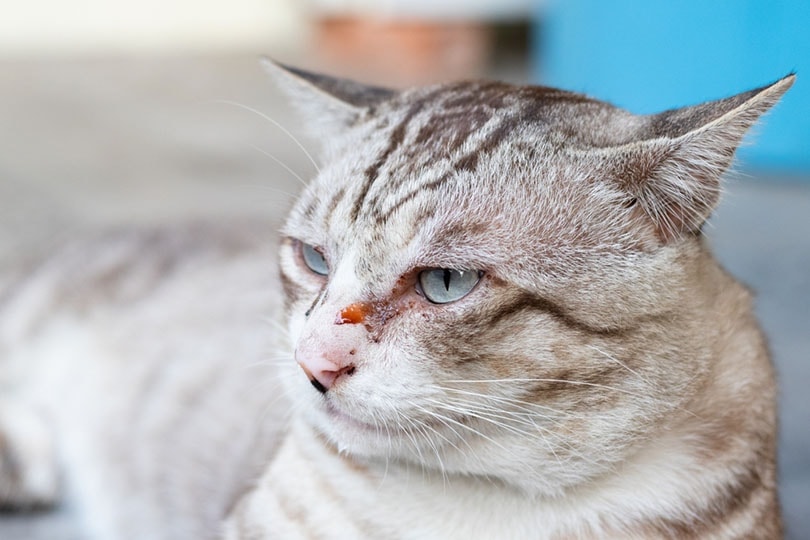
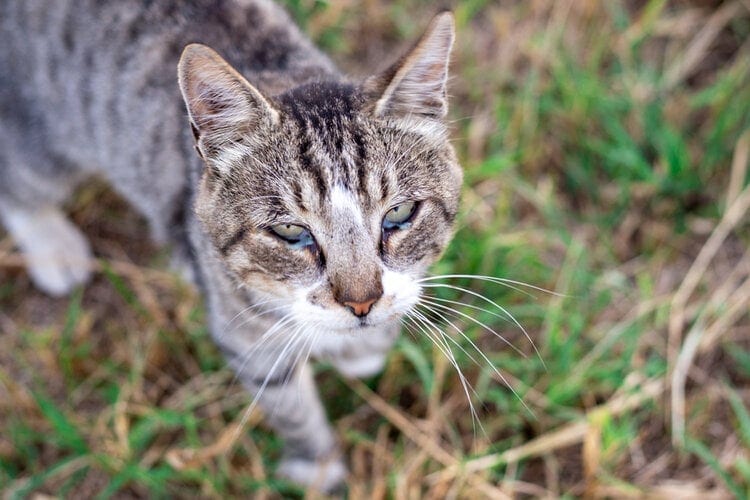
tabby cat's eye discharge
Image Credit: Nutnutchar NAV, Shutterstock

Cats can have allergies of their own, just as humans do. If your cat’s eyes are watering, allergies may be the cause.

Other symptoms of allergies in cats include sneezing or coughing, constant itching at the eyes or ears, ear infections, vomiting, diarrhea, swelling paws, and chewing at the paws.

Environmental factors, food, or fleas are the most common causes of allergies for cats. If there are excessive pollen, mold, or plants in the area, that could be causing your kitty’s problems. Likewise, your cat could be allergic to the food they are eating, or fleas could have bitten them but these are not likely to cause watery eyes.

How to Treat

  • If your cat's eyes have started watering you should take them to the vet for a check over. If allergies are suspected the vet will discuss allergen avoidance and treatment options with you. The allergy symptoms, such as tearing eyes, should be alleviated soon after.

2. Foreign Object

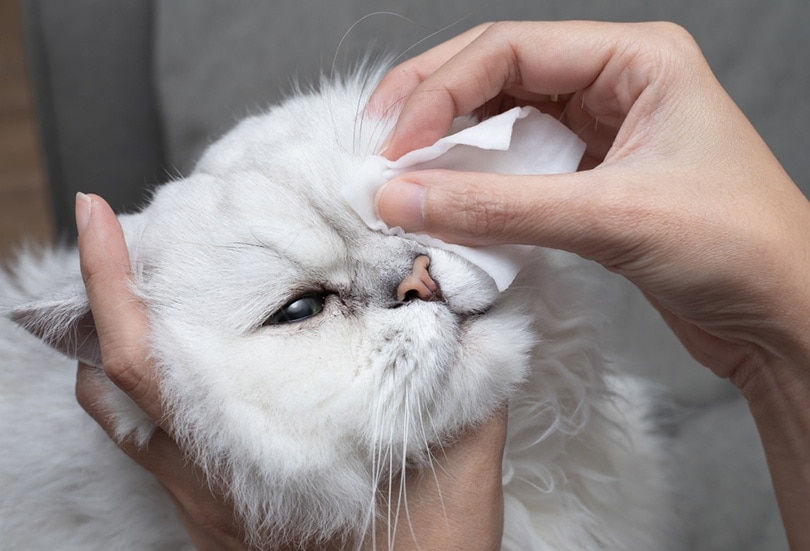
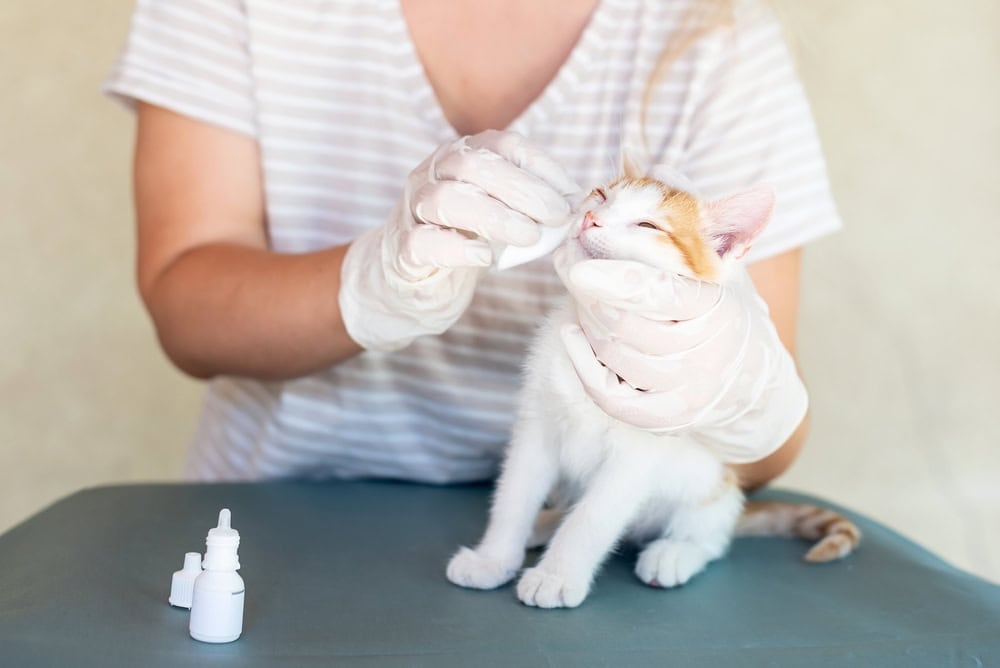
cleaning persian chinchilla cat's eyes with cotton pad
Image Credit: catinsyrup, Shutterstock

It is also possible that your cat’s eyes are watering because something is inside them. If there is a foreign object under your cat’s eyelid, their eyes will water in an attempt to flush it out.

There is a chance that their eyes watering will not be enough to rid them of whatever has gotten in their eye, so pay close attention to how long their eyes water and if other symptoms show up.

Some signs that your cat has something in their eye that they can’t dislodge include squinting, pawing at their eyes, eyelid and/or eyeball swelling, and heightened sensitivity to light.

How to Treat

  • A vet can evaluate your cat to determine how serious the issue is. Depending on the foreign object’s depth, the care will either be a flush of the eyes or removal with forceps. The eyes will likely be checked for any complications from the foreign object such as ulceration.

3. Glaucoma

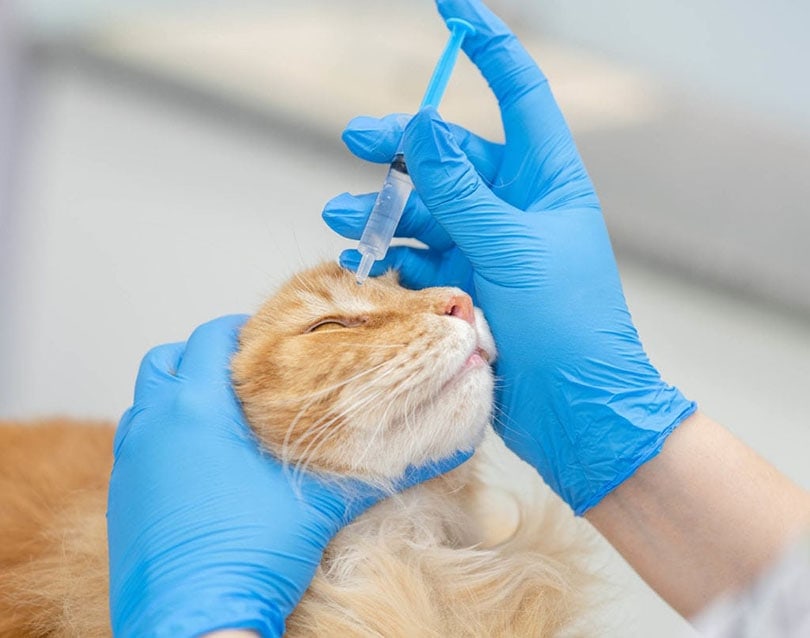
Vet dripping drops in cat's eye
Image Credit: Ermolaev Alexander, Shutterstock

Glaucoma is a severe and concerning condition. If you think that your cat may have it, reach out to your vet immediately.

When fluid pressure within the eye is increased, glaucoma develops. Insufficient fluid drainage in the eye builds up pressure, leading to damage to the retina and optic nerve. This can cause serious issues, including pain and bulging of the eye, cloudiness or discoloration of the cornea, dilated pupils, and sudden onset blindness.

How to Treat

  • It is necessary to see a vet quickly for treatment. Depending on the severity of the case, your vet may prescribe medications to soothe the pain and support the drainage of the eye, or a referral to a veterinary ophthalmologist may be required.
  • It will be necessary to have regular appointments scheduled with your vet so that your cat’s condition can be monitored as they progress through treatment.

4. Conjunctivitis

cat eye squinting with swelling
Image Credit: Sheila Fitzgerald, Shutterstock

Conjunctivitis occurs when the membrane that lines the inside of the eyelid is inflamed. It is most commonly caused by viruses or bacterial infections. This is an extremely common eye disorder among cats, and despite how it sounds, it is not a grave condition. However, if left untreated, it could lead to more concerning conditions.

Other symptoms include squinting, constant blinking, swelling of the eyelid, and possibly a colored discharge from the eye.

How to Treat

  • Oftentimes, conjunctivitis can clear up on its own. If the condition is present for a few days or your cat is in significant discomfort, take it to the vet to ensure no other underlying issues. Your vet may recommend eye drops or ointments if the case is more severe.

5. Viral infection / bacterial infection
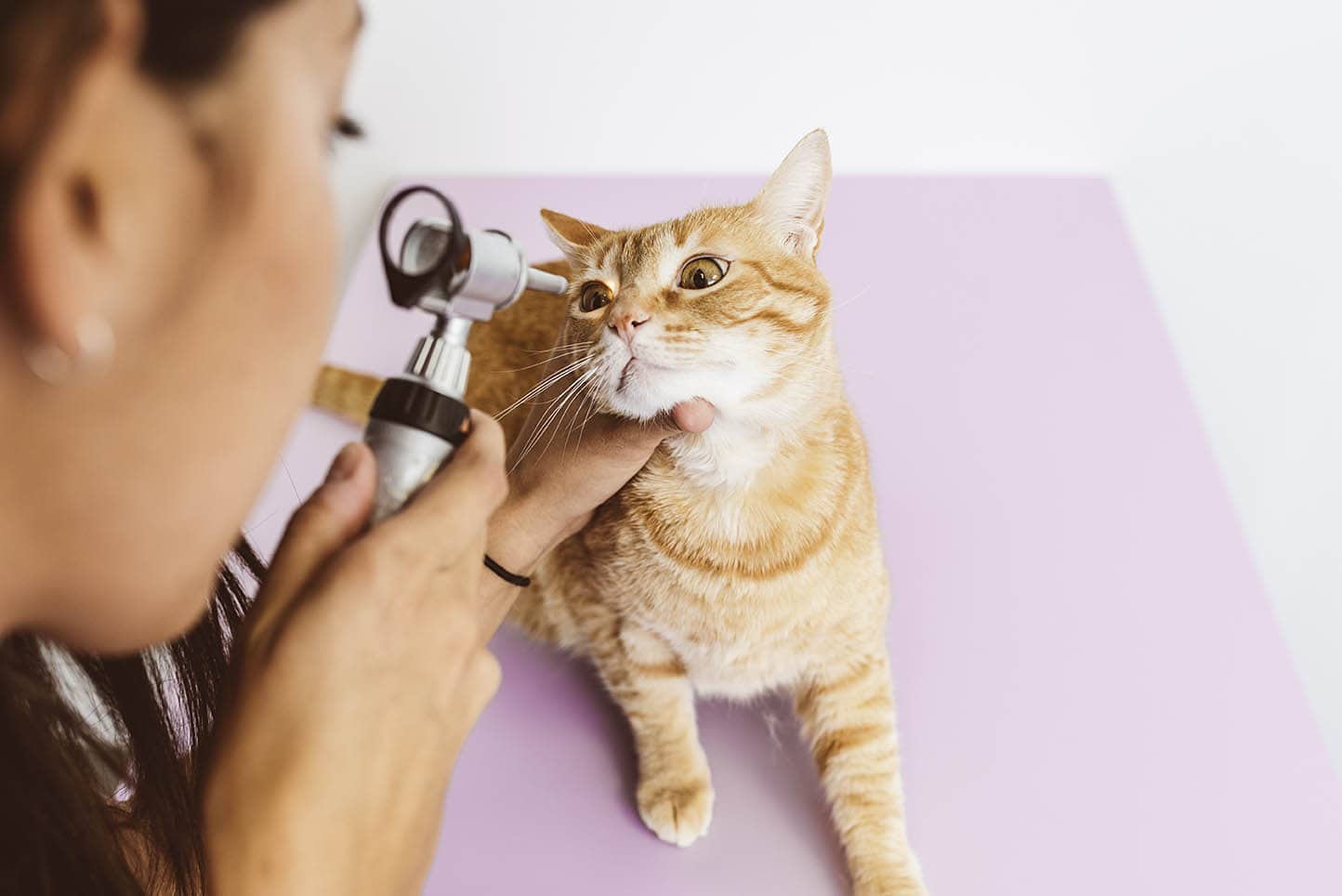
vet checking cat's eyes
Image Credit: santypan, Shutterstock

An infection could be to blame for your cat’s watery eyes. It is not uncommon for cats to be afflicted with either a viral or bacterial respiratory infection, and since they can become rather unwell, it is important to reach out to a vet as soon as possible.

Signs of a possible respiratory infection include inflamed eyelids, sneezing, red eyes, constant blinking and pawing at the eyes, or a discharge coming from the eyes that is either clear, greenish, or yellowish. Reduced appetite and nasal discharge or congestion are common symptoms of cat flu.

Since respiratory infections are contagious, your cat may be infected if they have recently encountered another cat.

How to Treat

  • It is essential to take your kitty to the vet to make an appropriate diagnosis since treatment depends on accurate information. Your vet will likely prescribe eye drops or gels, but they may provide oral supplements or medications depending on the type of infection. Vaccination against cat flu will help reduce the risk of your cat becoming ill in the first place.

6. Blocked lacrimal duct

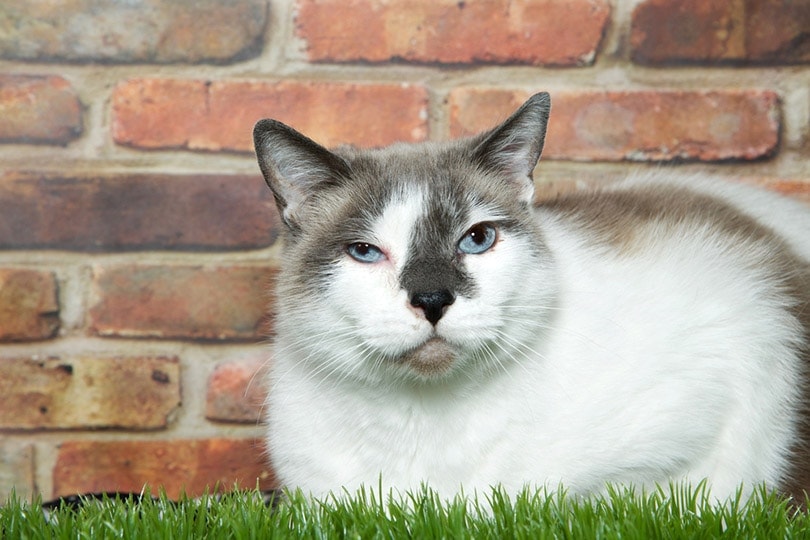
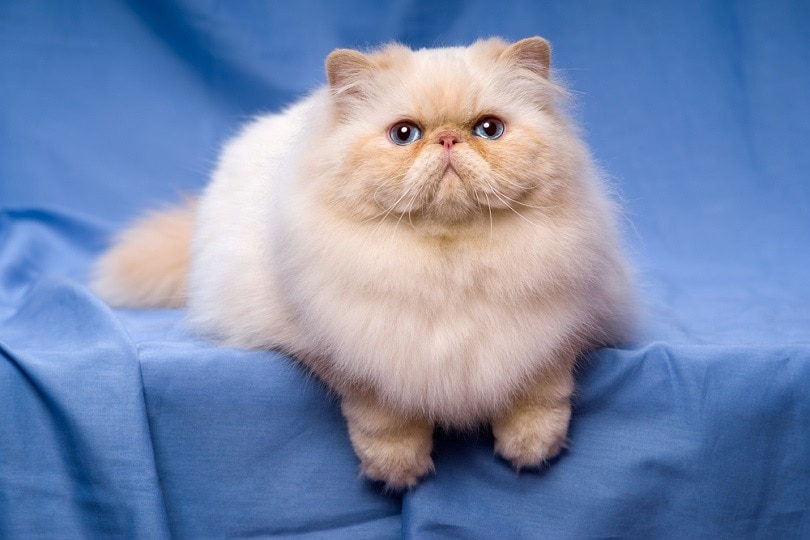
Beautiful persian cream colorpoint cat whith blue eyes
Image Credit: Dorottya Mathe, Shutterstock

The lacrimal duct is a crucial part of drainage for a cat’s eyes and nose. When this duct is blocked, it can lead to watering eyes. The duct could be blocked by several things: inflammation, scarring, or even a hereditary defect of the duct’s formation.

Beyond watery eyes, another symptom of a blocked lacrimal duct is often reddish-colored tears. If an infection develops, redness, itching, or swelling of the face may occur. In more serious cases, bacteria may begin to grow around the eyes due to the wetness of the fur. Your cat’s face may even start to smell bad due to this.

How to Treat

  • If the blockage is caused by inflammation, then medications will be prescribed to combat it. However, there may be instances where surgery is required, especially if the duct is formed improperly or there is something that is obstructing it.

7. Eye Ulcer

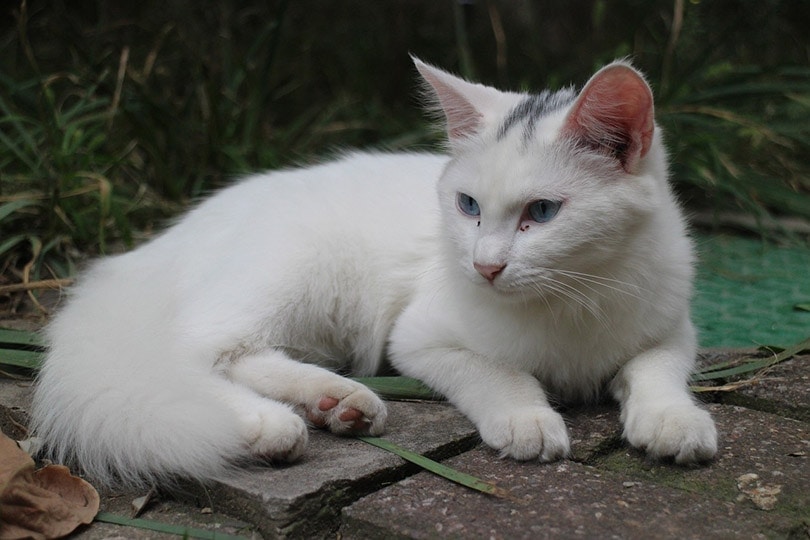
white cat with eyes discharge
Image By: AmberShadow, Pixabay

Your cat may have a corneal ulcer. A corneal ulcer is essentially an abrasion of multiple layers of the cornea to create an ulcer. This may be due to trauma, infection, or eye problems such as ingrowing eyelashes.

The cornea is the surface of the eye and is made up of three layers: the epithelium, the stroma, and Descemet’s membrane. A corneal ulcer is formed when the outer layer (the epithelium) and the middle layer (the stroma) have been penetrated. If the ulcer continues to grow and breaches Descemet’s membrane, the eye could collapse and cause irreversible damage.

Corneal ulcers are incredibly painful. If your cat has one, it will be evident by their body language. They will rub their eyes with a paw or even on furniture or floors. Other signs are squinting, constant blinking, and discharge from the eyes.

How to Treat

  • If medical management alone does not help the ulcer resolve then surgery will most likely be needed to heal the ulcer. Your vet will have recommendations for the best procedure or combination of treatments to get your cat feeling better in no time.

Conclusion

These are some of the primary reasons your cat’s eyes may be watering. If you think your cat is displaying additional symptoms of any of these conditions, pay close attention to your pet and its state of well-being. If these issues persist for two days or your feline friend seems to be in pain, make a trip to the vet immediately.

See also:

Sources

Featured Image Credit: Repelsteeltje, Shutterstock

Get Hepper In Your Inbox

Pet care tips from our vets and experts, straight to your inbox.

List

Select all that apply.

You may opt-out at any time. View our Privacy Policy for more information.

Nicole Cosgrove
Authored by

Nicole Cosgrove

Join the conversation

Ask a question, share your story, or send private feedback.
Rate this post
Required to post. Only our editors see your rating.
Who should see this?

A human reviews every comment before it appears. Your email is never published.

Picked to go with this article

Dog’s Eyes Watering: 7 Vet-Reviewed Reasons & What to Do

Dog’s Eyes Watering: 7 Vet-Reviewed Reasons & What to Do

Drippy eyes aren’t just ugly, they can signify major medical problems. It’s normal to occasionally see a little bit of watery discharge, but if you’re seeing s…

Chelsea Mortensen
By Chelsea Mortensen ·
Cat Eye Discharge: Understanding What is Normal (Vet Answer)

Cat Eye Discharge: Understanding What is Normal (Vet Answer)

Just as in the case of human eyes, a cat’s eyes are physically protected with eyelids. What you probably didn’t know is that while humans have only two eyelids…

Dr. Paola Cuevas
By Dr. Paola Cuevas ·
Conjunctivitis in Cats: Vet-Approved Causes, Signs & Treatments

Conjunctivitis in Cats: Vet-Approved Causes, Signs & Treatments

There are many bacteria and viruses that most cats will experience at least once in their lives. These viruses can be highly contagious and cause a problem to…

Nicole Cosgrove
By Nicole Cosgrove ·
Why Do Cats Have Eye Boogers? Vet-Verified Reasons & Precautions

Why Do Cats Have Eye Boogers? Vet-Verified Reasons & Precautions

They say the eyes are the windows to the soul, but what happens when the windows spring a leak? If your cat’s eyes are suddenly crusted with boogers, you’re pr…

Elizabeth Gray
By Elizabeth Gray ·

Keep reading

More stories you might like

Why Is My Cat’s Third Eyelid Showing? 10 Vet-Reviewed Reasons

We love our cats’ whiskers and certainly their toe beans, but their eyes are most definitely one of their most beautiful features! But if you’ve noticed your c…

Kathryn Copeland
By Kathryn Copeland ·
Why Is My Cat’s Third Eyelid Showing? 10 Vet-Reviewed Reasons

How Do Cats Get Pink Eye (Conjunctivitis)? Vet-Verified Facts & FAQ

The first time you see your cat with the dreaded “pink eye,” you likely won’t ever forget it. Your poor cat will be tearing up like they are crying, may have a…

Gregory Iacono
By Gregory Iacono ·
How Do Cats Get Pink Eye (Conjunctivitis)? Vet-Verified Facts & FAQ

Can You Use Human Eye Drops on Cats? Vet-Reviewed Facts & Care Tips

If your cat has eye problems, it’s natural to worry about them, and you undoubtedly want to help them as quickly as possible. Using human eye drops can be temp…

Nicole Cosgrove
By Nicole Cosgrove ·
Can You Use Human Eye Drops on Cats? Vet-Reviewed Facts & Care Tips

Why Is My Cat Keeping One Eye Closed? 5 Vet-Reviewed Eye Problems

When people wink at each other, it’s generally a sign of affection or an attempt to flirt. However, if your cat appears to be “winking” because they’re holding…

Elizabeth Gray
By Elizabeth Gray ·
Why Is My Cat Keeping One Eye Closed? 5 Vet-Reviewed Eye Problems

Why Do Cats Sneeze? 6 Vet-Approved Causes and When to See a Vet

Sneezing is as common in pets as it is in humans. But when does a simple sneeze that happens every once in a while, turn into a more significant problem? Sneez…

Hallie Ballard
By Hallie Ballard ·
Why Do Cats Sneeze? 6 Vet-Approved Causes and When to See a Vet

Why Does My Cat Have a Stuffy Nose? 10 Vet Reviewed Causes & Care Tips

Having a stuffy nose can be a real pain, but it can be much worse when your favorite cat has a stuffy nose. When this is caused by inflammation of the mucus me…

Gregory Iacono
By Gregory Iacono ·
Why Does My Cat Have a Stuffy Nose? 10 Vet Reviewed Causes & Care Tips

7 Kitten Health Issues to Look Out For (Vet Answer)

The fun and joy of taking care of a new kitten can quickly be dampened if you're concerned about something that is just not quite right. Worrying about somethi…

Dr. Chantal Villeneuve
By Dr. Chantal Villeneuve ·
7 Kitten Health Issues to Look Out For (Vet Answer)

Why Is My Cat's Nose Dripping When They Purr? 5 Vet-Reviewed Reasons

One way to know your cat is really enjoying your bonding time is when they begin to purr. There is nothing quite like that sweet, loving sound they make – it c…

Lindsey Lawson
By Lindsey Lawson ·
Why Is My Cat's Nose Dripping When They Purr? 5 Vet-Reviewed Reasons