Hepper is reader-supported. When you buy via links on our site, we may earn an affiliate commission at no cost to you. Learn more.
Cockatiel vs. Budgie: The Differences (With Pictures)
In this article
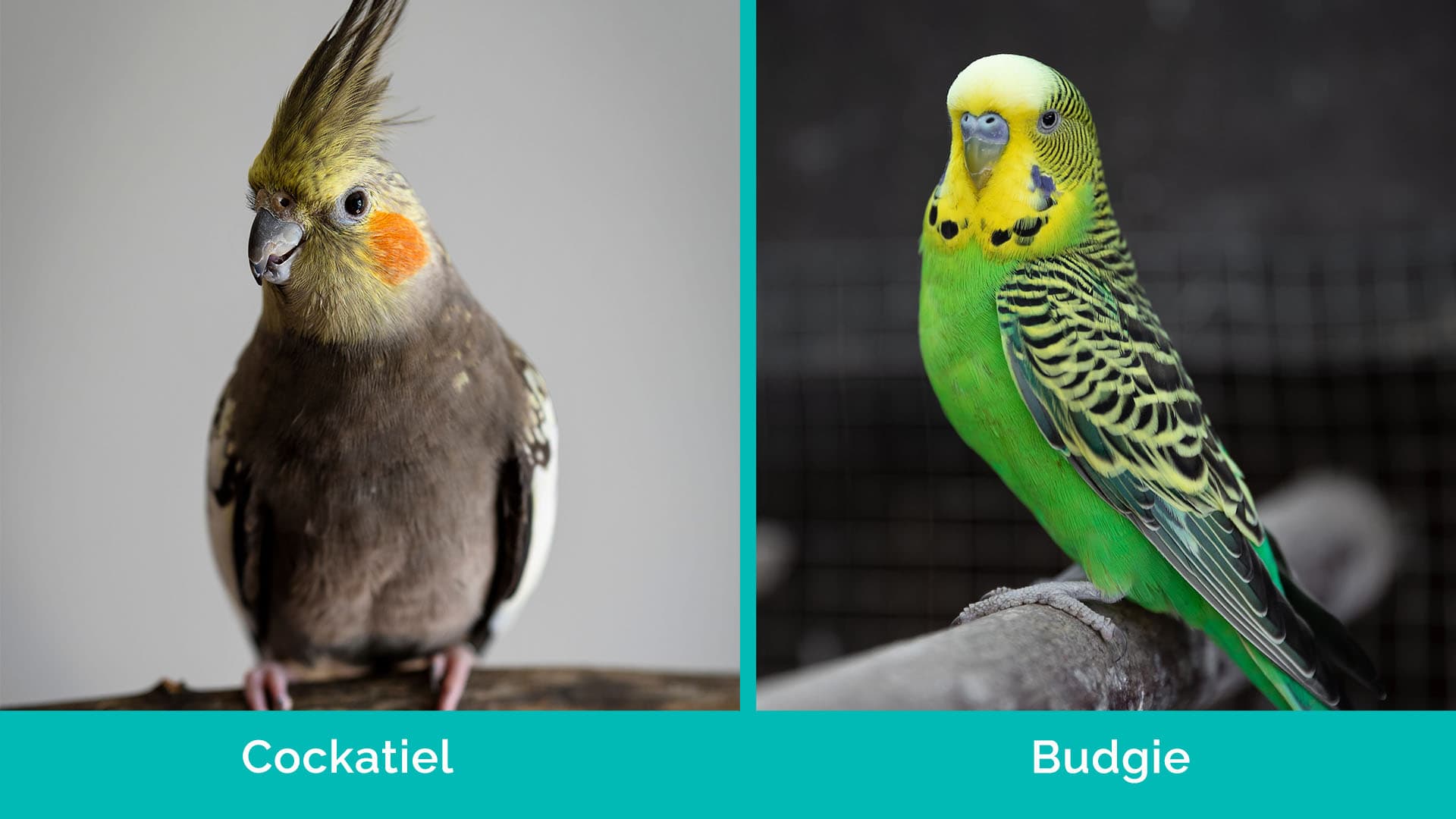
The cockatiel and budgie or budgerigar are the top two most popular pet birds. It’s easy to see why. They are both friendly and affectionate, and they are active and entertaining to watch. The cockatiel will delight you with its whistles and songs, while the budgie can acquire an impressive vocabulary with time and patience.1 Both species have other similarities and differences to consider.
Both make excellent pets. They are suitable for children and first-time bird owners. They are relatively long-lived with the proper care. Understanding the social nature of these birds is essential. They need daily interaction, especially if you plan on only getting one. Then, you’ll have to fill in as their mate to provide the necessary mental stimulation.

Visual Differences
At a Glance
Cockatiel Overview
The cockatiel lives in the savannas and open woodlands of its native land of Australia. It typically gathers in large flocks, although it’s a monogamous species that forms pair bonds early in life. This social pattern serves the bird well to help alert conspecifics of predators, often birds of prey. While it can bite to thwart an attack, it usually flies away, reaching speeds up to 43 mph.
Scientists credit Scottish naturalist Robert Kerr for being the first one to describe the cockatiel formally in 1792.2 He gave it the scientific name Psittacus hollandicus.3 It assumed its current name Nymphicus hollandicus, in 1832 when German ornithologist Johann Georg Wagler renamed it.4 The species quickly endeared itself to Europeans, who began to breed the bird.
Characteristics & Appearance
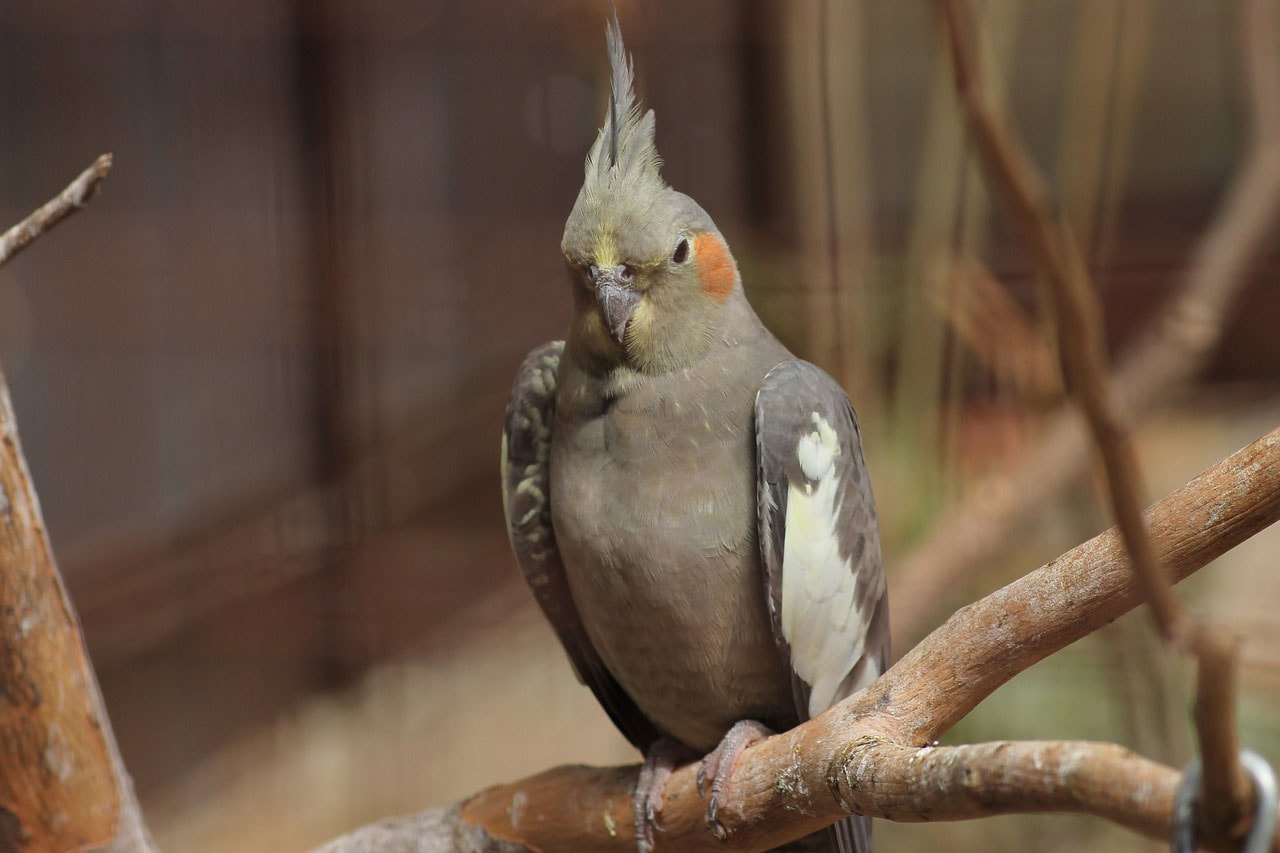
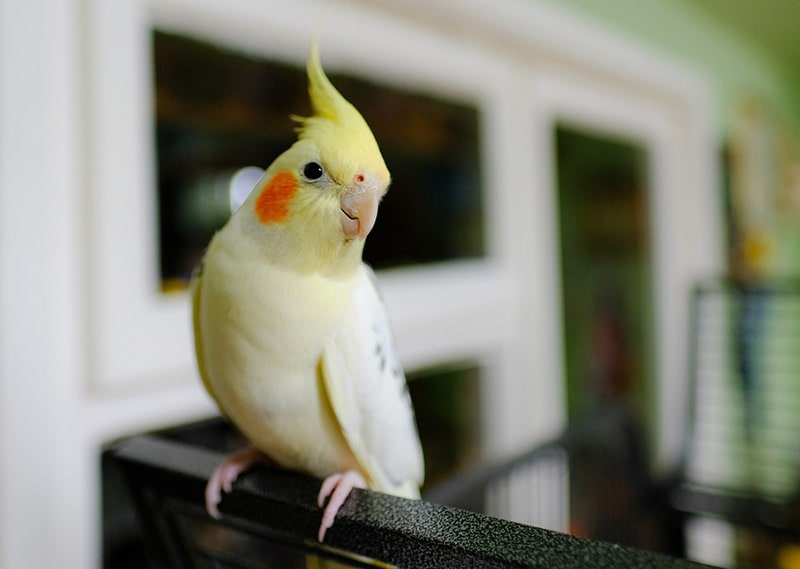
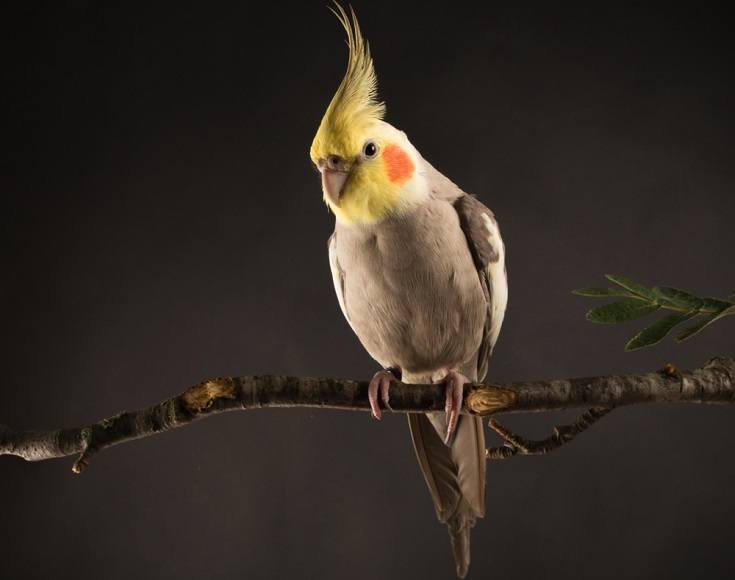
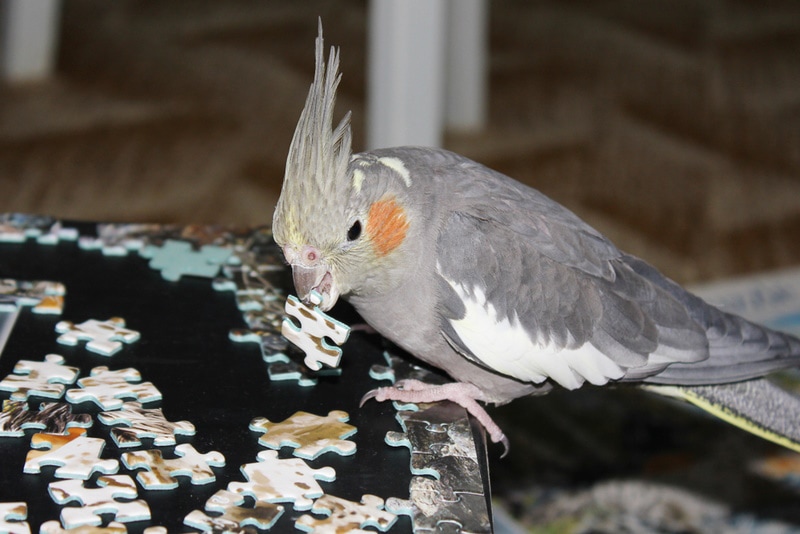
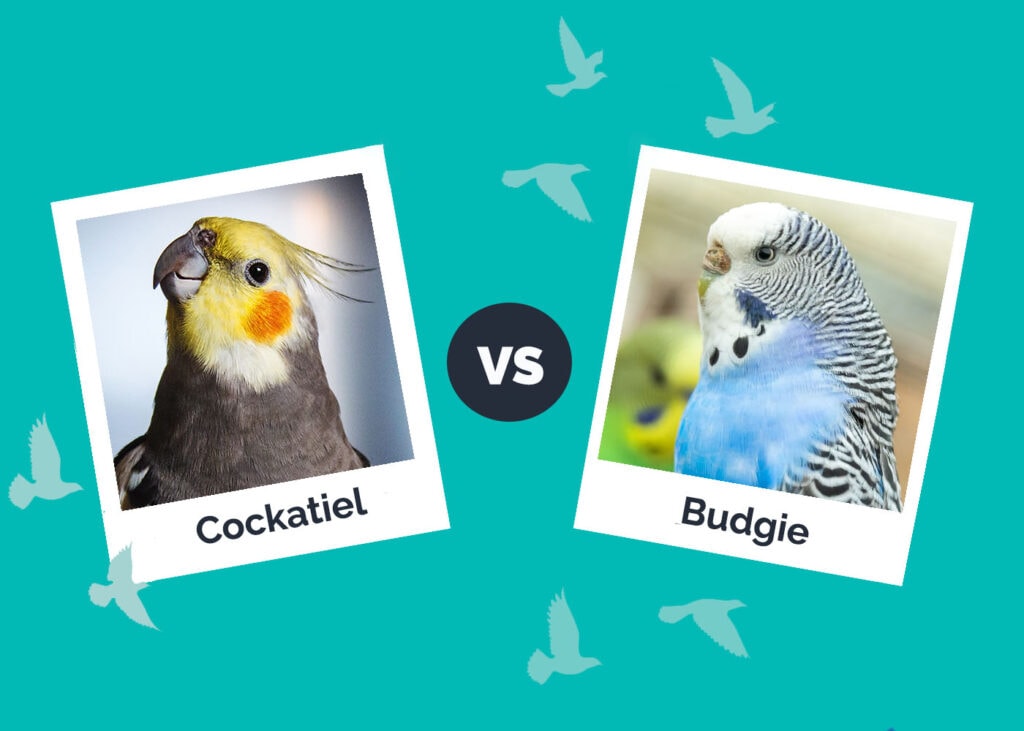
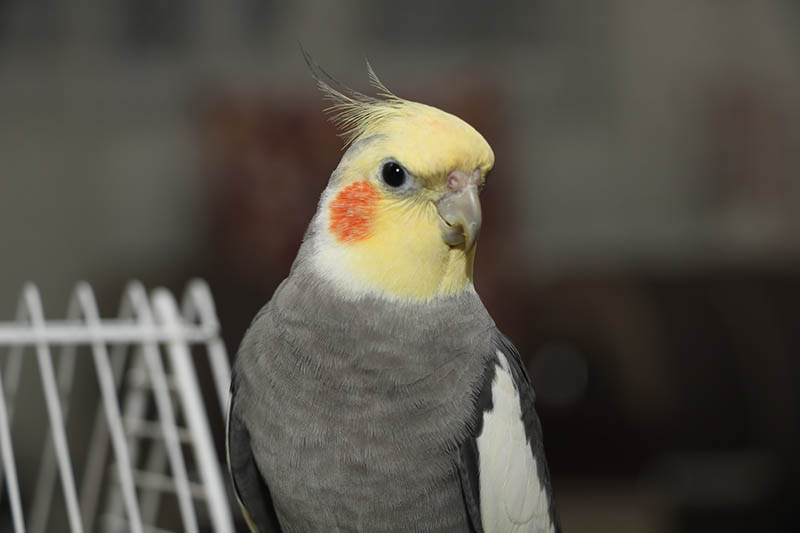
The cockatiel’s most noticeable feature is its crest, which communicates its mood. A content bird holds it at a 45-degree angle against its head. If it points straight up, it’s on high alert. The crest of an angry cockatiel will lie flat, not unlike a cat flattening its ears. The wild bird is primarily gray with a white-yellow face adorned with orange cheek patches.
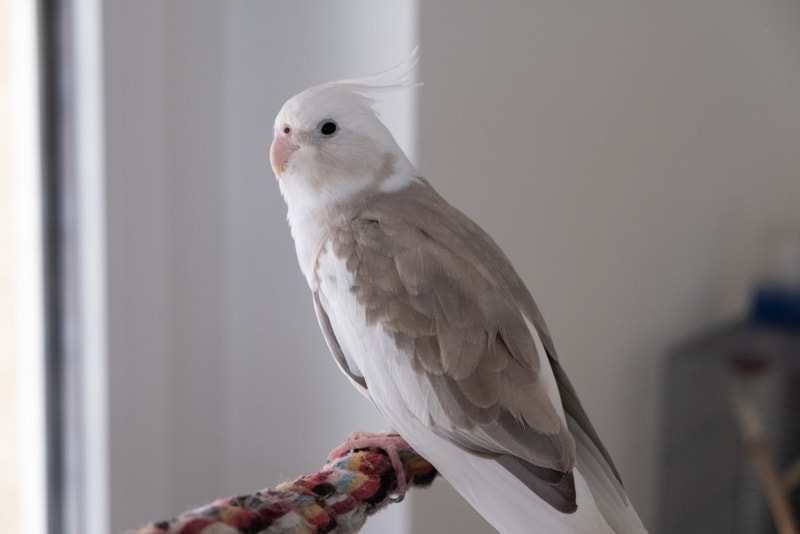
Its tail is about as long as its body. It has long, pointy wings with a span of about 12–14 inches wide. Captive birds come in various colors, including pearl, pied, and lutino. They are the result of mutations and selective breeding.
Cockatiels fare best on a varied diet that includes seeds, nuts, and fruits. It’s a decent representation of the foods they would eat in the wild. These birds feed primarily on the ground. Your pet will likely simulate the same behavior in its cage. Cockatiels have a powdery down that waterproofs their feathers. However, they like to bathe and will enjoy the opportunity to do so.
Uses
The cockatiel is a companion bird that needs daily attention and interaction. That will ensure it remains a good pet. It’s not a bird to keep in a cage and just admire it from afar. It may pick up a few words, but its real talent is singing and whistling. It will happily sing a tune and seems to enjoy it. The bird can also mimic other sounds, like your mobile’s ringtone.
While the cockatiel’s voice can be quite shrill, it’s not as loud as other parrots and macaws. Apartment dwellers can keep one without fear of disturbing their neighbors. It has zygodactyl feet, meaning two toes point forward and two toes point back. It likes to climb and perch. You should get a cage with a bar spacing of 0.5–0.75 inches. We recommend getting one that is at least 24 inches long and wide.
Budgie Overview
The budgie’s story is similar to the cockatiel’s. It inhabits the same areas, usually inland instead of along the coasts. It’s also a social bird that lives in large flocks of chattering mates. The budgie has a predictable daily schedule with a morning and evening song. Like the cockatiel, it’s not usually active during midday when conditions are warmer.
Budgies are primarily granivores or seed eaters. They forage on the ground and pick them off plants. They are delightful as pet birds. Australian farmers have a different take, especially when large flocks descend on their crops. Nevertheless, the species’ popularity has helped scientists learn more about birds and their physiology because they’re easy to keep and breed.
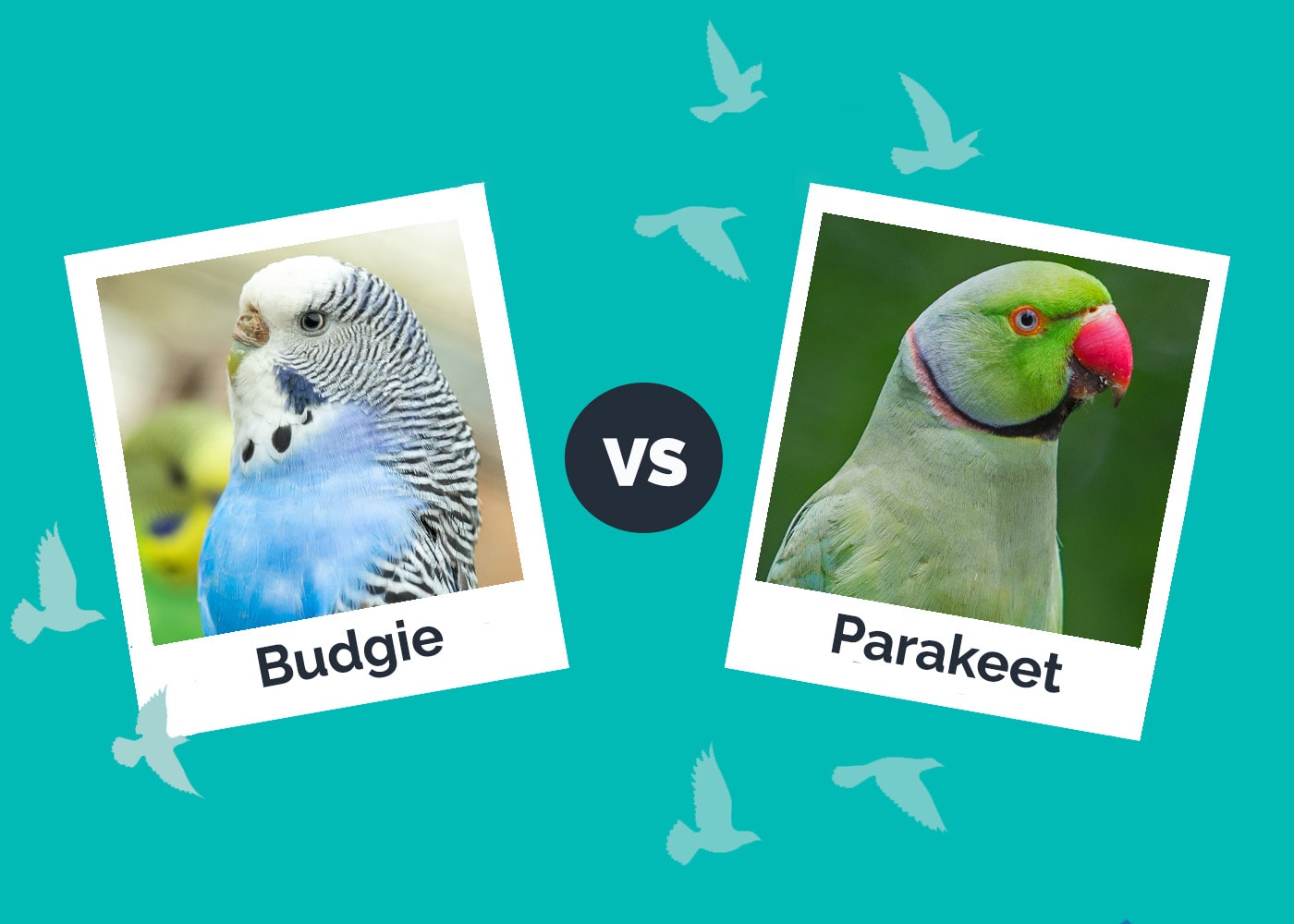
English zoologist George Shaw first described the budgie in 1805, along with many animals in New Holland, the former name of Australia. The bird is in the same family as the cockatiel, although it belongs to a different genus. It’s worth noting that Americans also call the budgie a parakeet. The latter is a generic term for multiple species of a similar size.
Characteristics & Appearance
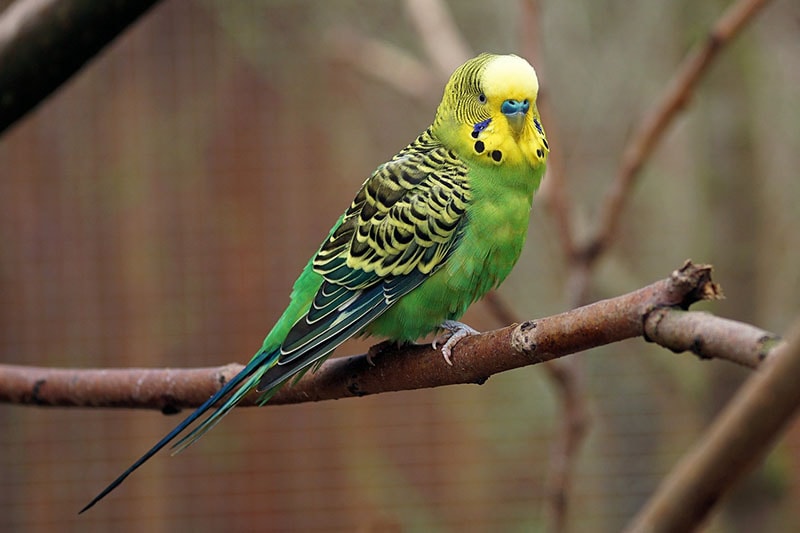
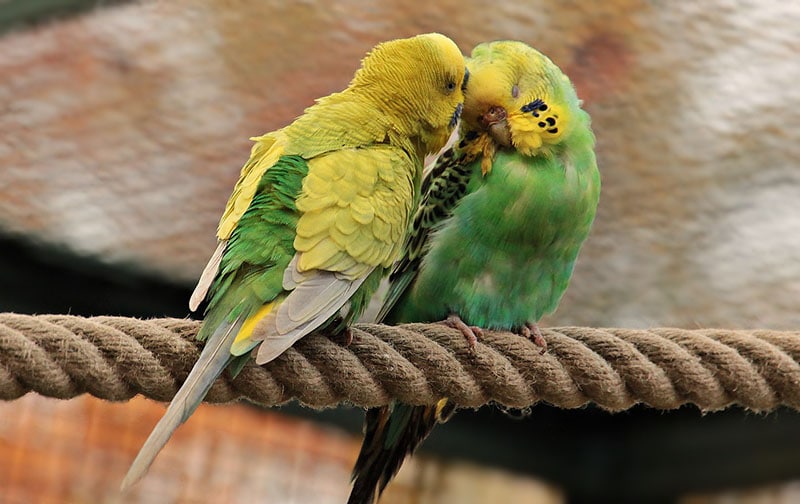
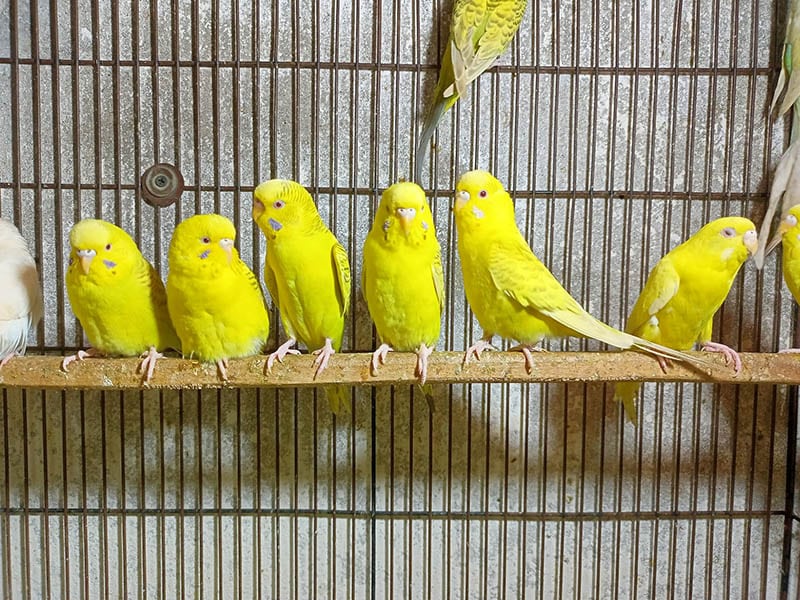
The budgie is noticeably smaller than the cockatiel. It has a rounded head with a distinct plumage pattern of green, yellow, and blue with black stripes. You can distinguish males and females by the color of its cere, the skin covering the bird’s nostrils. The former is blue, and the latter beige or pinkish. Otherwise, the sexes are similarly colored.
Like cockatiels, budgies are monogamous and easy to breed in captivity. Interestingly, both species live in places other than their native Australia. Wild populations exist in Puerto Rico and the United States. It’s a testament to the birds’ adaptability to varying environmental conditions. Enthusiasts have also created several color variations through mutations and selective breeding.
The budgie is just as social as the cockatiel. It is often chattier and more active than the latter. You may see the two species together in the wild, but it’s more happenstance than anything else.
Uses
The budgie’s main role is as a pet bird. Its ease of care and friendly personality make it an excellent choice for children and adults alike. It can become hand-tamed and learn to talk. It can also mimic sounds like the cockatiel. The best cage is at least 18 inches long and wide with a bar spacing of no more than 0.5 inches.
The budgie should get a varied diet of seeds, nuts, and grains. Contrary to popular opinion, it doesn’t need grit since these birds hull their food before consuming it. The addition of safe fruits and vegetables can ensure your pet gets enough vitamin A. Good sources include bananas, blueberries, and cantaloupes cut into small dice.
What Are the Differences Between a Cockatiel & a Budgie?
The care of the cockatiel and budgie is similar. They eat similar foods, although the former will enjoy large seeds like sunflower and safflower. Other aspects of raising birds are the same with both, including fresh water, adequate cage cleaning, and moderate household temperatures. The main differences rest with housing. Being the bigger bird, the cockatiel needs a larger cage.
The cockatiel is often more laid-back than the budgie, which always seems to be on the move, chattering. The former is more likely to tolerate touching and handling, whereas the budgie doesn’t always enjoy this interaction as much. Some cockatiels experience what enthusiasts call night frights. The term describes the reaction when a bird is startled away. However, it doesn’t apply to all pets.

Which Bird Is Right for You?
The cockatiel and budgie offer a similar pet experience. You can hand-tame either one with patience and regular handling. It’ll make having a bird more enjoyable for you while providing the necessary social interaction for your avian companion. The main differences involve the type of pet you want.
A couple of budgies will bring song and playful activity to your home. They’ll provide welcome entertainment for you and your family even if you don’t handle them a lot yourself. A cockatiel is an ideal choice for someone who wants a more hands-on pet. It will enjoy bonding with you and getting the occasional head scratch.
However, either species will provide a rewarding experience when given the proper care and suitable diet. We can’t think of a better way to begin our day than with a lovely bird song with an Aussie twist.
Related Reads:
Featured Image Credit: (L) Alena Gerasimova, Shutterstock | (R) Bianca Ackermann, Unsplash
Get Hepper In Your Inbox


Pet care tips from our vets and experts, straight to your inbox.
You may opt-out at any time. View our Privacy Policy for more information.

Chris is an experienced pet writer specializing in science topics, with a particular passion for health and the environment. She has been a writer for over 15 years and lives with her husband and three cats in Michigan.
Beyond writing about cats and dogs, Chris loves to learn about wine. She has WSET 1 and 2 certifications and is currently pursuing her Certified Wine Specialist Award (CSW).
Join the conversation
Ask a question, share your story, or send private feedback.