Hepper is reader-supported. When you buy via links on our site, we may earn an affiliate commission at no cost to you. Learn more.
Conure vs Cockatiel: The Differences (With Pictures)
In this article
Cockatiels and Conures are both popular pets because they are docile enough to be handled, fun, and relatively easy to care for. But, as well as typically being more vividly colored, the Conure tends to live a few years longer.
However, the Conure is also louder, despite not being able to learn as many songs. The Conure is usually considered the easier to train and can be taught more tricks and it isn’t usually as dusty a species as the Cockatiel, which means that it might be the better option for owners that have allergies. Cockatiels are quite laid back and they don’t usually bite or nip. They also usually prefer to sit and hang out with their humans, rather than being taught tricks or taking part in training.
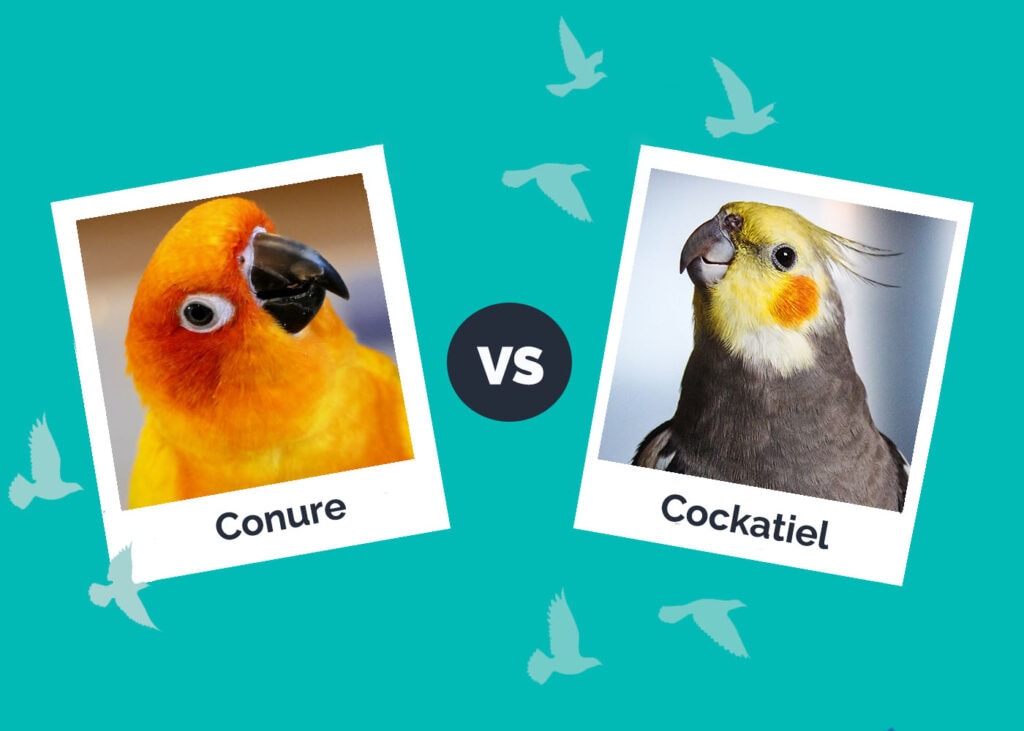
But, every Conure and every Cockatiel is different, and because both of these birds can make excellent pets, it can be difficult to determine which is the best option. Below, we look at the main points about each species and consider their biggest differences to help you decide on your next bird.

Visual Differences
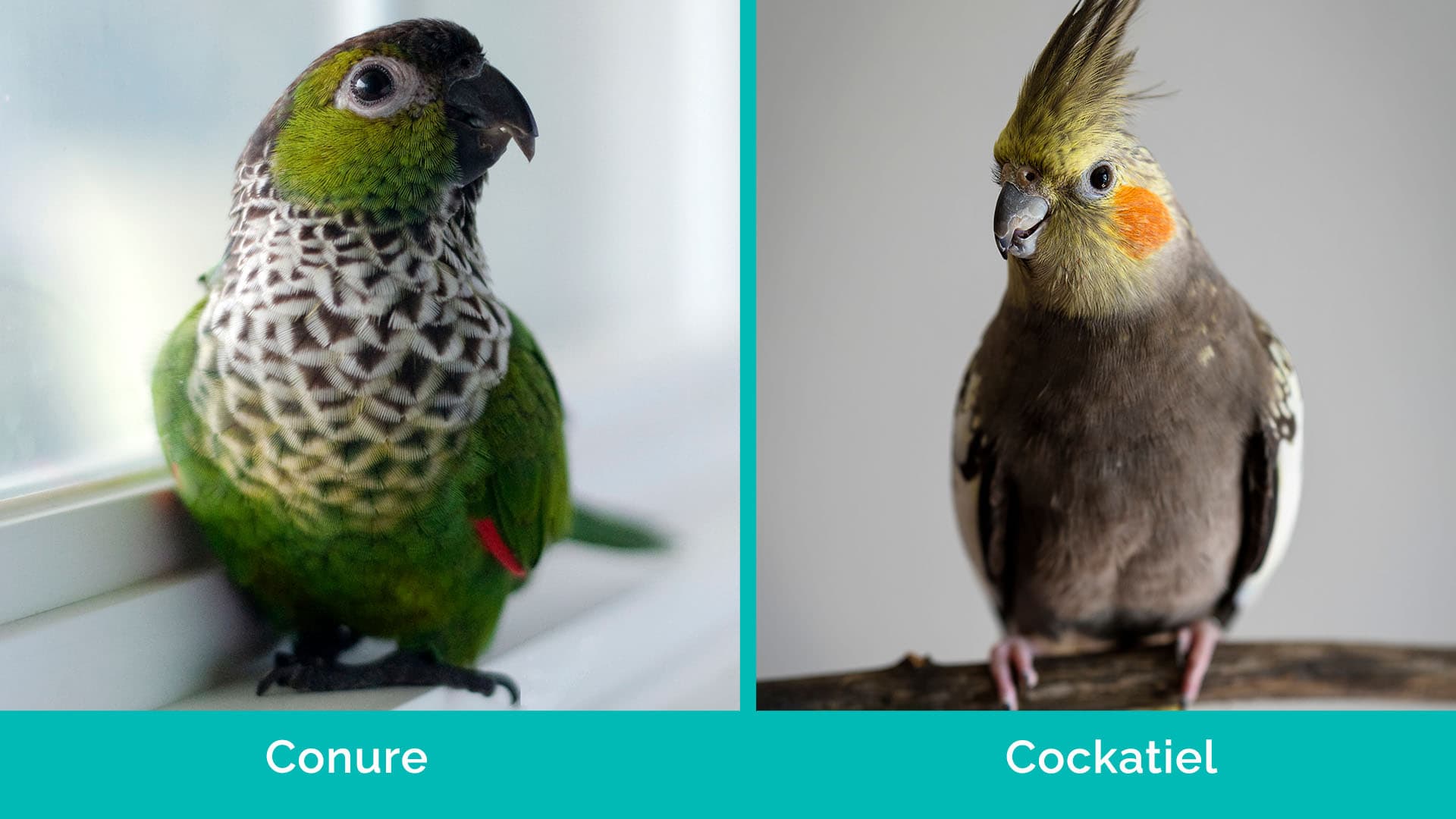
At a Glance
Conure Overview
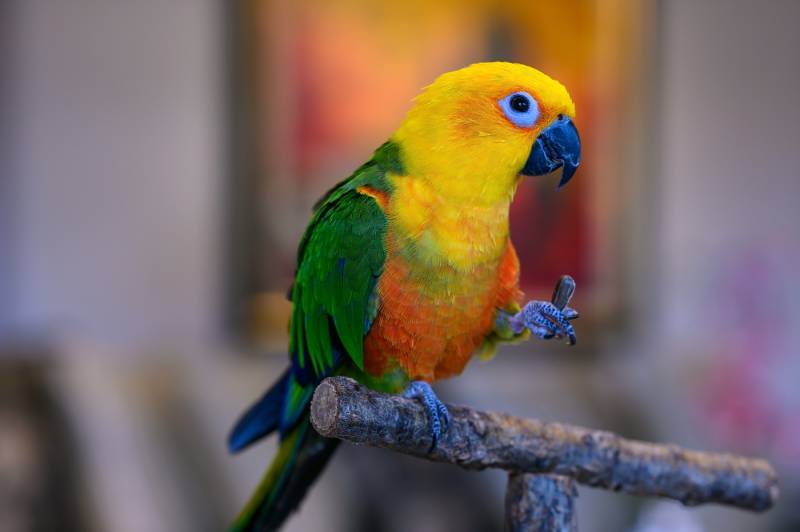
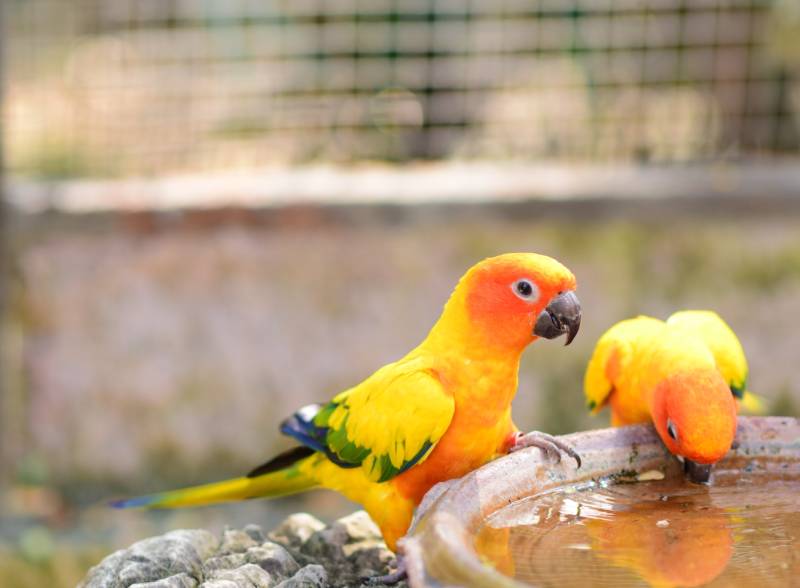
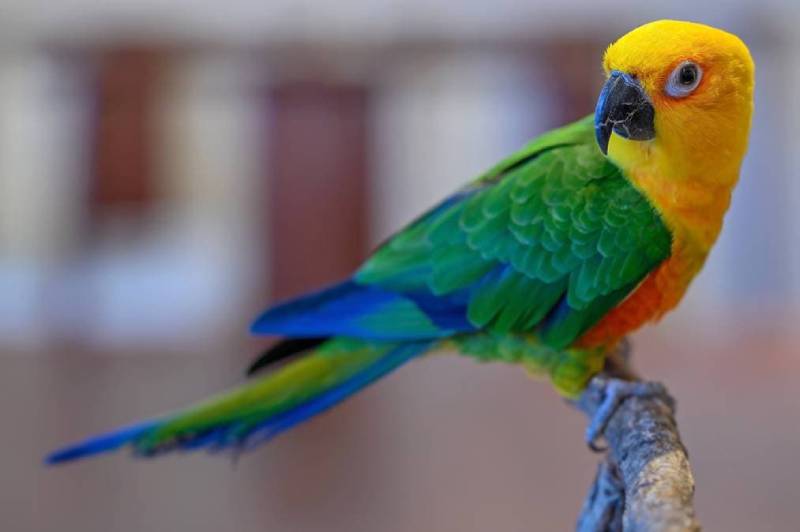
Conures are small to medium-sized Parrots, but the exact size and temperament of the Conure will depend on the exact species, of which there are many. For example, the Pineapple Conure typically measures 10 inches and weighs around 2.5 ounces, whereas the Golden Conure can measure 15 inches and weigh nearly 10 ounces. One of the most popular pet Conure species is the Green Cheeked Conure which is on the smaller end of the Conure scale.
Its size is part of the reason for its popularity as a pet, but it also tends to make less noise than other species and it has a friendlier character.
Personality
The Conure is a lively, active, social bird. It typically wants to know everything that is going on and be a part of it. If it doesn’t feel involved, it can be prone to protesting loudly at its exclusion. And if it is involved in any activity, it will loudly proclaim its excitement. The Conure is quite a loud bird, and even the Green Cheeked Conure, which is said to be one of the quieter species, is still louder than a lot of other pet bird species, including the Cockatiel. It is quite a forgiving species, which makes it a good choice for families with children that want to get involved with their new pet bird.
Many Conures will tolerate being touched on the belly, for example, although you should not encourage this, and it is good to teach children not to touch bird bellies.
Training
Another reason for the popularity of the Conure is that it can be trained. It is an intelligent bird and if it finds training fun or gets plenty of attention during training sessions, it will enjoy taking part. Some Conures will pick up a few human words, although they don’t really mimic other noises, preferring instead to screech and yell. But you can teach a Conure to shake hands, wave, hop onto your finger, and more, as long as you are patient and consistent in your training.
Conures can be a little bit nippy, so early training should concentrate on preventing yours from nipping and trying to bite.
Health & Care
A Conure is usually best given a combination of commercial food suitable for the breed, supplemented with fresh fruit and vegetables. The breed, generally, is considered a high-maintenance bird. It has a busy beak and likes to chew, although you can help counteract this by providing foraging and chew toys. It will also enjoy being misted daily and bathed. The Conure isn’t as dusty a bird as the Cockatiel, however, as it is not a member of the Cockatoo family.
Suitable For:
The Conure needs plenty of attention, but it can be trained and is a fun bird to keep as a pet. It is best suited to pet parents that have plenty of time to dedicate to their feathered friends.
Pros
- Can learn a few human words
- Can be trained to learn several tricks
- Typically lives around 20 years in captivity
- Enjoys spending time with its family
Cons
- Can be prone to nipping
- Can be very loud
Cockatiel Overview
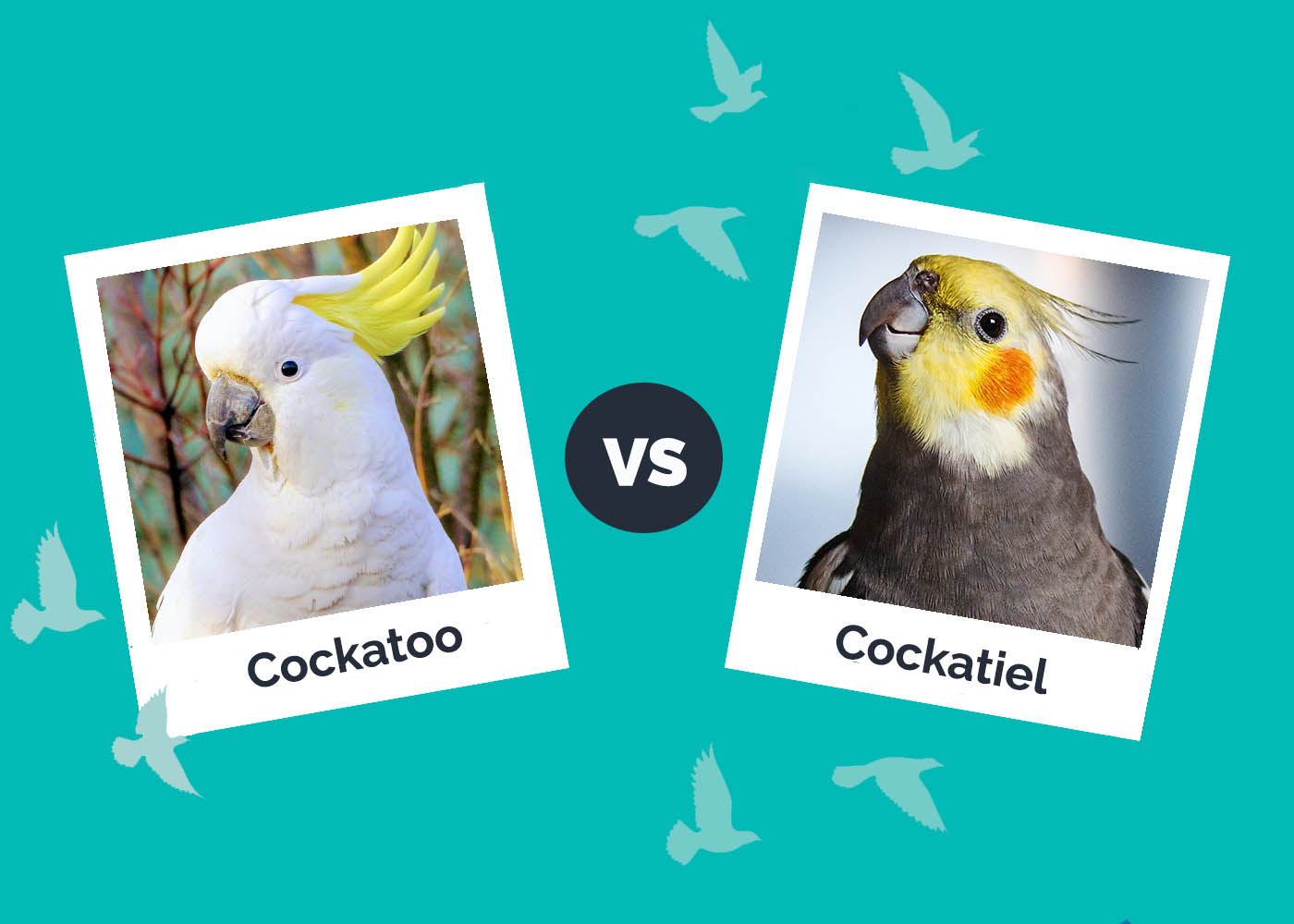
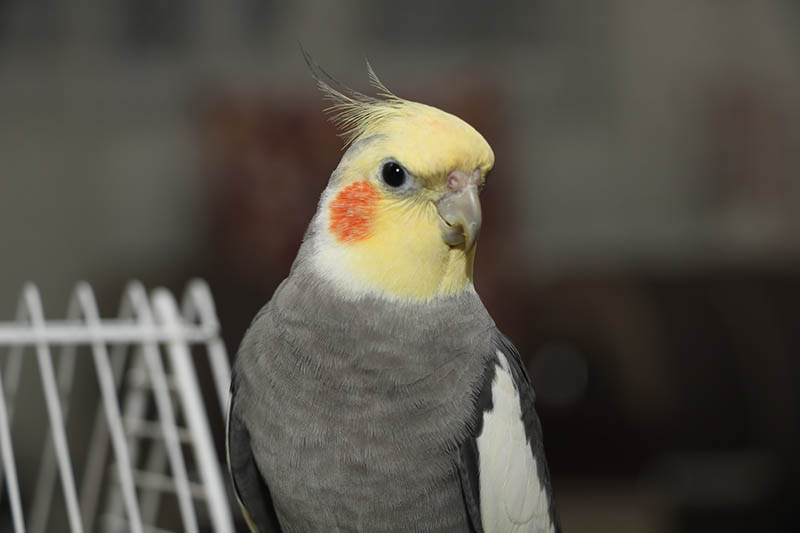
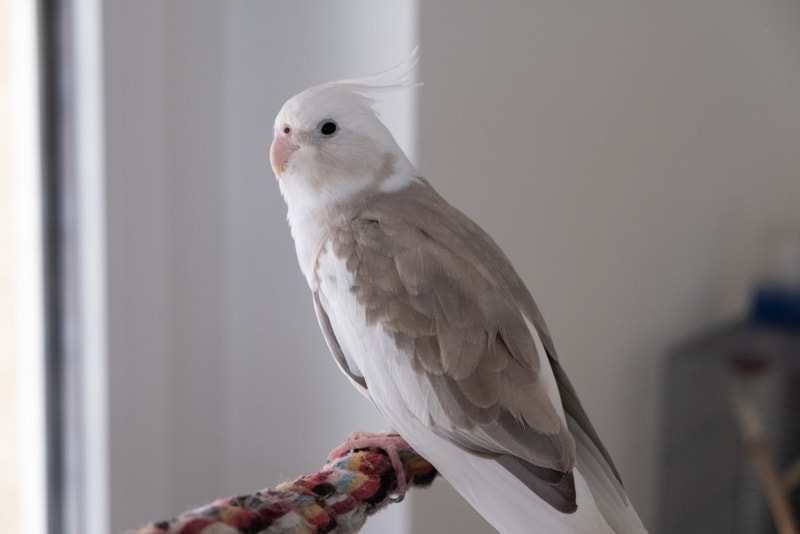
The Cockatiel is one of the most popular and common pet bird species. It is lower maintenance than most Parrots, is a comparatively quiet bird, and not only tolerates being handled but thrives on spending time with its human family. The Cockatiel is a member of the Cockatoo family, which means that it does produce a lot of dust, but the species is widely considered one of the best start bird species for those that are new to keeping pet birds.
Personality
Cockatiels enjoy spending time with their human family, but they don’t tend to be as vocal about it as Conures. In fact, they are quiet birds compared to most Parrot species. They will learn to whistle a few tunes, and some, albeit not many, also learn to mimic a handful of human words, but they won’t screech and shout as much as a Conure.
Although some Cockatiels do like to be cuddled, most prefer just to spend time with their people and hang out on hands and shoulders. They can also be good with other birds, as they are docile, but they may be picked on by bully birds, so you do have to carefully consider this before housing them with other species in an aviary.
Training
Although they can pick up a few basic tricks, Cockatiels are not usually capable of learning as many commands as Conures. They do respond to positive reinforcement, so give them plenty of praise and a treat when they do something you want to encourage. If you’re looking for a bird that can be trained to perform multiple tricks, you may want to consider a different species.
Health and Care
Cockatiels are prone to a number of infections, which means you may end up at the vet with yours. However, feed a good diet and ensure good cage condition for your Cockatiel and there is less chance of illness. In terms of general care, the Cockatiel isn’t too demanding. Keep an eye on the beak to ensure it isn’t deformed, and monitor claw length. The Cockatiel is a dusty bird, which means that it can take some work to clean up after them and maintain their cage.
Suitable For:
The Cockatiel isn’t quite as demanding as the Conure, but it does require human interaction and socialization. It is a comparatively quiet bird, though, so it does benefit from quieter surroundings.
Pros
- A quiet and placid bird
- Typically likes to spend time with its humans
- Only needs a simple diet
- Can be taught a few tricks
Cons
- A dusty bird that does require some cleanup
- Can be prone to infections

Which Breed Is Right for You?
Cockatiels and Conures are both small species and are two of the more commonly kept pet birds. They are both considered friendly and sociable, which makes them great pet options. They can also be trained to learn tricks, although the Conure is easier to train than the Cockatiel. The Conure is louder, however, and it will let you know if it wants attention, is having fun, or if it simply wants to make a lot of noise. The Cockatiel tends to be quieter and can learn to whistle a few songs to keep you entertained.
In the wild, Conures can live up to 30 years, and while they don’t normally live this long in captivity, a pet Conure will still live up to 20 years or more, whereas the Cockatiel’s lifespan is between 12 and 15 years. When it comes to maintenance and care, the Cockatiel is quite dusty which means you will need to clean up more, but it has a simpler diet and is quieter. The Conure enjoys being misted or having regular baths to help keep it fully hydrated, but it isn’t a dusty Cockatoo species. Both birds make good pets for beginners and experienced owners alike, and the Conure is known to be forgiving of children’s less experienced handling.
See also:
Featured Image Credit: (L) Andrea Lightfoot, Unsplash | (R) Alena Gerasimova, Shutterstock
Get Hepper In Your Inbox


Pet care tips from our vets and experts, straight to your inbox.
You may opt-out at any time. View our Privacy Policy for more information.

Nicole is a lover of animals of all sizes but is especially fascinated with the feline variety. She’s the proud mom of Baby, a Burmese, and works every day so he can relax in the sunshine or by the fire. She’s always had a cat in her home and has spent countless days with others, observing behaviors and softening up even the grouchiest of the lot. Nicole wants to share her kitty expertise with you so you and your cat can live happy, healthy, and care-free.
Join the conversation
Ask a question, share your story, or send private feedback.