Hepper is reader-supported. When you buy via links on our site, we may earn an affiliate commission at no cost to you. Learn more.
8 Common Dalmatian Health Issues to Watch Out For (Vet Answer)


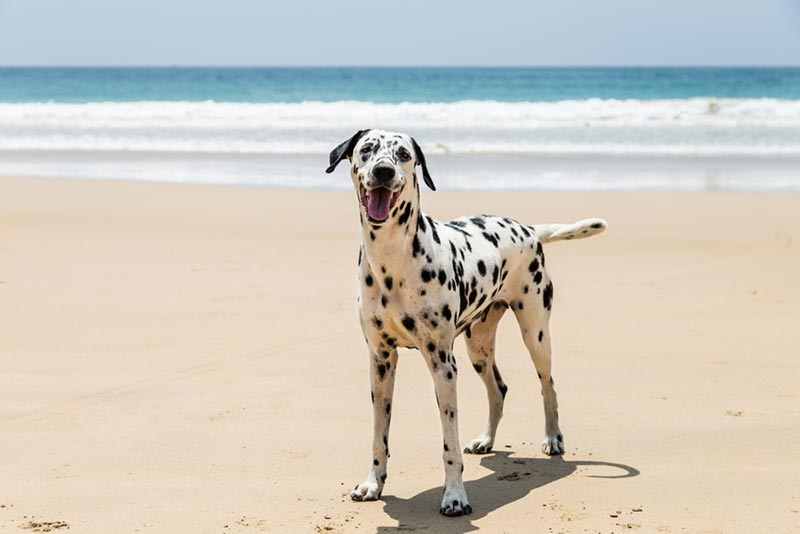
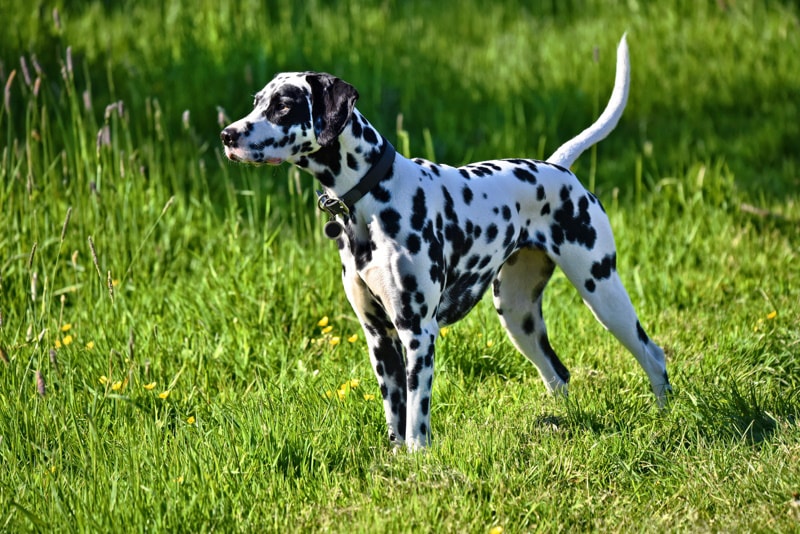
If you don’t know much about Dalmatians, we can tell you that they're rambunctious, loyal, and extremely lovable dogs. They're also highly intelligent and relatively easy to train. But what about their health?
The average Dalmatian lives for 10–13 years and the breed is relatively healthy. Like many purebred dogs, however, Dalmatians are prone to some genetic or breed-related health problems. Eight common ones will be explored in this article: deafness, skin tumors, bladder stones, skin allergies, hip dysplasia, bone pain, epilepsy, and laryngeal paralysis.

The 8 Common Dalmatian Health Issues
1. Deafness
Congenital sensorineural deafness is a type of deafness present at birth, and it affects Dalmatians more commonly than it does other breeds. The deafness can be unilateral (affecting one ear) or bilateral (affecting both ears, causing complete deafness). This condition is inherited and can seriously affect a dog’s quality of life.
While Dalmatians with unilateral deafness live a relatively normal, unaffected life, dogs with bilateral or complete deafness may have more difficulty. Auditory stimulus tests can be used to confirm the deafness. Affected dogs should not be used for breeding.
2. Squamous Cell Carcinoma
Dalmatians are considered “at risk” for squamous cell carcinomas, which are skin tumors. These tumors are categorized as cancer, meaning they behave malignantly and are certainly cause for concern. Squamous cell carcinomas are more common in short-coated, light-colored breeds of dogs that spend lots of time under the sun, meaning Dalmatians aren’t the only breed affected.
Though they start out looking like a wart, these skin cancers increase in size and begin to look ulcerated. Surgical removal of squamous cell carcinomas is necessary, though big tumors or tumors that have recurred may require radiation therapy too.

3. Bladder Stones
This condition is very common in Dalmatians. Dalmatians carry a gene for an inherited condition called hyperuricosuria (HU), in which uric acid levels in the urine are particularly high. This makes dogs much more likely to develop bladder stones (specifically urate stones). These stones can cause blockage of the urinary tract in male dogs, as the urethra is longer and narrower than it is in female dogs. Once present, urate stones require surgical removal. However, once they are removed, their recurrence can generally be prevented by feeding special diets.
DNA tests are available to test for the genetic mutation before breeding (or buying) a Dalmatian. If the test has not been performed, frequent urine tests, and occasional X-rays, are certainly a good idea, allowing for early detection of stones.
4. Skin Allergies
Skin allergies, also known as allergic dermatitis or atopic dermatitis, seem to be more prevalent in Dalmatians than in some other breeds. This condition is caused by genetic and environmental factors. In short, Dalmatians are more prone to seasonal allergies, in which their skin reacts to different pollens and grasses in the environment. This causes redness, itchiness, and, if they scratch enough, skin infections.
Atopic dermatitis is difficult to diagnose with absolute confidence, but, thankfully, there are several effective medications available to manage this condition in dogs.

5. Hip Dysplasia
Hip dysplasia is a genetic and developmental condition that does not only affect Dalmatians, but a number of large-breed dogs. The hip is a “ball and socket” joint: the round head of the thigh bone (femur) should fit nicely into a rounded socket in the hip. However, dogs with hip dysplasia have an abnormally shaped femoral head and a shallow hip socket. This means that the thigh bone does not sit neatly into the hip socket.
Why is this a problem? Well, it predisposes the joint to develop arthritis, and arthritis is painful. Mild cases of hip dysplasia in Dalmatians can most likely be managed with pain relief and joint supplements; more severe cases, in which pain and arthritis cannot be well managed, require corrective surgery.
6. Panosteitis
Young, growing Dalmatians can experience inflammation and pain in their long bones, such as the thigh bone and radius. This condition is termed panosteitis. In colloquial terms, it might be referred to as “growing pains”, but it is more specifically defined as “bone inflammation”. Again, a number of large breed dogs can be affected by this condition, not just Dalmatians. The underlying cause is not completely understood, but it seems likely that genetics, activity levels, nutrition, and infection all play a part in the development of panosteitis.
Most dogs show the first signs of pain, or lameness, between 6 and 18 months of age. Veterinarians may be suspicious of panosteitis if the bones appear painful when squeezed (“palpated”), but X-rays are required to confirm the diagnosis. This condition does not usually affect Dalmatians and their bone health in the long term, but pain relief and anti-inflammatory medications are beneficial in the short term.

7. Epilepsy
Epilepsy refers to repeated or recurrent seizure episodes. This condition can be seen in Dalmatians, as well as other breeds of dogs. A number of different neurological diseases can result in seizures in dogs, but when no underlying cause is identified, the problem is categorized as “idiopathic epilepsy” or “primary epilepsy”. Most dogs with epilepsy have their first seizure at a young age: between 6 months and 3 years.
Diagnosing epilepsy requires all other causes of seizures to be excluded or “ruled out”. This generally involves a combination of blood tests and some form of brain imaging (such as an MRI scan). Dalmatians diagnosed with epilepsy will likely require lifelong treatment with anti-epileptic medications, which keep the seizures under control.
8. Laryngeal Paralysis
Laryngeal paralysis is more of a problem in senior Dalmatians. This is a disease in which the nerve that supplies the voice box (larynx) becomes paralyzed for unknown reasons. This results in the voice box hanging over the airways, affecting a dog’s ability to inhale or breathe in. The most common sign is noisy breathing, and breathing seems to be more severely affected in hot weather or after exercising.
Occasionally, in severe cases, or where an affected dog has become overexerted, collapse and difficulty getting enough oxygen into the airways can occur—this is an emergency. Most cases can be managed with medication and environmental control. However, younger dogs or more severe cases of laryngeal paralysis require corrective surgery.


Summary
The purpose of this list is not to deter any prospective owner from bringing a Dalmatian into their family. Quite the opposite! Dalmatians make great pets due to their loving nature and high energy levels. However, we believe that knowing what common health issues occur in this breed allows owners to intervene early. Early veterinary intervention often leads to the best outcome for you and your pet.
We also emphasize that the above conditions, while seen more commonly in Dalmatians, are certainly not seen in all Dalmatians. Indeed, a high-quality diet, good training, and plenty of exercise prove extremely valuable to looking after this breed. If you have any concerns about the above diseases, or anything else, don’t hesitate to contact your veterinarian.
Sources
Featured Image Credit: Pixel-Shot, Shutterstock
Get Hepper In Your Inbox


Pet care tips from our vets and experts, straight to your inbox.
You may opt-out at any time. View our Privacy Policy for more information.
Joe is a veterinarian from Sydney, Australia and has two beautiful Golden Retrievers who love the ocean as much as he does. Joe completed his Bachelor of Veterinary Biology and Doctor of Veterinary Medicine at the University of Sydney in 2020, and his areas of particular interest include internal medicine, wound management and oncology. His passion for veterinary medicine comes not only from helping pets, but also from helping their owners and working with wonderful teams of people. When he's not working, you can find Joe exercising, cooking, and exploring Australia’s wilderness. He has worked for 2 years at a busy mixed practice on New South Wales’ mid-north coast, treating animals of all sizes.
Joe is a veterinarian from Sydney, Australia. He has two beautiful Golden Retrievers who love the ocean as much as he does. When he's not working, he can be found exercising, cooking, and exploring Australia’s wilderness.
Education
Joe received a Bachelor of Veterinary Biology and Doctor of Veterinary Medicine from the University of Sydney in 2020.
Experience and Interests
Joe has worked for 2 years at a busy mixed practice on New South Wales’ mid-north coast, treating animals of all sizes. The areas of particular interest to Joe include internal medicine, wound management, and oncology. His love for the profession comes not only from helping pets but also from helping their owners and working with wonderful teams of people.
Join the conversation
Ask a question, share your story, or send private feedback.