Hepper is reader-supported. When you buy via links on our site, we may earn an affiliate commission at no cost to you. Learn more.
15 Types of Dog Houses & Their Differences (With Pictures)
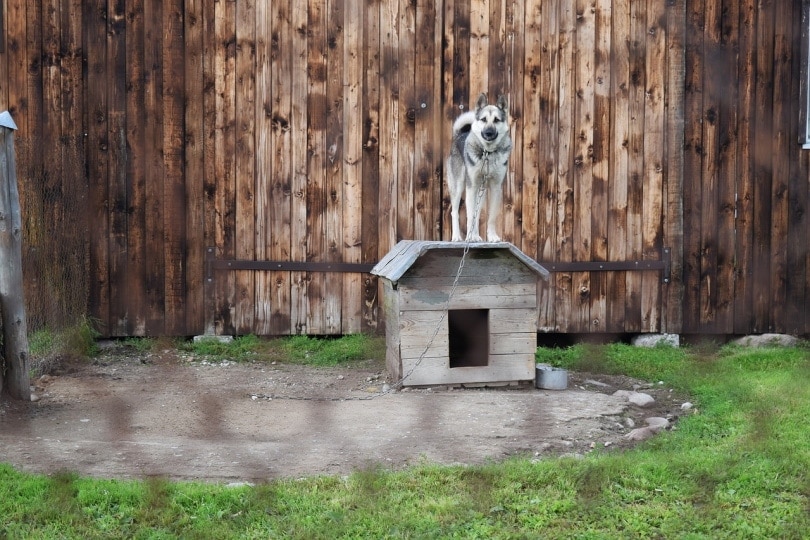
If you’re thinking about buying or building a house for your best friend, you need to decide what kind of dog house your dog needs. What’s that you say? You didn’t realize there were different kinds of dog houses?
Believe it or not, dog houses have come a long way from the basic pointy-roof models Snoopy used to sleep on. In the guide below, we’ll show you some of the most popular styles right now so you can find the perfect one for your pup.

The 15 Types of Dog Houses
1. A-Frame Dog Houses
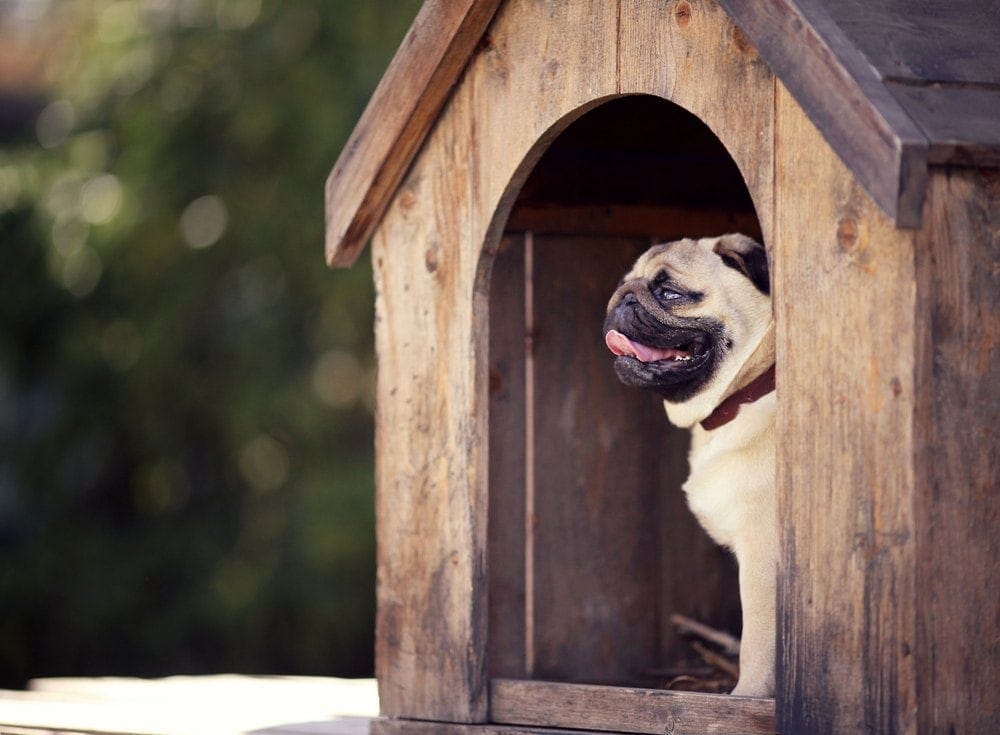
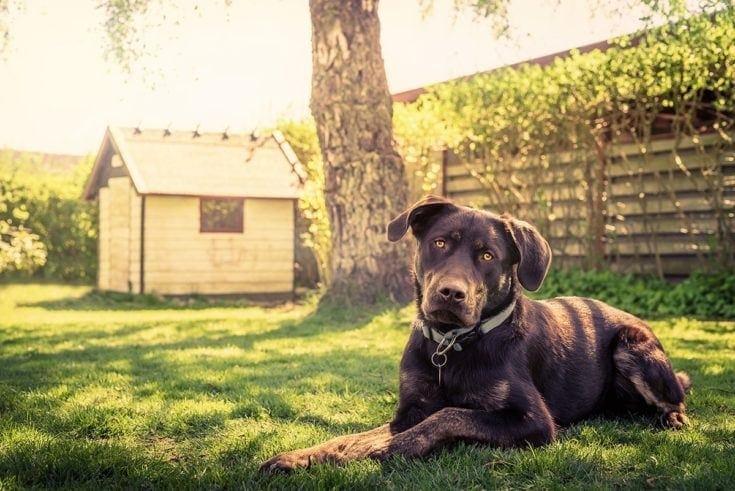
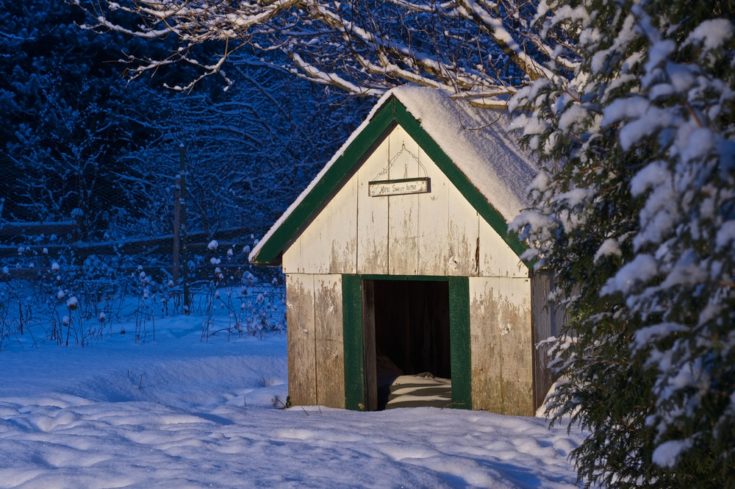
Ok, so we’ll start with the classic “Snoopy” model. These houses have a peaked roof where two panels meet over a basic rectangular box frame. They’re often made of wood, but you’ll also find them in metal and plastic.
Pros
- Classic design
- Easy to build
- Water runs off the roof
Cons
- Lets cold air in
2. Single-Panel Flat Roof Dog Houses
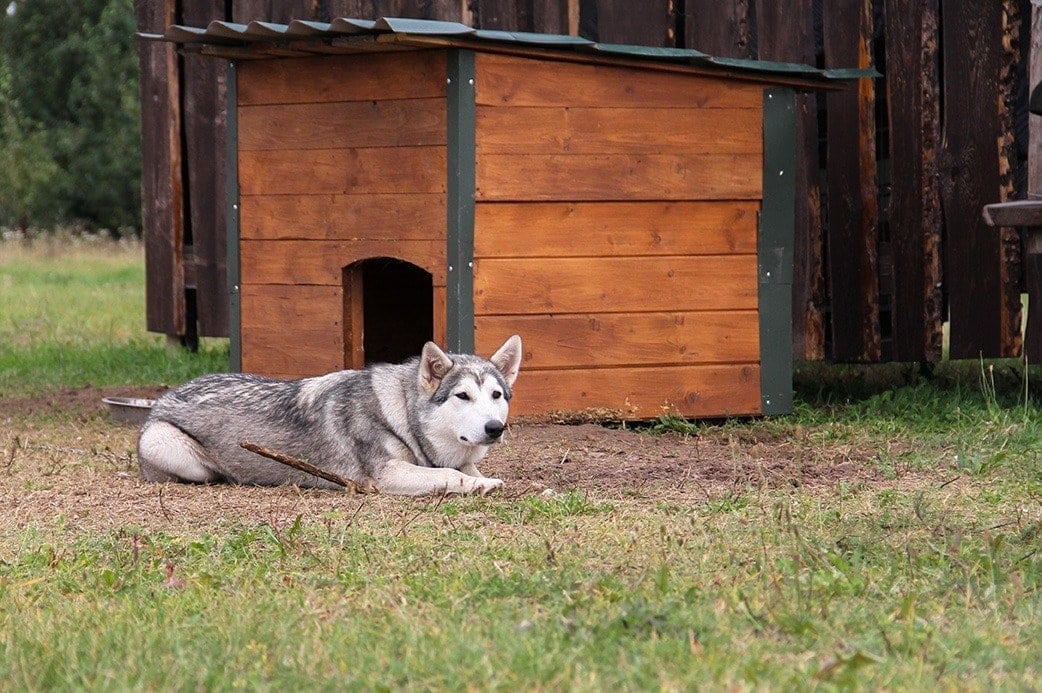
These are similar to A-frames, except they have a single panel running at a slight angle. If the roof is low enough, don’t be surprised if your dog enjoys sleeping on top of it as much as inside it.
Pros
- Extremely easy to build
- Require little in the way of materials
Cons
- Water more likely to collect on the roof
3. Loft Roof Doghouses
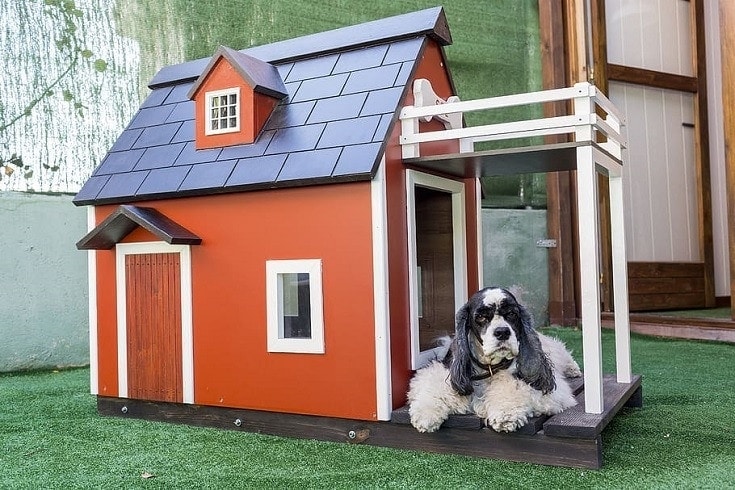
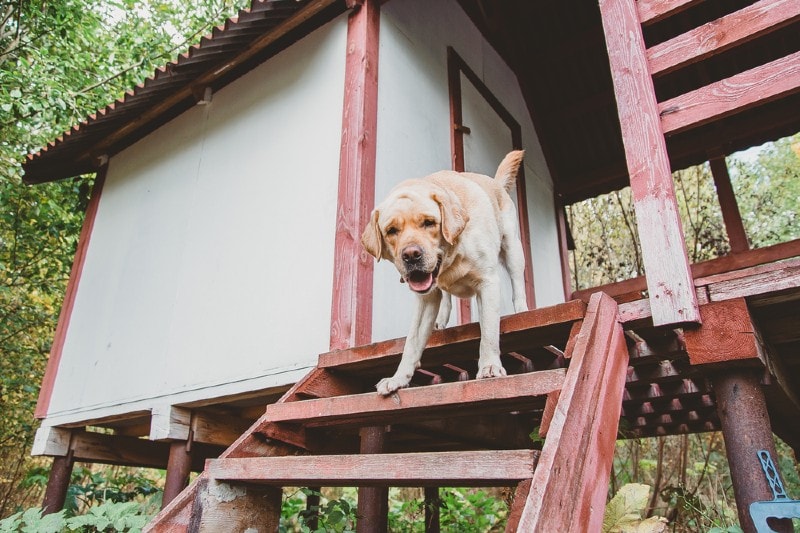
These often look like miniature barns; some higher-end models might be nicer than your house. In fact, they have separate decks or lounging areas attached, which is a great way to show your neighbors how spoiled your dog is.
Pros
- Very luxurious
- Give your dog plenty of room
Cons
- Tend to be expensive
- May be too cavernous for skittish pups
- Take up a lot of space
4. Igloo Dog House
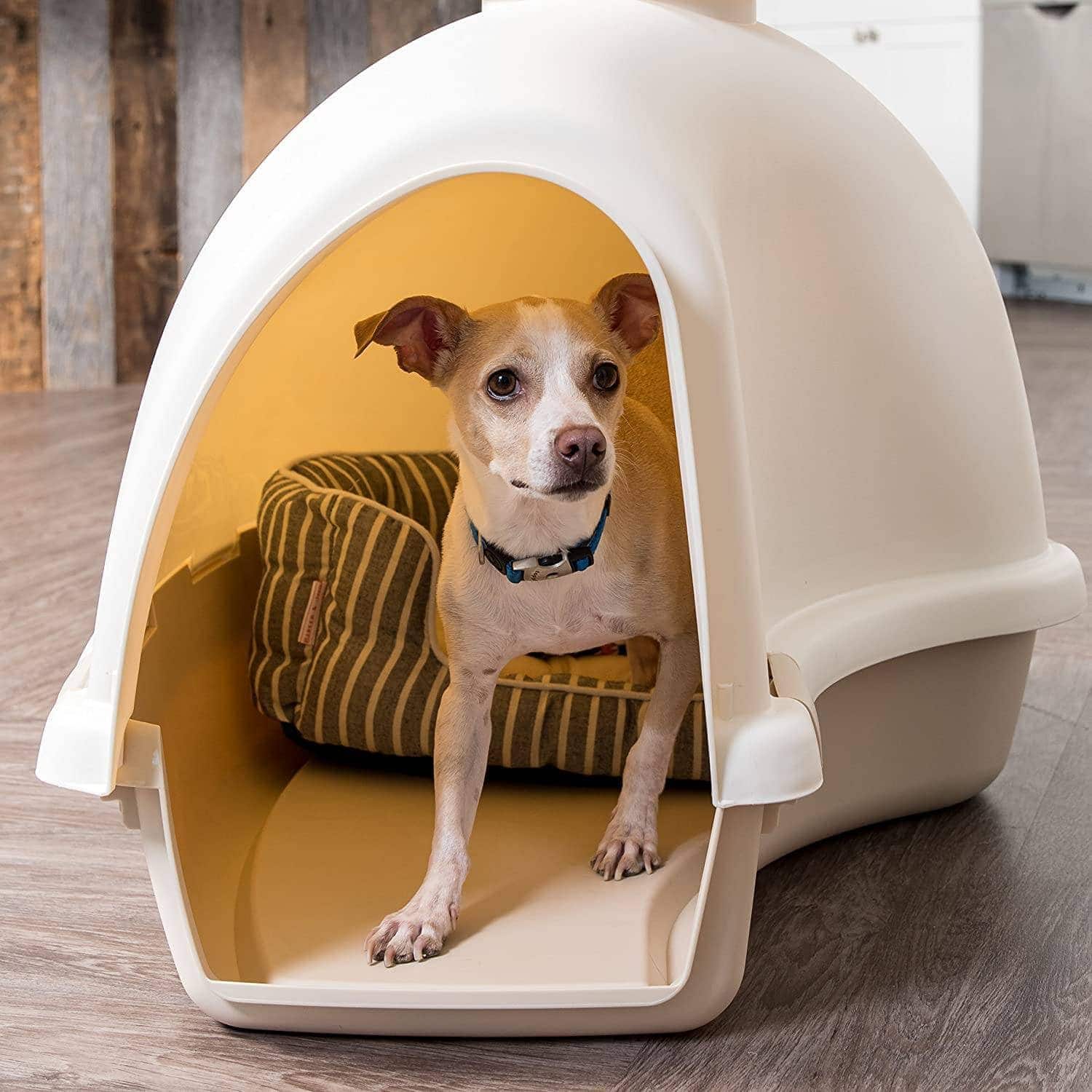
You’ll never guess why these are called “igloo” dog houses. They give your dog a separate chamber to curl up in that’s offset from the door, which keeps cold air out.
Pros
- Good for windy climates
- Often inexpensive
- Very cozy
Cons
- Difficult for old or arthritic dogs to get into
- Fairly unattractive
5. Gambrel Roof Dog Houses
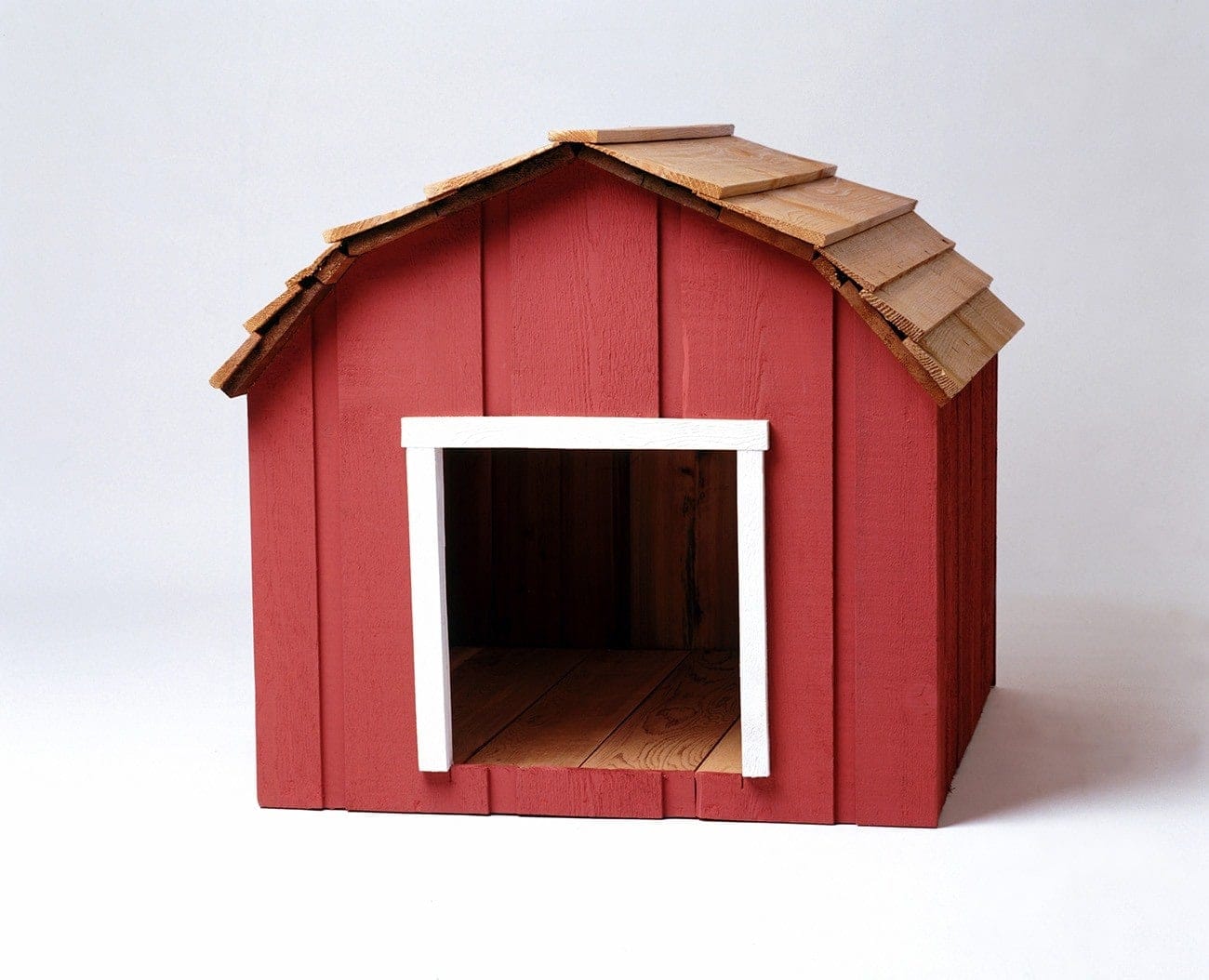
The Gambrel roof is like a curvier version of the A-frame. This makes the houses look like traditional barns, and the roofs provide lots of space inside them, which may or may not be a good thing, depending on the size of your dog.
Pros
- Classic appearance
- Good for hot climates
Cons
- Fairly complicated to build
6. Box Dog-House
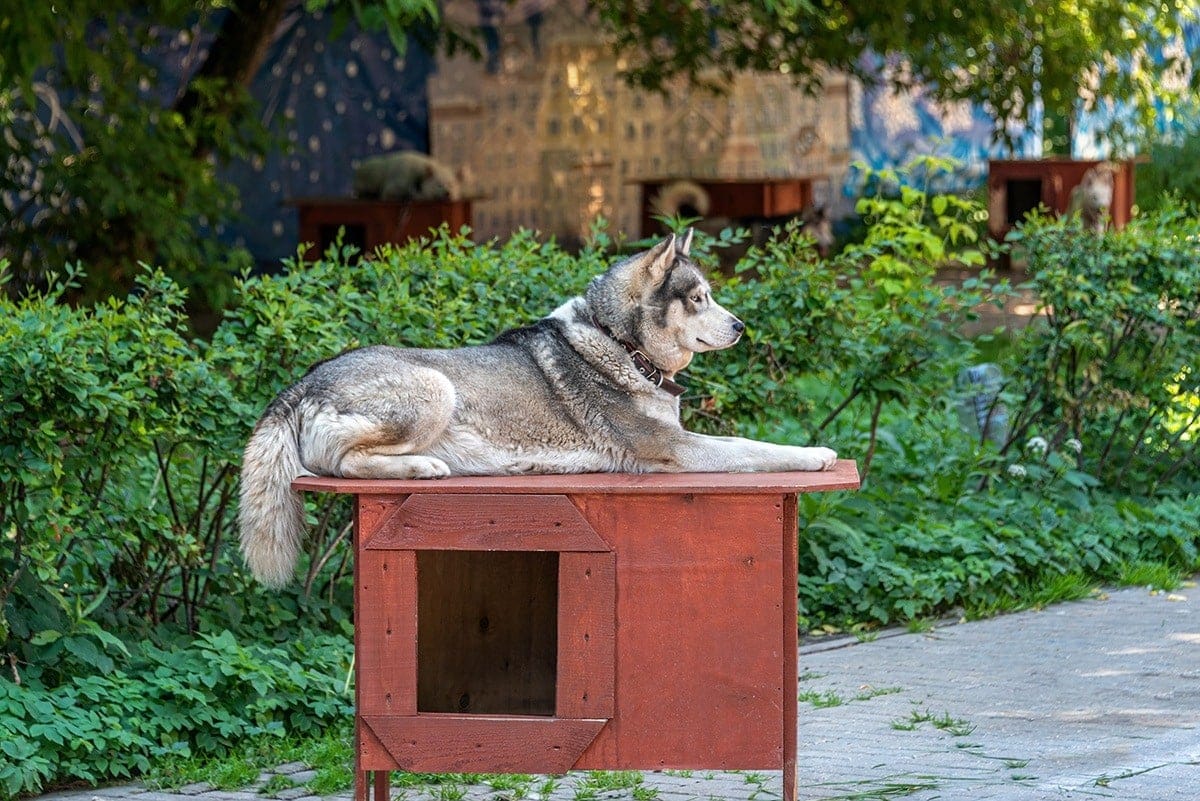
As the name suggests, these houses look like big boxes. They’re either square or rectangular, with flat roofs. Some have staircases leading to the roof to allow your dog to sleep on top or inside the house.
Pros
- Very easy to build
- Good for warm, dry climates
Cons
- Water will pool on the roof
7. Barrel Doghouses
These are the ultimate DIY houses, and they'll show the neighborhood (or at least your dog) just how resourceful you are. They’re empty barrels (usually old wooden wine barrels) lined with insulation.
Pros
- Good for DIY types
- Can emulate dog’s preferred den style
Cons
- Not terribly comfortable
8. Fiberglass Cave
If you want your dog to get back to nature, consider a fiberglass cave. They are natural-looking caves that blend into your backyard. They have a hole cut out for your dog to enter, and some have floors while others simply lay on top of the ground.
Pros
- Won’t leak or decay
- Extremely low-maintenance
Cons
- Large and ugly
9. Double Dog Houses
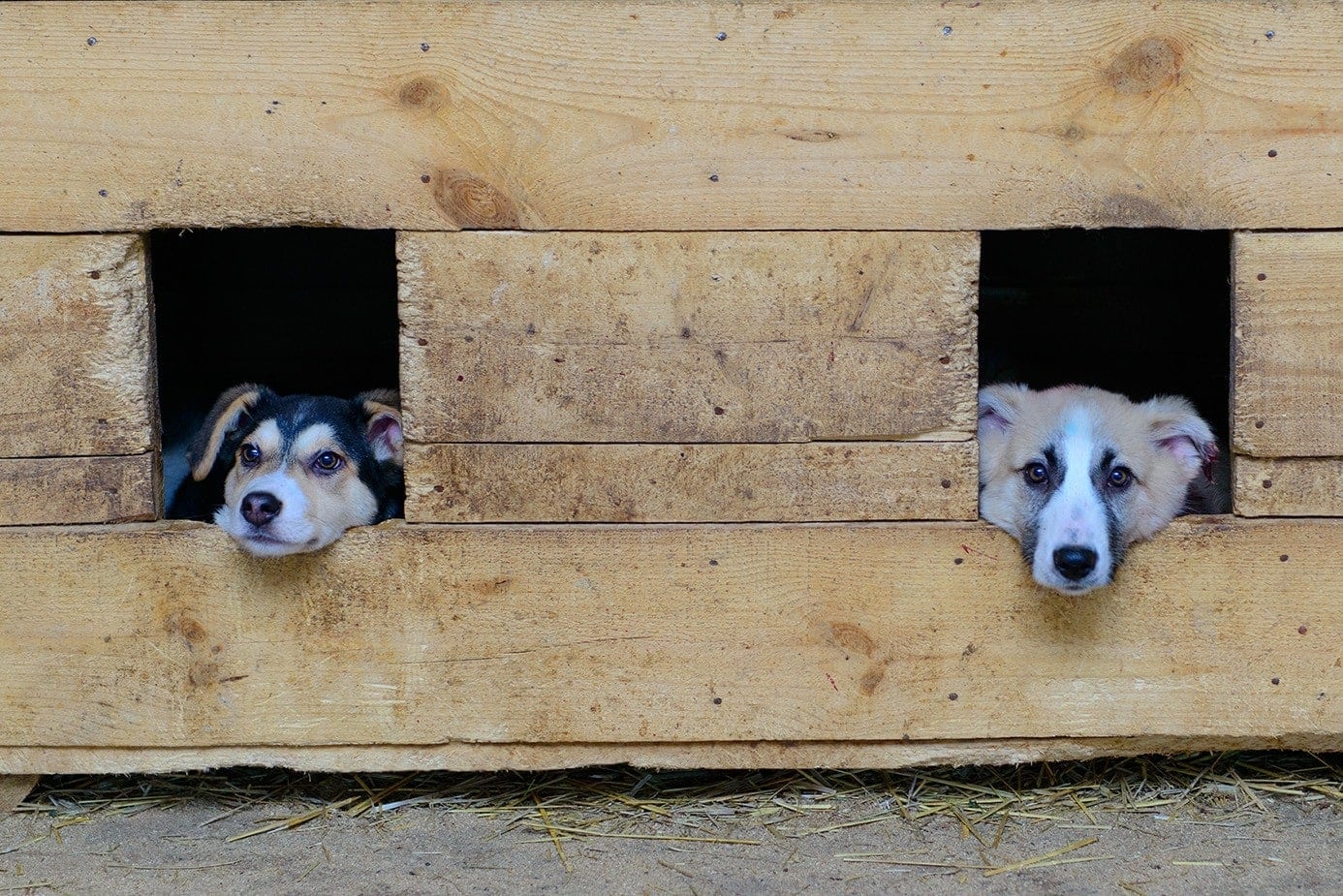
If you have two dogs and they don’t like sharing, you can get them a duplex. They are large houses with a divider down the middle, which gives each pup their own dedicated space.
Pros
- Good for multi-dog households
- Can reduce the risk of fighting over space
Cons
- Very large
- Tend to be expensive
10. Side Porch Dog House
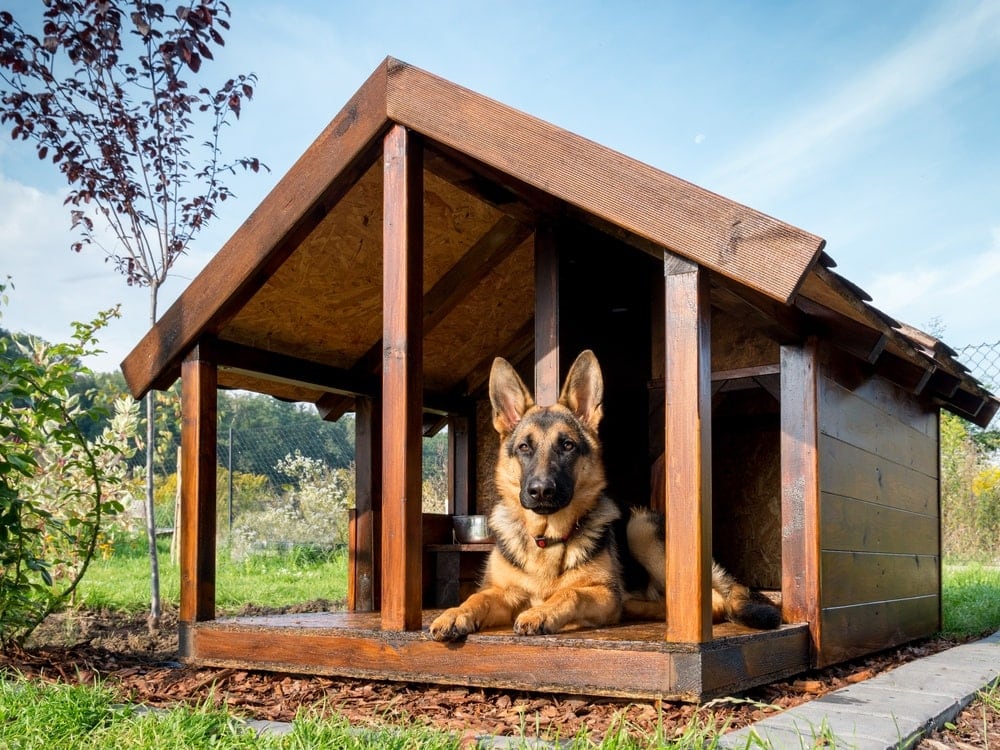
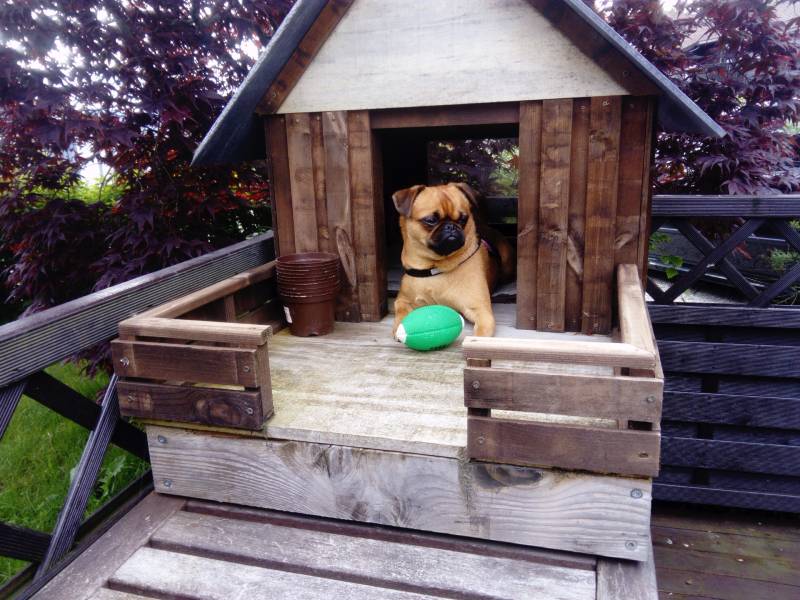
While some box-style houses have a place for your dog to lie on the roof, these have a separate flat area next to the house. This allows your pup to catch some rays or go inside and be antisocial.
Pros
- Provides dogs with sleeping options
- Porch is a good place to put food and water
Cons
- Porch may not offer many advantages on bare ground
11. Heated
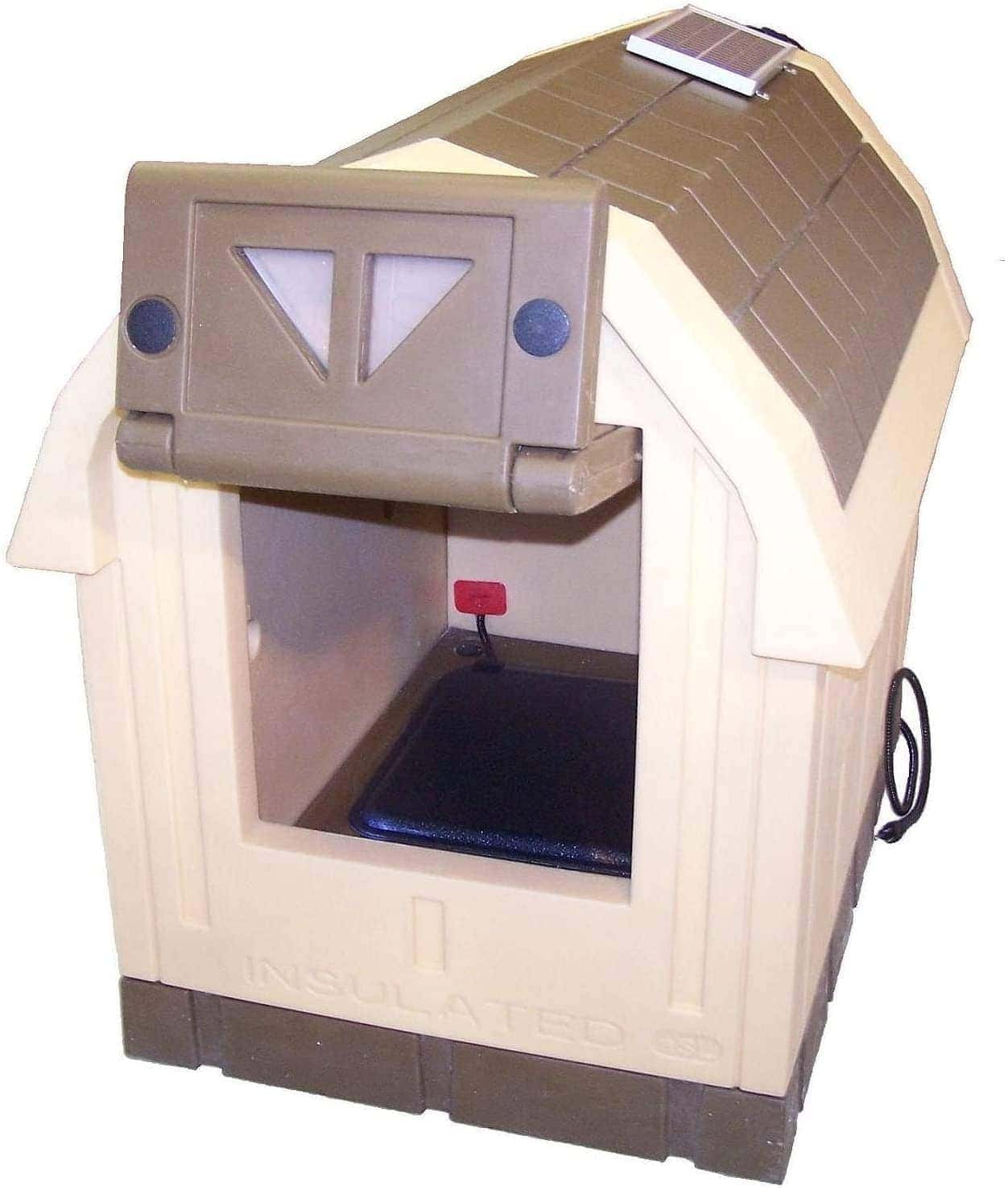
If your pup is especially lucky, they can live in a heated house. Some models have built-in floor heaters that keep the unit warm and cozy in winter; you may be tempted to climb in!
Pros
- Very comfortable
- Good for frigid climates
Cons
- Extremely expensive
- May get too hot for some dogs
12. Cooling
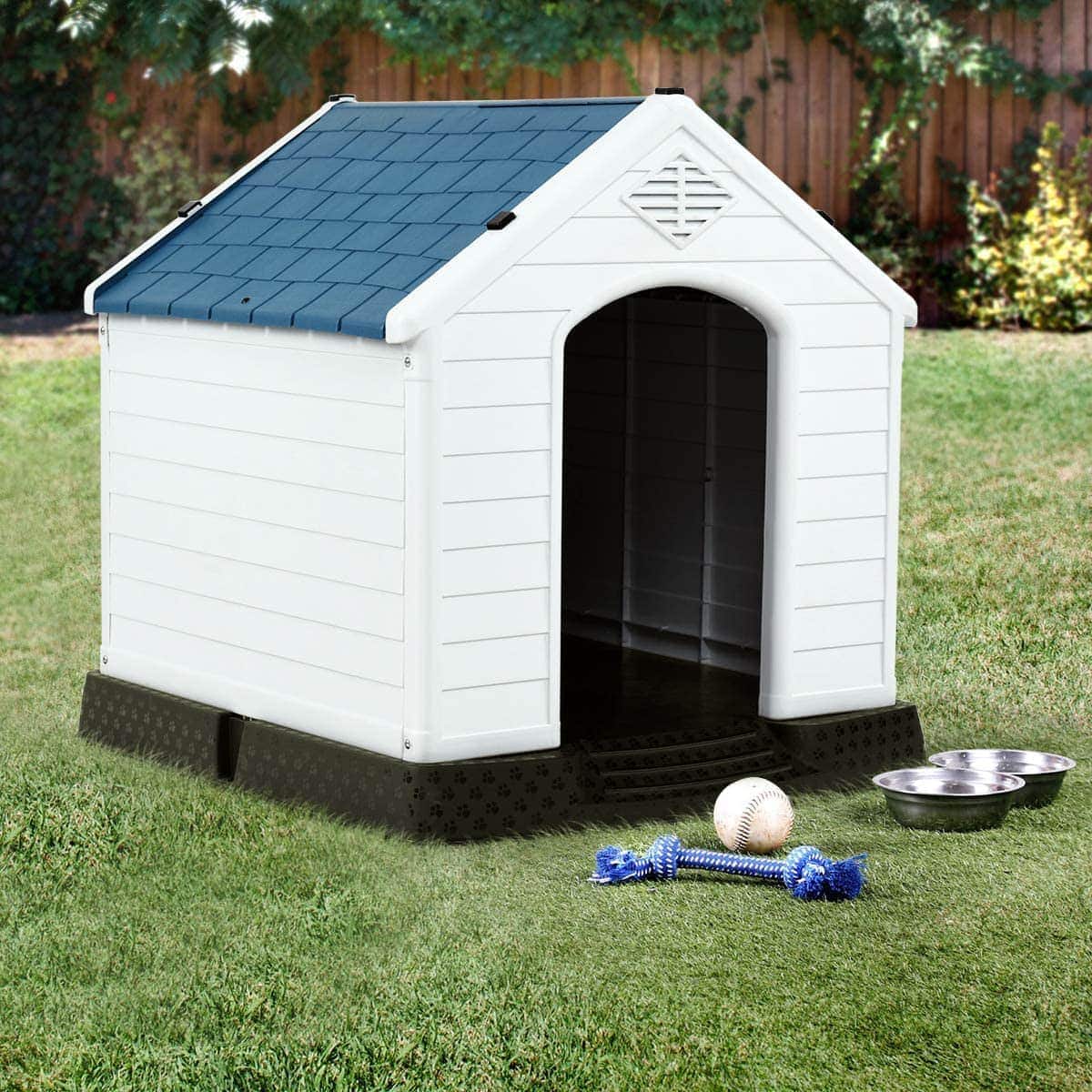
You had to know there would be a counterpart to the heated house, right? These models use a cooling mechanism like a cooling bed, exhaust fan, or air conditioner to cool your dog off during the summer. If you really want to spoil your dog, you can get one to go along with a heated house so they're covered year-round.
Pros
- Good for dogs that are prone to overheating
- Can prevent dehydration
Cons
- Very expensive
13. Soft-Sided House
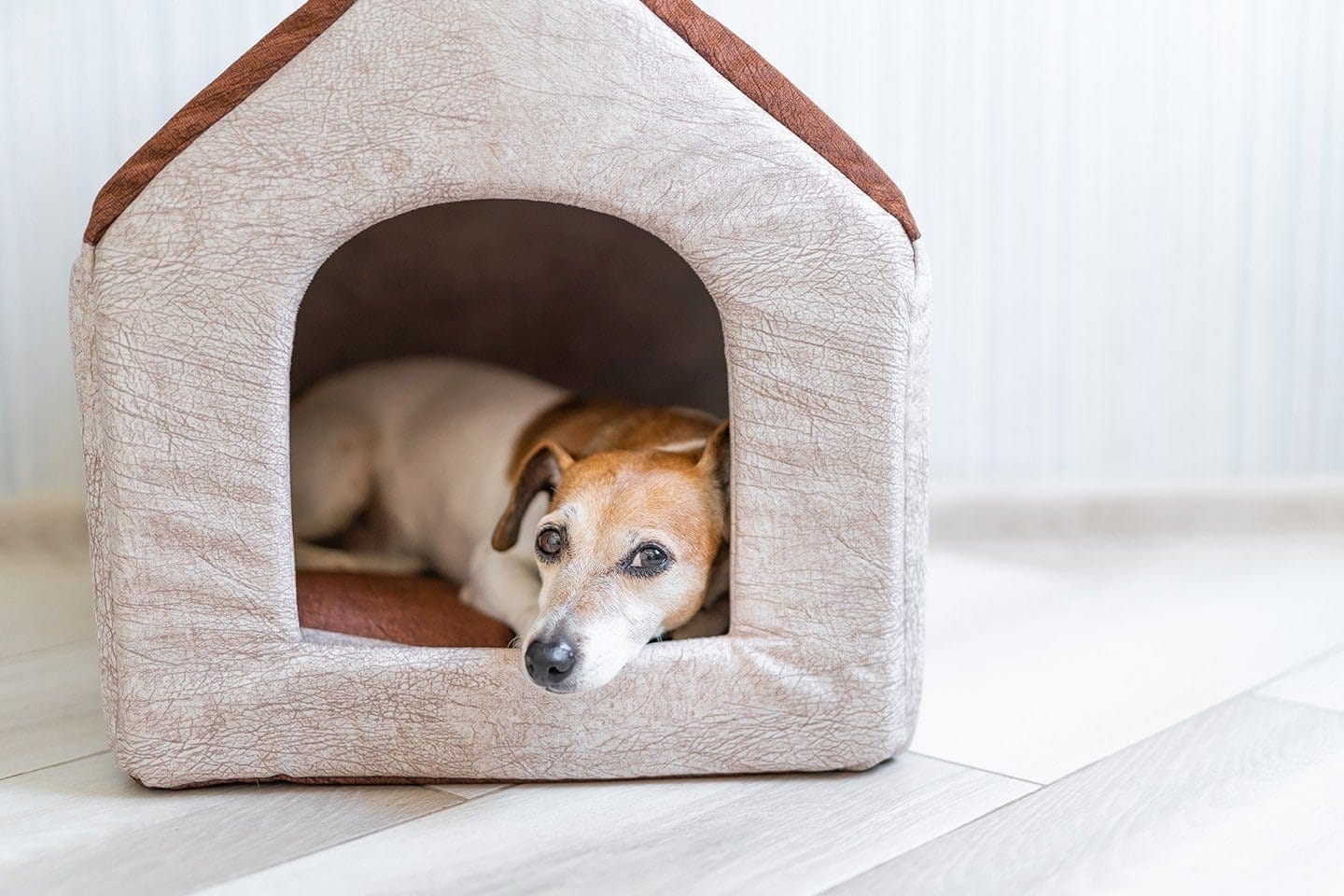
While not suited for outdoor use, these flexible houses are great for travel or simply for giving your pup a space inside your house. They come in a variety of adorable designs.
Pros
- Easily portable
Cons
- Not for outdoor use
- Too small for larger breeds
14. Tents
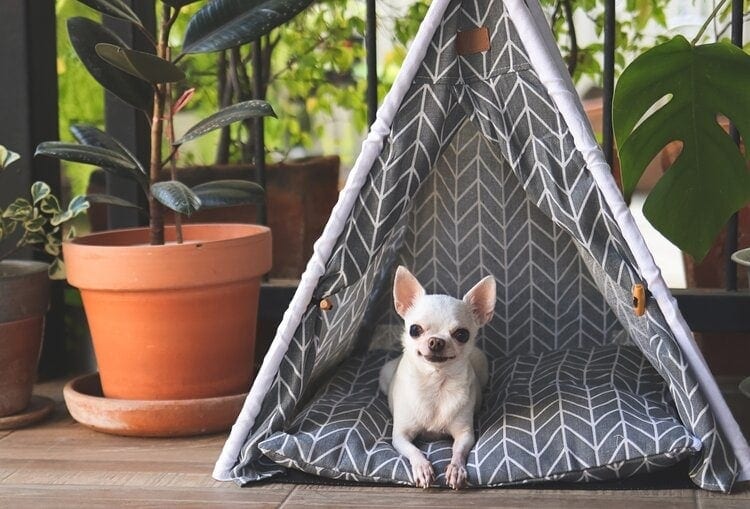
Tents make great temporary shelters if you like to take your dog camping with you or need them to spend a night or two outside. Some are pretty elaborate and can be even fancier than most permanent houses.
Pros
- Great for travel
- Easy to set up and take down
Cons
- Unsuitable for diggers or chewers
- Don’t provide much protection
15. Inflatable
An inflatable model is ideal if you’re ever stuck out in the wild and need a dog house in a hurry. Since they're made of thick plastic, they’re surprisingly durable and provide decent protection from the elements.
Pros
- Lightweight and portable
- Can just be hosed off for cleaning

Decisions, Decisions
As you’ve seen, building or buying a dog house might be the easy part; it’s deciding on one that could take forever. However, the designs we discussed are the most popular, and you're sure to find one your dog will love. Luckily, most dogs are satisfied with simple, inexpensive shelters. Then again, once a pup has enjoyed a house with air conditioning, they're likely ruined for life.
See also:
Featured Image Credit: Mimzy, Pixabay
Get Hepper In Your Inbox


Pet care tips from our vets and experts, straight to your inbox.
You may opt-out at any time. View our Privacy Policy for more information.

Nicole is a lover of animals of all sizes but is especially fascinated with the feline variety. She’s the proud mom of Baby, a Burmese, and works every day so he can relax in the sunshine or by the fire. She’s always had a cat in her home and has spent countless days with others, observing behaviors and softening up even the grouchiest of the lot. Nicole wants to share her kitty expertise with you so you and your cat can live happy, healthy, and care-free.
Join the conversation
Ask a question, share your story, or send private feedback.