Hepper is reader-supported. When you buy via links on our site, we may earn an affiliate commission at no cost to you. Learn more.
Do Cats Eat Christmas Trees? Toxicity & Safety Facts


In this article
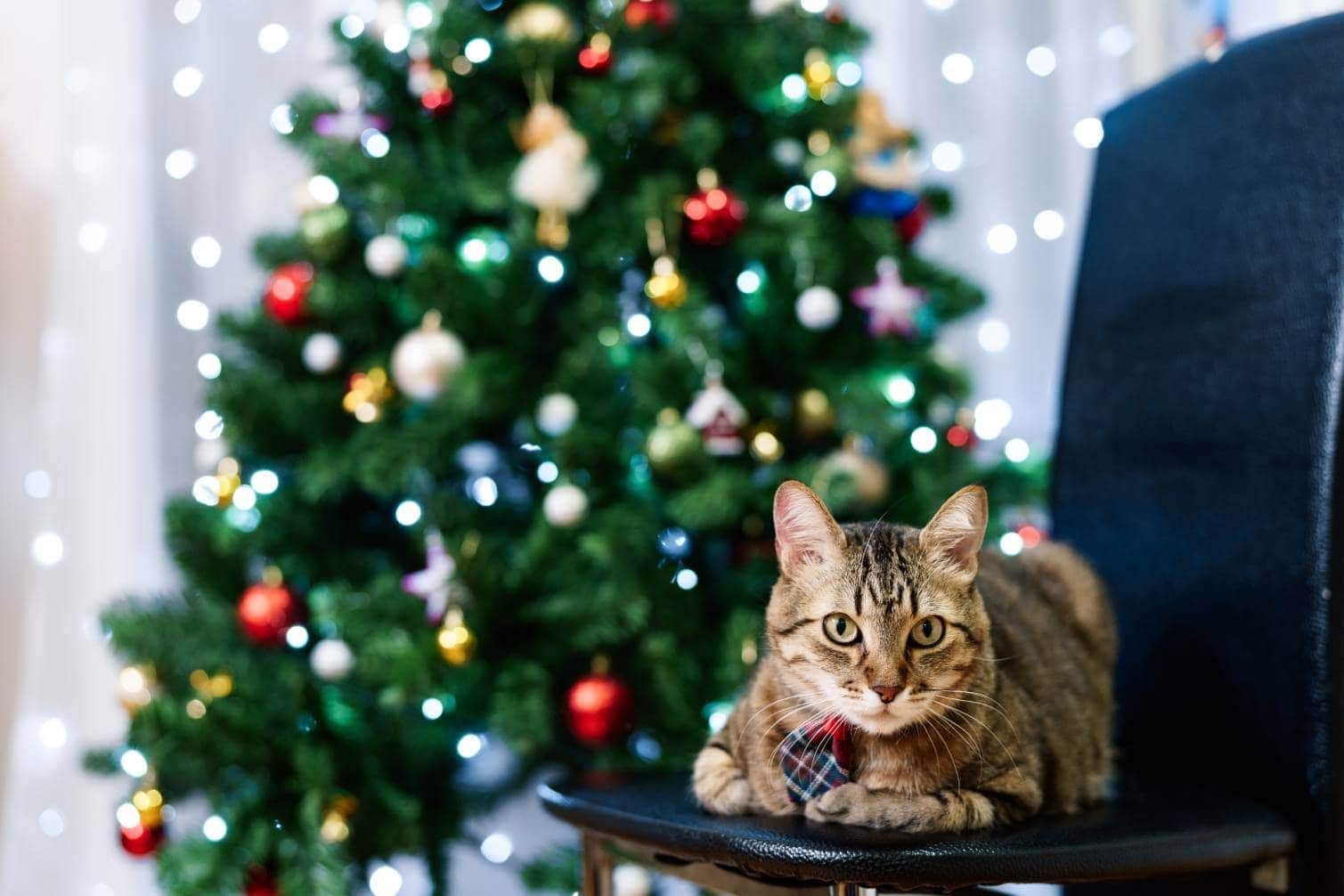
Christmas trees are beautiful additions to many homes for the holidays, but they can bring about dangers for your cat. There are several hazards to consider when setting up a tree, so you need to make sure your kitty stays safe. One of the biggest things that cat owners wonder about during the holidays is if their Christmas tree is poisonous to their cats. The good news is that simply having the tree in the house won’t hurt your cat. However, their investigation of the tree, especially when you’re not around to stop it, is what brings about the danger.
While some cats stick to destroying by climbing on and knocking over the tree, others chew and eat the tree’s needles. The needles, oils, and sap from Christmas trees can be harmful to your cat. To keep your curious feline out of harm’s way during the holiday season, here are a few things that you need to know about Christmas trees and cats.

Are Christmas Trees Poisonous to Cats?
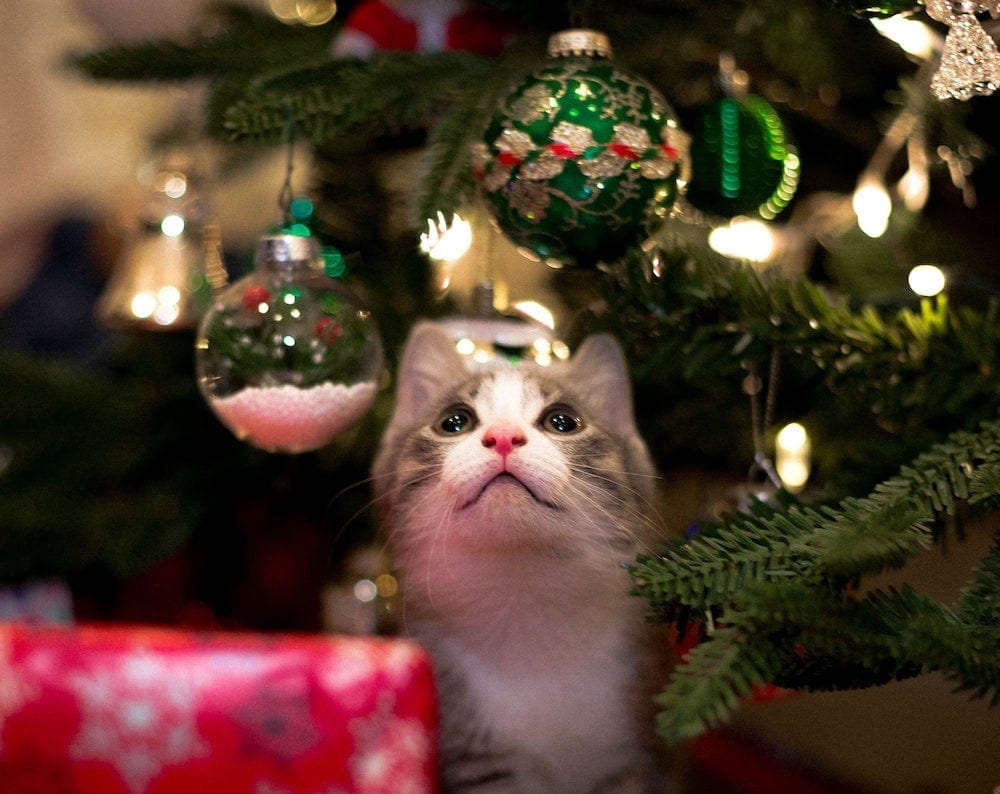
Real pine, spruce, or fir Christmas trees are popular choices for living rooms during the holidays. Many people love the look and smell of a real tree as opposed to an artificial one. When cats are around real trees, there’s no danger if the cat leaves the tree alone. When they start investigating, it could lead to trouble.
Needles
Eating the needles of the Christmas tree is dangerous to cats. The needles have sharp ends and can cause intestinal perforations, or holes in the lining of the bowels. Not only is this condition extremely painful for cats, but it can cause the contents of the intestine to leak out into the body. This condition is called peritonitis and is life-threatening.
While chewing the needles, cats can also experience mouth irritation and wounds from the pointed ends. The needles can cut the inside of your cat’s mouth and throat, sometimes getting lodged in the tissue and needing to be removed.
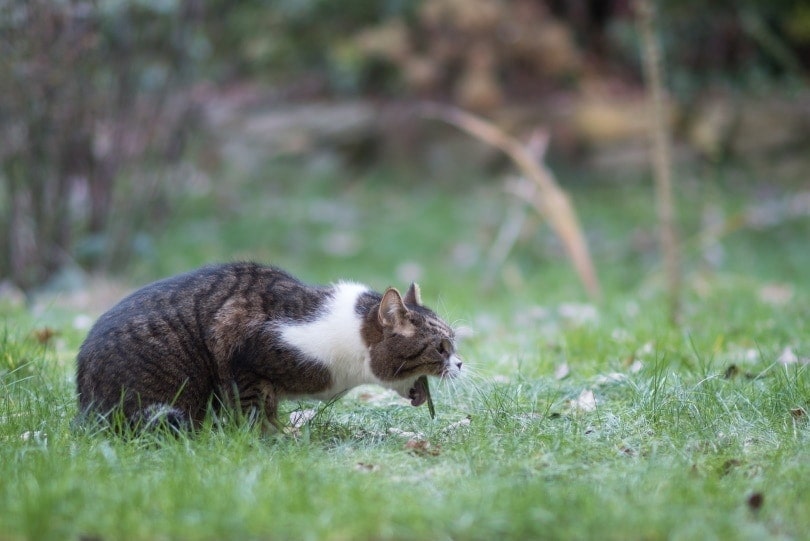
Your cat may vomit after eating Christmas tree needles. You’ll see pieces of the needles in the vomit. Once you know that your cat has eaten the needles, watch for any other signs of illness. Symptoms of a perforated bowel are lethargy, vomiting, diarrhea, fever, drooling, depression, and loss of appetite. If you notice these signs, this is a medical emergency, and your cat needs to see a veterinarian immediately.
Additionally, cats that climb the trees can get injured by the needles poking them in the eyes.
Sap
The oils and sap from trees can be harmful to cats. Oils in pine trees are toxic to cats and can lead to liver failure. Cats that consume sap can experience nausea, vomiting, weakness, and irritation of the skin.
Sap can also get stuck in your cat’s fur, which is difficult to remove. If the sap is on the bottom of your cat’s feet, loose needles can stick to their paws. This will potentially cause injuries to their paws or faces as they try to groom themselves.
Water
Real trees must be placed in water to last through the holiday season. Many live trees are sprayed with pesticides and fire retardants that then leak into that water. Cats can ingest these and any fertilizers or preservatives that you add to the water to keep the tree alive. If you have a pine tree, they may also ingest pine resin, which is toxic.
In any standing water, mold, and bacteria can grow. This presents another danger to your cat if they drink the water.
Signs of Christmas tree water poisoning are vomiting, diarrhea, loss of appetite, pale gums, muscle weakness, and changes in breathing.
Artificial Christmas Trees & Cats
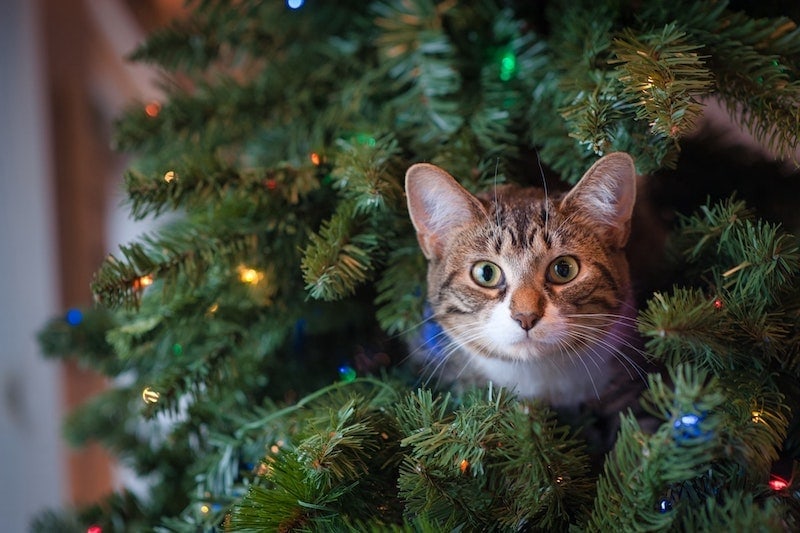
Artificial trees don’t require any water and have no oils, sap, or sharp needles. They can still be dangerous to your cat for several reasons, though. You won’t have to worry about toxicity, but injuries can still occur.
Ornaments
Cats like to bat at things that swing, and hanging ornaments are attractive pieces for your cat. The problem is that many ornaments are made of glass or thin metal. If they fall to the floor and shatter, the shards can cut your cat’s paws.
If your cat manages to get an ornament from the tree without breaking it, they may be tempted to consume parts of it. Cats should not eat glitter or glue. Small ornament pieces can also be choking hazards. Metal hooks used to hang ornaments can also cause injuries.
Tinsel
Tinsel is attractive to your cat because it’s fun to play with and shiny. Unfortunately, eating tinsel can lead to it getting trapped in the bowels, causing an obstruction. Sometimes, tinsel can perforate the intestines. If the tinsel is lodged and causes a blockage, the cat will require surgery to get it removed.

Tree Material
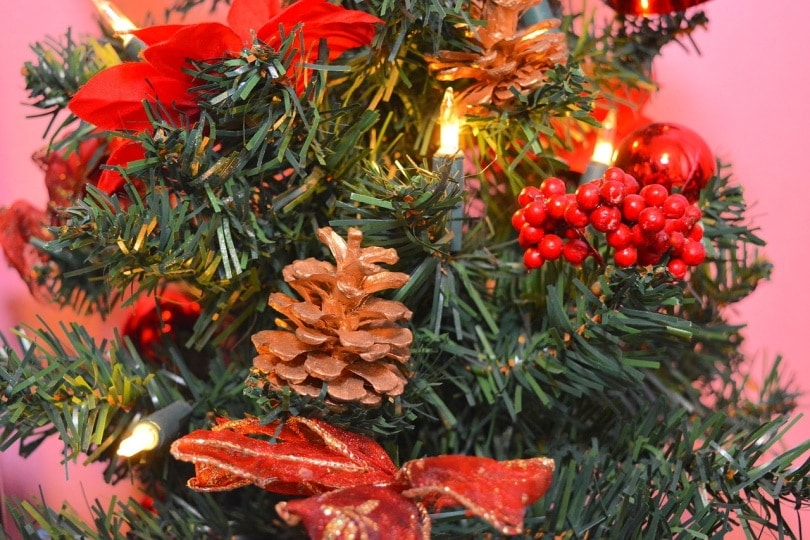
Many artificial trees are made from polyvinyl chloride plastic. While the needles are not as sharp and may not cause as much damage as real needles, they could still cause intestinal blockages if eaten.
Tipping Over
If your cat likes to climb the Christmas tree, they could cause it to tip over. Sending everything crashing to the ground not only makes a mess, but it could also injure your cat in the process.
Electric Wires
The lights on the tree are beautiful, but they need to be connected to a power source. Curious cats may chew on the wires, causing electrocution or burns.
Keeping Your Cat Safe
You can still enjoy the holidays with all the decorations that you love and keep your cat safe at the same time. By following a few simple steps, you can reduce the risk of injury to your cat. An artificial Christmas tree is safer than a real one if you have cats. However, there are a few ways to have both the live tree of your dreams and a cat that won’t mess with it.
- Spray the tree down with a hose, and let it dry before you bring it inside to set up.
- Keep the tree’s water covered at all times. You can use aluminum foil or a tree skirt for this.
- Secure the tree’s base. Make sure the tree is sturdy. You can even attach it to the wall with a wire to make sure it won't topple over.
- Don’t place your tree near any furniture that would make it easy for your cat to jump onto it. Chairs and tables are good launching pads for your cat. Your tree should be in the most difficult spot for your cat to reach.
- Use deterrent sprays to keep your cat away from the tree and wires. Lemon and orange peels placed around the base of the tree can also keep cats away.
- Use baby gates or pens around your tree to keep your cat out, especially overnight or when you’re away from home.
Decorating Your Tree
Before you start to decorate the tree, leave it up for a couple of days to let your cat get used to it. Once the novelty wears off, they shouldn’t be too interested in it once it’s decorated.
When placing your decorations on the tree, aim for the top half. Low-hanging ornaments will entice your cat to play with them. Lights can be placed high and toward the center of the tree, making it difficult for your cat to reach the cords.
Tying ornaments to the tree branches instead of using metal hooks to hang them will keep your cat safe and your decorations from breaking. Skip tinsel and garland altogether if you don't need them.
Conclusion
You can have a cat and still enjoy decorating for Christmas. By taking a few simple precautions, you can keep your cat safe from the dangers of Christmas trees and decorations.
If your cat does happen to eat some of the tree’s needles, either real or artificial, keep an eye on them for any signs of illness, and be sure to contact your vet for further instructions.
Whether you choose a real or artificial tree, you can make it safe for your festive feline.
Featured Image Credit: Nadtochiy, Shutterstock
Get Hepper In Your Inbox


Pet care tips from our vets and experts, straight to your inbox.
You may opt-out at any time. View our Privacy Policy for more information.
Nicole is a lover of animals of all sizes but is especially fascinated with the feline variety. She’s the proud mom of Baby, a Burmese, and works every day so he can relax in the sunshine or by the fire. She’s always had a cat in her home and has spent countless days with others, observing behaviors and softening up even the grouchiest of the lot. Nicole wants to share her kitty expertise with you so you and your cat can live happy, healthy, and care-free.
Join the conversation
Ask a question, share your story, or send private feedback.