Hepper blog

Search our database of over 9,984 posts with up-to-date information from our experts and veterinarians.

Hepper is reader-supported. When you buy via links on our site, we may earn an affiliate commission at no cost to you. Learn more.

Does Neutering a Dog Change Their Personality? Vet-Reviewed Facts

By Codee Chessher · Reviewed & fact-checked by Dr. Alice Athow-FrostVet Approved
Dr. Alice Athow-Frost
Reviewed & Fact-Checked byDr. Alice Athow-FrostVeterinarian
Originally from London, Alice has been a small animal vet since graduating in 2016. Prior to that, Alice studied Zoology at the University of Bristol, so she has a love of all things animal-related.View authorThe information is current and up-to-date in accordance with the latest veterinarian research. Read about our vets
Share
Ask us a question in the comments
dog wearing plastic cone

It’s a common belief that neutering a male dog will change his personality. This is not always true, but certain changes occur after neutering that do influence behavior to an extent. Neutering reduces or outright stops some undesirable behaviors, like running away to find mates, territorial marking, and testosterone-fueled dominance. As a result, a previously aggressive dog that frequently marks his territory may appear more easygoing and relaxed. Neutering used to be advised for all aggressive dogs to reduce this unwanted behavior, but more recently it has been found that success in reducing aggressive behavior by neutering depends on the cause and type of aggression being demonstrated. Aggression, dominance and confidence can be linked to testosterone, so removing the source of testosterone can influence your dog’s behavior to an extent.

If you’ve ever wondered about the benefits of neutering your dog, its side effects, or when to consider it for your dog, you’re in the right place. Join us below as we dive into all those topics so you can have a better understanding with which to make a more informed decision.

Does Neutering a Dog Have Side Effects? Risks Explained

Neutering a male dog is considered a routine medical procedure for the average healthy dog, and in most cases, there aren’t any major side effects to speak of. This is still a surgery, though, which inherently comes with some risks.  Spaying a female dog is a more involved procedure and recovery time is usually longer.  There are also more inherent risks with a female spay, but it is still considered a routine surgery. There are also certain breeds and disease processes that need to be mentioned separately.

Potential Side Effects & Risks of Dog Neutering:

  • Depressive behavior: Low-energy and sleepiness are common post-surgical signs that will resolve with time. If you think your dog is not responding normally or is more sleepy than you expected, you should contact your vet.  Sleepiness is normally a side effect of the anesthetic and should wear off within 24 hours.
  • Reduced metabolism: Dogs may appear less energetic and want to eat more food after they’ve been neutered. It is not true that neutered dogs always put on weight.  They will only put on weight if they are overfed or under-exercised; owners need to be mindful of this and not feed their dog’s increased appetite.
  • Increased risk of joint conditions: It’s unclear why, but in some larger dog breeds, spaying/neutering early in life (before 1 year of age) can increase the likelihood of developing painful joint conditions.1
  • Increased likelihood of some cancers in some breeds: Neutered male Golden Retrievers are more likely to develop bone cancer, if neutered before the age of 1, and the risks of prostate cancer are higher in neutered dogs.2

Benefits of Neutering Your Dog

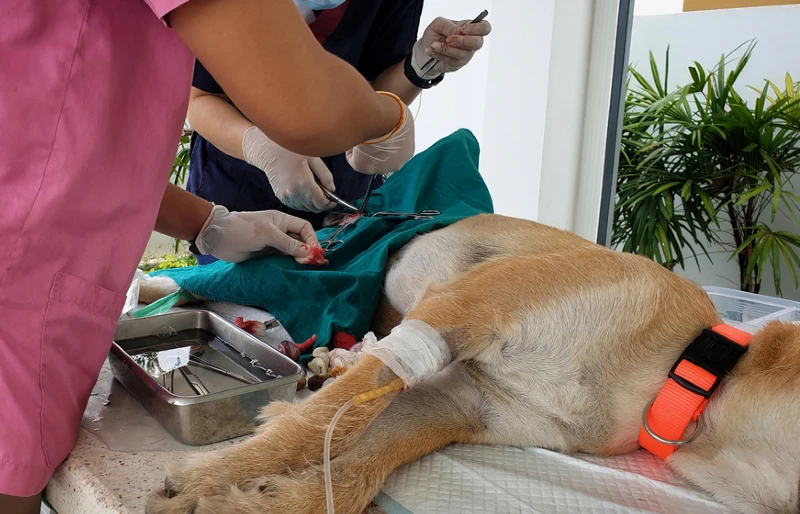
veterinarian spaying or neutering a dog
Photo Credit: RJ22, Shutterstock

One important reason to neuter a dog is to stop it from reproducing.  Neutering a dog means they lose both their ability to reproduce and their drive to reproduce. However, there are actually a few other notable health and behavioral benefits you may notice after getting your dog neutered. Let’s look at a few of those benefits so you can determine if it’s worth it for your dog.

Benefits of Neutering:

  • Decreased risk of some cancer: Desexing removes the risk of testicular cancers in male dogs and reduces the risk of benign prostatic hyperplasia (non-cancerous growth of the prostate). In female dogs, neutering removes the risk of ovarian and uterine cancers, as well as reduces the likelihood of mammary cancers.
  • Reduced aggression: Dominant male dogs will become more agreeable and less likely to fight other males or compete for a female dog’s attention. If aggression is due to nervousness, it is not recommended that male dogs are neutered until their behavior is improved through training.
  • No reproductive drive: Desexed male and female dogs will lose their urge to run away and find a mate, keeping them safe at home and much less likely to be involved in road traffic accidents or fights.

When to Desex Your Dog

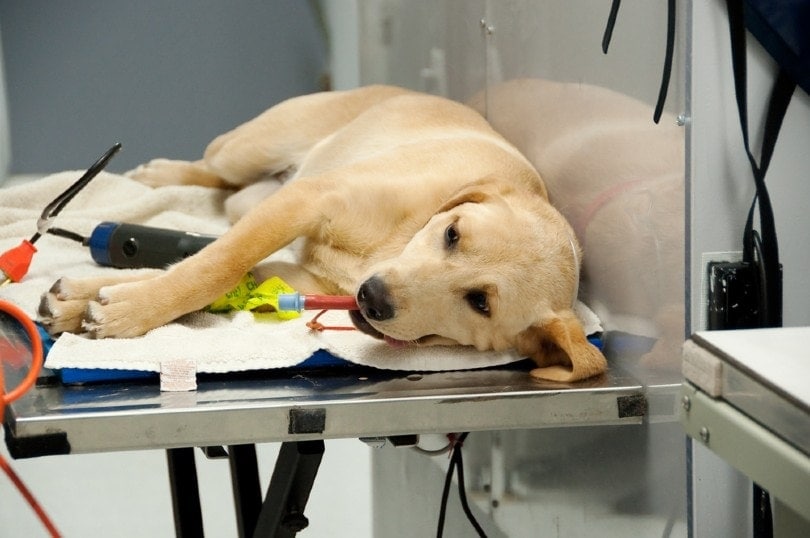
dog at vet for spaying procedure
Photo Credit: aspen rock, Shutterstock

Dogs can be spayed or neutered at 6 to 9 months, but you may be wondering whether it’s really advisable to have the procedure done at that point. The longer answer is that it depends on your dog’s breed and behavior. Smaller breeds can benefit from being spayed or neutered at a younger age. To be specific, toy breeds, such as the Yorkshire Terrier, can be desexed at 6 months with few long-term effects.  The increased cancer risks associated with neutering (mentioned above) seem to only be the case in larger breeds of dog.

Larger dogs may need more time to mature before they can safely be desexed without adverse risks to their health. We suggest waiting until 18 months before desexing large or giant dog breeds to help mitigate the risk of them developing orthopedic conditions. Simply put, their bone growth and health is impacted by the sex hormones so ideally, you want to wait until they’re fully grown to minimize the risk of complications.

Before you make the decision to have your dog neutered, we strongly recommend you do some research on your dog’s breed and discuss their potential for developing health conditions with your vet. They’ll be able to help you evaluate the risk of neutering and advise you on current research to help decide whether it’s worth it for your dog at this time.

You should only get advice from qualified vets on this subject as there is a lot of conflicting advice on the internet about it.

Conclusion

Neutering a dog can change its personality to an extent, but this is usually for the better, especially in the case of unwanted behaviors.  Some dogs are more at risk of developing serious health problems like cancer after neutering, so we urge you to talk to your vet for more personalized advice on this topic.

Sources

Featured Image Credit: Robyn-May, Shutterstock

Get Hepper In Your Inbox

Pet care tips from our vets and experts, straight to your inbox.

List

Select all that apply.

You may opt-out at any time. View our Privacy Policy for more information.

Codee Chessher
Authored by

Codee Chessher

Join the conversation

Ask a question, share your story, or send private feedback.

Rate this post
Required to post. Only our editors see your rating.
Who should see this?

A human reviews every comment before it appears. Your email is never published.

Picked to go with this article

Pros and Cons of Neutering a Male Dog (Vet-Approved Facts)

Pros and Cons of Neutering a Male Dog (Vet-Approved Facts)

You may not be sure whether fixing your male dog is the best option. Conventional thinking states that unless you are planning on breeding your dog, it’s impor…

Nicole Cosgrove
By Nicole Cosgrove ·
Can Neutered Dogs Still Mate? Vet-Verified Facts & FAQ

Can Neutered Dogs Still Mate? Vet-Verified Facts & FAQ

Have you ever wondered if neutering your pet means you'll never have to worry about their sexual behavior again? It's a common misconception. Although a castra…

Hanh Duong
By Hanh Duong ·
How Long Does It Take a Dog to Recover From Being Neutered? Vet-Reviewed Facts & Care Tips

How Long Does It Take a Dog to Recover From Being Neutered? Vet-Reviewed Facts & Care Tips

A neuter is a common surgical procedure you may be considering for your dog. But what do you need to know before your dog undergoes surgery, and how long will…

Nicole Cosgrove
By Nicole Cosgrove ·
When to Spay or Neuter a Great Dane: Dangers of Early Surgery Explained

When to Spay or Neuter a Great Dane: Dangers of Early Surgery Explained

Spaying or neutering is not only very common but highly recommended for any dogs that are not being used for breeding purposes. Having your dog surgically ster…

Lindsey Lawson
By Lindsey Lawson ·

Keep reading

More stories you might like

When To Neuter a Labradoodle? Vet-Verified Facts & FAQ

Knowing when to have your male dog neutered can be a tricky business, made even more complicated by the mélange of information floating about online. The most…

Nicole Cosgrove
By Nicole Cosgrove ·
When To Neuter a Labradoodle? Vet-Verified Facts & FAQ

How Long Does It Take to Neuter a Dog? Vet-Reviewed Facts, Pros & Cons

If you’ve just adopted a male puppy, you know the time to neuter them isn’t far off. However, you might have some questions about the process (especially if it…

Misty Layne
By Misty Layne ·
How Long Does It Take to Neuter a Dog? Vet-Reviewed Facts, Pros & Cons

Male vs Female Dogs: Main Differences (With Pictures)

Choosing a new dog that will fit into your family well is far more important than how the dog looks (though all dogs are gorgeous in their own way). You’ve pro…

Kathryn Copeland
By Kathryn Copeland ·
Male vs Female Dogs: Main Differences (With Pictures)

When to Spay or Neuter a Golden Retriever? Vet-Reviewed Practices & Tips

While spaying/neutering is one of the most common procedures for pets, it’s not always easy to know when to schedule the procedure. For example, a recent study…

Nicole Cosgrove
By Nicole Cosgrove ·
When to Spay or Neuter a Golden Retriever? Vet-Reviewed Practices & Tips

Can My Dog Eat or Drink Before Getting Spayed or Neutered? Vet-Approved Advice & FAQs

As a dog owner, unless you adopt a pet that has already been altered, spaying or neutering is a part of life. Having these procedures done is a great way to en…

Melissa Gunter
By Melissa Gunter ·
Can My Dog Eat or Drink Before Getting Spayed or Neutered? Vet-Approved Advice & FAQs

What Is the Cost of Spaying or Neutering a Dog in the UK? Updated in 2026

When you’re getting a new pet, you tend to factor in costs like insurance, food, and toys, but there are some costs you don’t realize could be an issue, until…

Kerry-Ann Kerr
By Kerry-Ann Kerr ·
What Is the Cost of Spaying or Neutering a Dog in the UK? Updated in 2026

How Far Can a Dog Smell a Female in Heat? What the Science Says

If your unneutered male dog suddenly experiences a wild personality change, it could be because he’s smelling a female in heat. But wait, you might think, ther…

Elizabeth Gray
By Elizabeth Gray ·
How Far Can a Dog Smell a Female in Heat? What the Science Says

When to Spay or Neuter a Corgi? Vet-Approved Care & Health Facts

When it comes to your Corgi, there are a lot of things you probably don’t think about as much as you should. After all, they’re your dog – they love you uncond…

Nicole Cosgrove
By Nicole Cosgrove ·
When to Spay or Neuter a Corgi? Vet-Approved Care & Health Facts