Hepper blog

Search our database of over 9,984 posts with up-to-date information from our experts and veterinarians.

Hepper is reader-supported. When you buy via links on our site, we may earn an affiliate commission at no cost to you. Learn more.

8 Common Dog Sleeping Positions & What They Mean

By Grant Piper
Share
Ask us a question in the comments
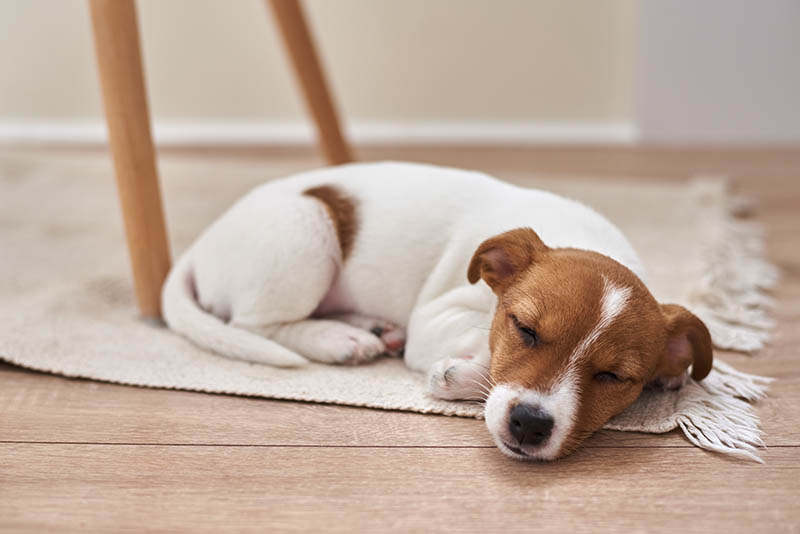
jack russell terrier puppy sleeping on the rag

Dogs sleep an awful lot. Some dogs can sleep as much as 15 to 20 hours per day. Puppies and senior dogs tend to sleep more than adolescent and adult dogs. All of this sleep is done in a variety of sleep positions. Dogs have several natural and learned sleeping positions. Each sleeping position means something a little different, and dogs will prefer different sleeping positions based on their personality, experience, environment, and preferences. Here are the eight most common dog sleeping positions and what they mean. Your dog likely partakes in one or more of these positions regularly.

The 8 Common Dog Sleeping Positions

1. The Side Sleeper
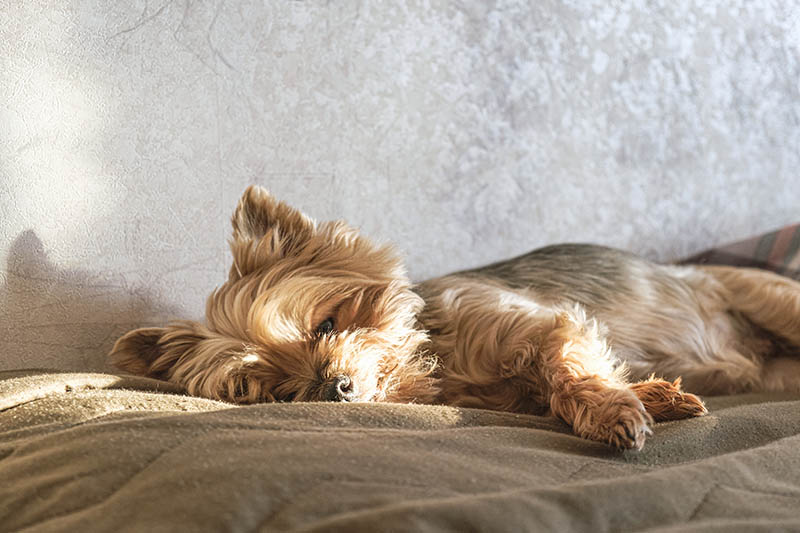
old yorkshire terrier dog sleeping on the side in the sofa
Image By: Galina Photo, Shutterstock

Side sleepers lay on their sides, hence the name. A side sleeper will lay down on their side with their legs sticking outward from the body. The belly is exposed. Legs can be rigid or relaxed. Side sleepers can take this position on the floor, in a dog bed, or a human bed.

What It Means

Side sleeping is a sign of relaxation and portrays a sense of safety. Any sleeping position that exposes the belly tells you that a dog feels safe and secure. The belly is a vulnerable area and is one that predators target in the wild. By displaying their belly, your dog is letting you know that they feel safe in your home. Side sleeping can lead to deep REM sleep, which can lead to twitching paws, dreamy yips, and a moving nose. Side sleeping is one of the most common sleep positions used by domesticated dogs.


2. Lion’s Pose

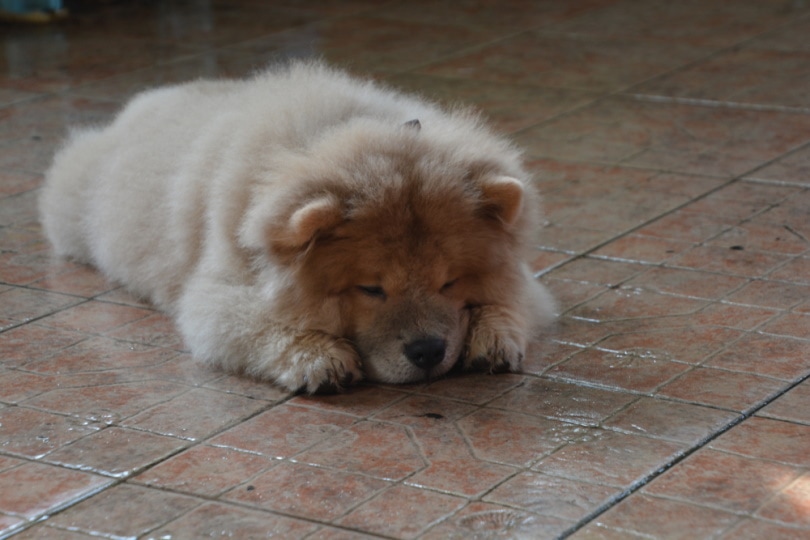
brown chow chow dog sleeping on the floor
Photo Credit: Pim-upsorn Aunskul, Shutterstock

The lion’s pose is one in which a dog falls asleep lying on the ground facing forward. The dog’s paws are out in front of them, and they often lower their head onto their paws. Dogs sleeping in lion’s pose are often pointed at something such as the door or a person, like a child or their owner. The lion’s pose is straight, with the dog’s nose aligned with their tail.

What It Means

The lion’s pose is an alert sleeping position. Dogs that fall asleep in lion’s pose are usually looking out for danger or are waiting for something to happen or for someone to come home. Dogs in lion’s pose can quickly raise their head, and their ears are usually pointed to the areas where they are interested. Dogs can also quickly get to their feet from lion’s pose. A dog dozing in this position can quickly leap to their feet and be ready for action at a moment’s notice. Dogs that frequently sleep in lion’s pose are usually suffering from a sort of chronic or apparent anxiety. You might need to address the cause of this anxiety if your dog sleeps in lion’s pose day after day.


3. The Doughnut

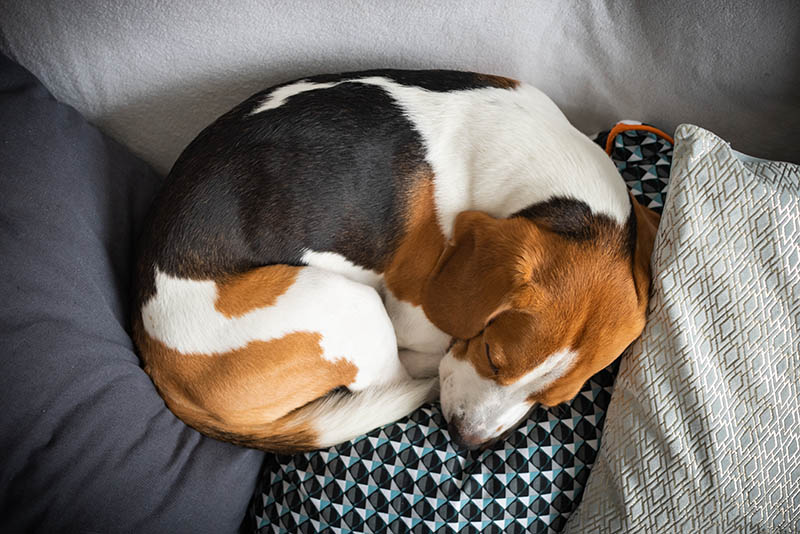
beagle sleeping in doughnut position
Photo Credit: Przemek Iciak, Shutterstock

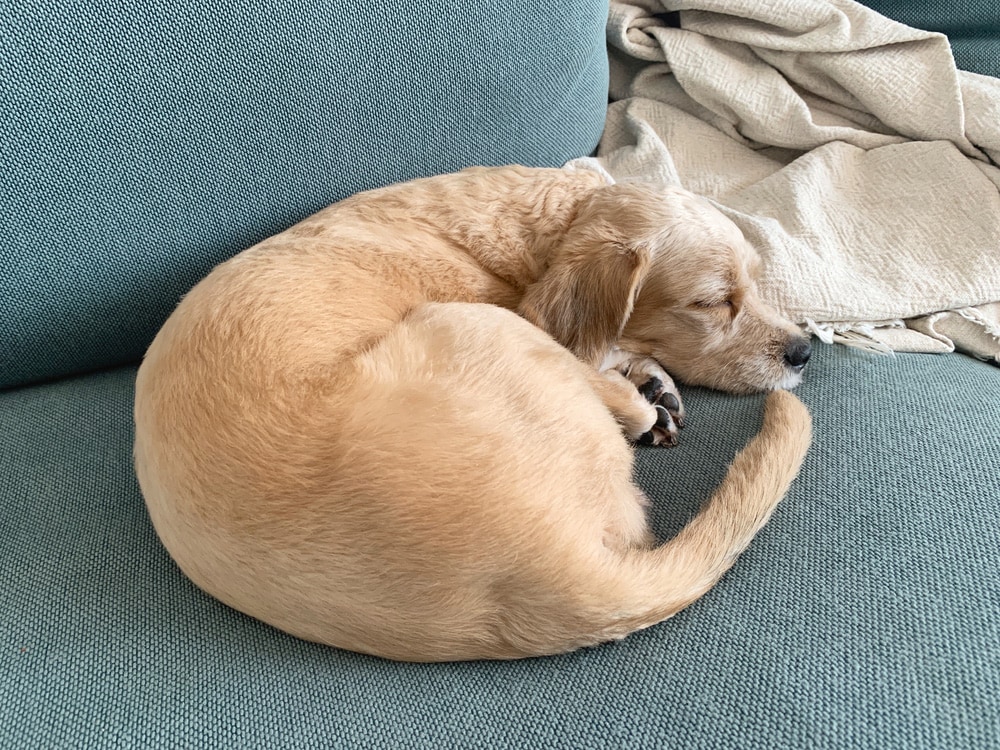
A dog will often curl up into a small ball. The legs and paws are tucked inward toward the belly, and the outer spine is wrapped around the whole body. The belly is covered, and the head often lies on the back legs near the tail. The doughnut is also called the ball or the curled sleep position.

What It Means

Dogs that sleep regularly in the curled doughnut position are usually reserved. They might be skittish around strangers or uncomfortable in their surroundings. The doughnut is one of the sleeping positions used by dogs in the wild to keep themselves warm and protect their soft underbellies. Dogs can sleep in the doughnut in their dog bed, in your bed, or curled up on the couch. The doughnut is a very primal and safe sleeping position used by many dogs.


4. Exposed Belly

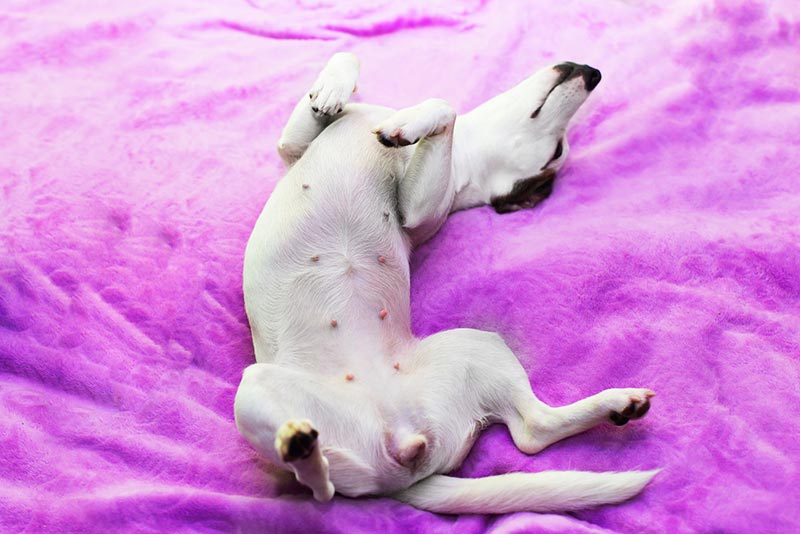
dog sleeping belly up
Photo Credit: vilma3000, Shutterstock

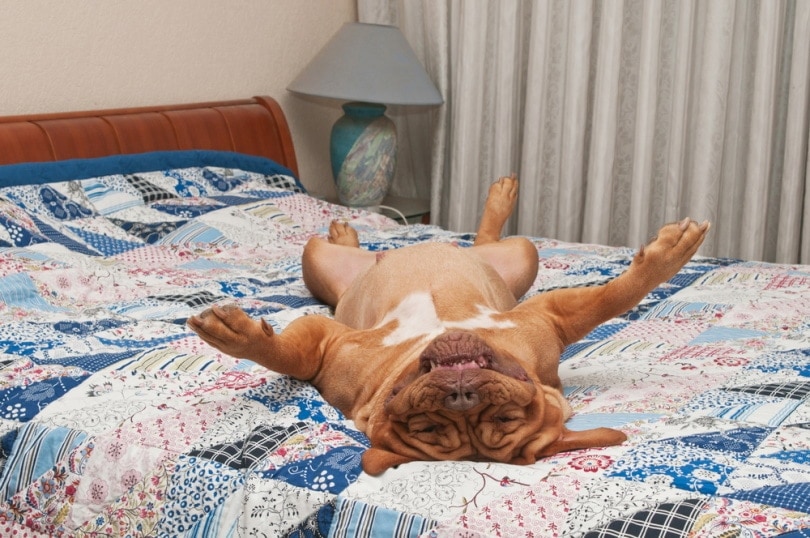
Dogs will sleep on their backs with their legs sticking in the air with their belly completely exposed. Often, dogs will take this position on cool surfaces in order to try and bleed heat.

What It Means

Dogs that sleep with their bellies exposed are extremely trusting. Any dog that will sleep on their back with their bellies exposed feels completely secure in their surroundings. That means that the dog is completely at ease with its immediate environment and trusts all of the people in the immediate vicinity. This is not a natural sleeping position for most dogs. Dogs in the wild would never sleep in this position.

Some dogs will take this position when they are hot, as exposing the paws and belly to open air will help let off heat. Just like a human’s hands and head give off heat (which is why we wear hats and gloves when it is cold out), dogs’ bellies and paws let off heat. When a dog is hot, this position will help vent excessive heat into the air instead of curling up and retaining heat toward the core.


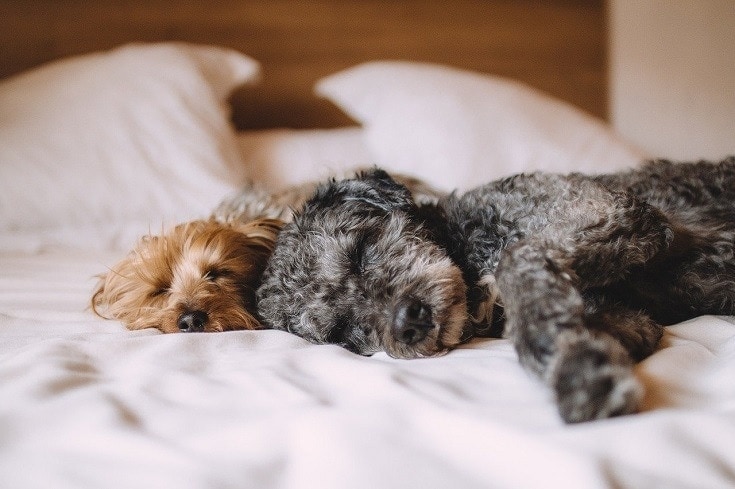
5. The Contact Sleeper

Two dogs sleeping
Image Credit: Pexels, Pixabay

Contact sleepers like to fall asleep with part of their body touching their owner or another dog. Contact sleepers can pile in and sleep in a giant dog pile, or they can simply rest their paws on your lap as they’re settling in. Contact sleepers like to sleep with someone or another dog in order to feel cozy and secure. These dogs are the most likely to make it a point to force their way into a human bed.

What It Means

Contact sleepers are usually cuddly dogs that love people. These dogs enjoy the company of others and are usually very sweet and very loving. Contact sleepers are often needy and like to stay close to their companions. Some people call contact sleepers “Velcro dogs” since they follow their people everywhere, even into places like the bed and the bathroom.


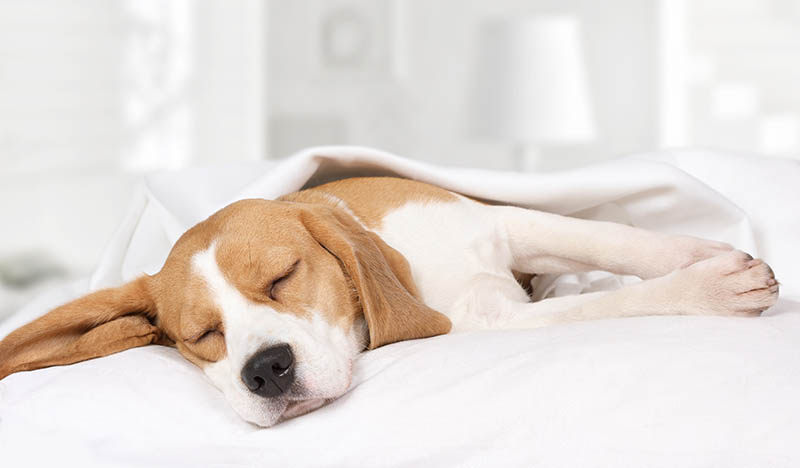
6. The Burrower

beagle dog sleeping in the bed covered with blanket
Image Credit: Kuznetsov Alexey, Shutterstock

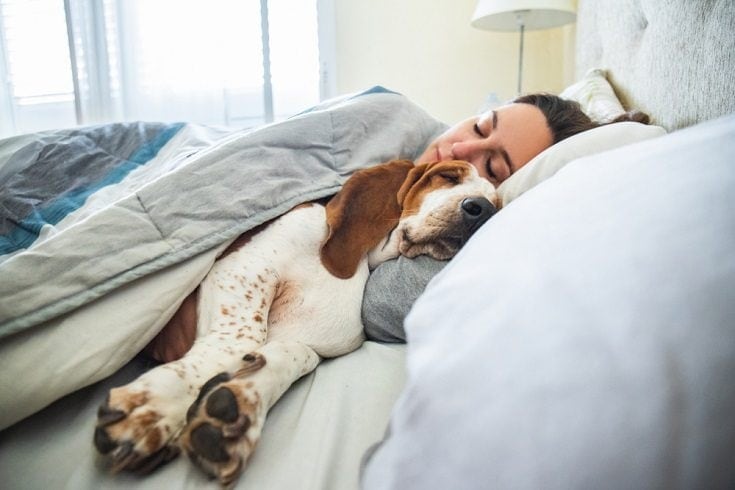
Burrowing dogs like to sleep covered by a variety of things, including blankets, pillows, or toys. Burrowers will pull blankets over themselves, nest in blankets or pillows, and crawl underneath soft things to sleep. These dogs can often be found in a bed, either your own bed or in a cozy doggy bed, bedded down for the night in comfort.

What It Means

Burrowers are often sweet and loving but are often needy. Burrowers are the kinds of dogs that will follow their owners around everywhere and wait for them at the door before they get home. These dogs like feeling the comfort and security given by blankets and pillows. They also often like to be close to their people. Burrowing is a type of activity used to calm dogs down. Dogs that do this are often looking for a calm, quiet place to sleep where they kind of hide from their anxieties.


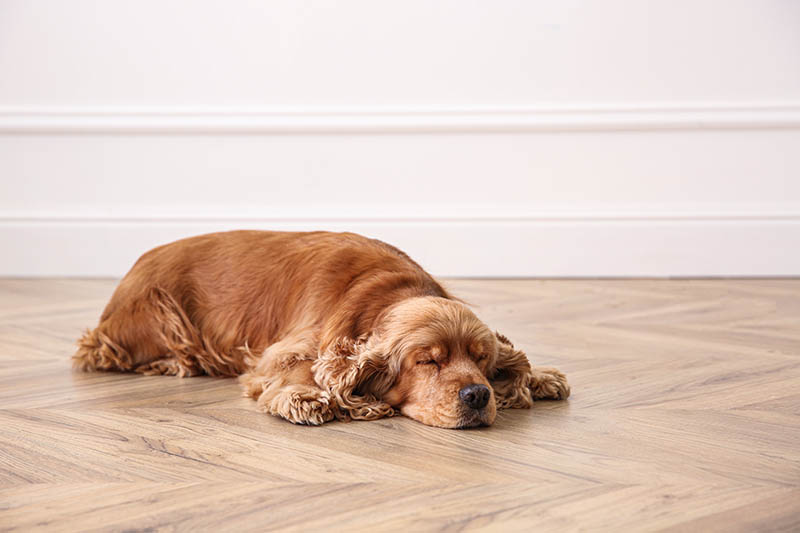
7. Superman Pose

cocker spaniel dog sleeping on the floor in superman position
Image Credit: New Africa, Shutterstock

Some dogs lie flat with their back legs splayed out. The front paws are either put in front of the dog or are tucked under the head. Superman pose is similar to lion’s pose, but this pose is more relaxed. The back legs might be bowed and look like frog legs rather than be completely straight. Stout dogs usually like to sleep in this position.

What It Means

Superman pose is a relaxed sleeping position exhibited by dogs like French Bulldogs and Boston Terriers. This is a playful sleeping position. Dogs will lie down like this after taking a break from playing fetch or tug. Dogs lying in Superman pose will also be ready to leap back up and resume play. Dogs that live in multi-dog households might participate in this sleeping position more than dogs that do not have friends nearby.


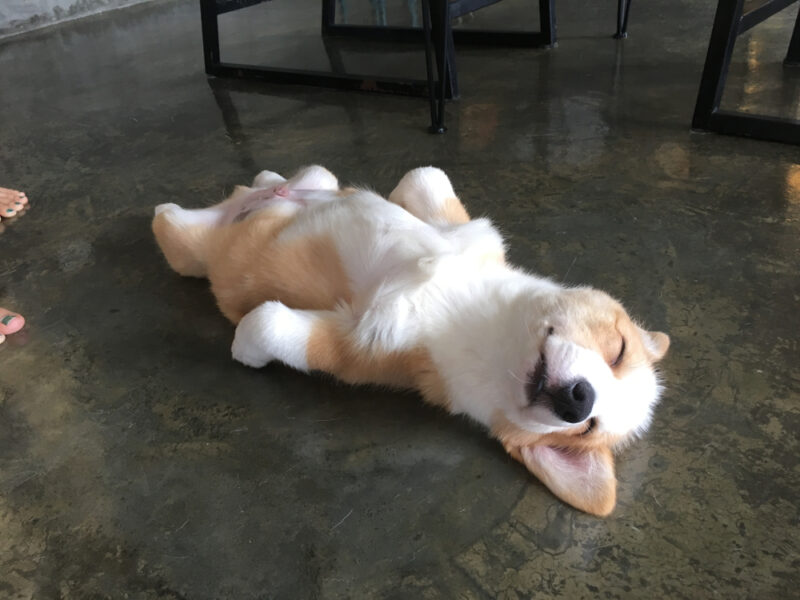
8. The Cold Surface Sleeper

Happy Sleep puppy corgi dog
Image Credit: CWR, Shutterstock

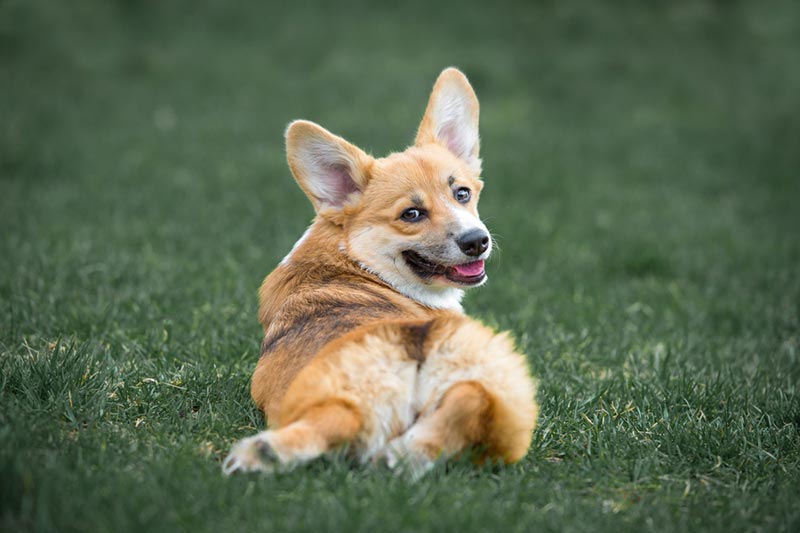
The dog lies flat out on a cold surface. Cold surfaces include hardwood floors or tiles. Common locations include cool, dark bathrooms, kitchen floors, and open wood floors. Dogs might lie under an air conditioning vent or in front of a fan.

What It Means

Cold surface sleepers are dogs that are hot or uncomfortable. This is a common sleeping position in the summer when the temperatures rise. It can also be common to see overweight dogs, shaggy dogs, and furry dogs take this position. Cold weather dogs that live in warm climates will often look for cool places to sleep since they are used to cold temperatures and climates. Old dogs might also sleep like this due to the fact that older dogs cannot regulate temperature as well as younger dogs.

You should not be too concerned if your dog is trying to keep cool when sleeping, especially if it is hot outside or if the dog is not exhibiting any other concerning or changed behaviors. Just like people, some dogs like to sleep cool, and other dogs like to sleep hot.

Conclusion

Most dogs will have one or two preferred sleeping positions. Dogs sleep a lot, so it is not uncommon to see your dog partake in a number of different sleeping positions over the days and weeks of the year. Sometimes, you can notice a change in your dog’s disposition or comfort level by observing their sleep patterns. None of these sleep positions are concerning, but you can learn a lot about your dog’s personality and mood by watching how they settle down for the night. These are eight of the most common dog sleeping positions, but some dogs are weirdos and will sleep in funky positions that they invent all on their own.

Sources

Featured Image Credit: Lazy_Bear, Shutterstock

Get Hepper In Your Inbox

Pet care tips from our vets and experts, straight to your inbox.

List

Select all that apply.

You may opt-out at any time. View our Privacy Policy for more information.

Grant Piper
Authored by

Grant Piper

Join the conversation

Ask a question, share your story, or send private feedback.
Rate this post
Required to post. Only our editors see your rating.
Who should see this?

A human reviews every comment before it appears. Your email is never published.

Picked to go with this article

Why Do Dogs Sleep on Their Backs? 4 Vet-Verified Reasons & Alternative Positions

Why Do Dogs Sleep on Their Backs? 4 Vet-Verified Reasons & Alternative Positions

It’s no secret that dogs are one of the sweetest beings on earth. Many of us turn to them for entertainment and rely on their company to ease loneliness. They…

Nicole Cosgrove
By Nicole Cosgrove ·
17 Typical Cat Sleeping Positions Explained (With Pictures & Infographics)

17 Typical Cat Sleeping Positions Explained (With Pictures & Infographics)

Cats make our homes fun and they are intriguing to watch, especially when they are sleeping. They can sleep for 18 hours a day or more, depending on the breed…

Nicole Cosgrove
By Nicole Cosgrove ·
Why Do Dogs Curl Up? 6 Common Reasons

Why Do Dogs Curl Up? 6 Common Reasons

Dogs love their sleeping time. After all, it’s hard work to fetch, chase squirrels, and roughhouse all day long. That explains why they sleep for up to 12 hour…

Chris Dinesen Rogers
By Chris Dinesen Rogers ·
Why Does My Dog Sleep So Much? 10 Vet-Reviewed Reasons

Why Does My Dog Sleep So Much? 10 Vet-Reviewed Reasons

Did you know that dogs spend around half their lives asleep? Sleep is a normal part of a dog's day, with the average dog sleeping for around 10-14 hours a day.…

Keri-Beth Clur
By Keri-Beth Clur ·

Keep reading

More stories you might like

Sleeping With Your Dog: 6 Science-Backed Benefits

We’ve all done it (even if we swore we wouldn’t). If you’ve ever owned a dog, you’ve probably snuggled up in bed with them at least once. While some dog traine…

Kristin Hitchcock
By Kristin Hitchcock ·
Sleeping With Your Dog: 6 Science-Backed Benefits

Dog Body Language: Vet-Approved Guide, Types & Understanding

Understanding your dog's emotions is one of the key points to bonding with them. When you can recognize your dog's mood based on their body language alone, it…

Ashley Bates
By Ashley Bates ·
Dog Body Language: Vet-Approved Guide, Types & Understanding

Do Dogs Like Sleeping With Their Owners or Alone? The Pros & Cons

If you have a dog that sleeps on your bed with you at night, you’re not alone. Nearly half of the dogs in the United States sleep in their owners’ beds.1 While…

Jessica Kim
By Jessica Kim ·
Do Dogs Like Sleeping With Their Owners or Alone? The Pros & Cons

Dog Won't Lay Down? 6 Vet-Reviewed Reasons & Advice

If your dog tries to lie down but can't seem to get comfortable, it's time to sit up and pay attention. The inability to lay down is often the cause of an unde…

Kristin Hitchcock
By Kristin Hitchcock ·
Dog Won't Lay Down? 6 Vet-Reviewed Reasons & Advice

Do Corgis Sleep a Lot? Vet-Approved Facts & FAQ

Corgis are smart, loving, medium-sized dogs known for their intelligence and short legs. Before her death, Queen Elizabeth II of the United Kingdom was a lifel…

Lorre Luther
By Lorre Luther ·
Do Corgis Sleep a Lot? Vet-Approved Facts & FAQ

How Many Hours Does a Dog Sleep? Plus 4 Tips to Help Them Rest

Dogs need a lot of sleep in order to recharge and reset their energy levels. And, unlike humans who typically get all of their sleep in one long stretch over t…

Nicole Cosgrove
By Nicole Cosgrove ·
How Many Hours Does a Dog Sleep? Plus 4 Tips to Help Them Rest

Why Do Dogs Cross Their Paws? 8 Vet-Reviewed Reasons

Isn’t it adorable when you see your dog cross their paws? Anecdotally known as “polite paws,” a dog crossing their paws is also photo-worthy, as you may not se…

Rachel Giordano
By Rachel Giordano ·
Why Do Dogs Cross Their Paws? 8 Vet-Reviewed Reasons

Why Do Corgis Sploot? Canine Behavior Explained

If you've ever seen a Corgi with their hind legs splayed out behind them and their front paws stretched forward, you may have wondered what the heck they're do…

Nicole Cosgrove
By Nicole Cosgrove ·
Why Do Corgis Sploot? Canine Behavior Explained