Hepper is reader-supported. When you buy via links on our site, we may earn an affiliate commission at no cost to you. Learn more.
Dog Tail Meanings: Vet-Reviewed Guide to the Different Positions


In this article
Paul Watzlawick famously stated, “One can not communicate,” and that’s certainly true of our canine pals. Dogs are
always telling us how they feel. We might not be able to talk and discuss their emotions, but their complex body language offers numerous clues about their mental state, informing how we should interact with them.
Of all the tools dogs use to communicate, the tail is arguably the most significant and one of the easiest to misinterpret. A wag that we may think means friendliness could, in fact, signal aggression, anxiety, or fear, potentially setting both person and pup up for a poor interaction. If you want to get on your pet’s level to ensure there’s never any miscommunication, here’s a detailed look at what the different dog tail positions mean.

Tail Position
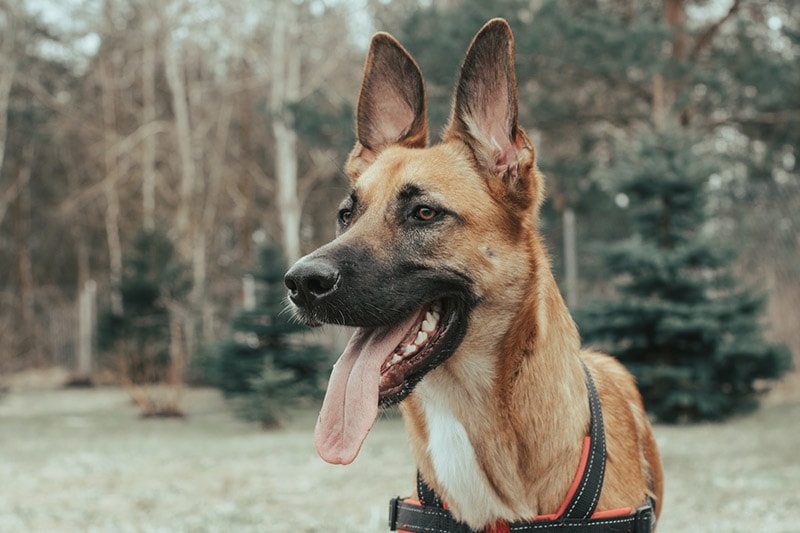
Interpreting a dog’s tail centers primarily on considering its position relative to the neutral position, the way it naturally falls when relaxed. The neutral state can vary considerably by breed. Many have tails that hang down, but some dogs, like Beagles or Huskies, may have a more vertical natural position. Others with curled tails will rarely wag their tails.
Dog tails aren’t all equally long, flexible, or demonstrative, making it crucial to understand your pet’s unique tendencies so you can better interpret their tail movements. To make matters easier, studying tail movement at the base near the rump rather than at the tip will give a better look at the dog’s relative tail position and emotional state.
1. High
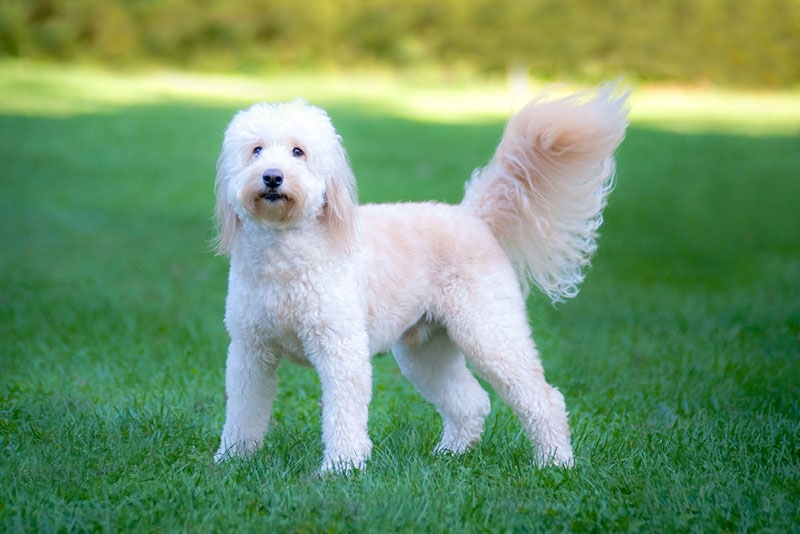
A relatively high tail with the tip in the air can have a few meanings. It could be a sign of confidence or a positive sign showing comfort among friends. The dog may also be vigilant or trying to display dominance.
In any event, a high tail means the dog is alert and excited. Lifting is an approach behavior, meaning the dog is about to engage with whatever they’re focusing on.
Additional cues are usually necessary to interpret if the dog is playful or aggressive. A play bow, soft and bright eyes, and an open mouth mean the dog is ready for play, while bared teeth and raised hackles indicate a threatening stance. If you’re unsure of the meaning behind their high tail, approach a dog with caution and only if necessary.
2. Straight Out and Relaxed
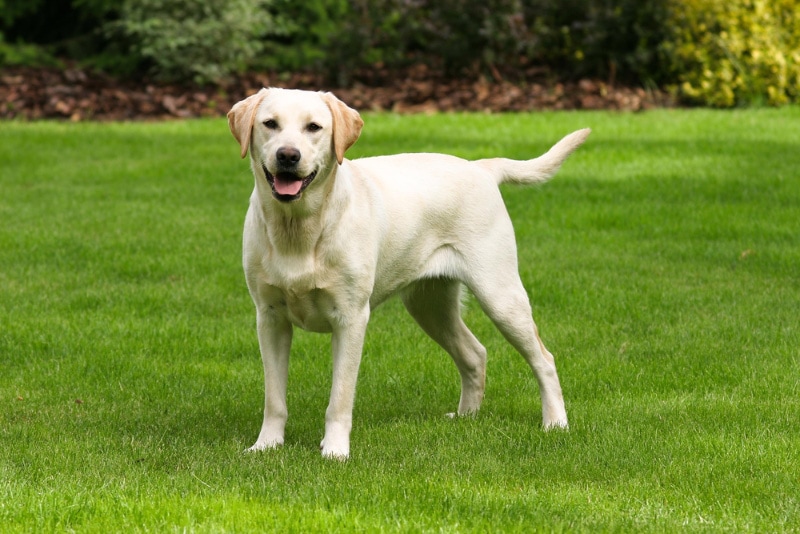
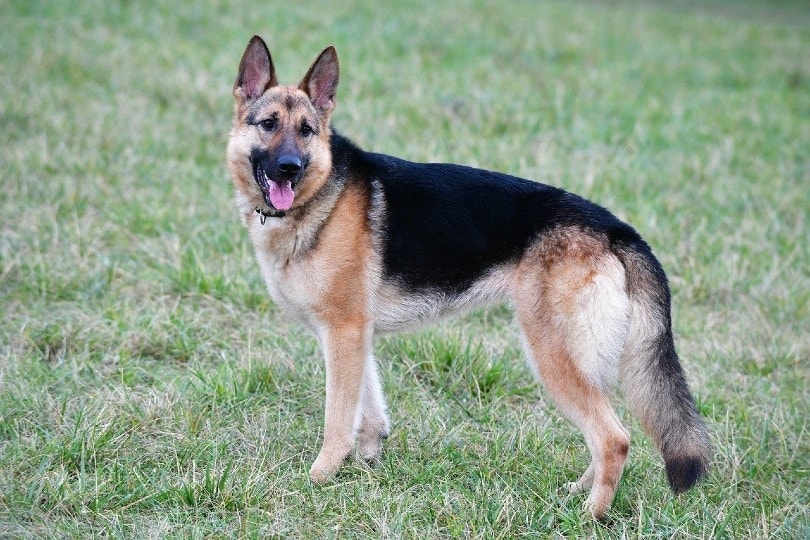
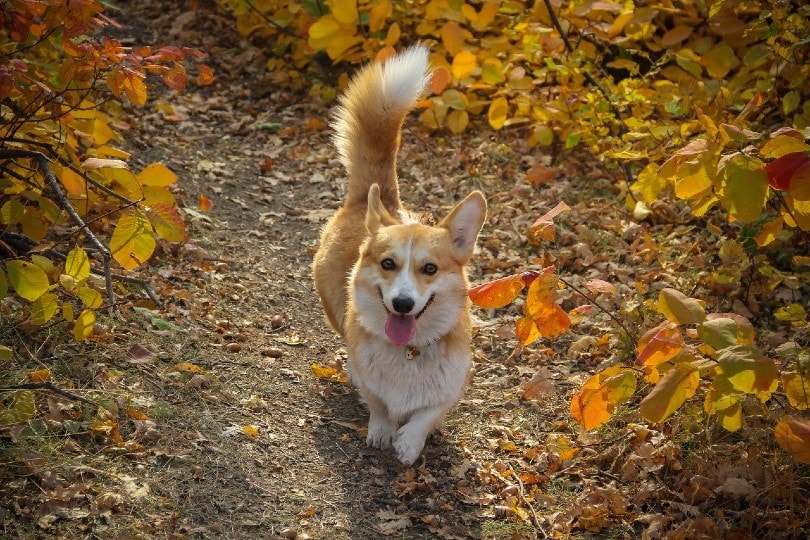
A tail in a resting, non-rigid state is a dog’s neutral position. The dog appears relaxed, often displaying a curious, exploratory attitude. They’re aware but not excited and generally in an upbeat, friendly mood, which will be more apparent with loose tail movement.
Although many breeds appear to carry their tails in a straight-out position, dogs vary considerably in where this position lies. The relaxed tail position may be higher or lower than others. Some dogs, like Pugs, Shiba Inus, and Pomeranians, will have a pronounced bend or curl over the back.
3. Low and Tucked
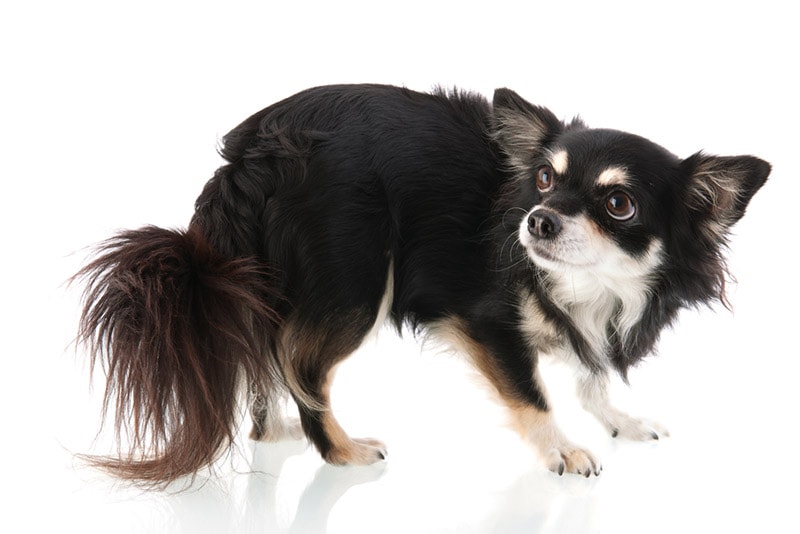
A lowered and tucked position is the opposite of a high tail. Rather than displaying approach behaviors, the low tail is an avoidance technique. Dogs in this position try to decrease their perceived size to take attention away from themselves.
Dogs lower their tails out of fear, anxiety, or appeasement, displaying more emotion the lower they go. A tail tucked tightly might be a way to handle stress or conflict with a perceived threat, showing the dog doesn’t want trouble. Other times, your dog may be in some discomfort. Monitoring for situations, people, or pets that might cause the submissive behavior will help you identify issues and formulate solutions.
4. Stiff
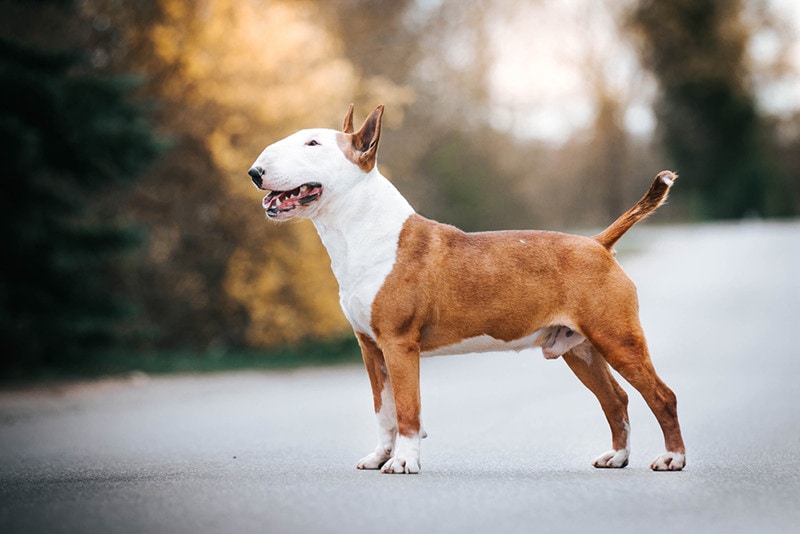
A stiff tail, especially an elevated one, typically means a dog is alert and sizing up a potential threat. It’s a fight-or-flight response. The dog could be uneasy and agitated, with a higher tail indicating more tension and a greater likelihood of aggression.
A motionless tail isn’t necessarily a stiff tail in every situation. Stillness will happen several times during the day, and your dog may be relaxed. Play often includes moments without wagging as dogs use gestures with each other to communicate their feelings. But holding it stiff can be the dog’s way of showing caution or their desire to hold off on any interactions with people or pets.

Wagging Tail
Alongside the tail height, a wag will provide further details into a dog’s mental and emotional state. Direction and speed can clue you into the dog’s excitement level and take some ambiguity out of the various tail positions.
5. Steady, Full Body Wagging
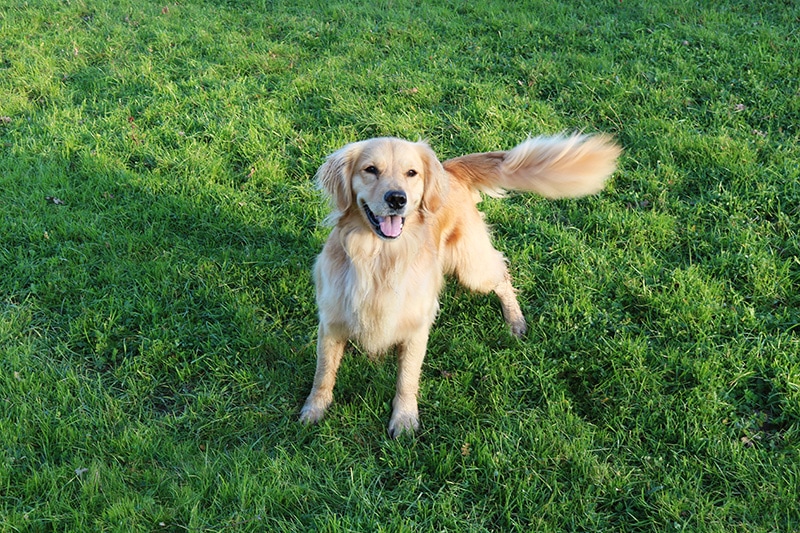
Loose, side-to-side wagging at a mid-level height around the dog’s neutral tail height is the most desirable of any tail-wagging position. When the dog puts their hips into it, you know they’re in a positive mood. The circle wag is even better, indicating the dog is happy and excited. Dogs often exhibit this behavior when excited to see one of their favorite people.
6. Rapid Wagging
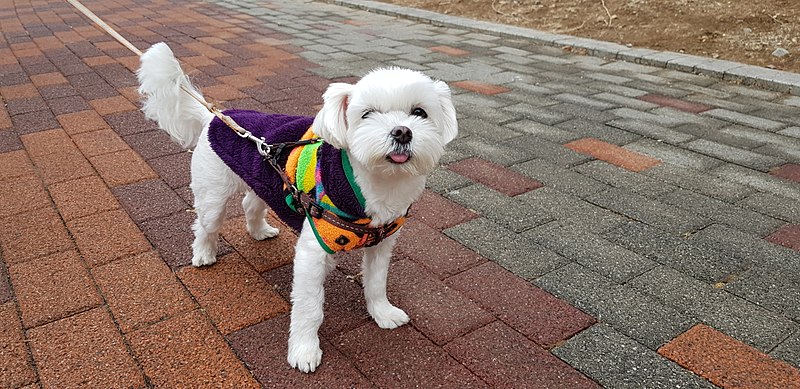
Fast-paced tail wagging isn’t always a sign of exuberant playfulness. Also called a flagging tail, this behavior could display excitement. Rapid wagging in a raised position is a clear sign of high arousal, indicating that you should proceed with caution.
7. Slight Wag
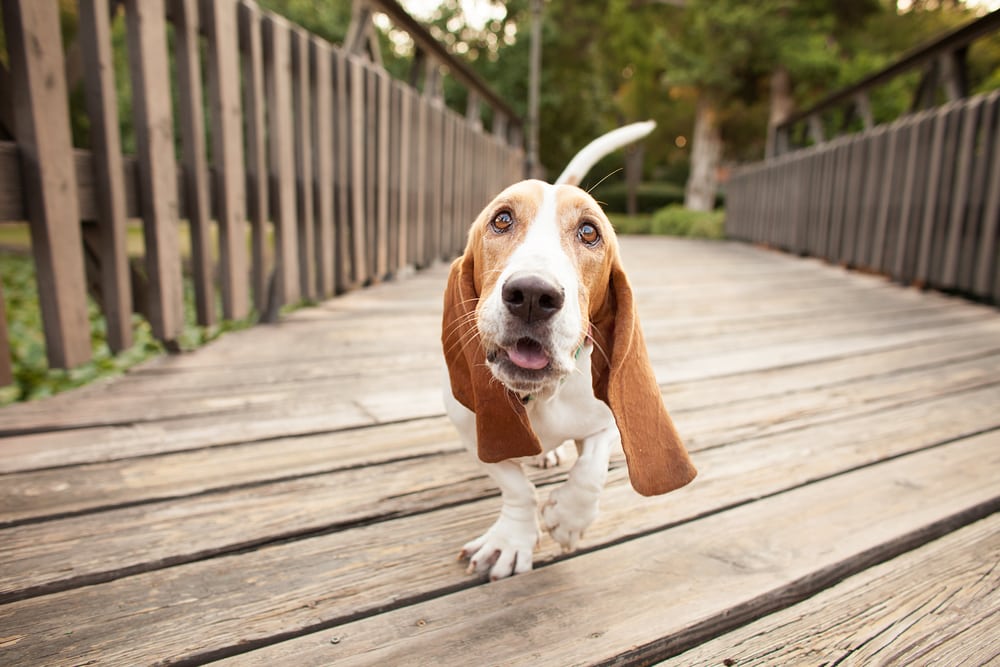
A dog with a slight wag may be moving their tail freely in a relaxed way. But it could also be a controlled response to an uncertain situation. Your dog may be indicating that they’re nervous about a new person or animal and want to approach them carefully.
8. Low Wagging
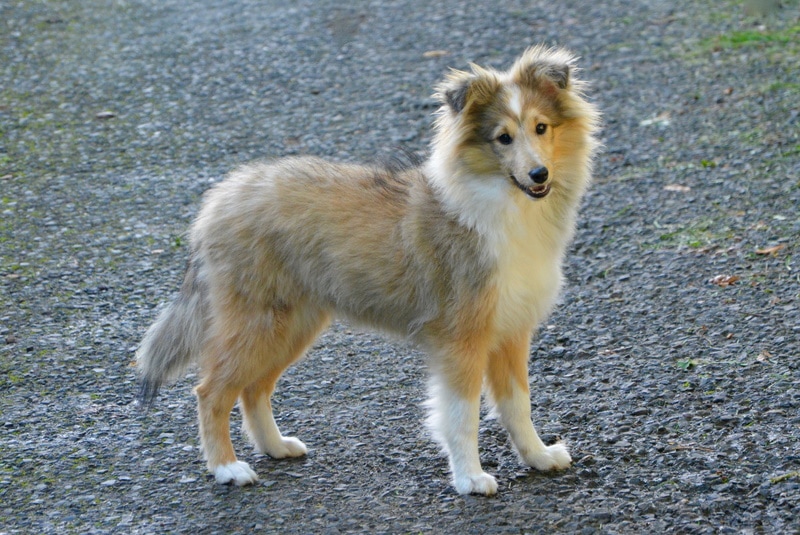
Low tail wagging typically results from negative emotion and is one of the easiest wagging positions to misinterpret. Dogs often lower their posture and drop down as an act of passive submission. The more the tail wags, the stronger their anxious or submissive state.
With fast tail wagging and a roll to the belly, dogs can give the impression that they want tummy rubs and affection. But in a passive, submissive state, they want separation from whatever is causing their behavior. If you notice additional diminishing actions, like flattening their ears or averting their eyes, you should give the dog space to avoid aggravating them.
9. Wagging to the Right

Speed and height aren’t the only ways a dog’s tail offers information about the animal's feelings. Tails can also wag predominantly on the left or right, changing due to positive or negative emotional valences.
One study found that the brain’s hemispheres trigger responses in the tail on the opposite side. If a dog is wagging their tail to their right, the left hemisphere is activated, indicating confidence, friendliness, and a positive desire to engage.
10. Wagging to the Left
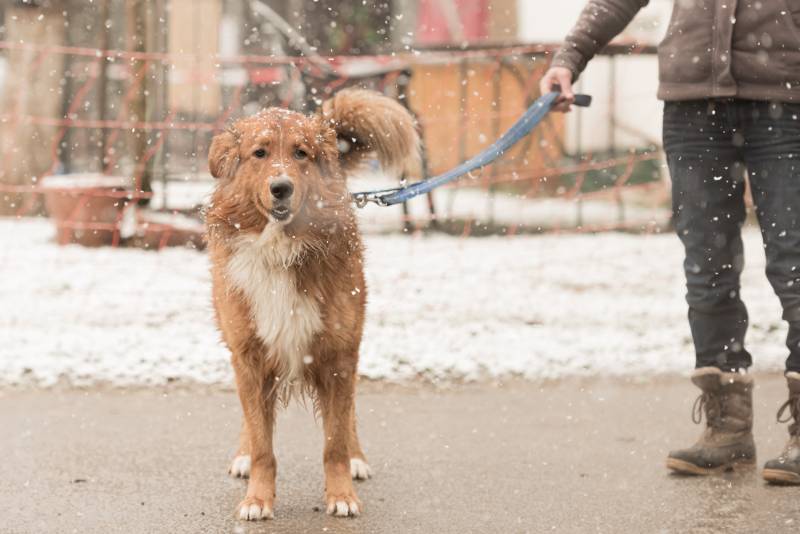
While left brain activation controls the tail wag to the right, right brain activity stimulates a left-side tail wag, expressing withdrawal and avoidance. Strange people or pets can cause a tail wag to the left. Your dog will likely show added signs of stress, fear, or some other negative emotion with the left-wagging behavior.
Can Dogs with Short Tails Communicate?
Dogs use several tools, from their head to their tails, to help them communicate their feelings and desires. While not completely incapable of communicating, dogs with short tails are at a significant disadvantage. As one of the dog’s more prominent features, they and other dogs rely heavily on the tail position to guide social interactions and establish the pack’s dynamic.
Dogs pick up on the nuances of another dog’s tail movements, even if they are subconscious behaviors. They understand the difference between a left or right tail wag and know smooth, confident tail-wagging signals an approachable dog.
Short tails send unclear signals. While a long tail’s motion or stillness gives others a clear idea of whether to approach or stay away, a short tail will be harder to interpret, potentially causing unwanted interactions and conflict. The social drawbacks are one of the many reasons animal enthusiasts condemn the practice of tail docking.
Conclusion
Are you misinterpreting your dog’s tail, or do you not notice its changing position? Overlooking the nuances of the tail is common and forgivable, considering all the other ways dogs capture our attention. And it’s only one of many cues our pups use to communicate. A tail may indicate a positive or negative emotion, but a collection of other clues can often yield the same information.
Still, with its versatility and the many meanings it can take, the tail is well worth your attention. Understand your dog’s neutral state, and start monitoring how they position their tail in different situations. With a better understanding of how your dog uses their tail, you can respond to their emotional needs faster and more appropriately, helping to avoid undue stress or unwanted situations.
Want to communicate better with your dog? Check out some of our other posts:
Sources
Featured Image By: Elena Rogulina, Pixabay
Get Hepper In Your Inbox


Pet care tips from our vets and experts, straight to your inbox.
You may opt-out at any time. View our Privacy Policy for more information.
Nicole is a lover of animals of all sizes but is especially fascinated with the feline variety. She’s the proud mom of Baby, a Burmese, and works every day so he can relax in the sunshine or by the fire. She’s always had a cat in her home and has spent countless days with others, observing behaviors and softening up even the grouchiest of the lot. Nicole wants to share her kitty expertise with you so you and your cat can live happy, healthy, and care-free.
Join the conversation
Ask a question, share your story, or send private feedback.