Hepper is reader-supported. When you buy via links on our site, we may earn an affiliate commission at no cost to you. Learn more.
Dogue de Bordeaux Dog Breed Info: Pictures, Traits & Facts
In this article
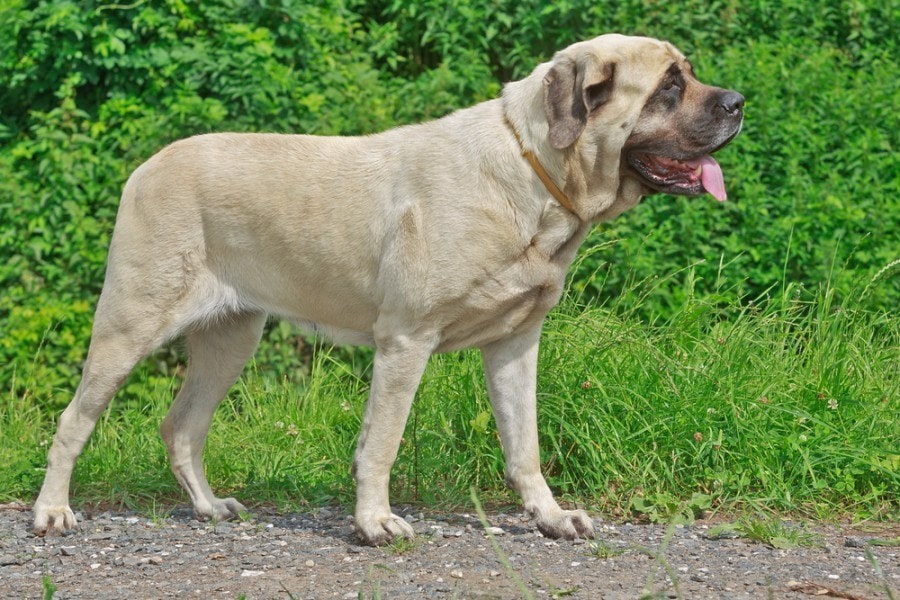
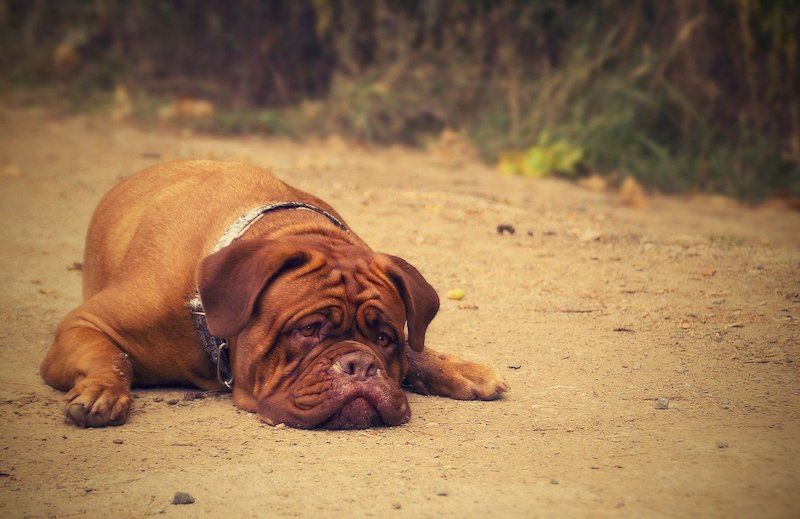
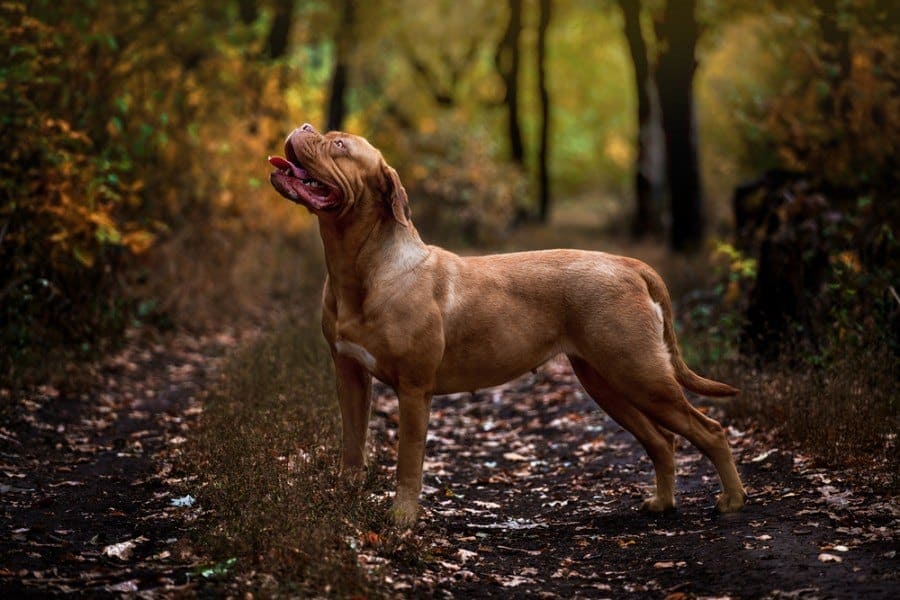
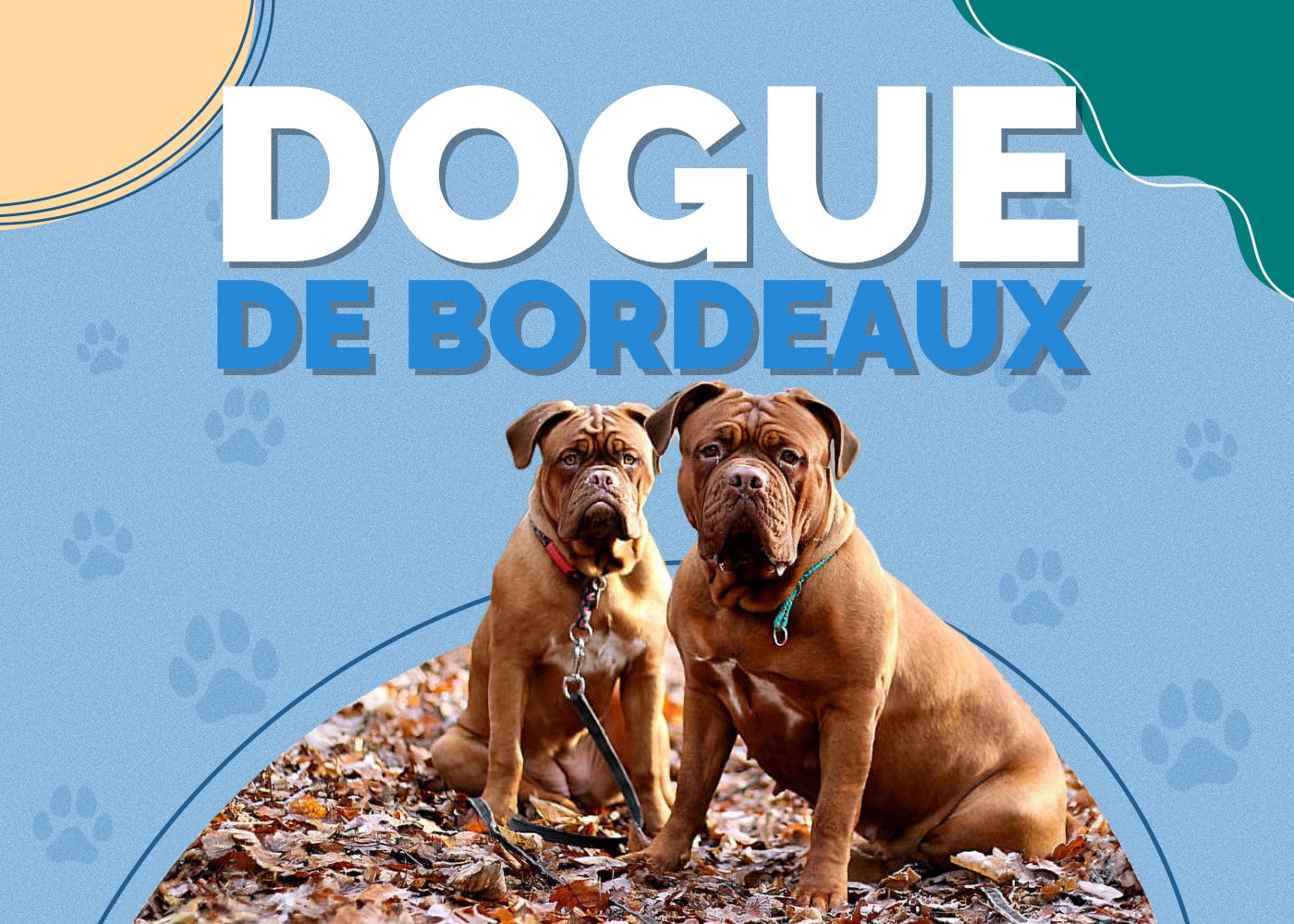
The Dogue de Bordeaux is among the gentle giants. They are handsome hulks of the dog world, with wrinkling faces that bring on compliments from passersby. They are a protective breed and have been used as guard dogs and protectors since their beginning.
Breed Overview
Height:
Weight:
Lifespan:
Colors:
Suitable for:
Temperament:
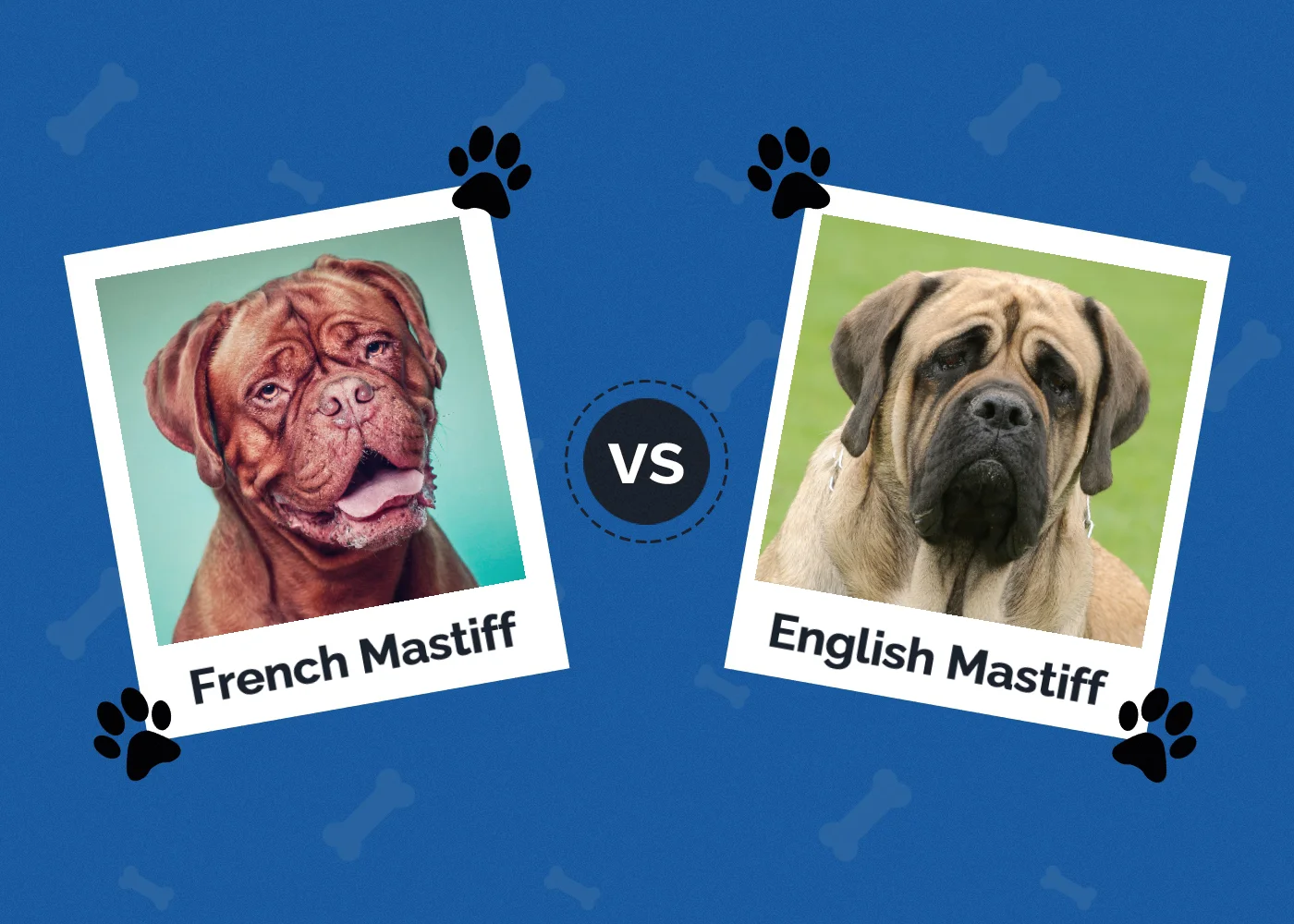
The Dogue de Bordeaux also goes by the French Mastiff and Bordeaux Bulldog because they have some of both in their bloodline. They are shorter and have a bulkier build than many other mastiffs.
Dogue de Bordeaux Characteristics

Dogue de Bordeaux Puppies
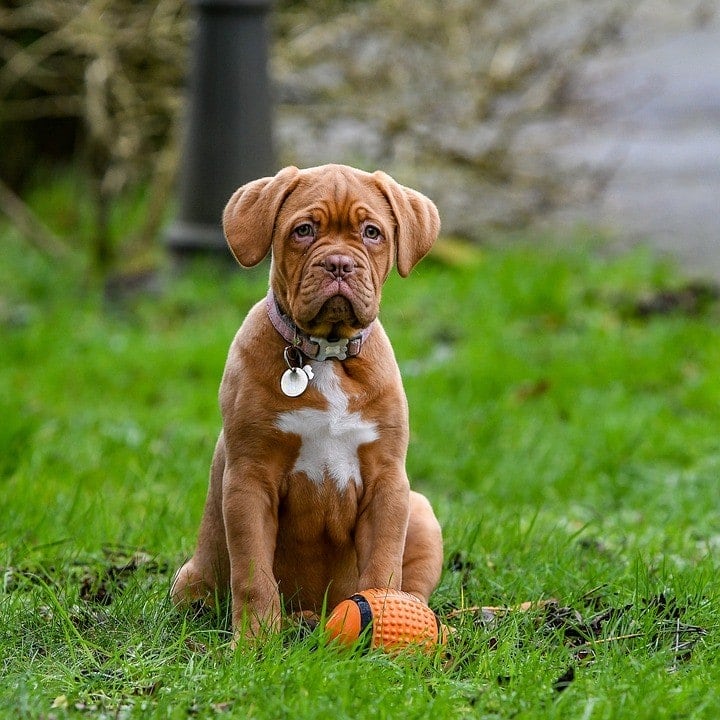
When you're looking for a Dogue de Bordeaux, take your time to find a reputable and ethical breeder. They are a rare breed, and finding one might be a task that requires patience. Meanwhile, you can talk with dog breeders or local rescues near you.
The Dogue de Bordeaux tends is patient and calm but can be stubborn if not paired with a reliable trainer. They love their people but drool and shed quite a bit. These loyal dogs make great watchdogs and are an excellent choice for families who can give their dogs a working role to keep up with their high energy levels.
Temperament & Intelligence of the Dogue de Bordeaux
Since the Dogue de Bordeaux has long been an established and recognized breed, they have specific traits typical to them. Although initially used as fighting dogs, they do not have aggressive personalities. They have calm and patient temperaments.
Beyond their calm demeanor, they are loyal and utterly devoted to anyone they deem their family. This attitude is why they are often used as guard dogs or protectors.
They are intelligent, as many ancient breeds are. They learn quickly but can be stubborn. If you want to train one to behave appropriately, especially in various social scenarios, you must have a steady hand and heart. They respect the confidence that surpasses their own.
Are These Dogs Good for Families?
Even though they have an intense and intimidating appearance, the Dogue de Bordeaux is typically gentle. Unlike other large dogs, they have more awareness of their size and weight.
However, it's necessary to monitor the time that they spend around little children. Teach both the children and the dog how to behave appropriately around each other to establish better bonds.
Does This Breed Get Along With Other Pets?
It is essential to socialize your Dogue de Bordeaux as early as possible. They have a strong prey drive because of all their years of fighting and hunting. They can do well with smaller animals like cats but are not recommended around smaller rodents.
You should train them from as young as possible since they are so powerful and react quickly.
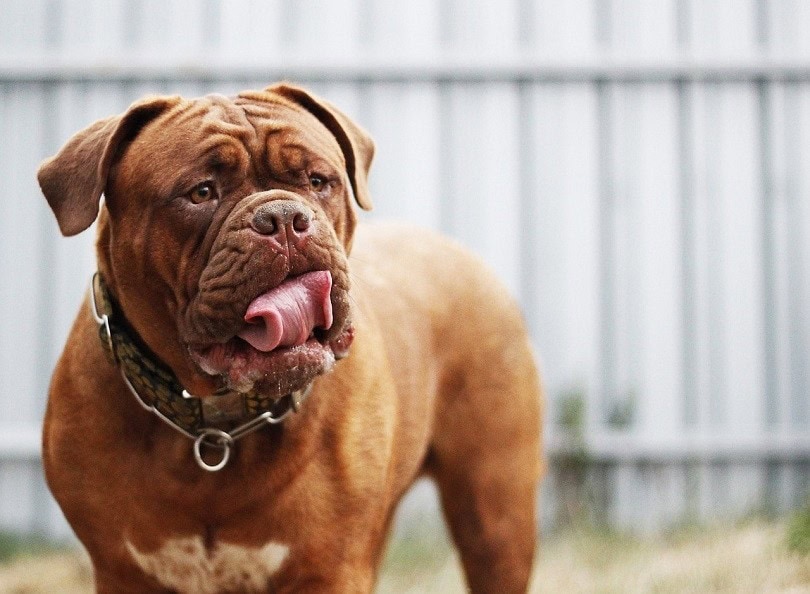

Things to Know When Owning a Dogue de Bordeaux
Food & Diet Requirements
Many large dogs with a great deal of muscle have a big appetite. They need enough protein and nutrition to fuel their bulk and keep them healthy. It's best to feed the Dogue de Bordeaux approximately 4 cups of food each day. Spread it out in portioned meals so they don’t suffer from indigestion.
Although the amount of food makes it feel like they could eat through your budget quickly, it is still important to feed them with a high-quality diet. Ensure the food has a high protein content and is formulated for large dogs.
Exercise
As with any working breed, the Dogue de Bordeaux needs plenty of exercise to prevent them from being destructive. They always prefer to have a job to exercise them mentally and physically. They do not adapt well to living in apartments or tiny homes.
If you adopt a Dogue de Bordeaux, take them daily walks for at least an hour spread throughout the day, or 8 miles. Be careful when you take them out during hot and cold weather. They cannot regulate their temperature that well, and they can quickly suffer from heatstroke in hot and humid weather, which can be detrimental to their health.
Training
When faced with a shy or unsure trainer, the Dogue de Bordeaux is a stubborn breed. They respect and listen well to people who have experience training dogs. Do not become aggressive or physical with the dog because they do not respond well to that kind of treatment.
Early socialization is one of the vital aspects of training the Dogue de Bordeaux. Take them to dog parks and introduce them to other animals as early as possible. Pay attention to their behavior. Specific training sessions will probably need to involve how to behave well around other animals.
They might not be dangerous but are perhaps more assertive than they should be because they are likely to be the dog with the most muscles on the block.
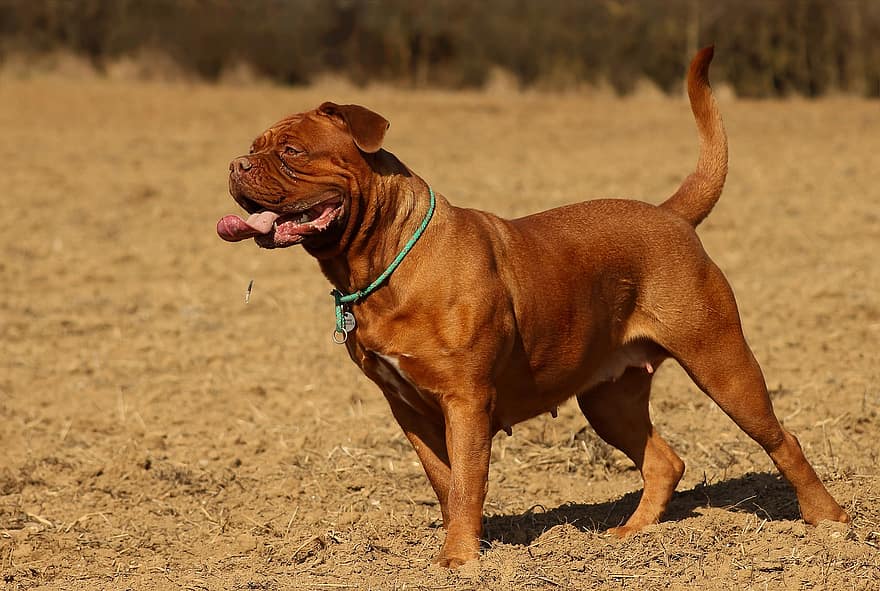
Grooming
The fur of the Dogue de Bordeaux is easy to maintain and unique. They need a couple of weekly brushings with either a curry comb or a soft bristle brush to control shedding.
These dogs need a bath around once a month, but make sure to use a medicated shampoo. They often suffer from skin conditions. It is essential to dry their skin off, especially in between the folds of their skin. If moisture gets trapped between them, it can irritate and create foul odors.
They need special attention around their face. Wipe them down at least once a week to prevent yeast infections or bacterial infestations. The dog drools heavily, and the moisture can get trapped in their facial skin folds.
The pads on this pup’s feet dry and crack more quickly than other dogs and need to have lotion applied regularly to keep them healthy. It helps prevent pain when they walk. Like other breeds, brush their teeth a couple of times a week and keep their nails trimmed down.
Health and Conditions
These dogs have developed a strong immune system that has supported them through many years of war and disease. They suffer from specific diseases that hybrids have more genetic defense against because they are purebred.
Take your pup to their annual or biannual vet appointments, especially as they age. Doing so helps to ensure that whatever they might suffer from gets caught early enough for treatment.
Male vs. Female
The males and females of this breed do not exhibit many personality differences. Their sizes vary slightly, however. The female Dogue is somewhat smaller, standing at around 23 to 26 inches tall and weighing between 99 to 130 pounds, still a formidable force. Males stand between 23 to 27 inches and are bulkier at around 120 to 145 pounds.

3 Little-Known Facts About the Dogue de Bordeaux
1. The Dogue de Bordeaux was once a movie star.
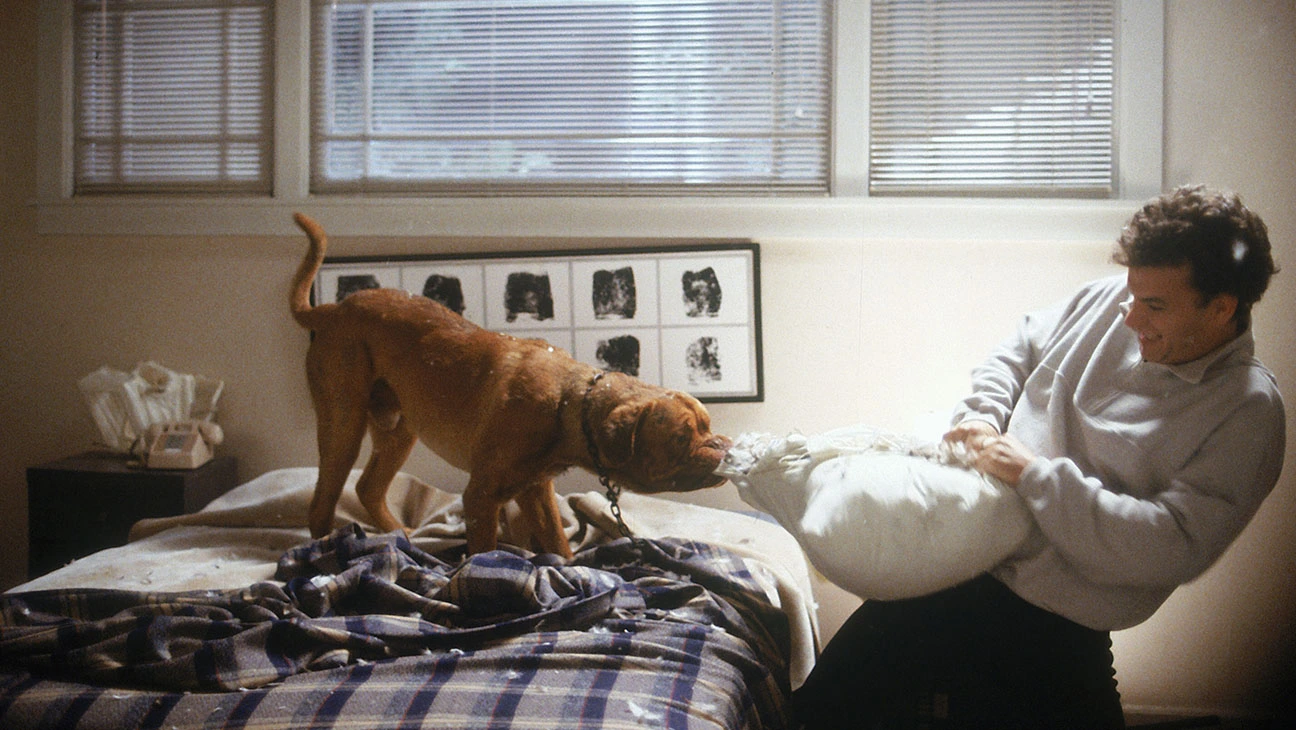
In 1989, Tom Hanks co-starred in a movie with a Dogue de Bordeaux named Beasley. The comedy, “Turner and Hooch,” had Hanks playing a police detective with his dog Hooch (Beasley) lending a helping paw.
Before the movie aired, the breed, despite their extensive history, was practically unknown outside France. However, after the lovable, drooling pup was on the silver screen, they became much more accessible to people worldwide.
The dog stole people’s hearts during the movie and took the spotlight in almost every scene. However, Beasley retired from acting after the movie and was not in another film.
2. Pinpointing their exact origination is not possible.
The Dogue de Bordeaux is one of the small handful of breeds recognized by the AKC whose origin date is unknown. The reason for this is the sheer length of their lineage. They are an ancient breed that traveled the world to arrive in France.
There are two central beliefs. One theory is that they have continuously resided in France and have slowly developed into the Dogue we know today over thousands of years. There is not much physical proof, however, to support this theory.
The story with the most backing is that the Dogue’s ancestors came with the legions of Julius Caesar’s army. During this period of the first century B.C., they received their introduction to France through the Romans.
Unfortunately, they would not have been well received initially because the Romans often used them as war dogs. Beyond that, they were matched against each other like gladiators in Rome’s gruesome sporting events. They fought each other and numerous wild beasts until the death of one or both.
Gratefully, much of this aggression has been trained out of them over the last thousand years. They are more commonly used as working and hunting dogs now. Many of them are also employed as guard dogs. The practice started in France but took an abrupt pause after the French Revolution because they were only used as by the nobility.
After that, the Dogue earned the name “Butcher’s Dog” by finding themselves commonly owned by livestock drovers.
3. These dogs used to come in two typical sizes.
There is evidence that the Dogue used to come in two sizes. There is not much known about the history of the two and their breeding differences since the smaller-sized pup disappeared from our historical records shortly after the 1700s.
The smaller dog was named the Doguin. The Dogue de Bordeaux nearly became extinct twice: once during the French Revolution and the other during WWII. Fortunately, only the Doguins were lost to history. Now, we have the larger version of the breed that embodies the name the Dogue de Bordeaux.
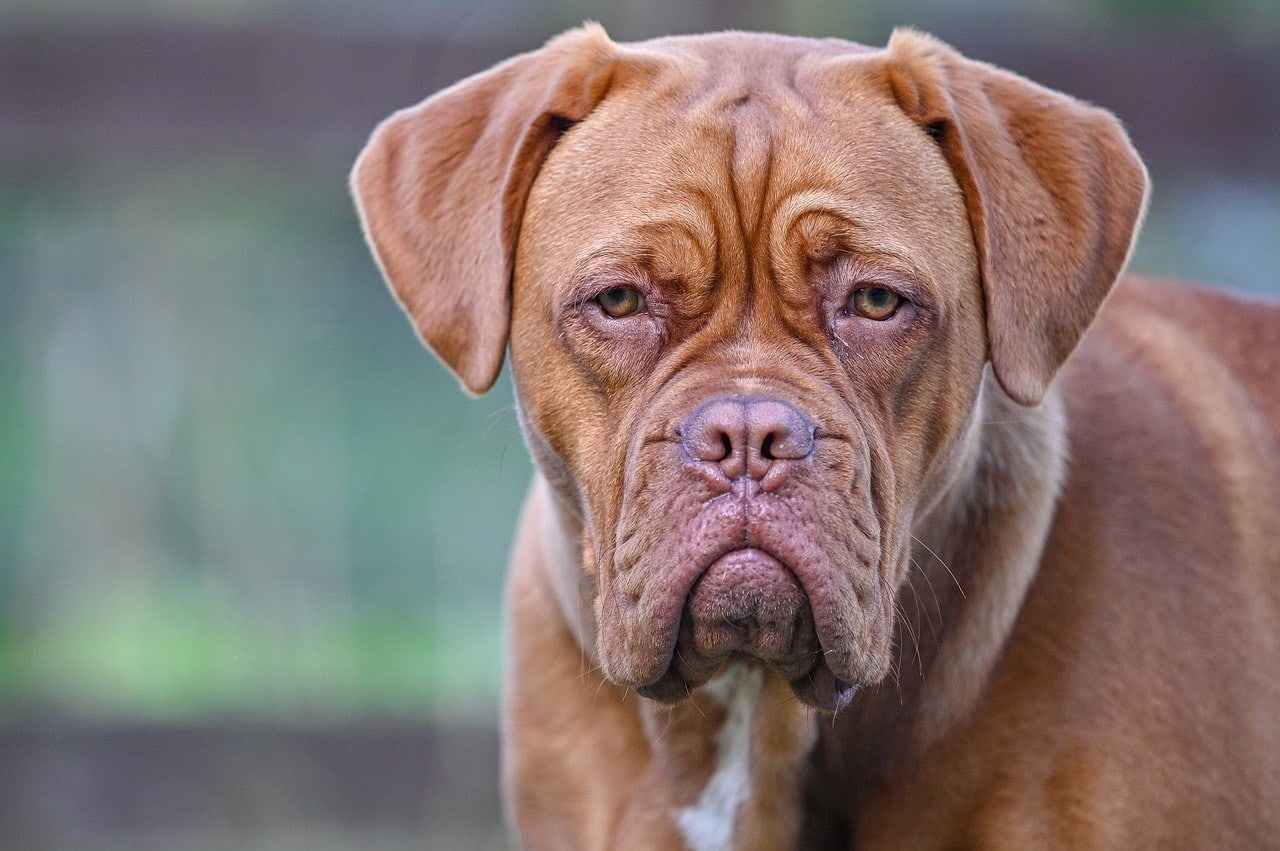

Final Thoughts
The Dogue de Bordeaux isn’t just another dog, but history packed into a muscled form. They have survived and thrived against all the odds. You get a determined dog with intelligence and form that speaks to their many years of breeding.
These pups may take a bit of management with their wrinkles and folds across their faces and bodies. However, they make up for it with their love and protection, ready to do anything for their family.
See also:
American Bulldog & French Bulldog Mix: Info, Pictures, Facts
Docker Dog (Dachshund & Cocker Spaniel Mix) Info, Pictures & Facts
Featured Image Credit: Pickpik
Get Hepper In Your Inbox


Pet care tips from our vets and experts, straight to your inbox.
You may opt-out at any time. View our Privacy Policy for more information.

Nicole is a lover of animals of all sizes but is especially fascinated with the feline variety. She’s the proud mom of Baby, a Burmese, and works every day so he can relax in the sunshine or by the fire. She’s always had a cat in her home and has spent countless days with others, observing behaviors and softening up even the grouchiest of the lot. Nicole wants to share her kitty expertise with you so you and your cat can live happy, healthy, and care-free.
Join the conversation
Ask a question, share your story, or send private feedback.