Hepper is reader-supported. When you buy via links on our site, we may earn an affiliate commission at no cost to you. Learn more.
English vs. American Labrador: What's the Difference?
In this article
Labradors are some of the most common dog breeds in the United States, United Kingdom, and Australia. They have warmed homes, hospitals, retirement facilities, and police stations all over the globe. If you don't look closely enough, it may appear they are the same.
However, over a history of selective breeding, there are notable variances between the English and American Labradors. It seems these two countries have left their mark on these friendly canines, leading to distinctions you may not suspect. Getting down to the nitty-gritty, let us explore what makes each of these dogs unique.

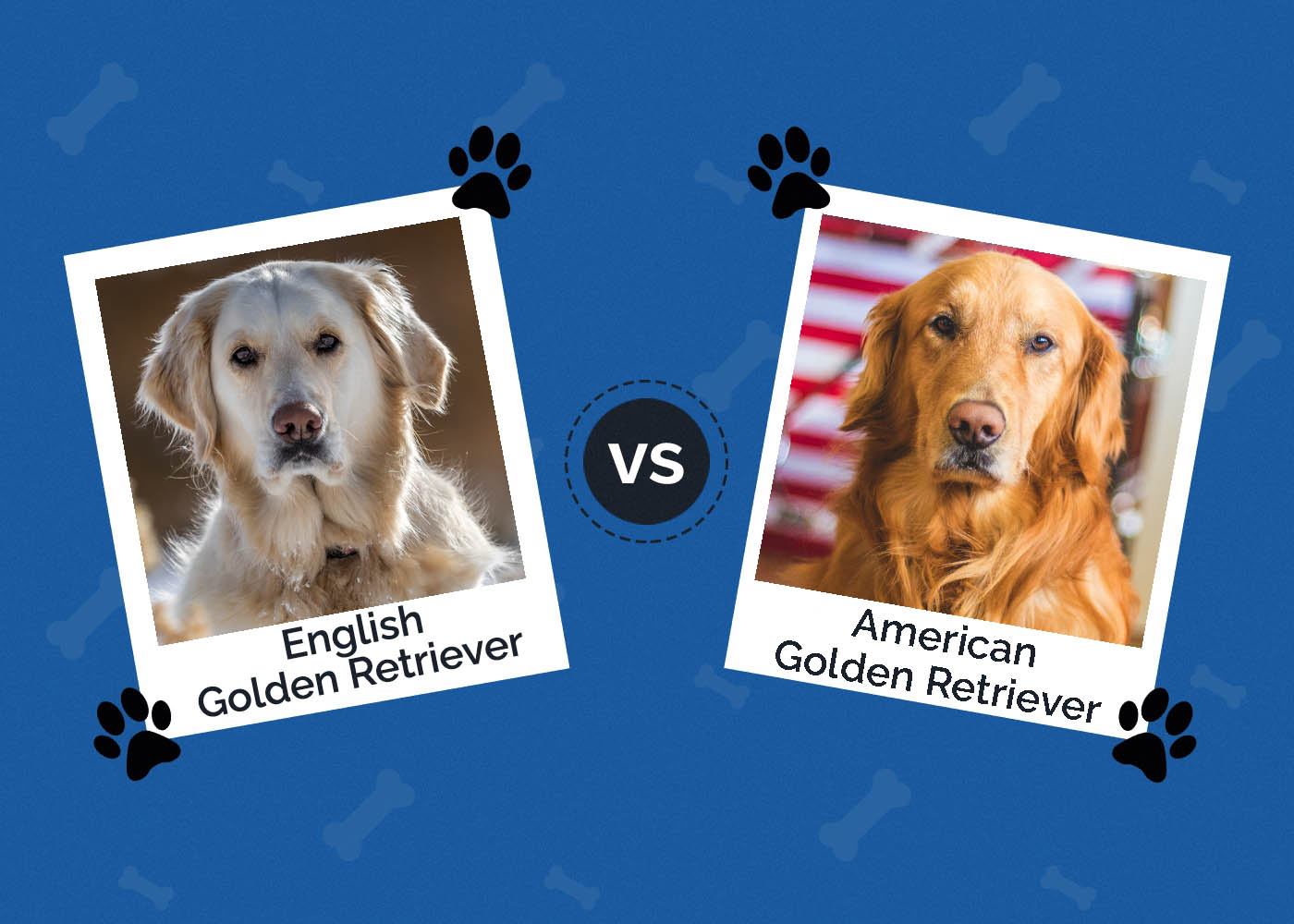
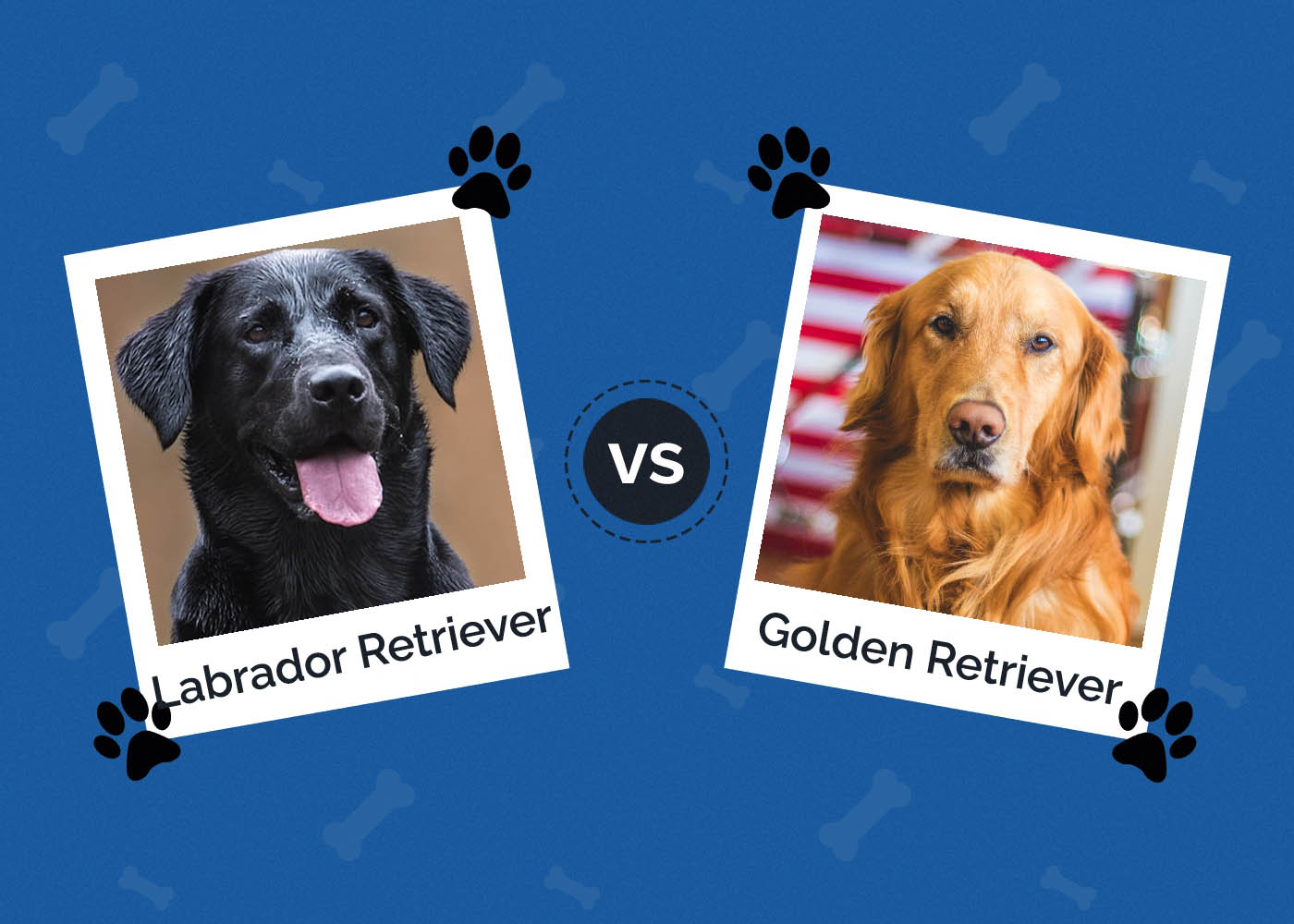
Visual Difference
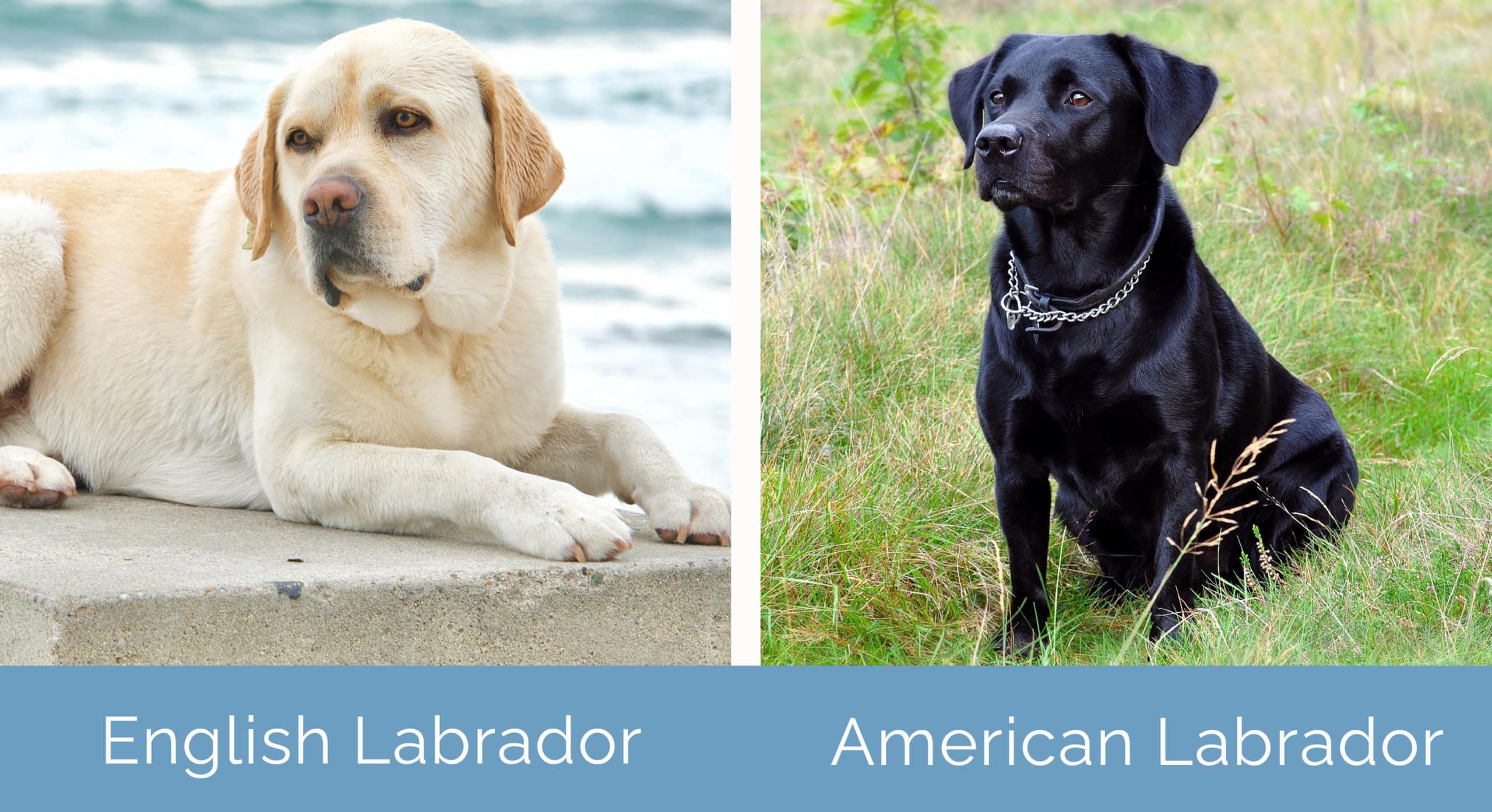
To begin, it is necessary to note that the AKC association does not notice a separation between English and American Labradors. They remain in the same category and aren't two detached entities.
A Quick Glance

English & American Labs – The Backstory
Looking back through the history of this breed, the Labrador was first called St. John's Dog or Lesser Newfoundland Dog. They were a sporting breed used to retrieve ducks and other small game for hunters.
They were soon taken back to England and renamed Labrador Retriever. They were added to England's Kennel Club roster in 1903. In America, they were recognized by the AKC in 1917.
The original St. John's Dog became extinct over time, and the new and improved Labrador Retriever completely took their place. They originally had white muzzles, paws, and chests, but this coat appearance fizzled into solid colors. Early Labs in England were no longer used as work dogs or given strenuous physical duties. They became show dogs, having a lavish existence. That is contrary to America, where they resumed roles as loyal hunting mates.
These days, both English and American Labs have taken on various characters, from in-home companions to service dogs. You may see them assisting the blind or serving as an emotional support animal. Their intelligence and intuition help them to perform outstandingly in just about any job you can imagine. However, because of the years of opposing uses for these dogs, it ingrained permanent differences in personality, looks, and purpose. While the AKC may not agree quite enough to make it official, the trait differentiation is noticeable.
Size & Appearance
Both the English and American Labs share the same color categories: yellow, chocolate, and black. The rarest color is chocolate because this color is very dependent on specific genetic combinations.
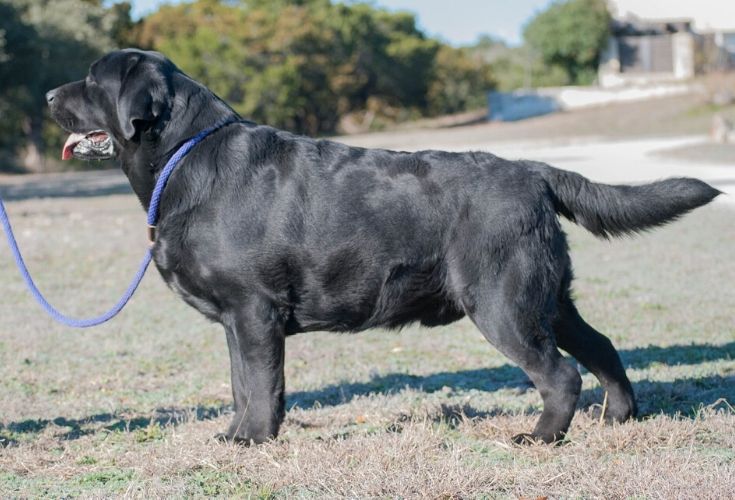
While there is no change in the color of their gorgeous coats, the texture and thickness differ. English labs are fuller and thicker with what is called an "otter" tail. Their fur is water-resistant, which makes them durable and efficient when swimming.
All Labradors very heavy shedders. Their dense coats leave a trail, and they benefit from regular brushing.
English labs are stockier in size, with a blocky head and broader muzzle. They have an almost lazy look about them. They tend to be a tad shorter height and in length. They are beefier with a thick neck and broad chest.
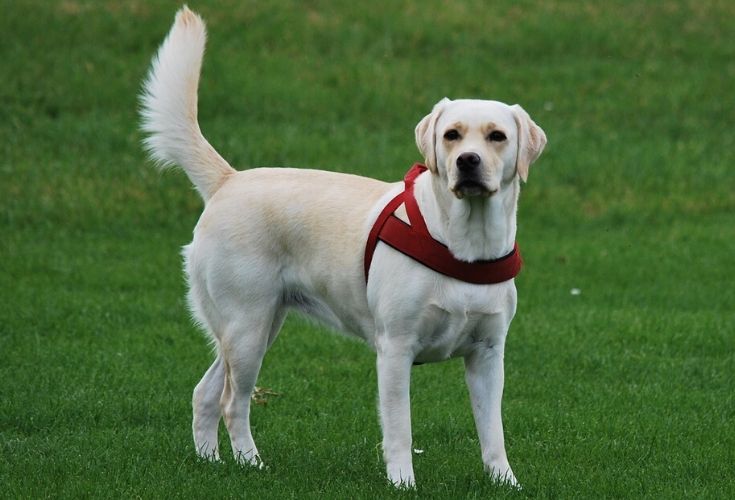
American Labs, on the other hand, tend to be sleeker and more athletic. They have longer legs and a longer body. They have a sporty build with thinner snouts and finer coats.
Male Labs weigh between 65 to 80 pounds while females weigh 55 to 70 pounds. This average range includes both. However, English Labs tend to weigh in at the higher end of the scale.
Temperament
Each of these dogs come in a fun-loving, even-tempered package. They are known for their bubbly attitudes and compatibility with people—and their track record reflects that.
While both dogs have decently high energy, the American Lab is the more enthusiastic of the two. Due to being bred specifically for hunting, they are more alert, responsive, and bright. They will tend to be hyper or higher strung than their English counterparts.
The English Lab is a more slow-paced, relaxed dog. They will be ready to cuddle up with you whenever you wish. Don't mistake this mild nature for low energy, however. They will still need adequate exercise and daily walks.
Both the English and American Labs are famously fabulous as family pets. They are passive and caring for children, making them both a friend and a protector. They are intensely intuitive and receptive to your emotions. That makes them sensitive to your approval or disapproval.
They are each obedient and trainable. However, because of the breed's original use, American Labs will be slightly easier to teach since they are more amenable. They are both exceedingly smart, but English Labs may take slightly longer to catch on.

Health Issues
Each of them shares the same lifespan, ranging between 10-12 years. While both dogs have similar health concerns, certain conditions may be more prevalent on one side or the other. They mutually have joint issues, heart issues, and potential genetic defects.
They are both at risk for hip dysplasia. But because American Labs perform retrieving and other high endurance activities, they are more likely to develop this condition. They also have a likelier probability of having other joint-related disorders like patellar luxation and osteochondritis dissecans.
Since American Labs are energetic dogs, the same is true for other issues like exercise-induced collapse. This condition triggers when the dog is undergoing periods of intense exercise, causing muscle failure, followed by a total collapse.
A condition called bloat is a problem for this breed, too. It happens when their stomachs are too full, and they exercise immediately following eating. It causes gas to expand the abdomen, which cuts off blood flow and is usually deadly.
They can also suffer from ailments such as canine lymphoma, hereditary myopathy, and diabetes.
English vs. American Lab – Family Addition
If you are looking to add this beautiful breed to your family, you probably wanted to cover your bases to learn all you can about their history. While both the English and the American Labs make excellent companions, picking the proper disposition is entirely dependent on your lifestyle.
If you have young children who love to romp and play or you are a person who frequently exercises, the American Lab may be the best. They will keep up with active routines and will thrive in fast-paced environments.
If you are looking for a calmer, more even-keel dog, opting for the English version may be your best choice. They will be cuddlier and less spastic. While they may be slightly less of a handful, they might not catch on quite as quickly as their American cousins to commands.
Outside of the typical family life, you may be looking to elect one as a service, therapy, or K9 dog. They cover all attractive attributes such as friendliness, agility, aptitude, and loyalty. You can purchase one that specializes in caring for those with mental or physical disabilities, diabetes, or severe trauma.'


That's a Wrap
No matter what continent these two cousins come from, they are full of love to give. Despite preferences related to either, they still remain a fan-favorite from country to country. That should speak for itself, as they have held the top slot firmly for over 27 years.
You couldn't choose a more widely compatible and adaptable four-legged friend. One thing is for sure: they will provide years of happiness and adventure, leaving you with memories to cherish for a lifetime.
See also:
Featured Image Credit: (L) TimberFish, Shutterstock | (R) nipa74, Shutterstock
Get Hepper In Your Inbox


Pet care tips from our vets and experts, straight to your inbox.
You may opt-out at any time. View our Privacy Policy for more information.

Nicole is a lover of animals of all sizes but is especially fascinated with the feline variety. She’s the proud mom of Baby, a Burmese, and works every day so he can relax in the sunshine or by the fire. She’s always had a cat in her home and has spent countless days with others, observing behaviors and softening up even the grouchiest of the lot. Nicole wants to share her kitty expertise with you so you and your cat can live happy, healthy, and care-free.
Join the conversation
Ask a question, share your story, or send private feedback.