Hepper is reader-supported. When you buy via links on our site, we may earn an affiliate commission at no cost to you. Learn more.
What Were Labs Bred For? Labrador History Explained
In this article
Year after year, the Labrador Retriever reigns supreme as the most popular pet dog.1 It’s little wonder why the humble lab continues to be the top pick; their gentle natures, goofy personalities, and fun-loving attitudes encompass everything that “man's best friend” stands for.
The modern Labrador is a loving family member, a child's best friend, a hunter's companion, and a reliable working dog. This perfectly balanced and even-tempered breed didn’t just appear from thin air, though. They became so with years of history alongside man.

Labrador Ancestry: St. John's Water Dogs
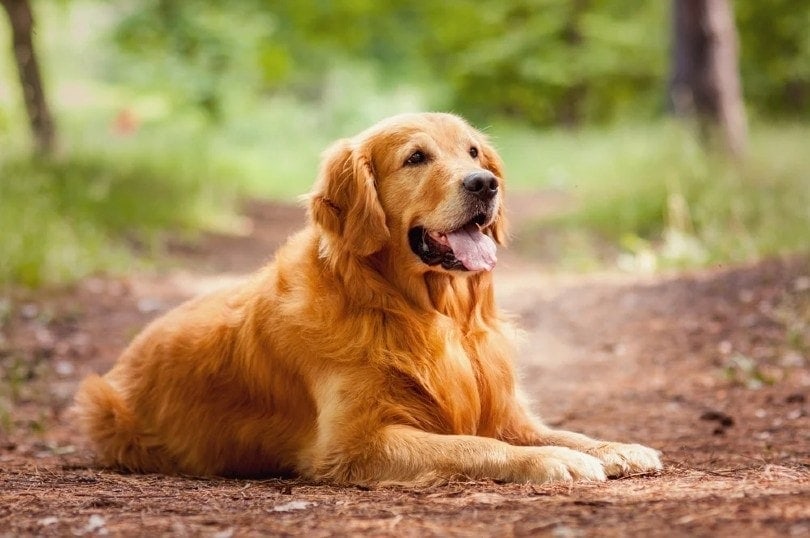
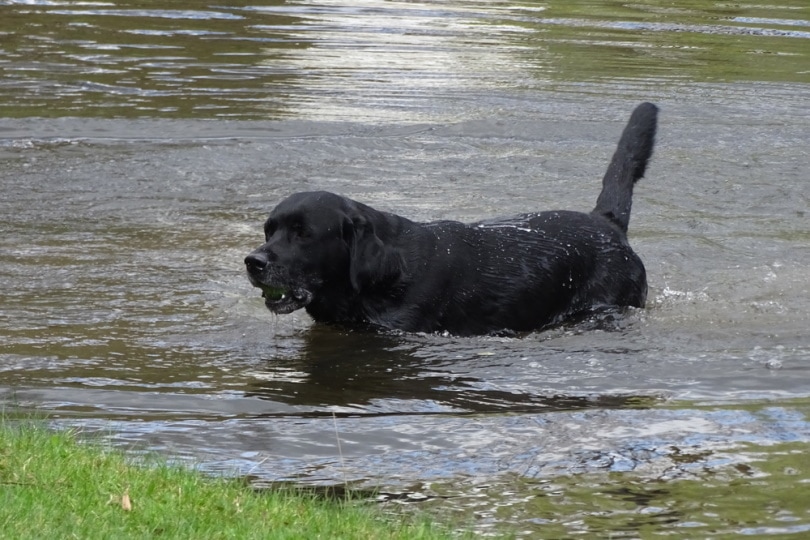
The furthest back the Labrador genes have been traced is to the 17th century, with writings of “St. John's Water Dogs'' accompanying fishermen on their boats. These smooth sailors aided fishermen by retrieving fishing nets and were well adapted for the water with short, thick, waterproof coats and thick tails acting as a rudder while they swam—sound familiar?
These pooches were found in the Newfoundland colony (which is now a part of Canada) and named St. John's Water Dogs after the capital of Newfoundland and their love for the water. These dogs began to mix with imported working dogs, likely from England, Ireland, and Portugal, who traded with Newfoundland.
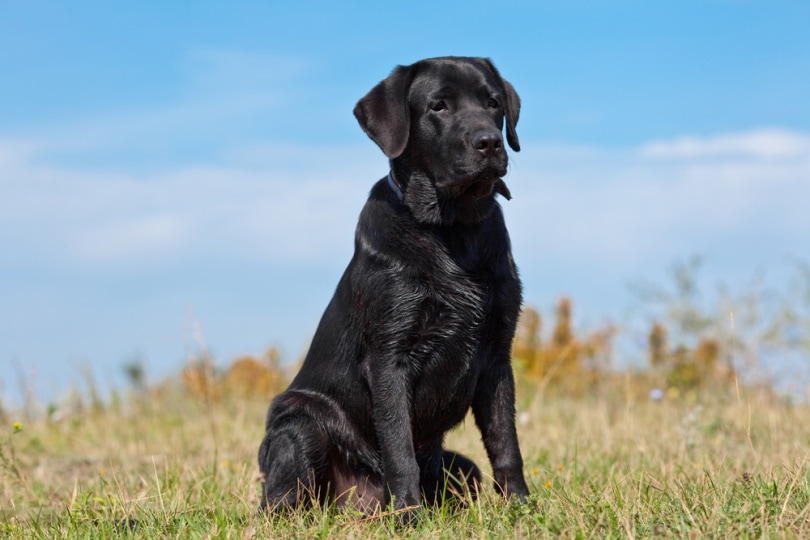
The St. John's Water Dogs were strong, stocky, and closely resembled the modern English Labradors. They were distinguishable by white patches on their chest, feet, and muzzle, a patterning that now strays up in modern Labrador mixes.
During the 1800s, the Newfoundland government set harsh taxes on any dogs that weren’t for farm work, such as herding or stock protection, to encourage the growth of the agricultural sector.
The St. John Water Dogs became scarce, but few were introduced to Britain through trading ships.
The First Labrador Retrievers
Once in Britain, the St. Johns Water Dogs were quickly recognized for their even temperaments, endurance, and working capabilities. They were bred with British hunting dogs to create the first-ever Labrador Retrievers, named after the Labrador region of Newfoundland.
Colonel Peter Hawker, a shooting sportsman, was the first to distinguish a “proper Labrador” from its breeding ancestors of various hunting dogs and the St. John's Water Dog. A thorough description was given in his book “Introductions to Young Sportsman1,” first published in 1845.
He praised the Labrador for their use in shooting sports, crediting them as “by far the best for every kind of shooting” and exclusively black.
Labrador Timeline
Hard Working Dogs
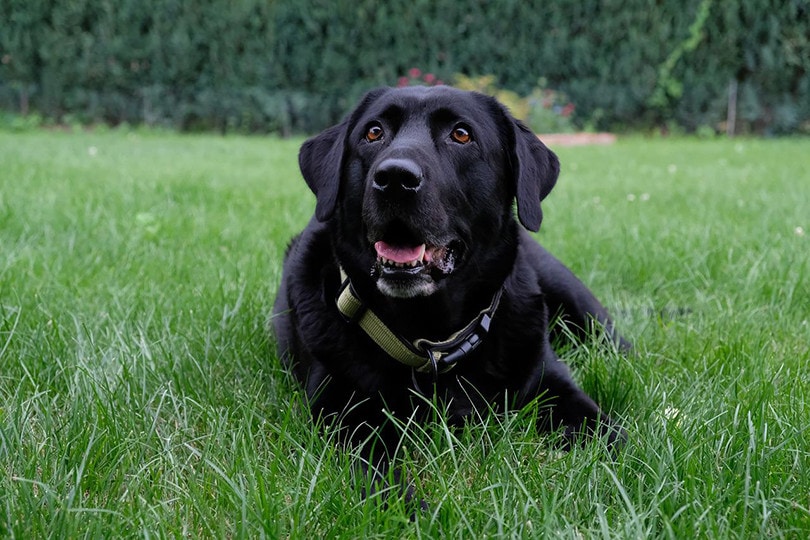
A family Labrador often gets labeled as lazy. They are happy to mope around the house and are known for snoring loudly! In reality, the Labrador breed has one of the best work ethics of any dog. They are bred for a massive range of tasks, from hunting companions to life-saving rescuers.
Their intelligence and eagerness to please and their natural abilities make them the perfect students to be molded into virtually any role. Some jobs Labradors are trained to do include:
English Labrador vs. American Labrador
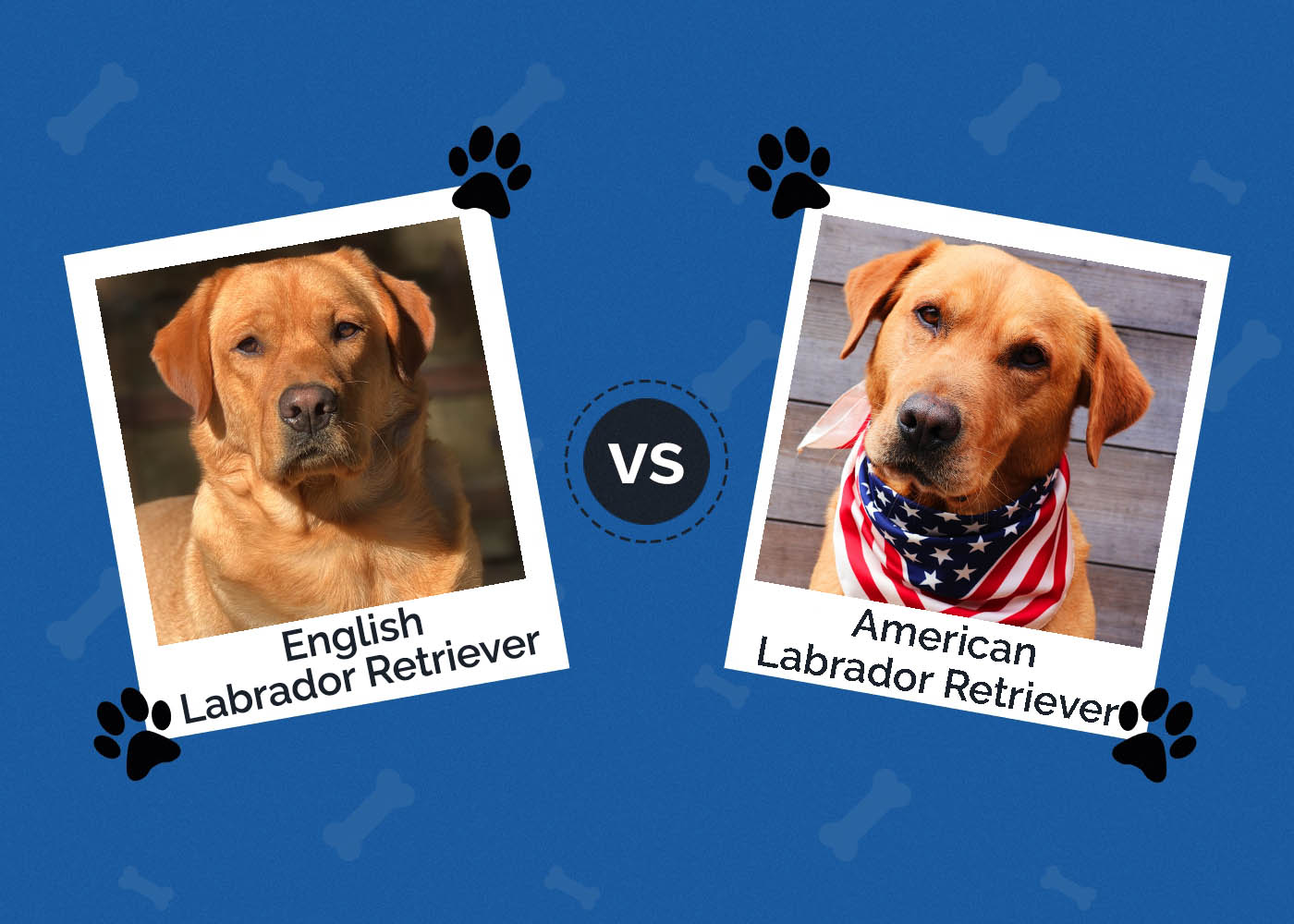
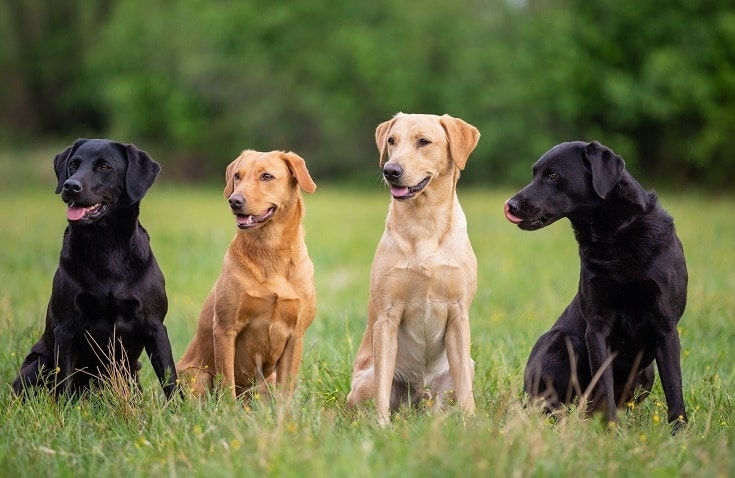
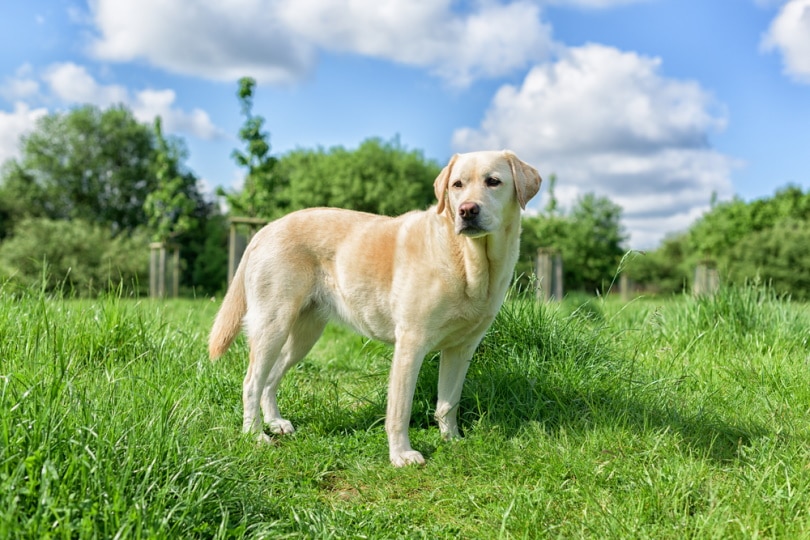
There is only one standard of Labrador Retriever described, but some physical differences are seen between groups. “English and American” labeling is misleading as all Labradors are of English origin. Serious Labrador breeders instead refer to the two variations of Labrador as “show conforming” (English) and “working/field” (American).
The English Labrador is considered a true Labrador as they are aligned with the breed description and standard. They are stockier, with wider heads, denser coats, and shorter legs.
The American Lab is lighter, and has longer legs, a narrower head, and a longer muzzle. Either variation can occur in either country; they aren’t exclusive to either continent.
The variation occurred as the history of the Labrador evolved. While originally bred in England to work, they become beloved and revered as show dogs. They were bred to retain their original qualities.
Meanwhile, the Labrador was primarily a hunting companion in America, so they developed more athletic bodies, higher energies, and longer endurance.
Final Thoughts
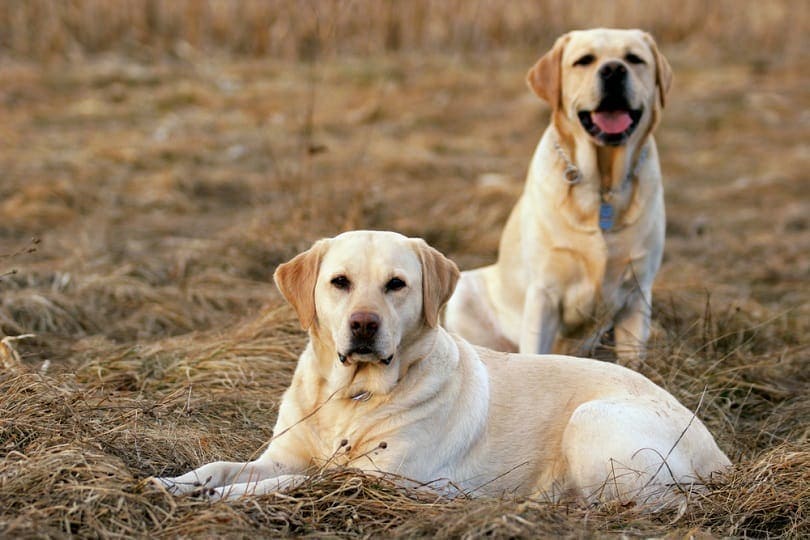
Who would have thought that Labradors had such an extensive history? Looking at our lazy, goofy labs, it may be hard to imagine them in positions with such responsibility. But behind their modest facade is a deeply intuitive, intelligent, strong, and determined dog.
Lab owners know just how lucky they are to share their home with such loving, gentle creatures.
See Also:
Sources
Labrador Training HQ - Labrador Retriever History: Origins and Landmark Moments
American Kennel Club - Labrador Retriever History: Behind America’s Most Popular Breed
Smithsonian Magazine - Meet the Dogs Sniffing Out Whale Poop for Science
The Guardian - The Five Diseases That Dogs Can Detect
CNN - Assistance dogs are trained as partners for the disabled
British dogs, their points, selection, and show preparation (1903)
American Kennel Club - Dog Registration Statistics
Labrador Retriever Club of Victoria - History of The Breed
Featured Image Credit: Baevskiy Dmitry, Shutterstock
Get Hepper In Your Inbox


Pet care tips from our vets and experts, straight to your inbox.
You may opt-out at any time. View our Privacy Policy for more information.

After an early start in the veterinary industry and as a conservation educator at Disney’s Animal Kingdom in Florida, Sophie has since been a successful Zookeeper and Conservationist, specializing in native New Zealand species. When she’s not bird watching in native forests or crawling through the underbrush at midnight searching for rare frog species, she can be found with her farmer husband on their sheep and beef station, far from civilization. Alongside them, they have 2 cats, 9 chickens, and 11 dogs (most notably, her sidekick, a black Labrador aptly named Jellybean). Sophie enjoys her writing career as it provides opportunities to help and support pet owners of all kinds to give animals the best welfare possible. The only downside is the long list of strange searches in her internet history!
Join the conversation
Ask a question, share your story, or send private feedback.