Hepper is reader-supported. When you buy via links on our site, we may earn an affiliate commission at no cost to you. Learn more.
How Big Do Mollies Get? With Size & Growth Chart
In this article
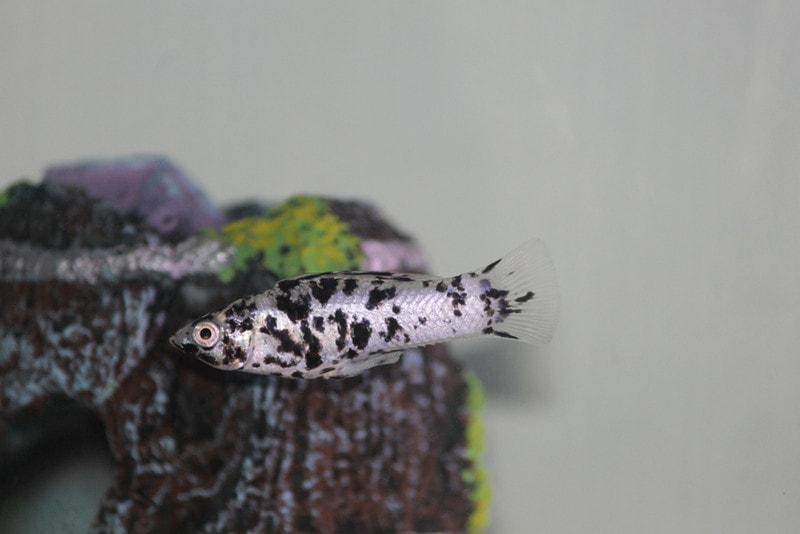
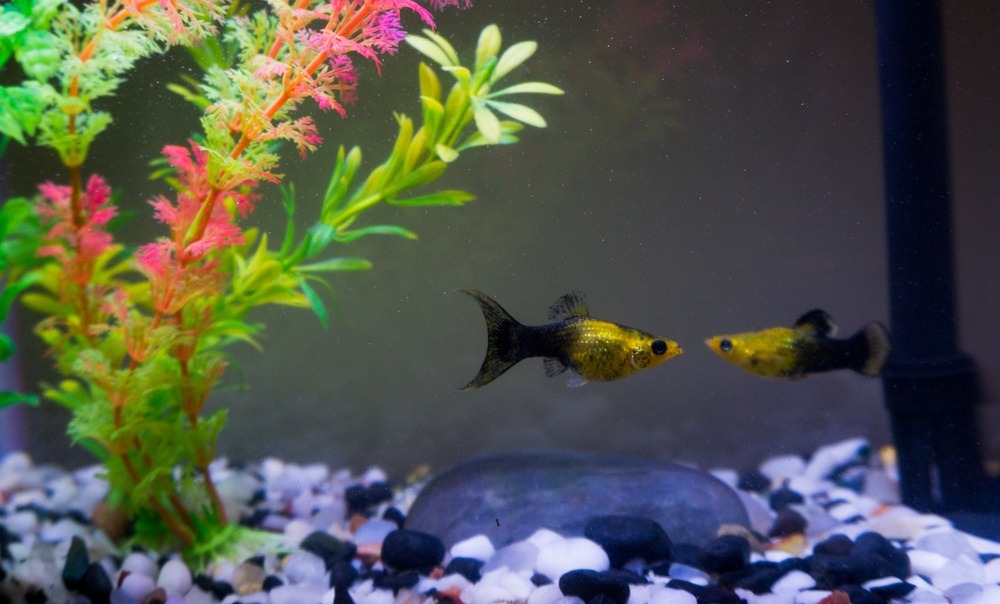
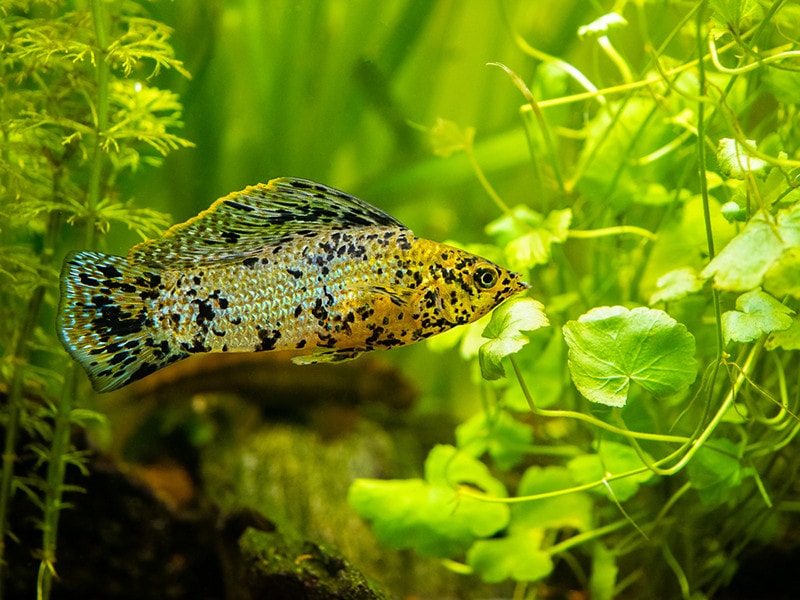
The bright and colorful Molly is a peaceful, tropical fish commonly kept in community aquariums. They are available in various types, sizes, and colors that make them attractive aquarium fish. Mollies are popular in aquariums due to their ability to adapt to different aquarium conditions while being more forgiving of beginner mistakes.
Learning how big your Molly will get is important when selecting the right aquarium. Even though Mollies are not very large fish, they still need appropriately sized fish tanks because they can grow up to 5 inches long.
This article discusses how large Molly fish can grow and all you need to know about helping your Molly fish receive the proper care to reach their adult size.

The 5 Facts About Molly Fish
Mollies are omnivores and eat a variety of plant and animal-based foods.
Mollies can survive in freshwater and brackish waters, and they do not need a high salinity content in their water.
Instead of producing eggs, Mollies give live birth, and fertilization occurs inside the female Molly.
Mollies enjoy eating algae, which grow on the tank's glass or in plants.
Molly fish have a relatively short lifespan and live only 4 to 5 years.
Molly Fish Size & Growth Chart
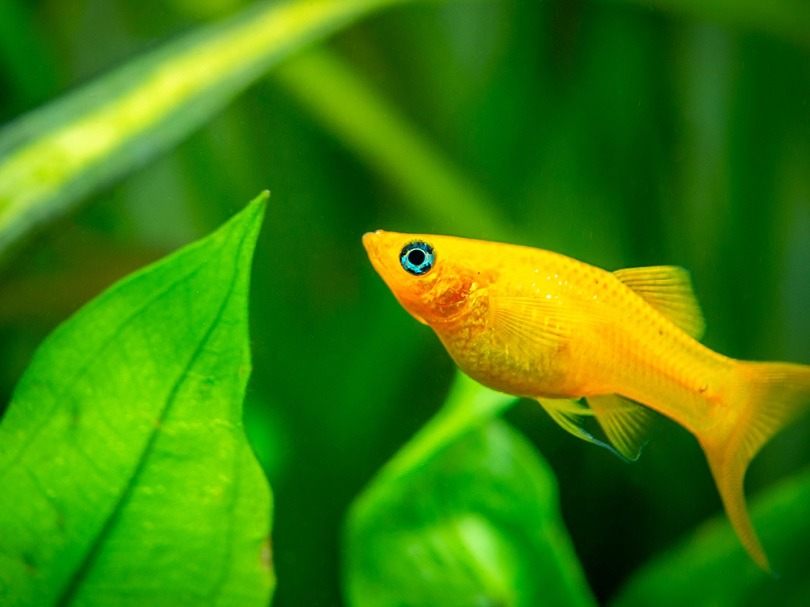
The Molly is not very large, and they grow fairly quickly. You should expect most breeds of Mollies to reach an adult size of 2 to 5 inches, with females growing larger than males. The average size for an adult Molly is 4 inches, and some female Mollies can reach 5 inches.
Most female Mollies are 1 or 2 inches bigger than the males, and their rounded bodies can make them appear larger.
| Age | Length Range |
| 1 week | 0.4 inches |
| 3 weeks | 1 inch |
| 1 month | 1–1.5 inches |
| 3 months | 2–3 inches |
| 6 months | 3–4 inches |
| 8 months | 4.5–5 inches |
When Does a Molly Fish Stop Growing?
Mollies typically stop growing at around 6 months of age. This is the age when they will be fully mature and close to their adult size if not already fully grown. Your Molly might grow half an inch in size until they are 8 months old.
Before reaching adult size, Mollies will experience the following stages of growth:
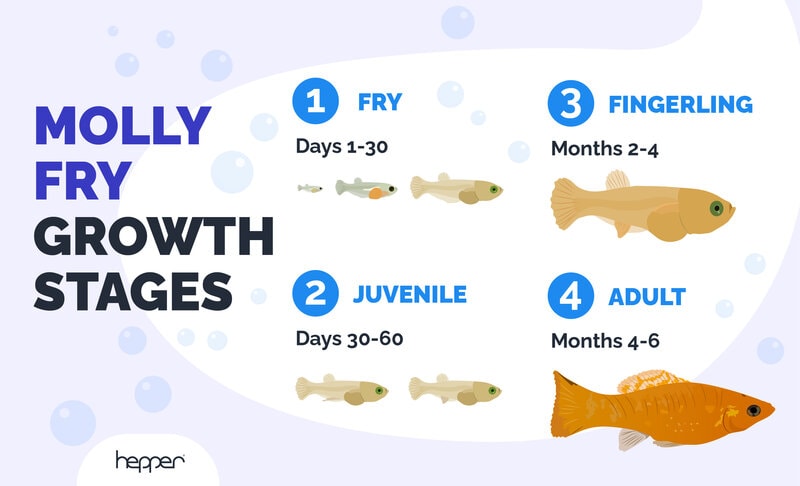
- Stage 1 (Fry) - From days 1 to 30, the Mollies are tiny fry or baby fish that have not fully developed their color. Parts of their body look transparent, and they hide more often. Their organs look dull initially, but they soon develop a more intense color after a week.
- Stage 2 (Juvenile) - Juvenile Mollies, on days 30 to 60, will start developing a dull-colored body and lose their transparency after a month. Here, you will see the gravid spot and reproductive organs developing, which can be used to determine the genders of each fry.
- Stage 3 (Fingerling) - The Mollies will soon be the size of a small finger and become sexually mature between 2 and 4 months of age. This is when the males and females can be separated if you do not want more breeding.
- Stage 4 (Adult) - At 4 to 6 months, the Molly will be fully grown. They can now be placed in the main aquarium and fed an adult diet. Mollies will be 3 to 5 inches long at this stage, depending on the breed you are keeping.
Factors Affecting the Size of Mollies
Like with most fish, certain factors can affect the size of Mollies. This includes gender, tank size, diet, and breed.
Ideal Diet for Maintaining a Healthy Weight
Mollies are omnivores, so they benefit from a diverse diet containing animal-based proteins and plant matter. Molly fry should be fed a diet of baby brine shrimp, micro pellets, and egg yolk. Avoid overfeeding the fry since it can cause issues with the water quality.
Mollies at the juvenile and fingerling stage should be fed micro pellets, granular foods, brine shrimp, freeze-dried bloodworms, or tubifex worms.
As adults, Mollies should be fed commercial fish food formulated for omnivorous fish like livebearers. Their diet can be supplemented with live or freeze-dried worms or shrimp. This will ensure they receive the right nutrition to stay healthy and maintain a healthy weight.
How to Measure Your Molly Fish
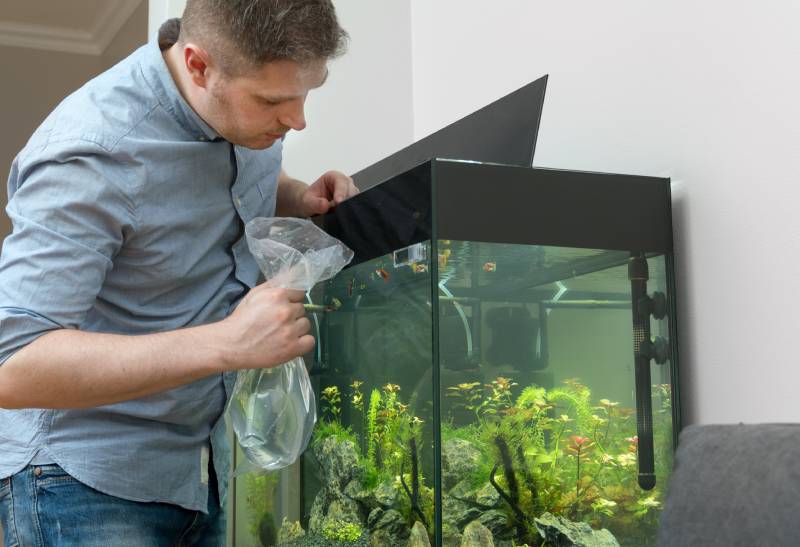
Measuring a fish can be tricky, and it must be done cautiously. To measure your Molly accurately, you need to remove them from the water for a few seconds to get a proper measurement.
You will need to use a tape measure to measure the length of your fish. Measuring can be pretty unpleasant for your fish, so it should only be done occasionally. In most cases, the growth of your fish is noticeable through pictures that you can use to document your Mollies' growth and progress.
First, wash your hands before handling your fish. Then, place them in the palm of your hand a few inches out of the water. Have your measuring tape ready to measure your Molly from their mouth to the tip of their tail. They might flop around on your hand for a bit, which can interfere with the measurements.
Avoid keeping your Molly out of the water longer than 10 seconds, and ensure that your hand is kept wet with tank water to prevent irritation to your Molly's slime coat.
Conclusion
Raising and growing Mollies from birth or watching your store-bought Molly grow into an adult and develop their final colors and patterns is fascinating. As a small tropical fish, Mollies rarely exceed 5 inches, making them perfect for community aquariums above 30 gallons.
You can keep Mollies with other peaceful tropical fish, and you get to choose from several types of Molly fish breeds to find one that grows to the size you want.
See also:
How Long Are Dalmatian Mollies Pregnant For? Full Gestational Period & More!
How Long Do Dalmatian (Dalmation) Mollies Live? Stages & Lifespan Explained
Featured Image Credit: Joan Carles Juarez, Shutterstock
Get Hepper In Your Inbox


Pet care tips from our vets and experts, straight to your inbox.
You may opt-out at any time. View our Privacy Policy for more information.

Sarah is residing in South Africa with her partner and pets. She currently is interested in veterinary science and ichthyology, which she wants to study alongside her main passion: pet content writing. Sarah has over 60 fish including goldfish, tropicals, shrimp, and snails. She also keeps hamsters and a tarantula and wishes to provide quality content for readers and allow others to learn from her knowledge and experience. Sarah has much experience in all aspects of pet care, and providing the world with knowledge on ethical pet ownership is her lifelong dream.
Join the conversation
Ask a question, share your story, or send private feedback.