Hepper is reader-supported. When you buy via links on our site, we may earn an affiliate commission at no cost to you. Learn more.
How Does a Bearded Dragon Sleep? Vet-Approved Facts


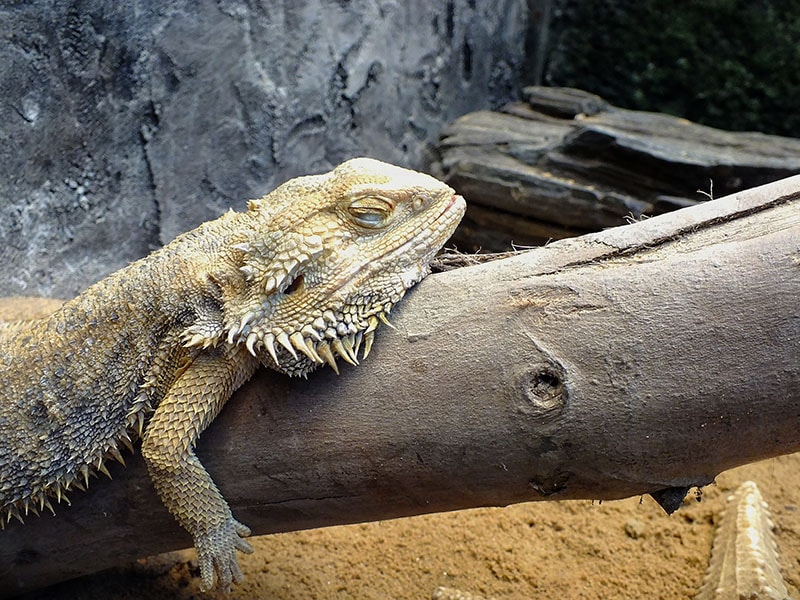
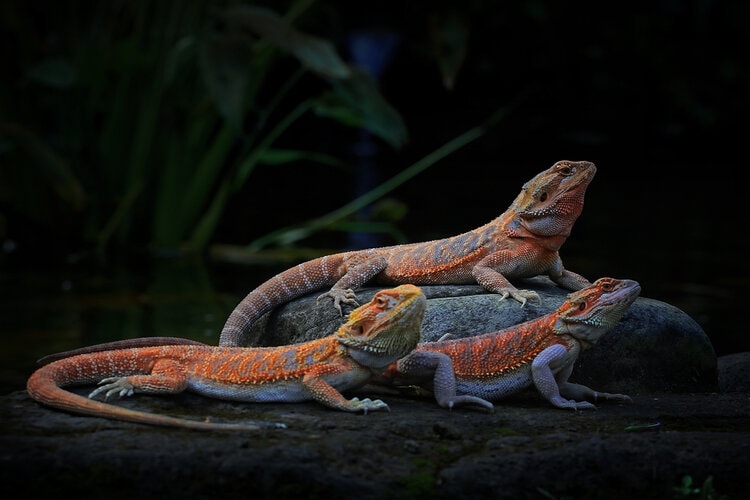
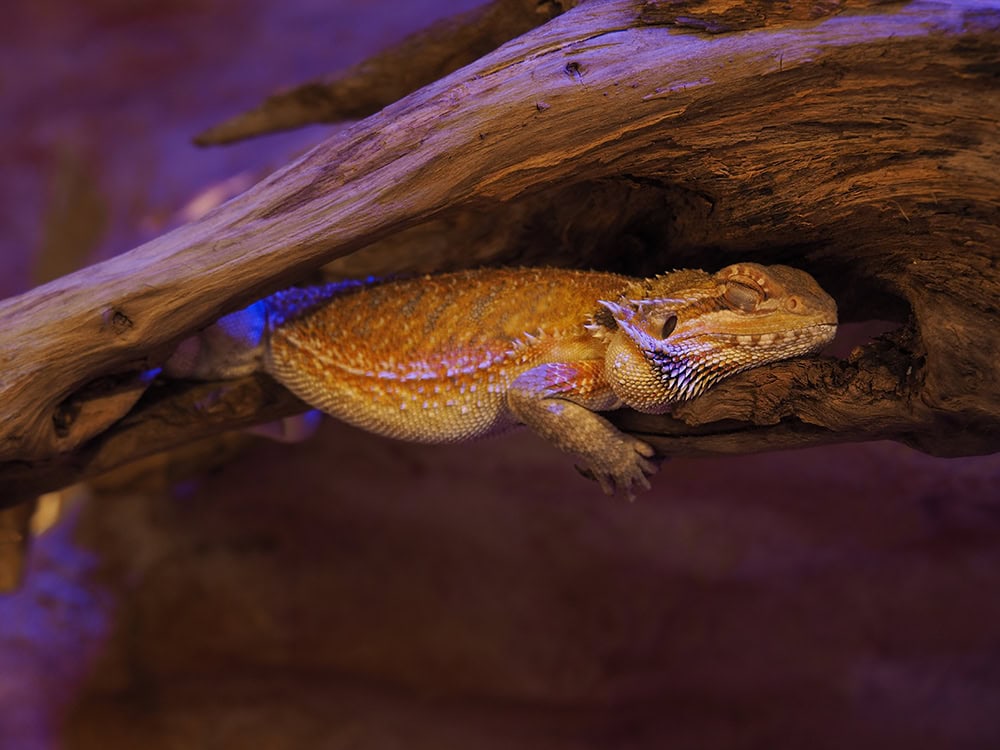
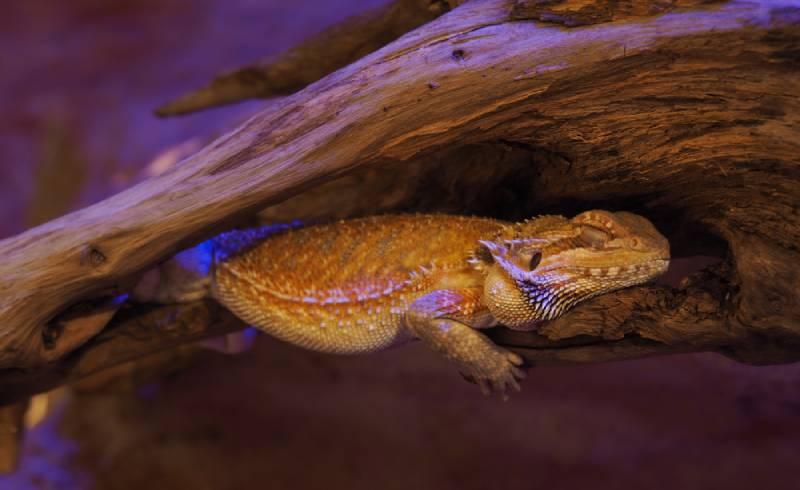
Bearded Dragons are one of the most popular reptiles to own. Despite what you may think, these reptiles are diurnal, meaning they are active during the day and sleep at night. Bearded Dragons love their beauty rest, and they sleep anywhere from 8 to 12 hours each night—they may even sleep up to 14 hours during colder months.
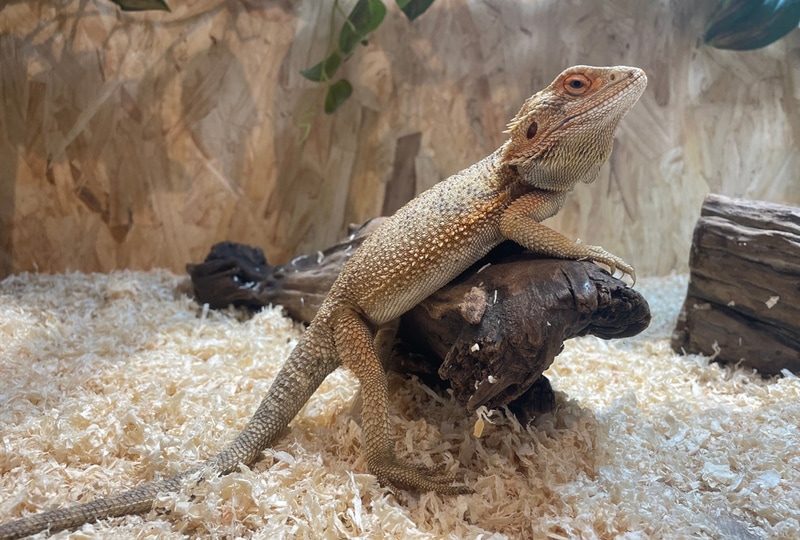
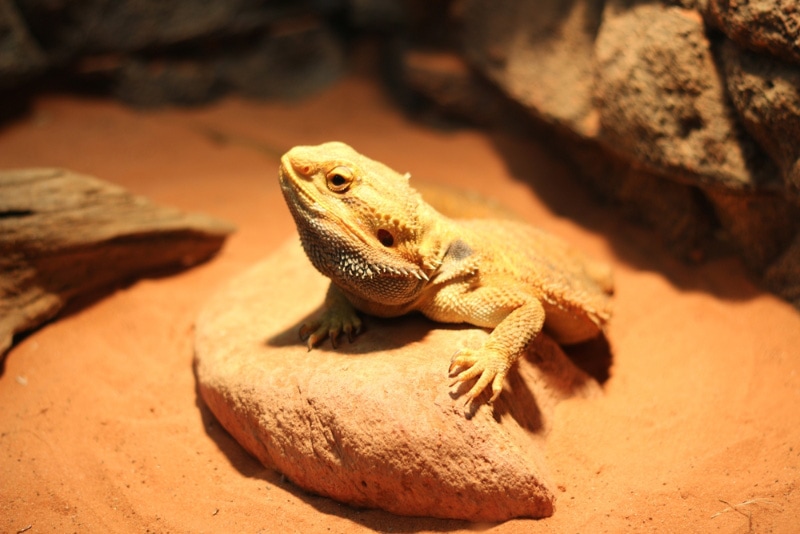
But how does a Bearded Dragon sleep? Do they lie down and get cozy in the substrate? Bearded Dragons have some unusual sleeping habits, but mostly sleep on their bellies. However, that’s not the only position! Read on to learn more.

So, How Does a Bearded Dragon Sleep?
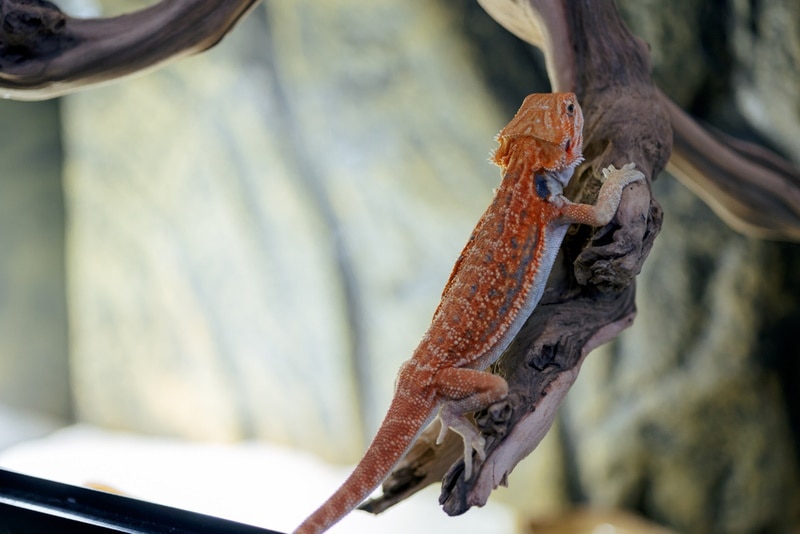
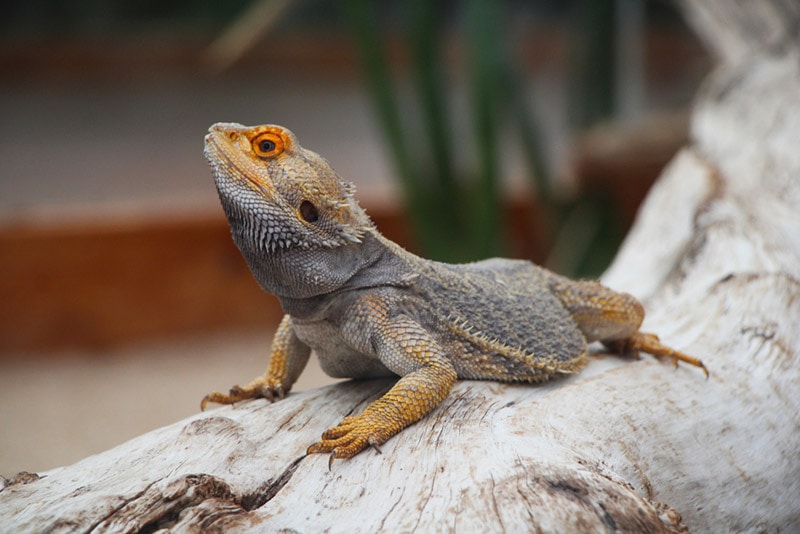
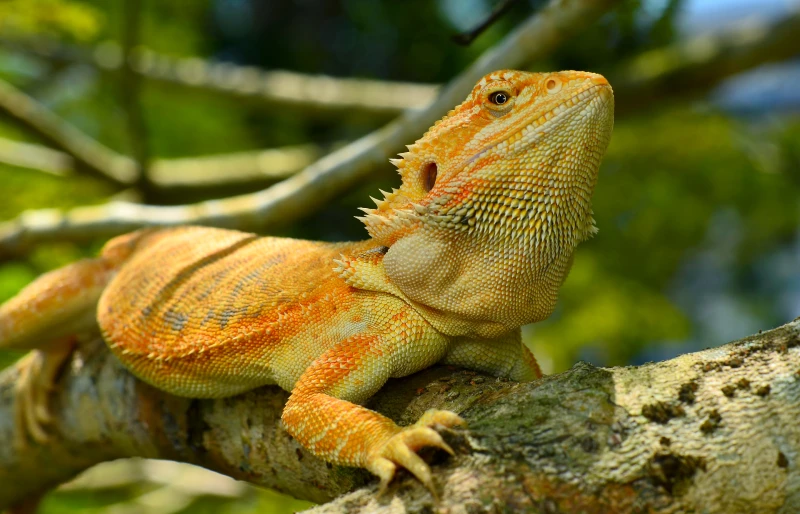
Bearded Dragons do sleep on their bellies, but that’s not the only way they sleep. In the wild, these reptiles may sleep upright in a vertical position against a tree trunk. They will even occasionally sleep like this in their terrarium up against the glass, so if you see your Bearded Dragon in this position, it means they are snoozing.
Why do they sometimes sleep vertically, you ask? In the wild, sleeping vertically makes them look bigger than they actually are, and they do this to ward off predators and to be able to scope out the environment. In captivity, sleeping vertically may be more comfortable for your Bearded Dragon. On the other hand, your Bearded Dragon could be sleeping vertically due to an incorrect temperature in the terrarium or due to stress.
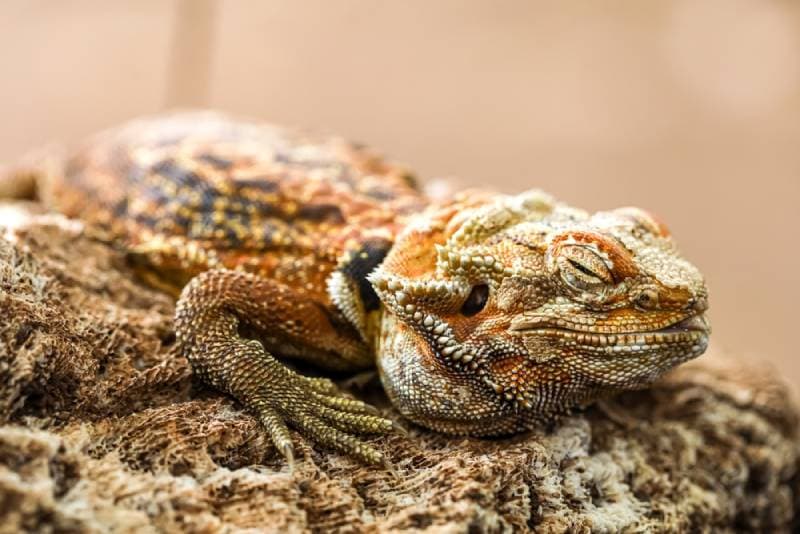
Do Bearded Dragons Sleep with Their Eyes Closed?
Some reptiles sleep with their eyes open, but the bearded dragon is not one of them. Take, for instance, snakes; they do not have eyelids and are incapable of closing their eyes while sleeping, but they do have transparent scales, called spectacles, which cover the eyes to protect them while sleeping.
Bearded dragons are part of a reptile group with eyelids, which allow them to close their eyes while sleeping. Other reptiles in this group are skinks, iguanas, and monitors.
Should Bearded Dragons Sleep with the Light On?
Just like humans, bearded dragons like to sleep when it’s dark. In fact, if your bearded dragon is asleep, and you flip a light on, it will disturb their sleep. Unlike some exotic pets, like hamsters, Bearded dragons are active during the day and sleep at night, just like we are. In short, you should turn the light off in your dragon's tank or terrarium at nighttime so they can get some quality shut-eye, along with any lights in the room where your bearded dragon resides.
Should You Turn Off the Heat Lamp at Night?
Bearded dragons require a temperature gradient with a moderate ambient temperature of 77–89.6°F (25–32°C), and a hot side with a basking area at the highest temperature of 95–100.4°F (35–38°C). In addition, they need a cool area at night with a temperature range of 71.6–77°F (22–25°C).
The humidity requirement for an adult bearded dragon is 20-30%. Young dragons (under 1 year of age) or dragons that are shedding have higher humidity requirements, at approximately 35-40%.

Tips to Keep Your Bearded Dragon Happy and Safe
Keeping the temperatures in your bearded dragon’s tank is critical for their health. Your beardie can become stressed if the conditions are not right. You should have a thermometer on both sides of the tank so you can regulate the warm and cold sides separately. Remember to keep the lights off at night for sleeping, and feed your beardie live insects, such as crickets, roaches, and mealworms. They like salad, fresh greens, and veggies like kale, parsley, and cucumbers.
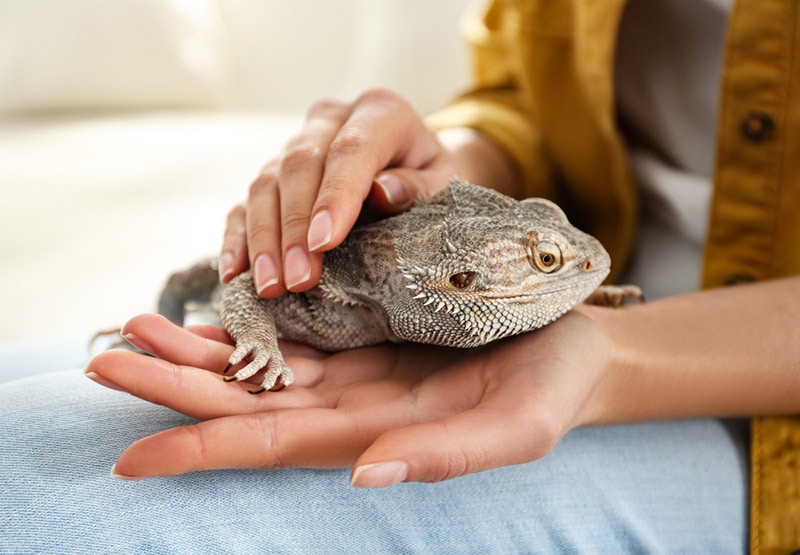
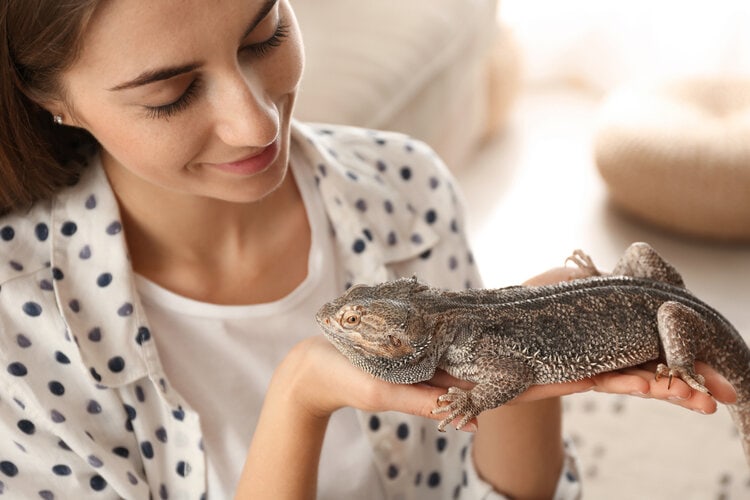
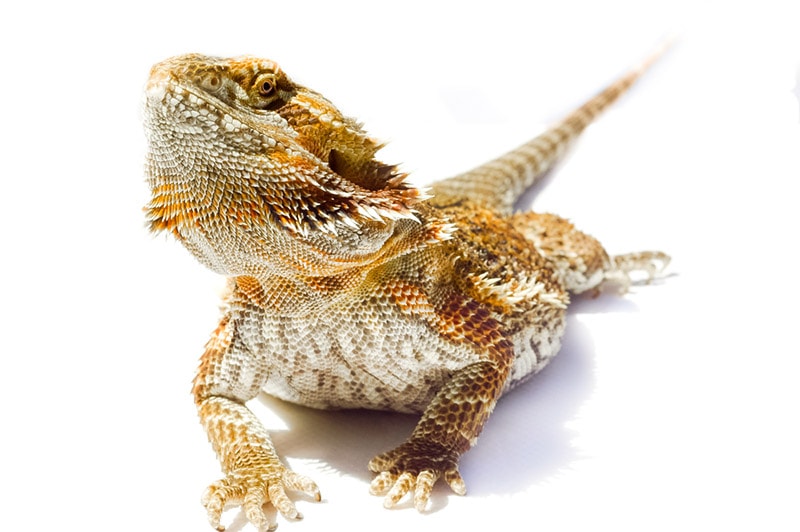
Always handle your beardie gently and pick them up slowly. When picking them up, ensure they can see your hand; otherwise, they may think of your hand as a predator and become scared and stressed. A bearded dragon’s field of vision isn’t perfect when looking straight ahead—they have a wider range of vision than we do, but their eyes focus more from the sides of the head with only partial vision looking straight ahead.
Conclusion
Bearded dragons are fun to own and make excellent pets. Bonding with your beardie is possible, but you need to handle them gently. More importantly, if you see your bearded dragon standing upright with their eyes closed, that means they are sleeping. As mentioned, your beardie could be in a vertical position due to stress, so keeping the temperature regulated appropriately in the tank is imperative. If ever in doubt about your beardie’s health, take them in for a checkup.
Related Reads:
Sources
Featured Image Credit: teerasak chomchuen, Shutterstock
Get Hepper In Your Inbox


Pet care tips from our vets and experts, straight to your inbox.
You may opt-out at any time. View our Privacy Policy for more information.
Rachel Giordano is a writer and musician out of Pensacola, Florida, living there with her partner and their two dogs, Aero, a Border Collie/Sheltie mix, and Sophie, a Boston Terrier. Rachel has a Bachelor of Arts degree in communication and enjoys writing about all types of animals. When Rachel’s not dedicating her time to writing about animals, she enjoys writing thriller/suspense novels. A writer by day and a musician by night, she's passionate about educating the public about the requirements and needs of all types of animals.
Join the conversation
Ask a question, share your story, or send private feedback.