Hepper is reader-supported. When you buy via links on our site, we may earn an affiliate commission at no cost to you. Learn more.
How to Train Your Cat to Stop Scratching Furniture: 6 Vet-Approved Tips That Work


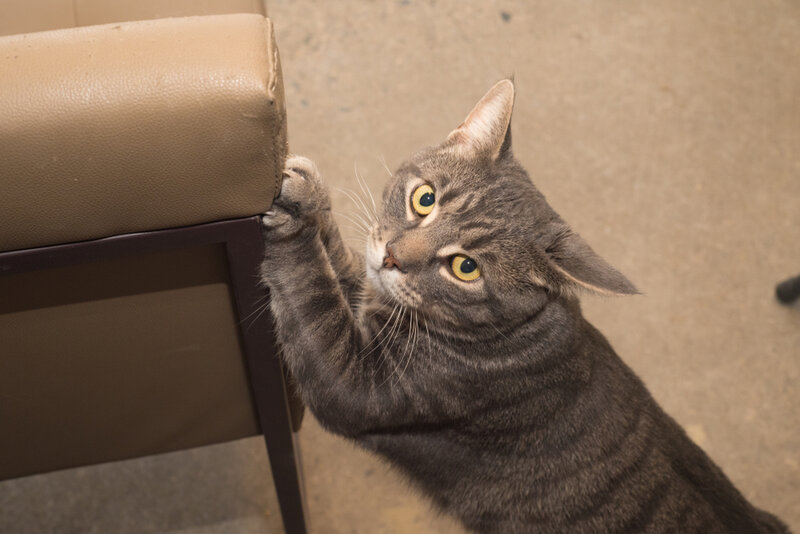
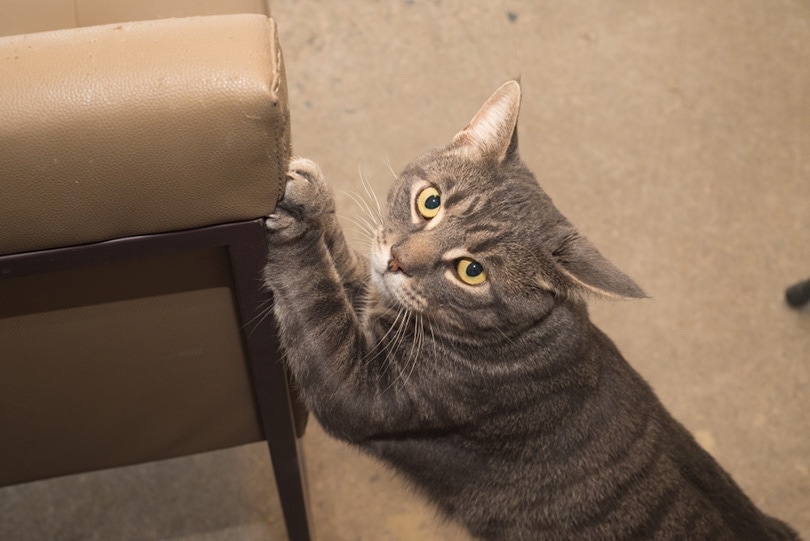
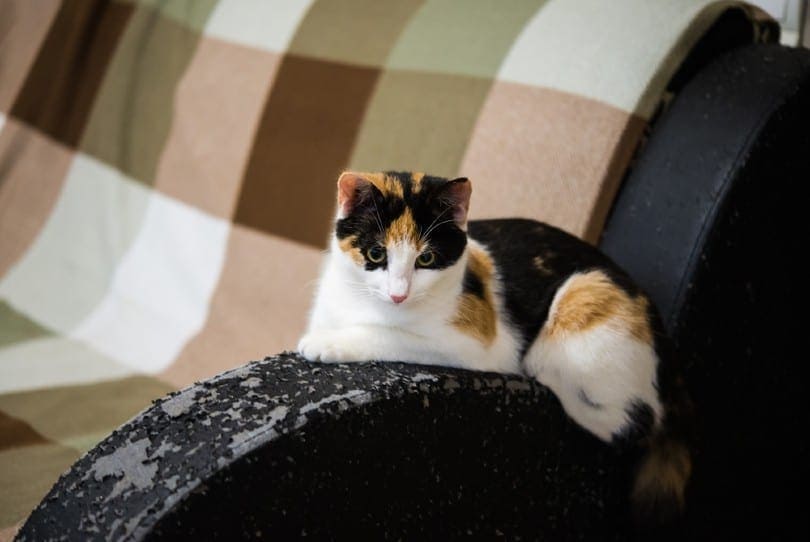
Cats have to scratch. It’s a need for them, not a want. Therefore, cats tend to scratch on whatever they can get their paws on, including your furniture! Unless you want your couch to look like it was attacked by a wolverine, there are a few steps that you’ll need to take to protect it. There are many ways that you can stop your cat from messing up your furniture. Here, we discuss six of the easiest and most effective ways to prevent your cat from destroying your furniture.

How to Train Your Cat to Stop Scratching Furniture
1. Purchase Multiple Scratching Posts
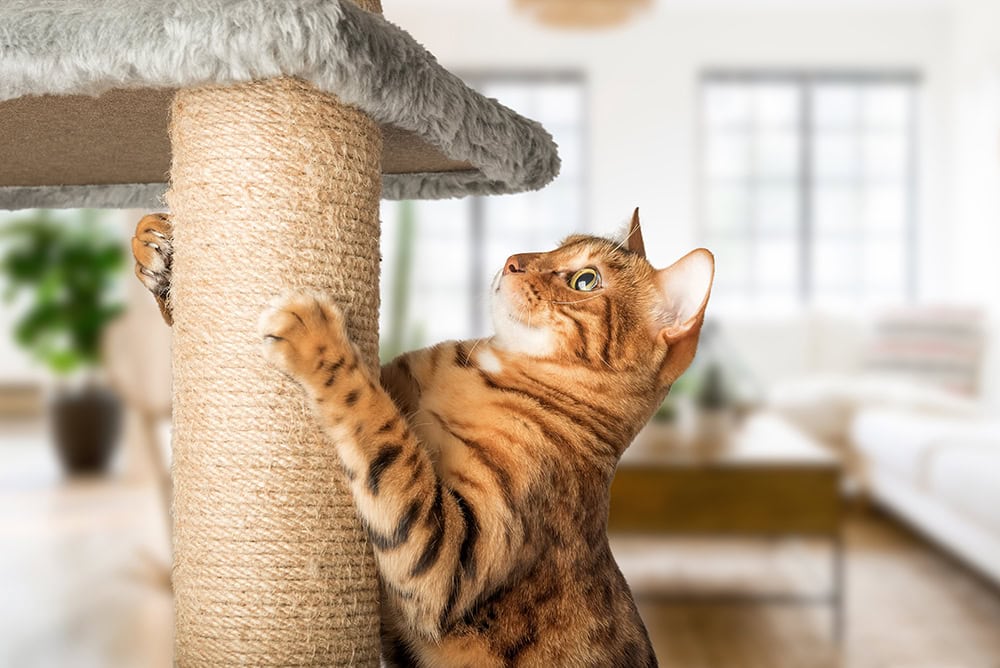
Cats must scratch. It’s a natural behavior that ensures they keep their nails in top form, while also stretching their muscles. The easiest way to prevent them from scratching on inappropriate items is to encourage them to scratch on appropriate items, like scratching posts. You can’t expect your cat to not scratch up your furniture if you don’t provide them with an alternative. We recommend purchasing multiple scratching posts and placing them at key parts around your home. Pay attention to where your cat usually scratches and place one there. You can use catnip to encourage your feline to use these scratching posts instead of your furniture. At this point, you just need to help your cat develop the habit of using the scratching post and not your couch. This will take time, but once you’ve done so, your cat should never use your couch as a scratching post again — as long as you continue to provide them with an alternative.
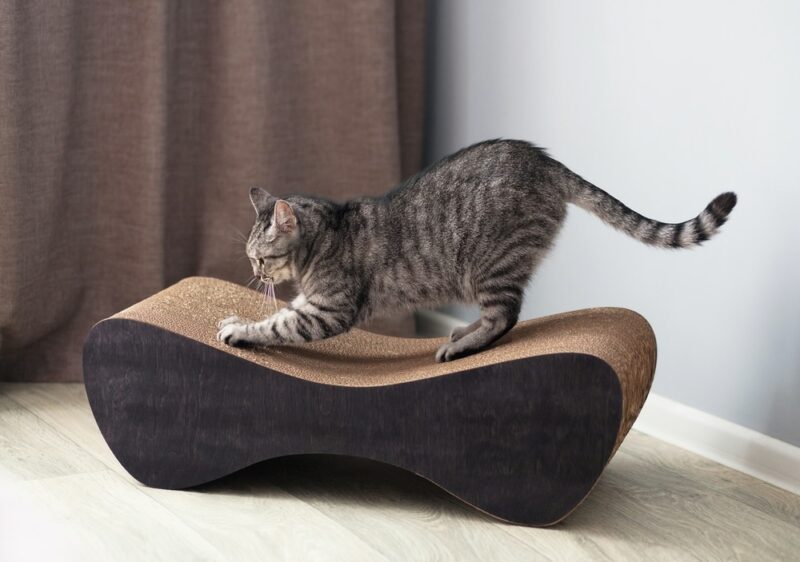
The modern and functional design of our Hepper Hi-Lo Cat Scratcher provides a unique and desirable place for cats to scratch – and a necessary distraction from your furniture. The 3-position setup and the B-flute cardboard texture encourage your cat’s scratching tendencies, eliminating their impulse to claw upholstery, carpets, and curtains. We’re sure the Hi-Lo will increase the longevity of your belongings while providing a more functional and fun environment for your cat.

- Premium Materials - Hepper's cardboard scratcher is made with dense, B-flute cardboard, and a metal core. Encased in a 1/2" plywood frame with gloss coating. Stable and beautiful, use after use
- High, Low and Lower - A single cat scratch pad won't keep your cat engaged. 3 unique positions keeps them coming back, and back, and back again. Finally, something to get them away from the couch!
- Activates Muscles - The Hi Lo isn't just a cat nail file to stop the chief cat couch scratcher. The deep cat scratcher wave encourages maximum musculoskeletal activation for a healthier workout
2. Cover Your Couch in Tin Foil
A lot of cats hate tin foil. It sounds weird, and they can’t scratch on it. Therefore, you can wrap the areas of your couch that your feline scratches with tin foil, which should help prevent them from using it. If you have scratching posts available, this method will also encourage them to switch and use them instead of your couch. After all, they can’t scratch on the couch with the tin foil, so they might as well use the alternative. You won’t have to use the tin foil forever. In fact, you should only need to use it for a week or so. Eventually, your cat won’t even consider using the couch anymore.
3. Use Double-Sided Tape
As an alternative to tin foil, you can use double-sided tape. Cats don’t like sticky stuff, and tape isn’t exactly a great option to scratch. Therefore, you can successfully use this tape to prevent your feline from scratching the couch. You won’t have to use this tape forever. Instead, you’ll just need to use it until you switch your cat to the scratching post. Once they are leaving the couch alone and using the scratching post instead, you can successfully remove the tape without a problem.

4. Use a Plastic Protector
Plastic protectors are explicitly designed to prevent your cat from scratching the couch. These are typically more permanent additions. They also tend to be more expensive than some other options, but they are quite effective. If you’re planning on protecting your furniture directly, then your best bet is to use a plastic protector. They look and stay in place better than aluminum foil or tape.
5. Invest in Cat Condos and Environmental Enrichment
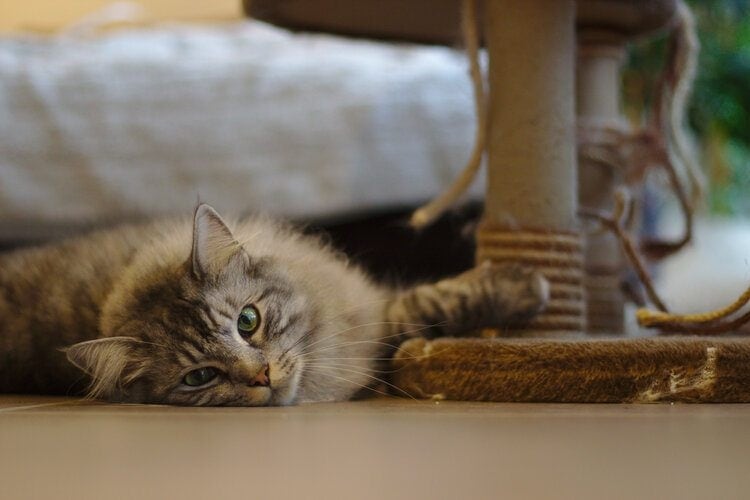
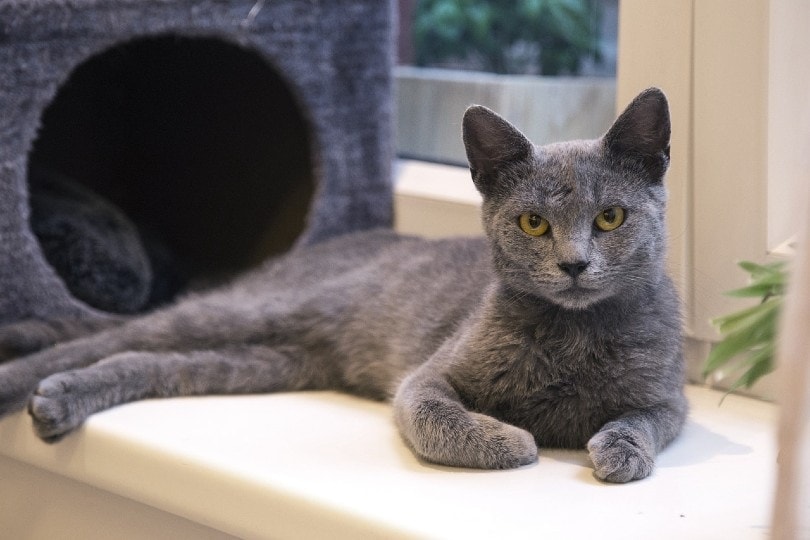
Cat condos often have more than one scratching post. You can utilize these for cats that like to scratch. The climbing component of the scratching post also encourages cats to use it. Many scratching posts also have hiding holes and perches. While these don’t directly help with scratching, it is very useful for those who want to accomplish multiple things with the same piece of furniture. That said, the material on the condo is essential. Preferably, you should get a sisal rope post. Many cats love this material, as it is effective at sharpening their nails. In the same vein, many cats also love natural wood. Cats would be scratching on trees in the wild, so natural wood mirrors what they would naturally be using. You should avoid carpet-covered posts and cat condos. It is difficult to teach cats that certain carpets are okay to scratch on but not others. Therefore, it can be quite confusing if you want them to use the carpet-covered post, but not your actual carpet. Choose other materials instead. Larger cat condos are often better, even if you only have one cat. Small cat condos aren’t that stable. If your cat is scratching and stretching with the post, the odds are that they will pull it down. Similarly, if your cat is jumping and playing on a cat condo, they may knock it over.
Enriching your cat’s environment using scratching posts, condos, cat trees, various perches, window sill lookouts, and plenty of toys, as well as dedicating sufficient time each day to play with your cat, is crucial in keeping them fulfilled and avoiding boredom and frustration that may in turn lead to destructive behaviors.
6. Trim Your Cat’s Nails
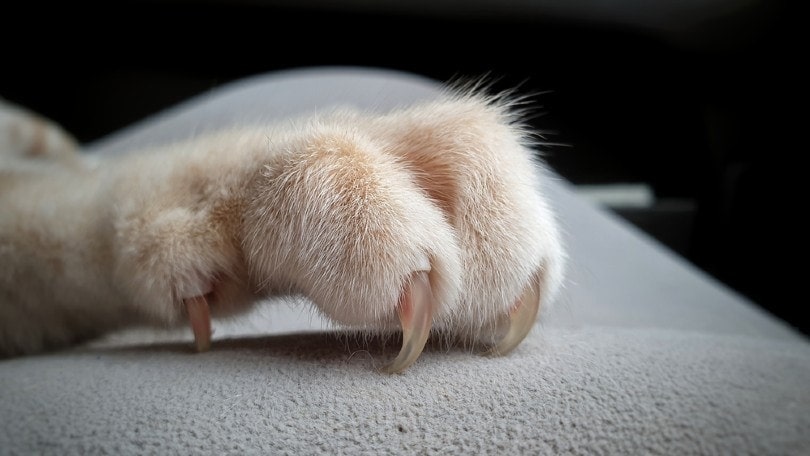
For the most part, cats use the scratching post to sharpen and trim their nails. If you do this for them, they may need to use a scratching post less. This won’t stop the behavior altogether, but it is useful when used alongside other methods. It is best to start when the cat is a kitten, as they will become used to the process over time. If your kitten is used to someone trimming their nails, it will be much easier to do when they are adults. You should go slow, though, as many cats dislike having their paws touched, so it’s important to use positive reinforcement with treats and praise to ensure they associate this with a positive outcome. If you go too fast or handle them too roughly, your cat will learn to dislike the sessions.
If your feline is particularly sensitive, you may just need to spend time getting them used to their feet being handled. If this is the case, touch their paws for a few minutes a day, giving them treats when you do so. Don’t push them past their comfort zone, but slowly increase the amount of time each session. Eventually, they’ll be better about their feet being touched, which will make nail trimmings go much more smoothly — and hopefully, save you time too!
Trimming your cat's nails isn't the easiest task in the world, but a well-designed set of clippers can make all the difference. Our Hepper Cat Nail Clipper Set features two sizes of clippers with easy-to-clean stainless steel blades and a built-in safety guard to prevent accidental cuts. These clippers are comfortable to hold, nicely designed to work at tricky angles, and even include a bonus hidden nail file and a convenient pouch!

- Complete Set - These cat nail clippers include both a large and small pair, meaning it works well as a kitten claw trimmer when they're a small kitty, and then before you know it, as a cat nail cutter
- Razor Sharp Stainless Steel - The most comfortable cat nail clippers for indoor cats provide a fast and clean cut. And for rough residuals remaining, the free cat nail file included can smooth it all.
- Safety First - With a safety nail guard and locking spring, you can make sure every grooming cut is stress free for you, and pain free for your purry pal
Conclusion
Cats need to scratch, so it’s up to you to teach them where they can scratch. You should provide them with an appropriate place to scratch, such as a scratching post or cat condo. Preferably, you should purchase multiple scratching posts. This way, you can spread them around the house, giving your cat more opportunities to scratch. If you just have a single post, your cat may decide that traveling to the other side of the house isn’t worth it! You can also directly cover up the part of the furniture that they keep scratching. For instance, you can use tin foil or double-sided tape. These steps will help prevent your cat from scratching your couch while they get used to the new scratching post.
Featured Image Credit: Melissa Sue, Shutterstock
Get Hepper In Your Inbox


Pet care tips from our vets and experts, straight to your inbox.
You may opt-out at any time. View our Privacy Policy for more information.
Kristin is passionate about helping pet parents create a fulfilling life with their pets by informing them on the latest scientific research and helping them choose the best products for their pets. She currently resides in Tennessee with four dogs, three cats, two fish, and a lizard, though she has dreams of owning chickens one-day!
Join the conversation
Ask a question, share your story, or send private feedback.